
We recently lost the extremely talented Robert Downey, Sr., which evoked a wealth of conversations surrounding his importance to the world of cinema, as made very clear by the legions of people who remarked on his brilliance as one of the formative voices in American independent cinema, which would not have been the cherished institution it is today, nor the breeding ground for some of the most interesting artists to work in the medium throughout the decades, without Downey. It also caused many of us to go back and rewatch some of his work, particularly those that aren’t as well-known as others. Putney Swope is one of the most biting satires to ever make it to film, and Greaser’s Palace is a cult classic – but what really made Downey such an impactful figure are the smaller, more intimate films he made earlier in his career. When trying to figure out the plot of Babo 73, your guess is as good as mine – but what isn’t up for debate is that this is a work of singular genius, a dark and deranged satire with peculiar intentions and an even more offbeat execution, creating a film that can best be described as if John Cassavetes, Andy Warhol and the Monty Python troupe teamed up to create a Cold War-era propaganda film. This is both high praise and an indication of absolute bewilderment, because whatever possessed Downey to make this film was surely something he believed in, since the final product is a puzzling exercise in experimental cinema that will leave even the most abstract-minded art enthusiast scratching their head – but after all, this may have been the entire point all along, which is certainly a good way to look at this strange but captivating satire.
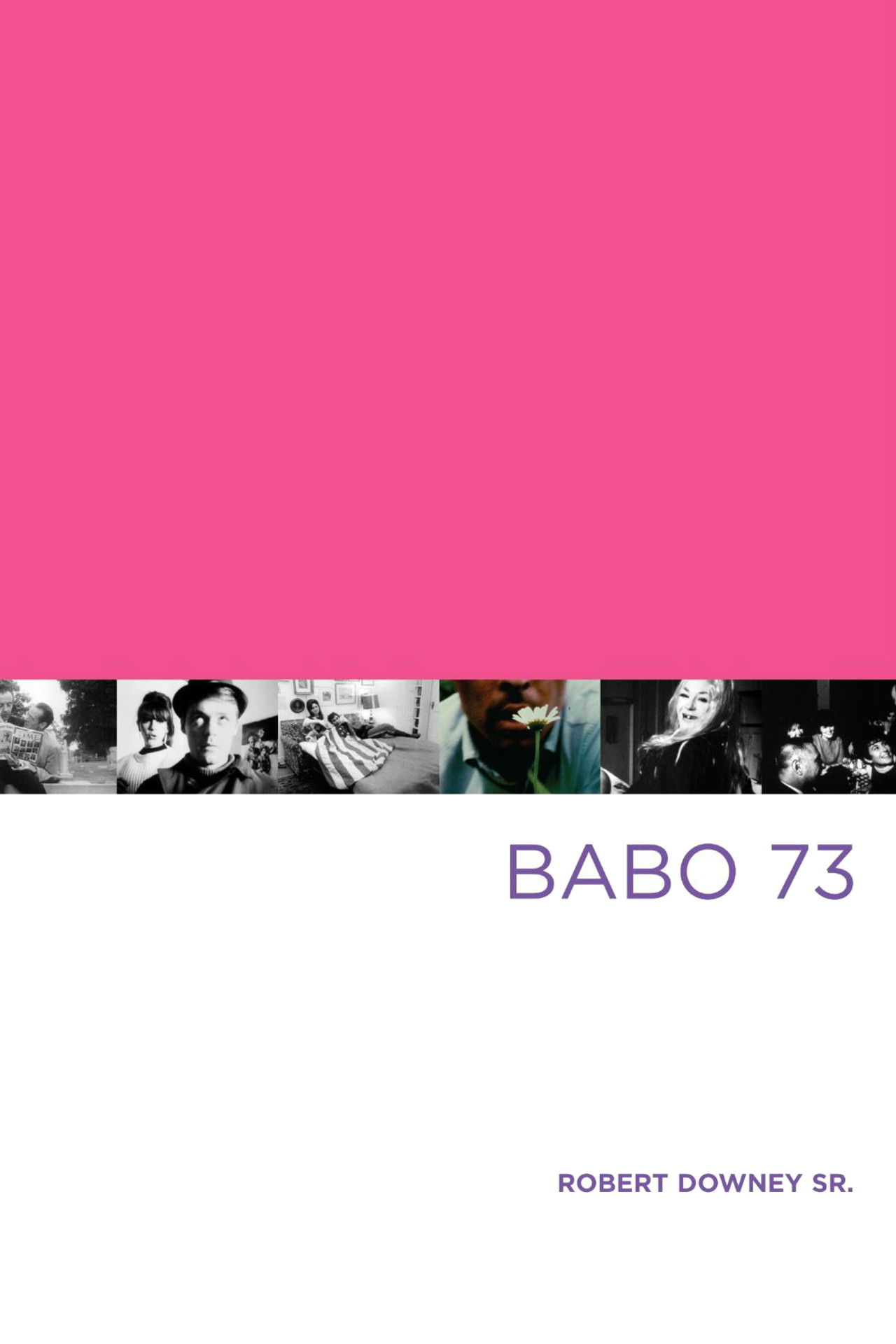
Babo 73 was released in the same year as another fascinating satire, Stanley Kubrick’s iconic Dr Strangelove or: How I Learned to Stop Worrying and Love the Bomb. Both films are notable for focusing (at least partially) on a newly-elected president becoming overwhelmed by his responsibilities in regards to foreign affairs, to the point where his incompetence becomes not only endearing, but his defining character flaw. However, Babo 73 is far more pointed and strange, and doesn’t seem to be following a coherent line of questioning, outside of its general premise being a few days in the life of President Sandy Studsbury (played by Warhol superstar Taylor Mead, most known for spending 76 minutes entirely bottomless in one of the esteemed pop artist’s more deranged directorial ventures), who has been let loose throughout Washington D.C., fresh off his inauguration as the leading of the United Status of America. Making sense of this film is about as impossible as understanding the circumstances that surrounded its creation – so when in doubt, it’s often better to just abandon all logic and instead embrace the absurdity, which is exactly what Downey invites us to do throughout this film. Functioning as 56 minutes of the most deranged, madcap dark comedy one is likely to see, the film barely manages to scrape enough social commentary off the grubby ground it treads on to be considered an actual satire, rather than a series of disjointed moments tied together by a thin story masquerading as a political comedy. Yet, it all comes together to form something quite unforgettable, especially if the viewer has a penchant for this surreal humour, which encourages thinking outside of the box, rather than rationalizing every narrative decision.
Beneath all of this puzzling material, it becomes clear that Babo 73 is just an effortlessly entertaining film, but one that works best if the audience is willing to surrender to the madness that informs much of this film. Downey isn’t inspired by anything other than his own curiosity when he set out to make this film – penetrating the veneer of what is really just a series of episodic vignettes centred around a particularly incompetent president as he goes about his daily activities as the leader of the free world, is a pointless endeavour, since thinking too hard on what this film represents only serves to further complicate the ambiguities that lie at its heart. This is the kind of artwork that means less the more you think about it – so if you’re willing to go on this adventure with the ragtag cast of cultural misfits and its deranged director, you’re very likely going to find a thoroughly delightful satirical romp at your disposal. This is essentially what gives Babo 73 its mystique – in under less than an hour, it sets out to cast a wide net over the entire concept of American culture, condensing it into a single story of a president entering office. Naturally, the film doesn’t make much sense, and all logic is disposed of from the first moment (once the introductory narration refers to a high-ranking official as “Professor Kitty-Litter”, you immediately understand just how serious the director wants you to take this story), but if you look slightly deeper, you’re likely to find a story that is far more captivating than many will dare give it credit for being. This is a clear case of experimental cinema being built on atmosphere rather than precise story details – and Downey’s precise directorial vision (which may be a strange sentiment considered the loose structure of the film) makes sure that we know that we’re in for a treat.
It’s easy to dismiss Babo 73 as nonsensical ramblings produced by an eccentric young director who strung together a few vignettes with a non-existent budget, a relatively unknown cast and a story that is about as understandable as the strange accents that permeate the film, or the character motivation undertaken by the grotesque ensemble of individuals that reside at its centre. What is most notable about Babo 73, outside of the fact that it is a relentlessly disconcerting voyage into the core of the American heartland, is that there is a strange brand of humour that underpins every moment – Downey isn’t satisfied to just provoke us with a peculiar series of moments, and makes sure that what he’s doing is actually very funny. There are several moments in this film that are absolutely hilarious – a character ranting and mentioning that he is having a nervous breakdown, only to be told to “have it somewhere else” is such an obvious joke, but in an ocean of strange images, these jabs tend to resonate more than usual. Midway through the film, the main character sits behind a piano and plays a tune that is just about as discordant as the film that is occurring around him – and it’s these parallels, combined with an off-kilter sense of humour, and an appetite for narrative destruction, that inspired one of the most deranged satires of its era, and a film that kickstarted a career of a director that mainly remained underground for most of his creative career, but gradually emerged as one of the most striking voices of his generation. It’s certainly never too late to start appreciating Robert Downey, Sr. now, especially since he continuously proved what a truly inventive artist he was throughout his storied life.
 The Postmodern Pelican
Your review of Babo 73 is the greatest. Thank you. The movie just aired on TCM and your review is the best thing I’ve found about it on the web.