
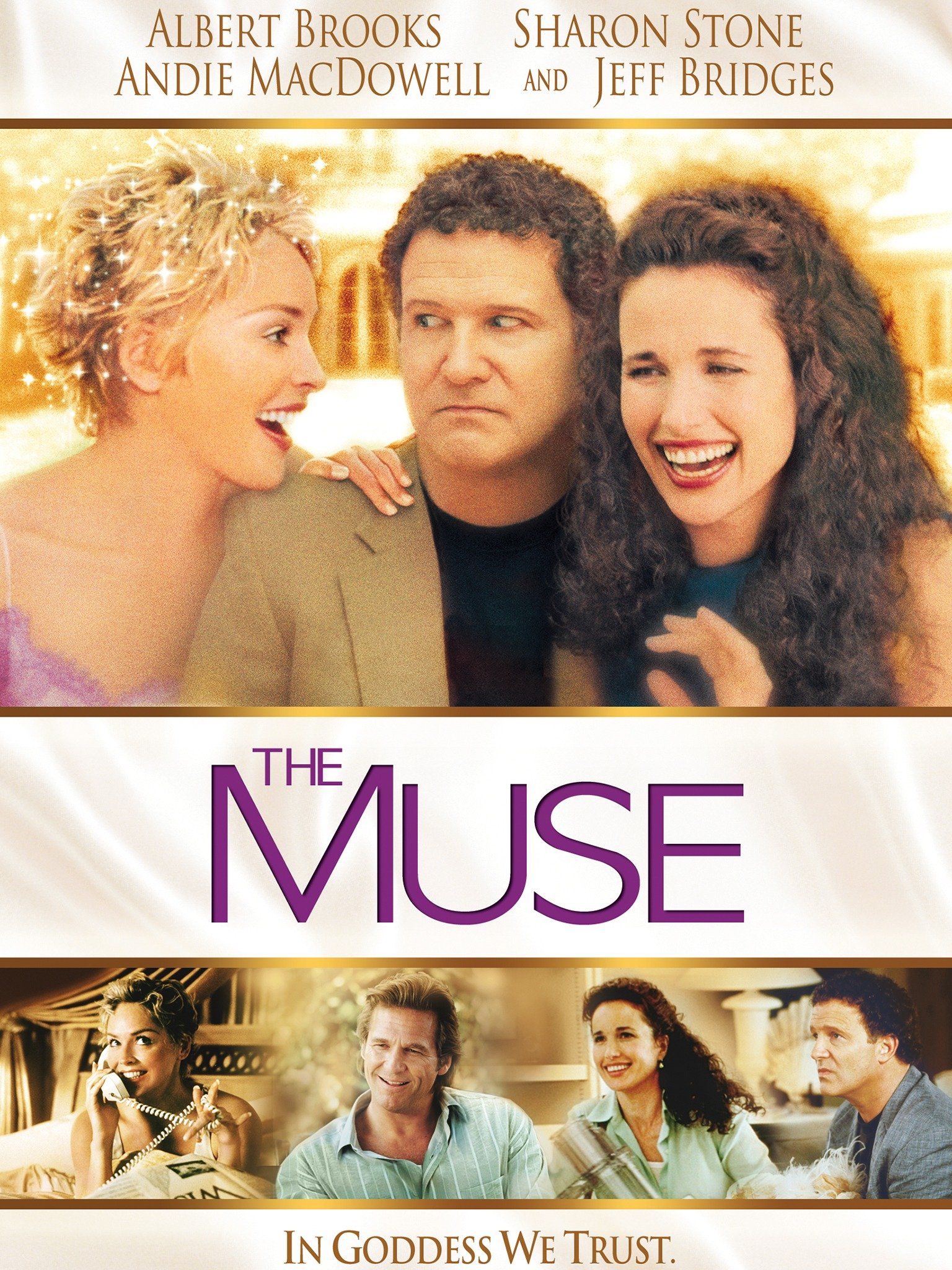
Steven Phillips (Albert Brooks) used to be a big deal in the world of screenwriting – emphasis on “used to”. He has recently managed to pick up a humanitarian award, which gives him a sense of accomplishment and importance, until he realizes how worthless it actually is, since the terms surrounding it are far more vague than the more prestigious prizes he has been trying to achieve his entire career. What he is hoping is the start for a new era in his career actually turns out to be filled with obstacles, starting with the fact that his scripts are not only rejected from every major studio (including those with which he has an existing relationship), but that he is being let go from his tenured post at a major production company, which was helping him take care of his family by at least giving him a steady source of income. This all changes when he visits his old friend, Jack (Jeff Bridges), a fellow screenwriter who has actually managed to achieve the acclaim and accolades that Steven has been striving to get for decades. Based on his friend’s desperation, Jack sets up a meeting with Sarah (Sharon Stone), who he claims is a modern-day Muse, one of the nine mythological figures that inspired creativity and artistic expression. Steven is naturally dubious, but once he starts to work with Sarah, who proves to be quite a difficult partner, but one who is actually quite brilliant, he starts to see results, which leads him to believe that she is truly who she claims to be. However, their creative partnership is short-lived, especially when Steven’s wife, Laura (Andie MacDowell) starts to realize that she too can make use of the enigmatic Muse to get her own baking business off the ground – and soon the couple come to realize that there may be only a finite amount of creativity to go around.
In a career that has seen him work in every conceivable medium, Albert Brooks has always been something of a renaissance man, an artist who has touched on so many different themes and conventions in his work, the fact that he is still oddly underestimated as a creative force is bewildering. Brooks is such an exceptional filmmaker, even something as lacklustre as The Muse has its indelible merits, so much that it sometimes even fools us into believing it to be a fantastic film, when it is merely a flawed comedy with many moments of genuine brilliance, all of them the product of a director, writer and star who truly had a great idea, and some co-stars that absolutely understood the assignment to the point where they’re turning in performances far better than the film around them. The critical reception for The Muse has been understandably divided over the last two decades, and for good reason – not necessarily a poor film, but rather one that starts out as something quite excellent before running out of steam midway through, the film tries its best to be the next major cinematic sensation, when in reality it only manages to settle for a reliable, solidly-crafted comedy with a lot of heart and an intelligence we don’t really see very often from this kind of broad humour. Ultimately, The Muse is a film that has received its fair share of criticism, some of which we’ll touch upon in this discussion – but it is still an entertaining comedy with a sincere sense of humour and many wonderfully unique ideas that all go towards the creation of a terrific film that may have shortcomings, but which are balanced out by the many memorable merits that define it and make it such an unconventionally enthralling comedy.
Brooks’ films have always shown two fascinating qualities, regardless of their plot – a massively impressive understanding of the human condition, and a genuine fondness for the artistic process, with most of his work centring on an artist in some way. The Muse, for all its imperfections, doesn’t break this pattern at all, and instead functions as a solid entry into a run of films that see Brooks taking on the film industry from his perspective. Playing a screenwriter may not be considered much of a stretch for the actor, but it’s what he does with the role, and the premise around it, that makes the biggest difference. Working with frequent collaborator Monica Johnson on the screenplay, Brooks was able to pull together a variety of miscellaneous strands from his other films based in or around the film industry, and turn it into a charming comedy about the most evasive quality of them all – creativity. For all of its flaws, The Muse is a tremendous homage to the experience of being inspired, or more accurately, the frustrations of being at a loss for inspiration. Anyone who has any experience in a field that requires some degree of creativity will understand the despair that comes with not knowing exactly what approach to take – and Brooks and Johnson seem to be working from a place of experience, turning their own artistic quandaries into a riotously funny comedy that uses an element of the supernatural to explain the sensation of writer’s block. It’s a truly fascinating approach to the genre that gets obscured by the half-dozen subplots that begin to take over as soon as the film allows them to, which is perhaps the reason why the film struggles to live up to its full potential.
At the very least, Brooks was able to use the fact that he was one of the most hardworking people in showbusiness to attract a bevvy of his friends and collaborators to the project, whether it be in major supporting roles (such as Jeff Bridges in one of his most underrated performances), or brief cameos, such as those by Martin Scorsese and James Cameron, who have very funny appearances as themselves, playing the embodiment of the cutthroat industry. Brooks is as charming as he always is, playing the part of the luckless everyman who finds himself on the wrong side of every situation. However, it’s his two co-stars that steal the film away from him and turn in the memorable performances. Andie MacDowell gets to make a brief sojourn from playing the dedicated housewife (which is what this film was initially positioning her as), to play the more complex role of a woman trying to regain her own place in the world, in an instance where the trope of “stay-at-home mom goes back to work” isn’t used as a way to show the ineffectiveness of her husband at providing, but rather a moment of carefully-curated liberation. Sharon Stone plays essentially the opposite role, being the free-spirited libertine to MacDowell’s logical and dedicated spouse. Stone is wonderful, turning in a rare comedic performance that shows that she possessed an impeccable sense of humour that has been rarely harnessed in a career that has been far more reliant on her dramatic work. The trio of Brooks, MacDowell and Stone anchor the film, and give it much more depth than the story would suggest, and do particularly well in grounding it in the moments where it feels as if it is about to derail itself as a result of far too much happening around it.
As an incredibly conceptual film, the shortcomings of The Muse shouldn’t be too surprising. After all, this is far more than just a film that aims to be operating in a minor key when it comes to Hollywood commentary. It does manage to be satirical without being mean-spirited (its almost a fatal personality flaw of Hollywood satires to throw too many jabs at those who don’t deserve it, so Brooks’ decision to punch upwards makes a considerable difference), and has a great sense of humour that helps move the story along. It’s not an overly complex film, and is really just your garden-variety comedy that has a solid foundation, and the confidence to try for more than it perhaps should have, which only makes for a more compelling experience, since despite not hitting all the intended targets, it absolutely earns the right to say it put in the effort. It may not be Brooks’ finest achievement, but it’s one that contains some of his most interesting commentary, and while it may take some time to excavate it, there is meaning underpinning this film. A solid script with many hilarious moments, fantastic performances and a genuinely interesting approach to the concept of creativity all go towards making The Muse a worthwhile endeavour, at least in terms of how it balances the comedy with a sense of magic that could’ve been developed more had the film realized where its strengths lay, rather than trying to fit too much into its already paltry running time. As a whole, The Muse is a fun but slight work that shows the incredible talents of Albert Brooks and his ability to present Hollywood in a very different light – so for that reason alone, the film is worth another look, even if it pales in comparison to how the director has looked at the industry in the past.
 The Postmodern Pelican
This review is published just hours after a May interview with Sharon Stone went viral. In the Zoomer conversation, the Oscar nominated actress and mother of three chastised the interviewer for phrasing a question in a manner that elevated Meryl Streep to an apex that appears unreachable to other actresses.
Stone who survived a subarachnoid hemorrhage and emergency surgery endured a brutal seven year recovery period. In March she released her autobiography. She remains outspoken and outlandish. And the topic of conversation never strays far from herself.
In her interview the unlucky reporter asked about the Soderbergh film The Laundromat, “so when you finally got to work with Meryl Streep . . .”
Stone is off to the races. “You didn’t say, ‘Meryl finally got to work with Sharon Stone.’ Or we finally got to work together.” Stone then monopolizes the conversation with lists of admired actresses, musings about how Streep feels by the constant reverence her name elicits, and verbalized defiance of whether Streep could play Basic Instinct or Casino as well as she.
In the final estimation Stone is a better than average movie star – a beautiful woman whose appearance masks other qualities, of course. Stone insures we know them in her book. She discusses skipping first grade due to her intelligence and her success as a songwriter.
When we watch her in The Muse and laugh, Stone has the guts to find her place in the world. And like most beautiful women, endure an unreasonable amount of abuse for opinions and actions that challenge patriarchal values.
Here Stone delivers solid work. Clearly that effort to survive in an image conscious culture has left a chip on her shoulder. Her recent reminder of her indignation should be a prompt to reflect how willing we are to accept Stone predominantly in roles that rely on her pulchritude and market her sexuality. A discerning audience would demand more.