
Unfortunately, Paradise Now (Arabic: الجنّة الآن) hasn’t aged particularly well, despite being something of a sensation at the time of its release. Perhaps it’s the fact that it courted more controversy than was to be anticipated, or that the film isn’t always free of some glaring flaws the distract from an otherwise compelling story. Yet, this is still a vitally important film, if not for what it says specifically, at least in terms of what it represents on a much broader scale. Hany Abu-Assad directed a masterful psychological drama that understands its limitations and doesn’t try and push too far beyond the confines of what it knows itself to be capable of. Ultimately, the film hasn’t been able to capture the same attention in subsequent years that it did when it was released, but it continues to be a worthwhile story that looks into a controversial subject, which Abu-Assad portrays with nothing but outward compassion and a sensitivity that makes every risk worthwhile. Not necessarily a definitive text on its issues, but rather a film that wants to bring awareness to an issue, particularly to those outside of its cultural milieu, Paradise Now is an admirable effort that may not be entirely free of obstacles, but manages to overcome the major ones, for the most part at least, resulting in a relatively strong effort from a director with a clear set of intentions for this story, and the willingness to explore them with insight and honesty.
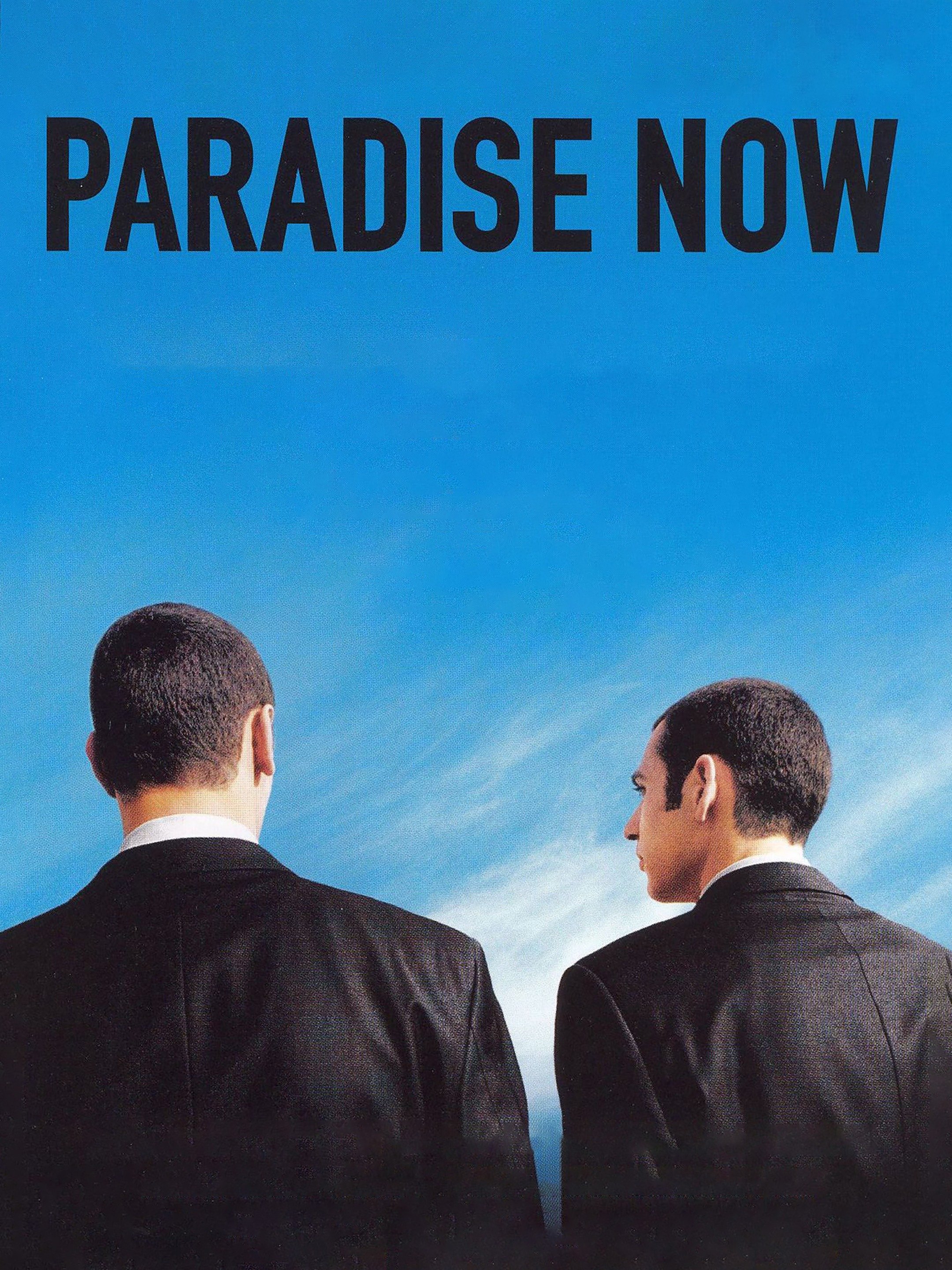
The film centres on two men – Khaled (Ali Suliman) and Said (Kais Nashef), two childhood best friends who have grown up in Palestine, having been first-hand witnesses to the changing social and political landscape, and gradually being radicalized by the growing tensions that persisted in the region, particularly in the neverending conflict between their home country and Israel. A recent attack on some members of their broader community ignites a group of militant resistance fighters to respond to the Israeli attacks, which they plan to do through an attack on one of their military bases. Khaled and Said are selected by Abu-Salim (Mohammad Bustami), the mysterious handler for the group, to sacrifice their lives in this suicide mission, being promised the glory and splendour of the heavens if they agree to lay down their lives. Both men are very dedicated to their faith, and agree to serve as the soldiers for this mission. However, they are both clearly very reluctant, and when it comes time to execute the plan, Said retreats – and now confronted with the possibility that he may double-cross them and reveal what is happening, Khaled and the rest of the militants have to find him to make sure that he isn’t revealing the plan. Suddenly, the brother-in-arms that he was willing to die alongside becomes his biggest adversary, but when Khaled realizes the reasons for Said running away, he too begins to question whether what he is doing is moral, and if it is actually in service of his nation and its people.
Undeniably, Paradise Now is about a controversial matter – nearly two decades since its release, the film touches on issues that are still very potent, and cause a visceral reaction in viewers, especially those who encountered stories of religious extremism and the nature of using faith as a justification of violence. Even speaking about this film a decade and a half later feels challenging, since it is such a raw and challenging subject. Abu-Assad and his co-writers Bero Beyer and Pierre Hodgson certainly understood the challenges that stood before them, and while it may not have been perfect, they did do relatively well in bringing some compassion to this story, mainly through stripping the film of the majority of political discussions that would normally serve as the overriding foundation for a film like this. Making a film that requires such an intense exploration of issues that are still very much relevant and fear-inducing is not an easy feat, and while they may not accomplish it perfectly, they still manage to find the humanity in a situation that has often been perceived as one of the most disconcerting and terrifying social issues of the past few decades. The film does this through actively engaging with these characters, portraying them as meaningful individuals with their own pasts, rather than the nameless perpetrators of violence – and while it narrowly avoids justifying their actions, as well as vilifying those who they are supposed to be fighting against, Abu-Assad is able to cut to the core of the story and deconstruct the human side of these stories – even those who are recruited to wreak violence on the world have backstories, and while it does tend to navigate a narrow thematic tightrope (and can come across slightly more forgiving of their actions), it does relatively well in being objective, instead being focused on the impact of political conflicts on the psyche of those who are forced to become part of it, whether by their own volition or otherwise.
However, the most probable reason why Paradise Now has exited the cultural consciousness for the most part can be attributed to the aspect that is perhaps its biggest flaw, albeit one that could not be anticipated – it was a product of its time. In 2005, such stories would’ve been far more resonant with audiences, but even at that point, the idea of a behind-the-scenes psychological drama focusing on a pair of suicide bombers isn’t all that palatable. The director does his best to look beyond the specific political matters and instead focus on the experiences of its two protagonists – but considering how, despite trying to show both sides through the lens of compassion, the biases that govern this film come into conflict with the fact that it was made at a time when tensions were notoriously high, and where such matters of violence were still very much part of the global discourse. It doesn’t necessarily mean that this film had no right to exist – ultimately it had some incredible insights. Yet, it’s difficult to separate the story from its cultural background. It is something of a quandary, as despite being a work that attempts to show both sides, it was made by someone with a clear opinion – but when the alternative is to have a complete outsider attempt to tell this story, it could be even worse. The only resolution is to not focus on the mechanics of the film’s creation, but rather on the underlying themes, which are almost entirely universal if we look beyond the specific premise and how it handles this challenging subject matter. It’s in the more quiet moments of humanity that Paradise Now really thrives, which is why it should’ve kept its attention on these aspects, rather than aiming for more than it could possibly handle.
Paradise Now is an admirable effort, but one that doesn’t always know what to do with its good intentions. Obviously, I am certainly not an expert on the intricacies of how this film represents the socio-political issues that served as its inspiration – but you don’t necessarily need to have an intricate knowledge of these matters to see that this film was far more than just an attempt to humanize religious extremism, but rather a disquieting character study of two men who find themselves placed in a precarious position, and forced to reconcile their conditioned beliefs with their inner psychological processes. It can be clunky, and it doesn’t realize that the parts that it tries to deviate from commenting on are the moments that are the most worthwhile – but for the most part, Abu-Assad did relatively well in bringing such a story to the screen in a way that isn’t preoccupied with division, and instead shows that working towards unity is possible. Resolution is far from found in this film, and the ambigious ending indicates something darker is about to transpire – but everything is kept vague enough to justify any interpretation, which is perhaps the best approach for a film such as this, where the audience is invited into this world, and asked to use their own discernment to uncover the underlying message. Good intentions are not enough to maintain an entire film, but it does certainly help get audiences invested, for that reason alone, Paradise Now is certainly worth the time of any viewer looking for insights into an issue that remains unfortunately relevant to this very day.
 The Postmodern Pelican