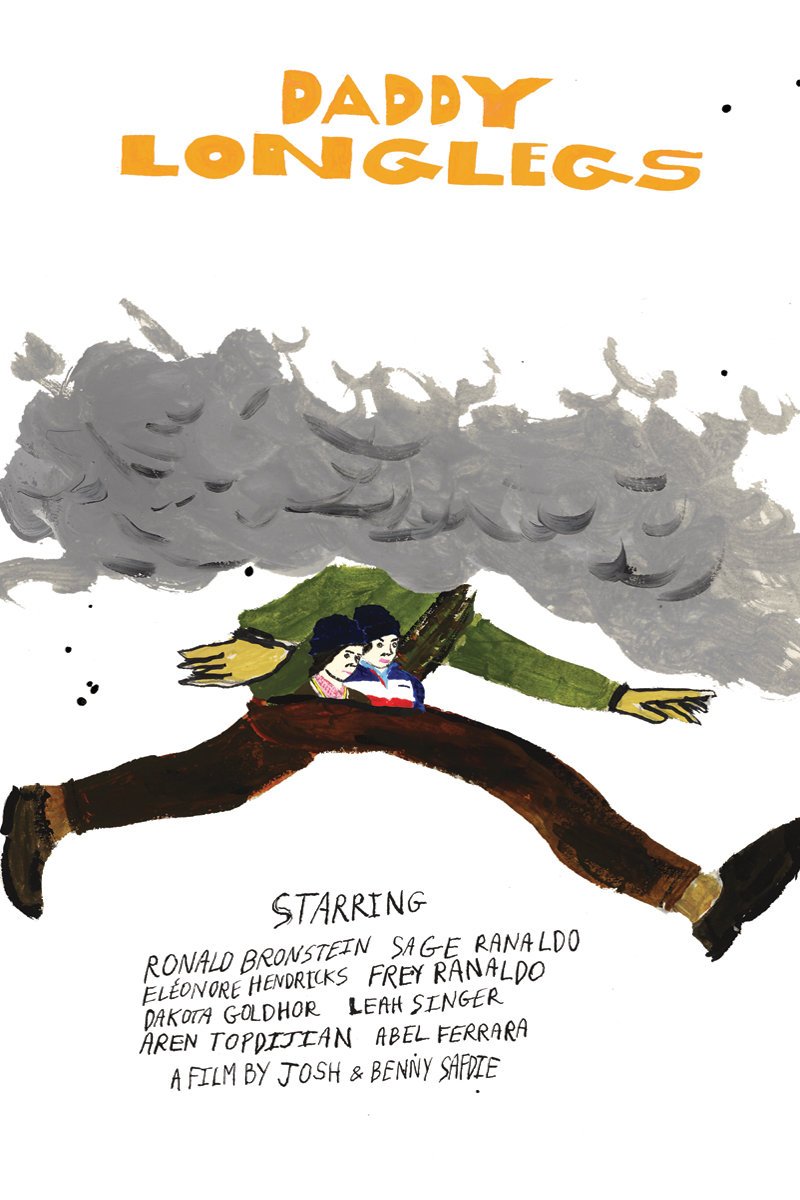
Long before they were the critically-acclaimed embodiment of the modern independent auteur, known for directing masterful works such as Good Time and Uncut Gems, Josh and Benny Safdie were obscure filmmakers that worked on shoestring budgets that could barely fund even a day’s work on a mainstream film, and who created films from the most paltry material, repurposing some of the most simple ideas into vivid, fascinating portraits of the human condition, something that has always stood out as one of their most compelling qualities, even after emerging as stalwarts of the next generation of visual storytellers. The work that first drew attention to them as viable auteurs was Daddy Longlegs (alternatively referred to as Go Get Some Rosemary in some instances), a tender and funny comedy that combines everything that makes the Safdie brothers such interesting figures in contemporary cinema – a simple premise that took on a range of ideas without being too heavy-handed, a straightforward approach to the filmmaking that compensates for its lack of funding with a cunning resourcefulness that covers the more meagre aspects of the production, and a general heartfulness that uses the bleak landscape of modern-day New York City as a backdrop for a harrowing but oddly poetic story of a single man’s metaphysical journey, addressing a number of challenging issues that persist in the lives of ordinary folk – and through a steadfast commitment to not only the story they’re weaving, but the entire cinematic lineage that inspired it, the Safdies brothers made a truly remarkable piece of independent filmmaking in Daddy Longlegs, which is both a masterful film on its own merits, and an incredible contribution to the world of truly independent cinema in general.
Unlike some of their later work, the directors are not working with recognizable actors (although the eagle-eyed cinephile will undoubtedly recognize provocateur Abel Ferrara in a small role as a sinister street vendor), nor a particularly straightforward storyline, which sharply contrasts with the work they’d come to be defined by (which were normally grounded in a single narrative), making Daddy Longlegs one of the more experimental works of independent filmmaking to emerge in the early part of the century. It’s not the most avant-garde approach, since it does follow the conventions of similarly-themed films with a relatively loose grip, keeping hold of it enough to remain consistent with what audiences are known to respond to, but having enough free-reign to justify its reputation as a rivetting work of contemporary comedy – although even reducing it to this seems wildly inappropriate, since there’s very little reason to see this as being able to fit into any known category. It does take a certain mentality to adapt to what the directors are conveying here – getting on their wavelength isn’t difficult, but it requires time and patience, and for those only beginning to venture into their small but compelling filmography, it might present something of a challenge, which is easily overcome with simply surrendering to the vision of a pair of artists intent on taking us on an unforgettable adventure into the trials and tribulations of a modern individual navigating a very peculiar version of the world. Their work is bewildering by design, and unconventional in every conceivable way – and while this would be disorienting for viewers not accustomed to their brand of intentional artistic chaos, once we find ourselves under their spell, there is simply no way to escape their gorgeously anarchic world.
Daddy Longlegs doesn’t have much to say on the surface, since it is essentially just the story of a middle-aged man trying to come to terms with being a divorced father who only gets custody of his children for two weeks a year – and through the process has to try and figure out how to reduce a year’s worth of parenting into only a few days, while realizing that he may not be the most effective father, based on his reckless tendencies and combative nature. Ronald Bronstein sells every aspect of the character, and truly brings Lenny to life in a way that feels authentic and lived-in, rather than the role being occupied by a recognizable actor who is playing against type. However, looking beneath the surface, we see there’s so much more simmering in Daddy Longlegs, a film built on its perpetual pursuit of something more than we would imagine finding in such a story, going about exploring a number of wildly different concepts relating to the central conceit, which could’ve been far too difficult to handle had it not been made by a directing duo that dabbles in inciting absolute chaos in manageable segments. Themes of fatherhood are central to the film, and what propels it beyond simply being an array of disjointed scenes through together for the sake of creating what appears to be a meandering tapestry of a man realizing all it entails to be a single parent. Working through its premise, which is mercifully far less complex than it should’ve been (considering how many similarly-themed films tend to employ a much more self-serious approach throughout the proceedings), the film finds a very distinct tone that benefits everything that surrounds it, making it quite an enthralling adventure in the form of a subdued, easygoing comedy with broad overtures of heartwrenching drama that continues unabated throughout.
It’s not uncommon to find films treading through the exact same narrative territory, but what separates Daddy Longlegs from everything else is its ability to hit emotional beats that are entirely unexpected for such a film. There’s an unexpected amount of depth to the film, which we may not be anticipating, considering the general premise and the direction the filmmakers are going, with the blend of cinéma vérité realism and vaguely-concealed absurdism making for a work of iconoclastic brilliance. This is mainly a film propelled by a sense of devil-may-care buoyancy – fragments of two weeks in the lives of its main character and his two children, as well as an array of peripheral characters, make for a thoroughly engaging portrait of a father trying desperately not to acquire the pejorative descriptor of “deadbeat”, which he flirts with consistently. Yet, there’s a sense of sadness that persists throughout it, a continuously melancholy approach to the material which provides it with more complexity than we’d imagine could come from such a straightforward story. The Safdie brothers do tend to infuse their films with a heartbreaking realism that often takes the unsuspecting viewer by surprise, and as perhaps their most personal work (by virtue of being inspired by their own experiences with a divorced father), there is a definite sensation that this is hitting close to home for the filmmakers, which can be felt by any viewer who can relate to the simple but moving story that forms the basis of this film, and from which the gifted directors are able to have an insightful discussion on some resonant themes.
Daddy Longlegs may be an acquired taste, especially considering it was made towards the end of the period in which mumblecore was at its peak, and this kind of bewildering independent comedy, which were based on rambling dialogue and disjointed narratives, were highly popular amongst audiences with an interest in alternative storytelling. However, it does ultimately manage to break through this barrier through the sheer willpower of a story well-told, created with honesty and sincerity, enough to justify this as an appropriate place for those intent on exploring this era of American filmmaking to start. The Safdie brothers are undeniably talented, and even at their most precocious, they have a depth that very few seasoned filmmakers could possibly have hoped to achieve by this point – and over a decade later, Daddy Longlegs is still a fresh and fascinating work that may provide insightful conversations on some very important themes, while not taking itself too seriously, constantly avoiding becoming an overwrought, unconvincing bundle of ideas without any payoff. The film may be somewhat polarizing, and its intentionally scattered narrative may alienate some viewers – but if we look just beyond the form, and understand the intentions, it’s possible to see just how singularly brilliant this work is, and how Daddy Longlegs is a revolutionary film all on its own terms.