
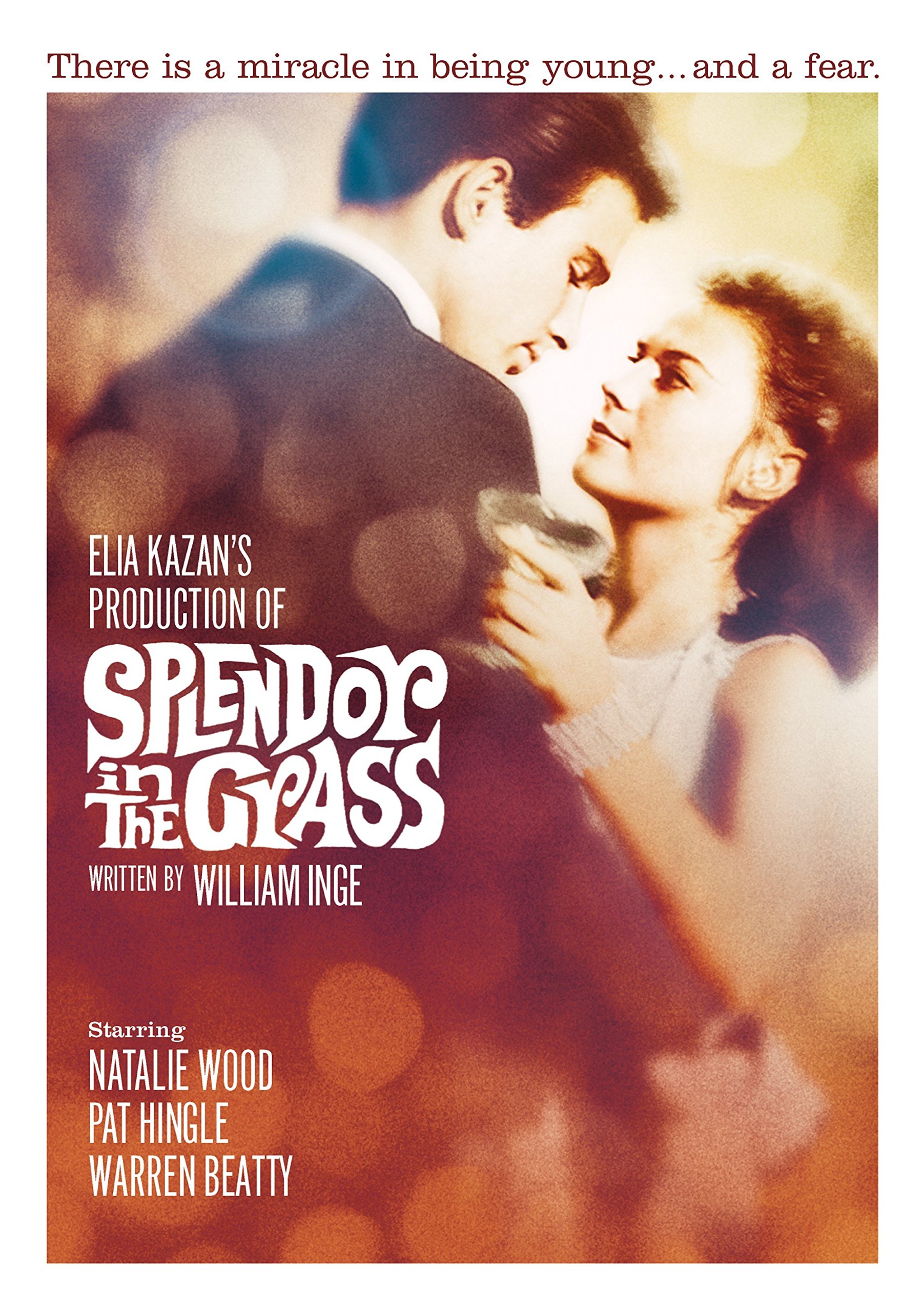
Times could not be better in Kansas, with so many people thriving as a result of the Roaring Twenties being at their peak in 1928. Two wayward teenagers, Bud Stamper (Warren Beatty) and Deanie Loomis (Natalie Wood) are so deeply in love, but are frequently told that their love isn’t all that valid. Bud is the son of a wealthy oil baron (Pat Healy), whose suggestion is to put Deanie aside for now and have his cravings satiated by someone who wouldn’t make for a suitable wife in the meantime, while Deanie’s parents (Audrey Christie and Fred Stewart) are vehemently against their daughter being with someone with such loose morals, constantly reminding her of the value of virginity, fearing that if they don’t keep her on the Christian path, she will soon be deflowered and tarnished from the purity they have always prided on having her raised to believe in. However, the two lovers soon prove that their relationship can survive just about anything – until it turns out that they’re put to the test by a series of incidents, such as Bud’s near-death from pneumonia, or Deanie’s gradual descent into hysteria. It doesn’t help that Great Depression was looming just around the corner, an event that would prove to ruin many residents of this idyllic Southern hamlet, including our two heroes, who find themselves struggling through various challenges as they try and prove their love, which is only made more difficult by the realization that perhaps they weren’t meant to be together in the first place. Young love is something to be cherished, but nothing can last forever, just like the splendor in the grass can only be a fond memory of summertime frolicking, not meant to last forever, a fact that they have to come to terms with before losing themselves (and each other) completely.
Looking at an Elia Kazan requires some degree of separating the art from the artist, since his actions and politics stood in stark contrast to his films, with the general consensus being that, as controversial as his activities were, he was a major talent that made some incredible films over the years. Splendor in the Grass is one of his more divisive projects, with some viewers finding it a masterful work of Americana, others seeing it as an overwrought, self-indulgent melodrama that doesn’t really carry much weight outside of some good ideas. I veer towards the latter, and while this is certainly not anything to scoff at (since it does manage to do some things exceptionally well), the fact remains that this is something of a lesser-achievement from a director who often hit impossibly heights when we was at his peak, but seemed to be settling for something far more subdued and simple than most of what he was used to making, even though some of his best-known work occupies the category of social realism. There’s a lack of a spark in Splendor in the Grass that made Kazan’s more popular films so much more effective, a kind of elegant grittiness that transcended the form and removed the membrane between the viewer and the work, leaving us to explore these worlds through compelling characters. This film, to its credit, does try to achieve them – but with William Inge’s script being solid but predictable, and Kazan not taking many risks in terms of his direction, Splendor in the Grass doesn’t work all that well, except for when we look at how it addresses certain issues, such as teenage promiscuity, addiction and abortion, which was somewhat ahead of its time, but not to the point where it compensates for the lacklustre direction it takes in many instances. Less of a failure, and more of a serviceable drama, Splendor in the Grass works as well as it could’ve but definitely had the potential to be so much more than it was.
What is almost undeniable is that Splendor in the Grass is a perfectly decent film, populated by some strong performances and a solid story that does succeed when taken as a whole – the problem comes when we look just below the surface. Considering the film as a complete piece, we’re not likely to spot the errors that pervade. However, going deeper into it, we start to see the cracks that occur between genuinely moving moments – whether it be in a piece of dialogue that just doesn’t strike quite right, or a choice made by the director that seems somewhat bewildering, there’s a certain blandness to the film that just doesn’t quite work all that well. This is a film that comes across as far too prosaic for its own good – despite being inspired by a truly beautiful piece of poetry (and which, to the film’s credit, is used remarkably well whenever it is employed in a scene), the film lacks the rhythm it genuinely believes it has – this is constructed as some great romance that sweeps the audience away, when in actuality it would’ve functioned far better as a smaller, more intimate character study. Kazan oddly seems to agree with this – there are moments where he seems to genuinely be shepherding Inge’s screenplay to more rational territory, downplaying the hysterics in favour of something a bit more grounded. This works in many moments (particularly those featuring the two leads), but also tends to be overwhelmed by this film’s constant insistence on saying something profound and moving in every scene. Each frame of Splendor in the Grass seems to be inundated with bleeding-hurt social commentary, which would’ve been fine if the story required it – but it just loses itself in the melodrama far too often, and while there are undeniably some moments of genuine magnificence, they tend to be overtaken by the more pedestrian aspects of the film.
When it comes to analysing why Splendor in the Grass didn’t work too well, it’s quite difficult to know who to pin the blame on, especially since no one is actively doing anything terrible, but rather not meeting the criteria needed to elevate the material. Inge would logically be the first point of contention, since his screenplay was bursting with unnecessary melodrama, with dialogue that sounded forced far too often, and characterisation that never reaches any discernible point of plausibility. Inge was not a slouch by any means – his productions on stage were explosive and iconic, such as the star-making turn for Shirley Booth in Come Back, Little Sheba, or the beloved Picnic, both of which have gone on to become canonical pieces of American literature when translated to the screen. An original piece, rather than an adaptation of one of his stage productions, Splendor in the Grass clearly didn’t have the benefit of being workshopped on stage, where it could mellow and develop in a space that naturally encourages provocative and insightful works of drama like this. Ultimately, this is less of a case of blaming someone for the failure than it is lamenting all the ways in which the film could’ve been substantially improved – Kazan’s direction is solid but doesn’t feel like he’s conveying any sense of passion. The compositions are gorgeous, but the director just doesn’t seem to have his heart in it – ultimately we can’t have expected a grizzled industry veteran from being able to relate entirely to the story he was making, but his distinct lack of intrepidity throughout this film points to the fact that this film leaves a lot to be desired, both in terms of the story and how the director interpreted it.
At the very least, Splendor in the Grass is anchored by a dynamic performance from Natalie Wood. The film came in arguably one of her breakout years, with this and West Side Story being very different projects that employ Wood to play these heroines who are committed to doomed romances. It’s not difficult to see why Wood was such an enigmatic star at her peak – she has such a unique approach to her characterizations, keeping everything simultaneously grounded and ethereal. The role of Deanie is challenging, and required Wood to plumb some intimidating emotional depths – she had to show restraint in many scenes (such as the haunting final moments of the film, inarguably the most effective parts of the entire piece) but also portray the deep-seated insecurity that a character like Deanie would feel. Splendor in the Grass is undeniably Wood’s film, but she’s contrasted well by her main co-star. The sight of the words “introducing Warren Beatty” in the opening credits was quite a disorienting experience, especially since Beatty is an actor who essentially defines Hollywood in this era – and in his debut film performance, he’s very good. He may not be given the same material as Wood, but he does very well with what he’s tasked with doing. Wood and Beatty have terrific chemistry, and whether in the earlier moments of bold romance, or the final sequence where they finally bid farewell to one another, they’re tremendous. Pat Hingle is excellent as Beatty’s father, and with the exception of his final climactic scene, is delivering one of the best performances in the film as an oil baron desperately holding onto his humble roots. Barbara Loden, Sandy Dennis and a host of other young actors are trotted out for smaller performances of varying length and quality, all contributing to the general tapestry of humanity that this film purports itself to being.
There is some merit in Splendor in the Grass, which is ultimately a film that isn’t actively bad in any real way, and achieves certain things that a lesser-work might’ve struggled to produce. It’s an adequate achievement defined by a solid script that does exactly what it was supposed to, and not much more. It’s not a massively successful work in this regard, as it may be very watchable and has moments of genuine emotion, but ultimately doesn’t go anywhere we haven’t seen better films go before. The cast is varied but mostly very good, with Wood and Beatty giving two really tremendous performances (to the point where the problems with some of the supporting cast can be forgiven for their sake) and embodying the spirit of the characters they’re playing with a lot of effort and enthusiasm. Unfortunately, the same can’t really be said for Kazan’s direction, as his approach is one that may have brief flashes of genius, but is rather just a very plain attempt at melodrama that doesn’t do too much on behalf of the more insightful aspects of the story, which are glossed over in favour of more convenient ideas. Splendor in the Grass is a film that achieves a decent amount but really didn’t aspire to much more than that. It’s a fine romance that has its charms, but ultimately falls a bit short, and despite not being the disaster it could’ve been, it just doesn’t feel all that impactful, and leaves the viewer moved but unconvinced, with the memories of the film not lingering nearly as long as more effective romantic films have been capable of in the past.
 The Postmodern Pelican
Splendor in the Grass is a movie of its time. The sexual revolution has dramatically changed how we feel about women. This, which was so startling in 1961, is not now. The physical beauty of Wood and Beatty though remains startling. A matinee watching these two ravishing people who happen to be exemplary actors make this a movie to savor