
There came a moment in the 1990s when several young and burgeoning filmmakers believed that they were on the precipice of making the next teen classic. John Hughes had inspired many artists with his masterful and precise glimpses into the teenage experience, focusing on the angst and joys of being young – but it was Richard Linklater who kickstarted a new generation of such stories with his one-two punch of Slacker and Dazed and Confused, the latter being amongst the most influential films ever made, purely on the virtue of influencing so many later works, as well as occurring concurrently to the rise in modern independent cinema. So many directors latched onto the craze surrounding this film, and as a result we saw countless similar stories told. Empire Records is one of the most blatant in terms of trying to capture a specific generation and their various struggles. It goes without saying that it does pale in comparison (especially since it was released the same year as Clueless, which successful scratched the itch that many filmmakers had to follow this legacy), but it is still certainly a film with a lot of value, especially in how director Allan Moyle and writer Carol Heikkinen effectively capture a brief snapshot of the slacker generation and their various trials and tribulations. It’s a terrific film, filled with charm and very entertaining performances, and offers the exact kind of diversion that many of us are seeking out when it comes to these charming but relatively one-dimensional comedies that don’t offer much, but do very well with the material they’re given.
The best way to describe Empire Records would be a series of youth-fueled existential crises set to a fantastic soundtrack – and any viewer considering watching the film needs to realize that this is pretty much all that can be expected from it. It’s one of those proverbial “hangout” films, where we are introduced to a motley crew of eccentric individuals who spend their days in each other’s company, sharing their love (or in some instances disdain) for some particular subject or niche interest. Much like Dazed and Confused, this film takes place over the course of a single day (although this structure doesn’t work quite as well when we notice how it compacts far too much material into this single time frame than seems plausible – entire relationships are built and destroyed and rebuilt again in the space of a few hours, which may seem logical in the world of the movies, but really doesn’t work outside of it), which just so happens to be “Rex Manning Day”, which has been appropriated by fans of the film as a faux day of celebration in real life, with this being perhaps the most significant cache this film holds in the culture. There really isn’t much to the film – there’s a framing device, in this case the threat of this cherished independent record store suddenly becoming part of a chain (adding levels of consumerist discourse, which was prominent at the time), but it is really just a couple of interweaving stories about intergenerational relationships and finding one’s identity in those awkward years between adolescence and adulthood, which is the time when most of us tend to find ourselves grappling with issues that seem enormous at the time, but are inevitable for our development. In this regard, there is a lot of value to Empire Records, especially when it comes to paying tribute to a generation that often siphoned their issues into their musical tastes, which are as varied and diverse as their individual identities, which is beautifully explored throughout the film.
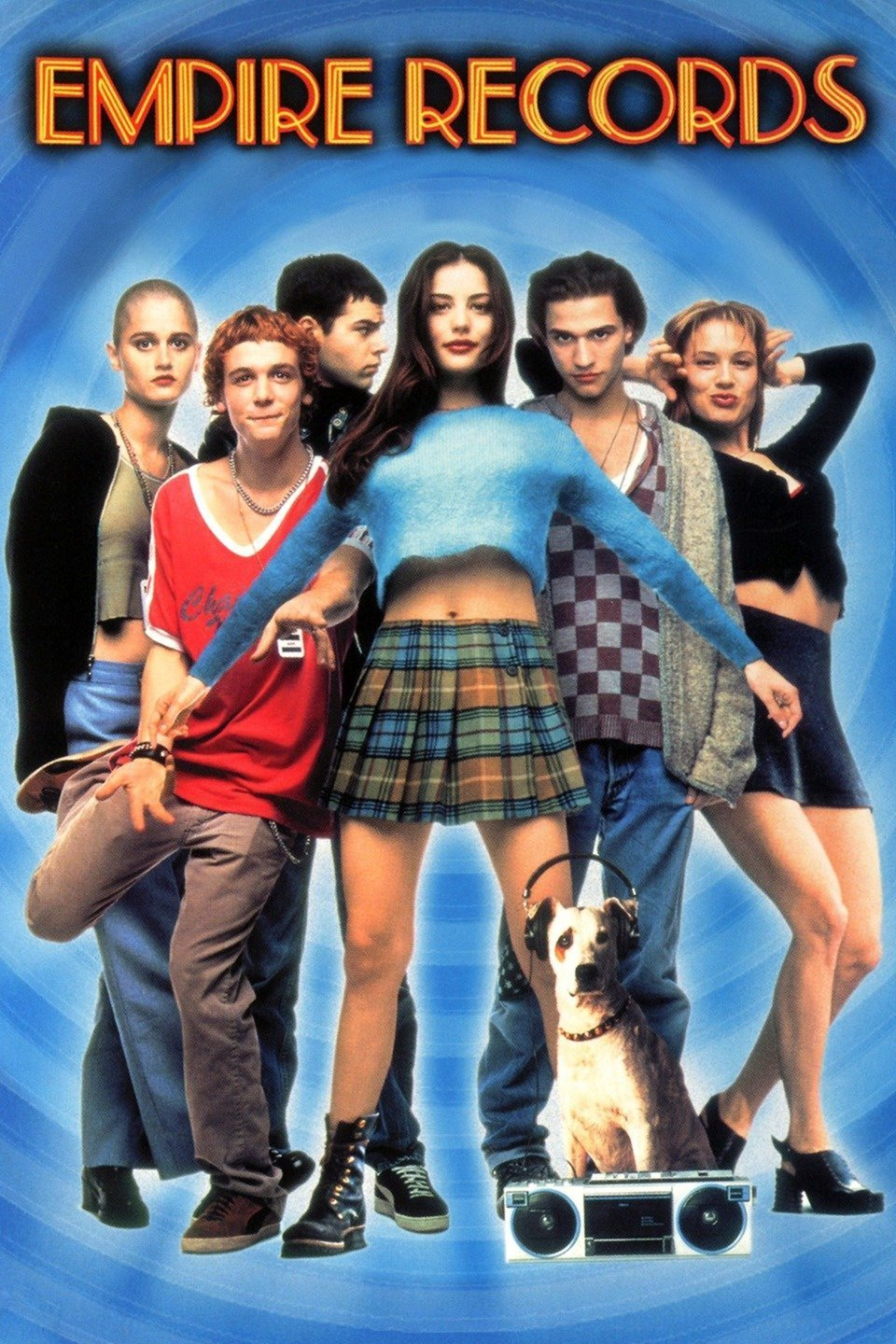
The narrative of Empire Records places a lot of emphasis on the younger characters, so it was integral that the roles were occupied by talented actors. The cast is slightly mixed, but it is inclined towards being very good, especially in how it featured early performances from some really gifted actors that would go on to become major stars, although not necessarily as a result of this film, which is slightly too weak to be considered a breakout for any of them. Rory Cochrane and Johnny Whitworth are decent as the male leads, playing polar opposites that somehow have incredible chemistry, while better-known actors like Renée Zellweger and Liv Tyler (undeniably the most notable stars) show that they had talent very early on in their careers, being the best parts of the film, and the most natural performers by a long stretch. The only actively bad performance in the cast comes from Ethan Embry (who was credited under his real name of Ethan Randall), who seems far too uncomfortable on screen, defaulting to a bizarre kind of comedy that feels out of place in a film that is very funny, but grounded in reality. However, at the heart of the film is a very soulful performance from Anthony LaPaglia, who is the veteran of this cast, playing the long-suffering store manager that struggles to control these younger characters, while simultaneously being their protector and guardian, someone to help them navigate the treacherous territory known as early adulthood, which is where many of these people tend to find the most significant challenges.
Unfortunately, Empire Records does have some notable flaws, especially in how it feels like it is a few steps behind greatness. What made Hughes and Linklater’s films so effective was how they feel genuinely plucked from the minds of people that had experience with those generations, either actively working with younger communities, or actually being part of it themselves. Moyle was a director of divisive, medium-quality fare that barely made much of an impact, but did offer a sufficient amount of entertainment. There was very little connection between the director and the material, with a lot of the burden being on screenwriter Heikkinen, who had a marginal success with The Thing Called Love a few years earlier, as this was clearly a subject much closer to her heart (she herself worked at a record store in her younger years) – but without the necessary tools that come with directing your own script, it was unsurprising the results were slightly disappointing. This is a classic example of a strong premise but weak execution – the writing is impeccable and has a lot of value, Moyle just struggles to realize it in a way that is effective and interesting, instead choosing to aim for the low-hanging fruit, which is not necessarily the smartest decision when dealing with something that has genuine promise. A slightly stronger director would have allowed the film to soar to incredible heights, but instead we receive a film that is decent and entertaining, but not particularly strong in the areas that matter the most.
Empire Records is a good film with a lot of heart and a great premise, it just lacks the spark it needed to be elevated to the levels of some of the films that clearly inspired it. It’s difficult to look at this film and not see a cheap knockoff of some much better works – and unfortunately, we soon learn that a mildly amusing story with many recognizable needle drops does not result in a particularly great film. However, there are just as many merits as there are shortcomings, with the distinctive tone being reminiscent of any great comedies from the era, and the use of music is not merely supplementary, but has genuine meaning, which makes for a suitably thrilling aural landscape that at least gives the film some degree of artistic merit, since it is a carefully curated playlist that feels selective rather than just a jumble of classic hits designed to stir nostalgia. It’s a decent film with a lot of heart, and it looks at the sometimes challenging years of early adulthood with a good amount of consistency, we can easily overlook the more jagged edges of the narrative, which are far from perfect, but at least seem to have some broad picture of what life would be like for this generation as they searched for some meaning in a seemingly hostile world. Funny and filled with a lot of good-natured enthusiasm about its subject matter, Empire Records is a suitably entertaining film that provides exactly what it promises, nothing more and nothing less.
 The Postmodern Pelican