
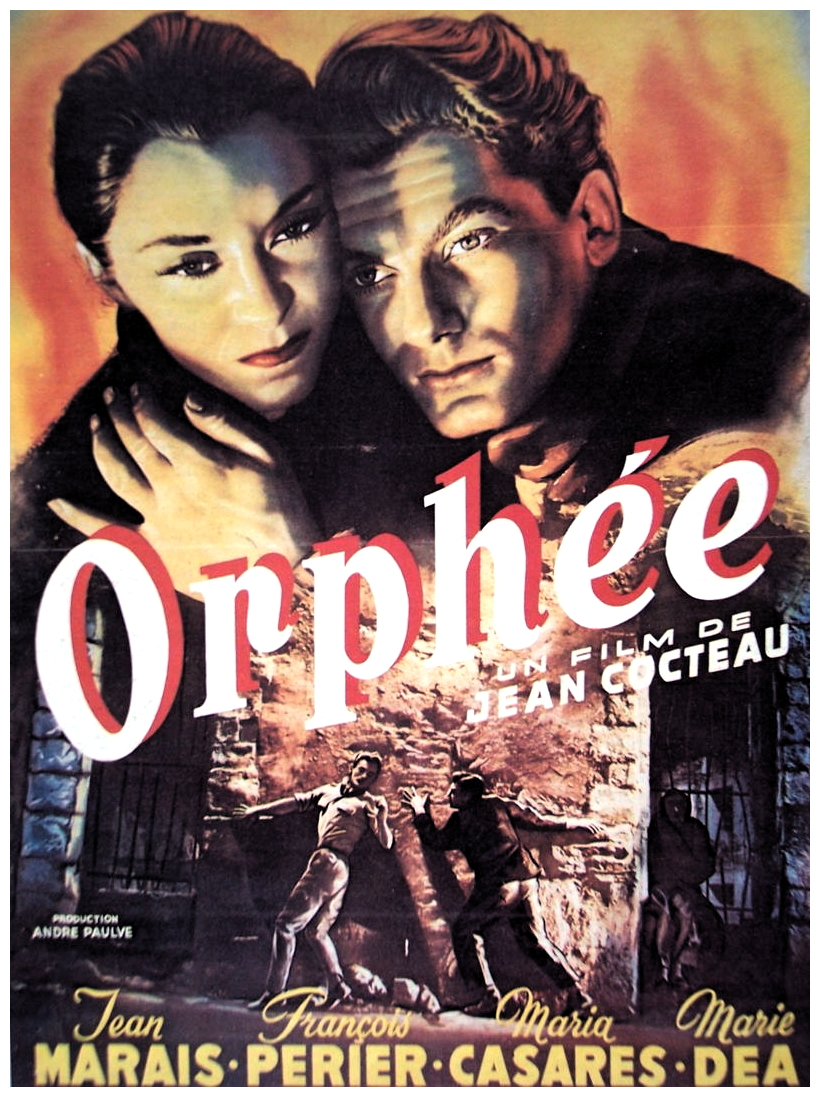
Despite having been composed thousands of years ago, Greek mythology still carries an oddly significant amount of cultural cache, often being perceived as the basis for many later artistic works that took inspiration from these tales of mystery and intrigue, which continue to mystify and entertain us, many years later. The primary reason is likely that they carry a lot of significance, and were pivotal to our understanding of existence – after all, the Ancient Greeks were the pioneers of philosophy and existentialism, so it’s likely that their stories have evolved concurrently to our understanding of the world around us. One of my personal favourite myths is that of Orpheus, and his journey into the Underworld to save his beloved Eurydice from the clutches of Hades and his army of the dead. It’s a simple but effective story, and as a result has been appropriated in a number of ways, whether through direct retellings, or the many fascinating adaptations that take the bare-boned structure of the story, and apply it to different temporal and geographical milieux, since it is easily adaptable and covers malleable themes that apply to any general context. Jean Cocteau, one of the most interesting and profoundly gifted directors of his generation, made his own version of the myth in the form of Orpheus (French: ), the second in a loose series of films known as his Orphic Trilogy, each one drawing inspiration from the famous myth. Taking place in France around the time of the film’s production, Cocteau’s film updates the myth, bringing it to a more contemporary space, and thus dealing with a range of more modern issues that were relevant at the time, and remain oddly potent, even by today’s standards. Cocteau was an exceptionally gifted artist, and like many of his greatest works, he takes a cherished piece of historical literature, and adapts it in a way that presents the primary themes through his own distinct authorial voice, which is always incredibly captivating.
For many viewers, this is the most succinct and memorable of the three (the others including The Blood of a Poet and Testament of Orpheus, each one being made in different decades and representing a different set of sensibilities in the director’s artistic arsenal), as well as being the only one that directly references the original Greek myth and centres itself around the story, rather than making use of vague allusions. It isn’t difficult to see why Orpheus is such a resounding success that has been celebrated as one of the most striking films of the era – it’s a beautifully made, effortlessly simple and incredibly evocative tale of resilience and betrayal, set to the backdrop of the most stunning locations, each one handpicked by Cocteau in his efforts to create something unforgettable. The collision between style and substance keeps us so incredibly engaged and enthralled, consistently pushing towards some deeper conversation around the themes integral to the original myth. Not many of us truly enjoy these stories because of their historical contexts, but rather are drawn to them based on the underlying message, and how it is applicable to our own lives, and other contemporary issues. This is what the director is provoking with this film, which seems to consistently be on the precipice of saying something remarkable, but requires our own genuine observations as viewers in order to unlock the multitude of secrets that lurk below the surface of this film, which is carefully crafted by someone whose interest in the material works alongside his neverending artistic curiosities in the creation of a film that is equal parts poetic, prophetic and utterly provocative.
There have been so many wonderful attempts to adapt this story, some of which are personal favourites (among them Marcel Camus’ Black Orpheus and Nikos Nikolaidis’ Euridice BA 2037), but this is one of the few that seems to directly be addressing the issues of adaptation. In the prologue, we hear from the director himself, who provides a brief overview of the original Greek myth, likely to give viewers without much knowledge of the story the chance to understand the context, as well as a firm indication that we are being invited to assert our own interpretation onto his story. Cocteau’s work has always been of interest due to the fact that he was never a filmmaker who believed his vision to be definitive of any story. He was heavily involved in experimental and underground cinema (before such terms were even widely used), and always seemed to be interested in pushing boundaries that didn’t necessarily even exist then as they do now, proving how ahead of his time Cocteau was. Throughout the duration of Orpheus, we are constantly reminded that we are not passively just viewing this story – the director has already instructed us to pay attention and use our own understanding to navigate the world he is presenting to us. Throughout the film, there are a number of gentle reminders that this is an active process, and while it may become somewhat difficult for those who are not entirely acclimated to this style of filmmaking, it is still an immersive experience that gives us unique insights not only into the director’s process of adapting an archaic myth, but also his methods of telling a story that is deeply riveting and artistically profound, which isn’t something that normally results in much credit, despite the fact that Orpheus is one of the greatest works of metafictional filmmaking ever produced, which only becomes clear once we surrender to Cocteau’s vision.
Following this film and finding a coherent train of thought isn’t only difficult, it’s outright impossible. Orpheus isn’t the kind of film that exists to confuse, but it equally doesn’t want to offer answers too easily. In fact, one can even debate as to whether or not there are any solutions to the problems proposed by the director in the first place. It’s a daring move to create a film that quite possibly doesn’t have much basis beyond the surface – but this is where the real impact of the film is made, since we use our own understanding of both the source material, and external factors such as experiences with psychological issues and existentialism to form our own interpretation of what is already quite a malleable story. Cocteau himself has debated the various meanings produced by viewers (while never outright rejecting them – after all, he was a proponent of the belief that once the artist has unleashed their work into the ether, it’s no longer solely their property in terms of underlying meaning and interpretation), which have run the gamut to provide every possible explanation. Oddly enough, Orpheus is a film that actually works better when it is the subject of dialogue, as opposed to it being viewed in isolation – the most enriching interpretations come through in conversations, since each viewer is likely going to take something new out of this film. Personally, this film appeared to be Cocteau’s way of negotiating the boundary between life and death, an ambigious space that is populated by uncertainty and despair, and no one can truly know what lies beyond this mortal coil. However, in the same way that this is my interpretation, there are dozens of other radically different meanings others have asserted onto it, with each individual viewer bringing something new to the proceedings, and thus creating a tapestry of interpretations that strengthen the film and its fundamental themes, which are vague enough for us to convincingly assert any theory onto the very simple narrative.
Orpheus is the rare kind of film that forces us to realize that the more we try and understand something, the less we actually know, which is the kind of wonderful contradiction that would please Cocteau, an artist whose work always reflected a kind of hostility towards meta-narratives and conventions, which are consistently dismissed in his films, even those that are undeniably quite simple on a surface-level glance. His version of Greek mythology is exactly what we’d expect – a film that seems straightforward at a cursory glance (it even has an introduction that summarizes the entire plot), but which conceals many strange surprises, all of which continue to be quite provocative as the film unfolds and we see the direction in which the director is willing to go for the sake of answering some very deep questions. Its a very peculiar film, one that has a lot to say about some broad issues, but in a way that isn’t overwrought or overly convoluted, an incredible achievement considering many works inspired by literature from the antiquity seem to think the age of the text is an invitation to excess. Cocteau is a masterful storyteller and an incredible visual stylist, and these components work exceptionally well in the creation of this stunning, intricately-woven existential odyssey that constantly pushes through the more bleak material to deliver a spirited, often quite funny, glimpse into the human psyche, all facilitated through an actively provocative series of discussions centred around an ancient text that has been beautifully repurposed into this bizarre but compelling experimental drama that perpetually pushes an agenda that places emphasis on the importance of the viewer’s interpretation. This all converges in a film that never quite offers any concise answers to its questions, but gradually manages to say more through ambiguity than many other films that tread similar territory.
 The Postmodern Pelican