
For the uninitiated or those that don’t quite know what to expect from it, Patrick (Flemish: De Patrick) could easily be mistaken for a sobering drama about very serious issues, which could not be further from what Tim Mielants’ gorgeously striking dark comedy actually is. A film that is profoundly European in its sensibilities, whether it be the deadpan sense of humour, almost libertine approach to the image of the human body, or the deeply melancholic sensation of despair that lingers through every scene – they simply do not make these kinds of off-the-wall existentialists dark comedies all that often, when makes Patrick such a remarkable achievement. Written and directed by Mielants (putting together the script in conjunction with Benjamin Sprengers), with a talented cast of Flemish-speaking actors that take on roles that many of their peers would be far too reluctant to embrace, the people behind the creation of this film demonstrate a keen bravery in telling a story that is far more than just the sum of its parts, instead becoming an oddly moving story of a young man searching for himself in the midst of an earth-shattering tragedy, which ultimately forces him to reconsider his place in the world, which he learns is far more volatile than anyone could ever have told him. Beautifully intimate and often hilariously irreverent, Patrick is a tremendously enjoyable film with a lot of heart, and an even more distinct soulfulness that propels this otherwise conventional story forward.
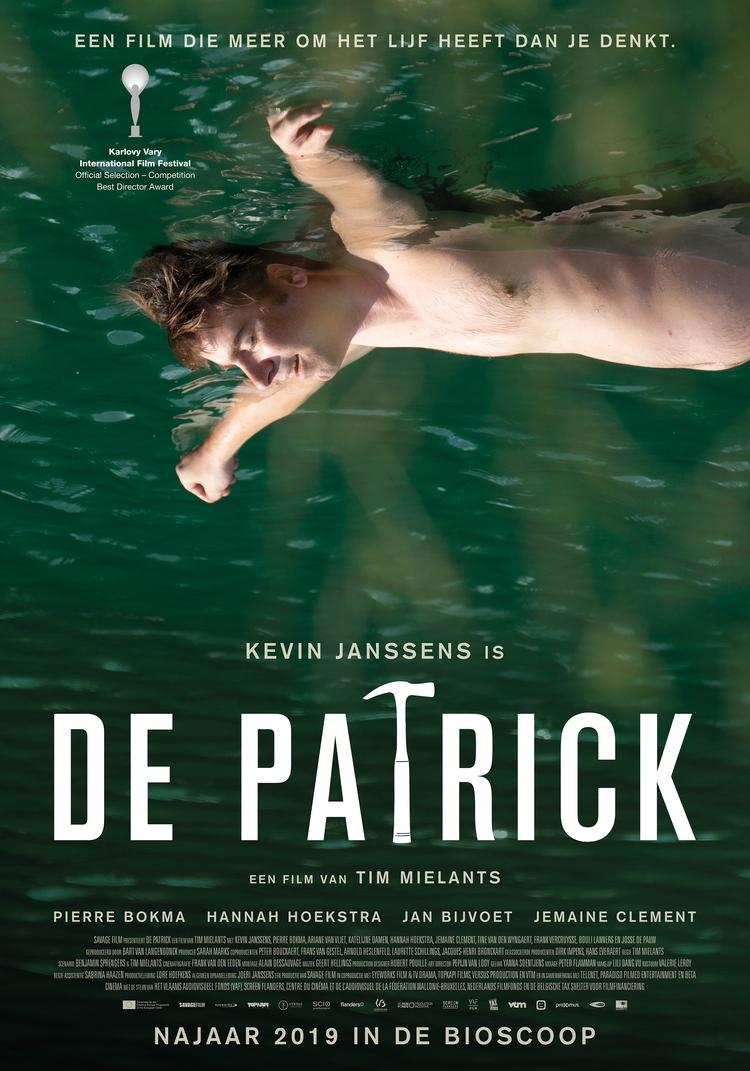
Perhaps the first quality we learn about Patrick is that it is set entirely within a nudist colony, somewhere in a remote corner of Belgium, which is owned by the titular character and his family. The reasons for setting it here are not ever made particularly clear, and it is left to the viewer’s own interpretation to determine the significance. Whether it be to transpose a relatively common concept of the character-driven comedy into a setting that is far removed from nearly anything we find in contemporary cinema, or merely as a way of demonstrating the freedom enjoyed by a small but passionate portion of the population, the film showcases an alternative way of living one’s life, which accumulates in a very captivating story of individuality. Serious films about naturism are difficult to find, so it is not surprising that the director would use this as an entry-point, capitalizing on a niche market that may not be the most widely-embraced theme, but is at least something that this film can boast about having over many similar works, which is both a clever marketing tactic, and a quality that sets it apart from other films that tread through the same narrative territory. Regardless of where we fall on the effectiveness of this concept as one of the primary themes of the film, it’s difficult to not have one’s curiosity piqued, especially since Patrick is a distinctly respectful and decent film, never viewing the human body as anything other than a bespoke vessel – all sense of overt sexuality is removed, and instead replaced with a very spirited and unique look into this recreational activity, as filtered through the eyes of a protagonist immersed in this particular world.
Do not let the fact that Patrick takes place in a nudist colony distract you from the actual message behind the film – this is a story about grief, as told through the eyes of a man who has reached what appears to be middle age, an awkward stage of his life that is made only more uncomfortable by the fact that he has seemingly waited far too long to actually start it, receding into a position of merely being the reliable but unremarkable handyman who is a constant and pleasant presence in the lives of the patrons of the resort that his family owns, and little more than that. When he suffers an unexpected loss, he finds himself shaken to his core, which manifests in the search for his lost hammer, the supposed theft of which he perceives to be a personal affront to his dignity, rather than just a minor inconvenience. The film gradually takes its time to uncover many unimpeachable truths about the characters and the role they play in the overall story – the cast consists of lovable eccentrics to unnervingly maniacal villains (and Jemaine Clement, for whatever reason – he is merely supplementary to the film, but a very welcome one at that), and the development of each one of these individuals as more than just archetypes is one of the primary reasons behind the astonishing success of a film that seems so much more complex as it progresses than it did at first. A film that can promise to be a bizarre series of moments, but actually proves itself to be quite an effective narrative of self-discovery and reflection is automatically going to be worth every moment of our time – and the director is constantly toiling to keep this story afloat, which becomes increasingly more vital as the film moves along and begins to understand both its characters and the audience, many of whom may be able to relate to some of these characters, whether on a personal or existential level.
Patrick certainly does pack a great deal of material into only 90 minutes, and as a result, it can feel somewhat rushed at various points. Mielants justifies this through the steadily shifting tone – much of his film plays like something of a psychological thriller, with very clear and distinct overtures of pitch-black comedy, which work together to form this tremendously entertaining story of a man searching for himself through the search for a hammer. Mielants scours the very promising story to find every possible emotional detail that could become part of the existential journey of the main character, and he makes sure to infuse this sense of emotional complexity into a story that some may consider convoluted if we are not entirely sure of its direction, since we know we are in excellent hands, both in terms of the actors bringing these characters to the screen (Kevin Janssens, who is nearly unrecognizable in the part, is exceptional as the titular protagonist, while Pierre Bokma and Bouli Lanners play two close friends of Patrick, who prove to be on completely different sides of the political debate), and the specific story being told be their presence. The film has a bizarre fascination with the conversation around masculinity, and how it intersects with the feeling of loneliness that comes inevitably in moments immediately following an enormous loss. It manifests in a very strange film, albeit one that clearly knows the direction in which it is willing to head, which is all part of the excitement that comes in watching a polarizing dark comedy that has its general ideas neatly assembled, with the more chaotic qualities occurring organically, which is ideal for such an off-the-wall premise.
There are so many fascinating themes swirling throughout Patrick, that the viewer almost feels like we’ve been done an enormous disservice when every idea can’t be resolved in a way that seems constructive and actively engaging – there are many ideas that briefly manifest (fooling us into believing that they are vital to the story), only to see them move away, making space for the more unavoidable themes that Mielants and his cast are passionate about bringing to life. The tone moves between overtly hilarious and outwardly bleak without even a moment’s notice, and we soon find ourselves easing into this charming comedy, looking at the world through the eyes of a character who may be very specific in his lifestyle and worldview, but has a sense of authenticity that many of us can undeniably relate to. Patrick is a charming little film – the actors bare themselves (both physically and emotionally), and prove that there is always merit in pushing a few boundaries from time to time, granted that there is a genuine sense of compassion lingering beneath the more absurd stories. Hilarious but filled with the kind of pathos needed to make a story like this believable, Patrick is a peculiar but well-assembled film that may give the audience more than we bargained for, but it never feels ill-conceived or meaningless, at least not when it comes to the areas that matter the most, which are coincidentally the parts of the film where it seems the boldest statements are being made, leading to a tremendously moving character-driven comedy that feels free-spirited and cathartic, which is wholly compatible with many of the most prominent themes that exist at the foundation of the film.
 The Postmodern Pelican