
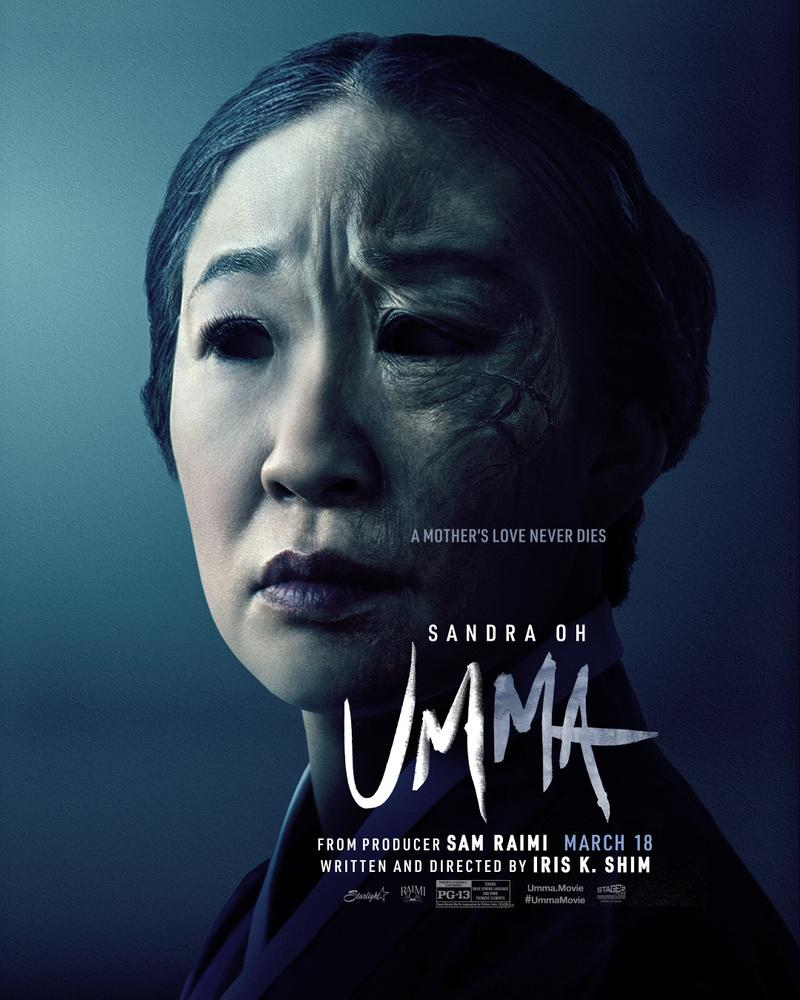
Representation is an issue that has taken over every sphere of the global culture, and has naturally trickled down into discussions on artistic voices, a long-overdue process that has seen some diverse voices being given a platform on which they can tell their stories. One of the most significant results of this process is the fact that not only are these voices being heard in the first place, but that they’re taking several different forms. Diversity doesn’t solely mean gritty realist dramas and irreverent comedies are the primary sources of exploring different cultural backgrounds, but rather that a wider range of genres are benefitting from this much-needed sense of inclusion. Horror has always been one that has been notoriously receptive to more distinct voices, especially since it is a genre that continuously searches for new ways to reinvent itself, undergoing change more frequently than the vast majority of others, since the material that frightens audiences shifts throughout the generations. This has resulted in a film like Umma being produced, which is a considerable step forward for more socially-aware horror. Written and directed by Iris K. Shim in her feature filmmaking debut, the film tells the story of a mother and daughter living on a remote plot of land, far from prying eyes and all technology, who suddenly discover that they are being haunted by a spirit of someone from their past. Inventive and ambitious in a way that may be slightly more tenuous for those who can’t get on board with the film’s very peculiar sensibility, Umma is a film that is bound to stir some fascinating discussion, and serves as an audacious debut for a young director whose career we should all pay attention to with great interest, since she shows the signs of a very promising artist who has something to say, which is another tremendous benefit of encouraging more inclusion in contemporary cinema.
In recent years, there has been a movement towards horror films that tend to intentionally hit quite close to him, in a very literal sense. It’s not uncommon to find stories in these films that revolve around some kind of familial trauma, whether it be a certain event that cauterized the characters, or the unbearable weight of tradition, which tends to become a burden to the point of lingering like a spectre over the members of the family, who struggle to get rid of the legacy that follows them around. Umma is not the first film to make use of this idea, but joins a small but fascinating canon of films that blend family drama and supernatural horror to create something quite memorable. Horror films that take place within domestic settings tend to carry a more tense aura, since it feels as if they’re encroaching on an individual’s place of comfort, which can be a very effective way to evoke truly resonant terror, as we all fear the safety of our homes being compromised by some external antagonist – so centring the film on a story about someone from within the family being responsible for the terror is an excellent entry-point into this world. It can be quite uncomfortable, and it does carry the sensation of being a debut feature (but not in a way that feels unconvincing, but rather that it is quite rough around the edges, which is excusable when there is a promising narrative at play), but we find ourselves becoming increasingly more submerged into this environment, which Shim carefully guides us through, setting us at ease, even during the moments of unhinged terror. The film may have its flaws, but its steadfast control of tone helps it become incredibly effective and suitably disquieting, which allows us to temper our expectations in a way that is at least extraordinarily constructive and actively engaging.
Despite having been a fixture of both film and television for nearly three decades, Sandra Oh continues to be deeply underpraised, someone who is often taken for granted, despite her impeccable work ethic and monumental talent. She’s had many terrific roles throughout her career, but few of them manage to tap into her internal complexity, and those that do often struggle to maintain it over the course of the project (which is primarily due to her best work being on television, where her commitment to multiple seasons of sub-par shows demonstrates her ability to elevate mediocre material in many cases). Umma is not the film that will suddenly make audiences sit up and pay attention to her – if anything, this just serves as a reminder that she is a very gifted performer, capable of doing nearly anything. It proves that she can lead a film with as much grit and passion as any of her contemporaries, since even at its most off-the-wall, Umma benefits from Oh’s steadfast commitment to finding the nuance in a character that desperately needed it. Considering she was pivotal in getting the film made in the first place, one can argue that she was giving herself a vehicle to show that she is capable of far more than just the kinds of roles that she has been playing for quite a while – and there is a degree to truth in this, but rather than being a vanity project, it aligns more with the principle that many individuals from groups unrepresented in cinema often have to create the roles for themselves, since a lot of the time these stories aren’t being told by the mainstream, so it is necessary to do it on their own. The result is a very good performance from an actress we have always known is gifted, and who may not surprise us by doing anything we haven’t seen before, but rather showing that even in a very abstract horror film, she remains an incredible screen presence.
Umma is not the most frightening film, and a lot of the horror can be quite ineffectual if we look at it from a more objective perspective. However, this was clearly not the aim of the film, which was designed more as a heartfelt story of a mother and daughter bonding – just in this case, it takes the form of a more harsh and unsettling narrative. Ultimately, Umma is a film about trauma, and horror has often been used as a discursive tool to explore this theme – and rather than being excessive (which was certainly an option, as we’ve seen in other similarly-themed films), the director employs a more subdued method of using fear tactics, showing restraint when it was most needed – the alternative would be wall-to-wall terror, which may have been a good option if we’re looking at it from the perspective of a horror film on its own, but which might have destroyed the goodwill the film amasses through the more subtle approach. It is a film driven primarily by its atmosphere, and Shim evokes such a tangible sensation of the unknown, we can’t help but feel every emotion that pulsates through these characters as they attempt to fend off the interminable terror wrought by their ancestor, who has returned to exact vengeance on her ungrateful progeny, who she views as disrespectful to the draconian culture she saw as sacrosanct. We don’t need to spend too much time with Umma to realize that this is a film about navigating the often disorienting world of culture, especially when one is more focused on fitting into the modern world, rather than adhering to archaic traditions that many believe have very little place in contemporary society – and through constantly pulling apart the layers that underpin this premise, the director is able to make a very strong critique on the subject, using horror as a loose guide, rather than the driving force behind the film.
It seems almost appropriate that Umma is a divisive film – the subject matter alone serves as a potent reminder that not all horror is supposed to be accessible, and that some of the best are those that intentionally polarize audiences. However, the negative reactions have been severely overblown – primarily, we have instances where viewers expect some revelatory, all-encompassing cultural commentary, rather than a simple horror film with slightly more complex subject matter. This is a problem in that it creates a scenario where we suddenly expect the film to be filled to the brim with interesting, inventive ideas, which is unfortunately out of its wheelhouse. There’s a bizarre tendency to expect any horror film produced from a viewpoint outside of the mainstream to suddenly be subversive to the point of almost deconstructing the entire genre, which places an unnecessary burden on a film that simply wanted to tell an intimate story of familial trauma through the lens of supernatural horror. Once we can detach the expectation that the film needs to entirely reinvent the genre or overhaul it to the point that it becomes experimental, the sooner we can find ourselves captivated by this vivid and fascinating character study that draws on decades of traditions to tell a compelling story that is both insightful and quite unsettling – and anchored by yet another solid performance from one of our most gifted actresses, and told with a firm commitment to every detail, Umma is a terrific exercise in horror, one that has many interesting ideas, and only required minor alterations to be the immense achievement it was aiming to be – but even at its most flawed, the film is captivating and well-crafted, which allows it to join the steadily growing list of socially-charged horror projects that use the platform to both terrify viewers and provoke thought, which often happens in tandem when done right.
 The Postmodern Pelican