
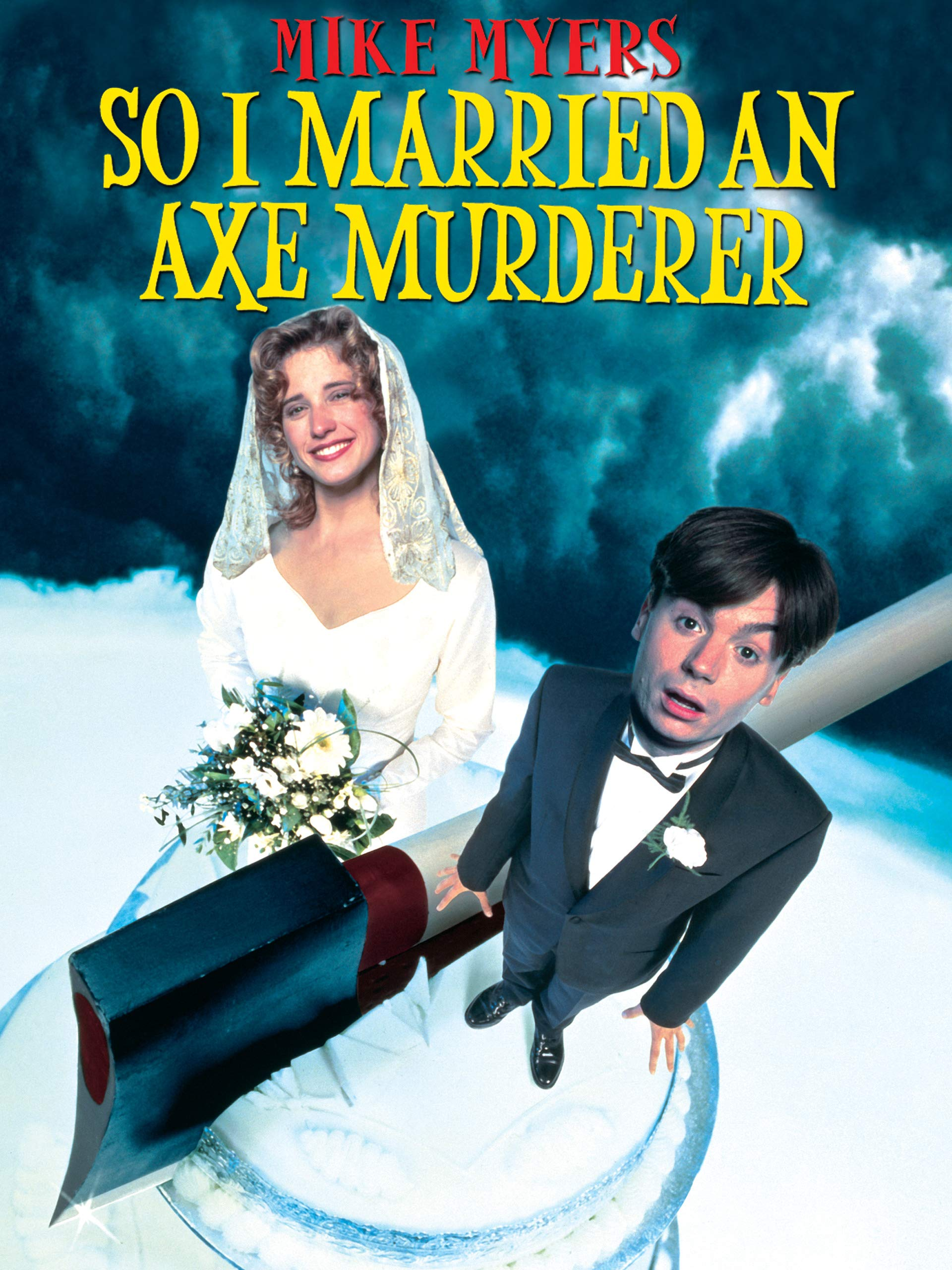
The first time I encountered So I Married an Axe Murderer was in my pre-teen years, when I stumbled upon it one late night on television. For someone who usually took films at face value, something to carry such a direct and evocative title was immediately going to be of interest, even if I had very little understanding of what to expect. The credited involvement of Mike Myers was also not particularly helpful, since as a young filmgoer who adored both horror and exuberant comedy, this could’ve referred to either of the two figures who continue to hold strong cultural cache in both respective genres. Revisiting So I Married an Axe Murderer for the first time in many years was an interesting experiment. Undeniably, time has weathered my rambunctious appreciation for the unconventional and absurd, so what appeared to be a cinematic coup in my earlier years has been rekindled as more of a fond admiration, rather than an overt love for the film. The growing understanding of the intersections between comedy and horror have also forced me to reconsider what I thought was an exceptionally unique and subversive film at the time. However, this is all relative, and has to do with my personal experience with this film, from my first viewing to the most recent, and the considerable span of time between them. It goes without saying that So I Married an Axe Murderer is not considered a cult classic without reason – what starts as a quaint and peculiar comedy with deep undertones of slasher horror actually turns out to be quite an inventive and well-composed film, and while it may be exceptionally silly for the most part (what else can we expect from a film with such a premise), director Thomas Schlamme made something quite special, even if it isn’t all that original, whether in premise or purpose.
The 1990s were a good time to be Mike Myers – he was part of arguably the finest cast to ever walk across the stage of Studio 8H on Saturday Night Live, and saw many promising opportunities arise from his most popular characters, which spurred a series of films that were either expanded versions of his beloved characters (such as Wayne’s World, another personal favourite), or entirely new creations that came from Myers’ demented but wonderfully endearing mind, such as Austin Powers, a character he played several times, and for which he is arguably most well-known. However, occurring between these two major moments in his career was So I Married an Axe Murderer, which is nearly as beloved as the others, but on a much smaller and more intimate scale, being constricted more to a dedicated cult following that may be growing as more people encounter it, but is still relatively small, which is entirely understandable considering the nature of the story. However, regardless of the premise, few films have been able to capture the madcap energy of Myers as a comedic straight man better than this one – he’s still extremely funny, but is trying a character who is far more straight-laced and subdued, which is a remarkable change of pace for an actor like Myers, who often seemed to always want to be the funniest person in the room, regardless of the project (which led to him often playing multiple characters in his films). Here, he allows the madness to come from those around him, while finding new ways to showcase his eccentric talents. With the exception of a few more performances that were slightly more dramatic in tone, So I Married an Axe Murderer could be his finest work in terms of giving a strong performance, rather than just delivering a neverending stream of eccentric quirks. This isn’t so much a criticism of his other work as it is a proposal that, even when playing the patsy to a range of other off-the-wall characters, Myers still manages to be unforgettably funny, a skill not many actors or comedians can attest to possessing.
While it may have been built on the star quality of its lead actor, So I Married an Axe Murderer is a film that really functions best when we look at it from a conceptual level. It’s not so much a Myers vehicle as it is an opportunity for any actor to descend into such a strange version of the world. Credit must go to screenwriter Robbie Fox, who is the primary reason this film works so well, putting together a story that pays sufficient tribute to both genres that inspired it, and making sure to sample from each with equal consistency. The witty dialogue (which is surprisingly nuanced for a mainstream comedy from this era) combined with the genuine sense of mystery, work together to create a film that is quite consistently daring, even when it doesn’t feel like it’s doing anything we haven’t seen before. The film, both in theory and execution, is not one that should’ve worked – it’s not always easy to make audiences laugh, nor is it the most effortless process to incite genuine suspense, so kudos must be given to both the writer, who pulled together some bold ideas in constructing the story, and the director and the rest of his collaborators, who somehow manage to tell the story in a way that is frequently very funny, but where the atmosphere surrounding it is anything but conventional. Not enough is said about how So I Married an Axe Murderer is actually quite a frightening film – it plays like a slasher horror without any direct violence until the very end, where the shocking twist (which still took me by surprise, even though a more logical person would’ve seen it coming from miles away) pushes this film in the direction of being quite profoundly unsettling, which isn’t something we’d expect from such a seemingly lighthearted romp. Perhaps it’s giving the film too much credit, but there’s genuine merit in subverting expectations to the point where it becomes quite disconcerting in its own right, while still remaining hilarious at the same exact time.
So I Married an Axe Murderer isn’t a film that really needs much introduction – it has been around for nearly three decades, and has continuously been subjected to a lot of adoration by fans, who find its peculiar blend of humour and horror quite enticing. Revisiting this old favourite was a unique experience, since it offers the opportunity to reconsider some of the qualities that made it such a striking work in the past, proving how some of these aspects remain stronger than ever, while others are seemingly more conventional the more we compare it to similar films at the time. Ultimately, So I Married an Axe Murderer isn’t particularly unique – it is daring and provocative, but it occurred at a time when many films were looking at the intersection between comedy and horror, and using these notoriously difficult (but wildly popular) genres to create a new brand of scathing dark comedy that could be violent and malicious, but in a way that was always entertaining. Not much can really be said about the film as a whole, since it does adhere to the conventions we’d expect, especially looking at it in retrospect. However, where it falls short in terms of an entirely unique approach, it more than compensates in terms of being consistently entertaining, always maintaining the same level of comedic quality that keeps propelling it forward, and ultimately just becomes a really tremendous, entertaining film with a lot of heart, even when it is at its most unconventionally bleak. Funny, charming and playful in the way we’d expect from a film aiming to be a riff on the cheap psychological thrillers produced at the time, So I Married an Axe Murderer is delightful, and I have rarely been more pleased to find my adoration for a certain film isn’t fueled entirely by nostalgia, but rather that this film has aged spectacularly well, being as funny and relevant today as it was decades ago.
 The Postmodern Pelican