
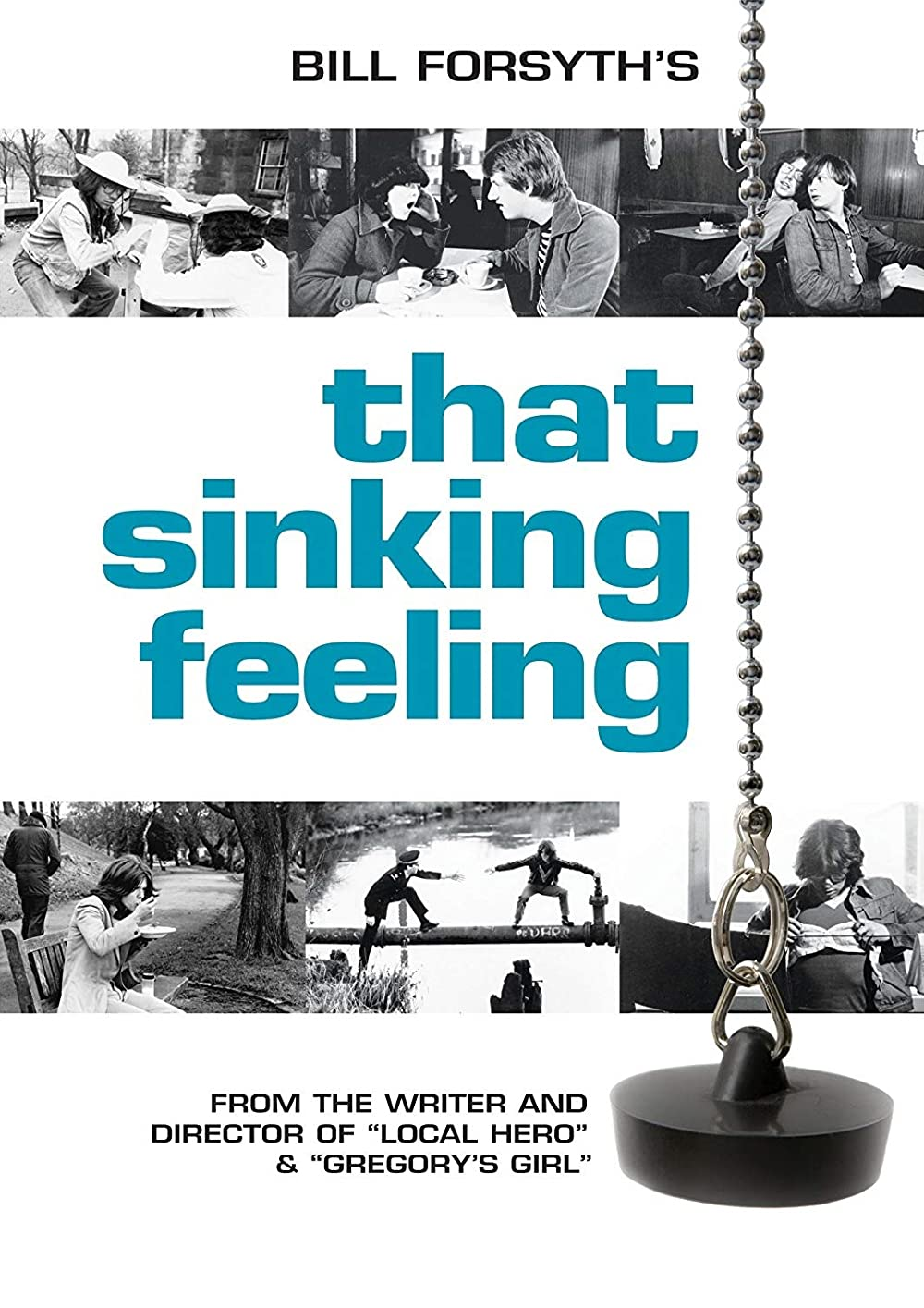
Bill Forsyth is a cinematic treasure – one only needs to watch the iconic Local Hero to understand his precise brilliance, with his blend of humour and pathos being responsible for some truly tremendous films, despite a relatively small body of work. We can look at the work he produced as a result of that wonderful moment he experienced as a result of that adorable independent masterpiece, but going backwards yields similarly interesting results, with That Sinking Feeling being a very different kind of film, but one that is just as captivating as anything else the director made. Acting as Forsyth’s directorial debut, this film is something special, a quaint and lovable comedy that never takes itself too seriously, and actually manages to make some profound statements in between some of the most peculiar examples of humour committed to film. Telling the story of a group of crude but endearing hooligans who hatch a plan to rob a local factory of their sinks, both as a way of making some quick money and to overcome boredom, That Sinking Feeling is a peculiar but captivating comedy that has a lot of genuine fondness for its story, especially in the moments where we start to realize there is something slightly deeper to this narrative, a kind of subversive humour that extends beyond the goofy exterior. Forsyth’s films have always made use of the element of surprise as one of its primary narrative techniques, and even in his debut, he showcases his ability to draw from an endless well of fantastic ideas and unique jokes, presenting us with something enthralling and always thoroughly entertaining.
That Sinking Feeling never pretends to be anything more than it actually is, refusing to demonstrate anything other than the most honest and authentic ideas, plucked directly from Forsyth’s own curiosity, and willingness to just allow a story as simple as this to transpire without overthinking it. We are almost seeing these events unfolding in real-time, with the process of making this film clearly being the product of a day-to-day series of ideas. There’s a constant suggestion that much of this film was impromptu, with the dialogue and situations feeling like they were crafted on the spot by the director and his group of actors, rather than conceived in its entirety prior to the time. This was certainly not unheard of when it came to these kinds of small-scale comedy (there is one similar director whose rise to acclaim parallels that of Forsyth whose entire artistic brand comes from the spirit of improvisation, although their paths are quite different). There’s a genuine charm that underlies That Sinking Feeling and makes it seem so realistic in both theory and practice – it may not have the same quality when it comes to the visual scope (clearly being produced on a shoestring budget, since not too many young, rambunctious filmmakers were going to receive too many resources for their debut film, especially not with as bizarre a story as this one), but it makes up for it in sheer ambition, with Forsyth and his friends creating something wonderfully unique in its own way.
There is always charm in simplicity, and That Sinking Feeling is one of the most perfect representations of this concept. With this film (and many of his others, since he didn’t often deviate from his very intimate roots), Forsyth proves that someone can tell a compelling story without needing to strive for perfection. There are clear flaws in this film, but they serve a strong purpose – the stilted performances from the amateur cast of actors reflect the intentionally awkward lives of these characters, while the very low-budget visual landscape adds to the working-class malaise felt by the protagonists. It’s an actively engaging work that is often relying on its story to make the most significant impact, which is just as ridiculous as one can imagine based on a cursory glance, but one that works out swimmingly when we look at the film as a whole. This is a film less informed by a particular story, and more focused on capturing a particular kind of atmosphere, a zeitgeist associated with a specific time and place, which Forsyth was deeply dedicated to representing, especially since his native Scotland wasn’t often portrayed with as much authentic detail as most would expect. Even just taken as a socio-cultural document, That Sinking Feeling is something quite special – the way Forsyth captures the language and cultural nuances makes it a fascinating text, only made more interesting by how it is all done through the director’s steadfast dedication to making something that is primarily entertaining, rather than just a prosaic bundle of scenes that don’t have any rhythm or poetry to them, which is the exact opposite of what the director was aiming to achieve here – and in many ways, he certainly succeeded.
If there is a way to describe this film, it would be as a direct response to the kitchen-sink realism movement. There comes a moment where we suddenly realize that this was very likely designed to be a literal parody of the working-class dramas that were rapidly produced in the United Kingdom in the 1960s and 1970s, where the gradual transition from realistic dramas to cautionary tales designed to deter the young population from falling victim to the allure of hooliganism. It’s not entirely clear whether this was intentional, but the fact that That Sinking Feeling is a film centred on a group of troubled youths (although calling them “troubled” is slightly inappropriate, since they’re barely even mischievous) plotting a crime that will bring them out of their miserable social situation, using the motif of a literal kitchen sink, leads one to genuinely think that Forsyth knew what he was doing when telling this story. Many of the genre’s conventions are very much present here – simple, authentic locations populated by non-professional or amateur actors (and where most of the small roles are played by people genuinely in that profession), and a story that draws on the experience of growing up in this particular corner of the world. More than anything, That Sinking Feeling presents us with a direct glimpse into what life was like at this moment in Glasgow, Forsyth cleverly infuses this very funny story with an abundance of heart, which come mainly from the director’s genuine fondness for his own upbringing, which he reflects here with pointed accuracy and genuine heartfulness – and authenticity, more than anything else, is what makes for a compelling social-realist tale.
That Sinking Feeling is a tremendously entertaining film, and one that wears its heart on its sleeve consistently. It may not be the definition of a purely successful film in terms of the story it tells of the quality of the filmmaking – but what it lacks in nuance, it more than makes up for in sheer ambition, and that’s what Forsyth was genuinely focused on exploring, rather than making something that would go down in history as the definitive version of life in post-war Glasgow. Much like one of the director’s compatriots, Bill Douglas (whose trilogy of films is arguably the greatest example of social realism captured on-screen produced outside of Italy), this film finds its brilliance in the details – and while it may not be entirely convincing on a deeper level in terms of how accurate it is (after all, this is a story of a group of young men robbing a kitchen sink factory, it isn’t exactly the most hard-hitting narrative), the small nuances that occur alongside the storyline are what makes this such a beguiling and captivating film, one that is proudly and unabashedly itself, regardless of the constraints placed upon it. It’s a lovable, interesting film with a lot of soul and an abundance of good-natured humour, making it a slight but ultimately extraordinarily charming glimpse into the past, as told by someone who is capable of both relishing in his own experiences, as well as playfully deconstructing them for our endless enjoyment.
 The Postmodern Pelican