
“Dying is easy, comedy is hard” – these words appear whenever someone is talking about the frequent excursions many artists make when it comes to the subject of death. The great inevitability is a subject that has provoked and inspired directors for generations, especially when it comes to looking at it through the lens of well-needed humour, rather than making them dour exercises. It is quite literally a subject that has been done to death, many such films being insightful, funny and meaningful. Unfortunately, The Bright Side is not one of them. The film, written and directed by Ruth Meehan, is a bit of a mess. A contrived and uninspired attempt at finding joy in the most painful of situations, this film isn’t particularly great, which is an immense disappointment, since this independent Irish comedy deserved a lot more than what it ultimately was given, the director squandering quite a bit of the goodwill afforded to her by this story. We’ve seen this exact series of ideas done elsewhere, particularly by those who could look beyond the surface-level premise and go in pursuit of something a bit deeper. As much as I wanted to love this film, since there is something very special about these small independent films and their search for deeper meaning – but the combination of a predictable story, overwrought emotions and a strangely poor screenplay sound the death-knell for a film that was holding onto dear life, but just doesn’t have the strong grasp it perhaps needed to take on a long lineage of similar films.
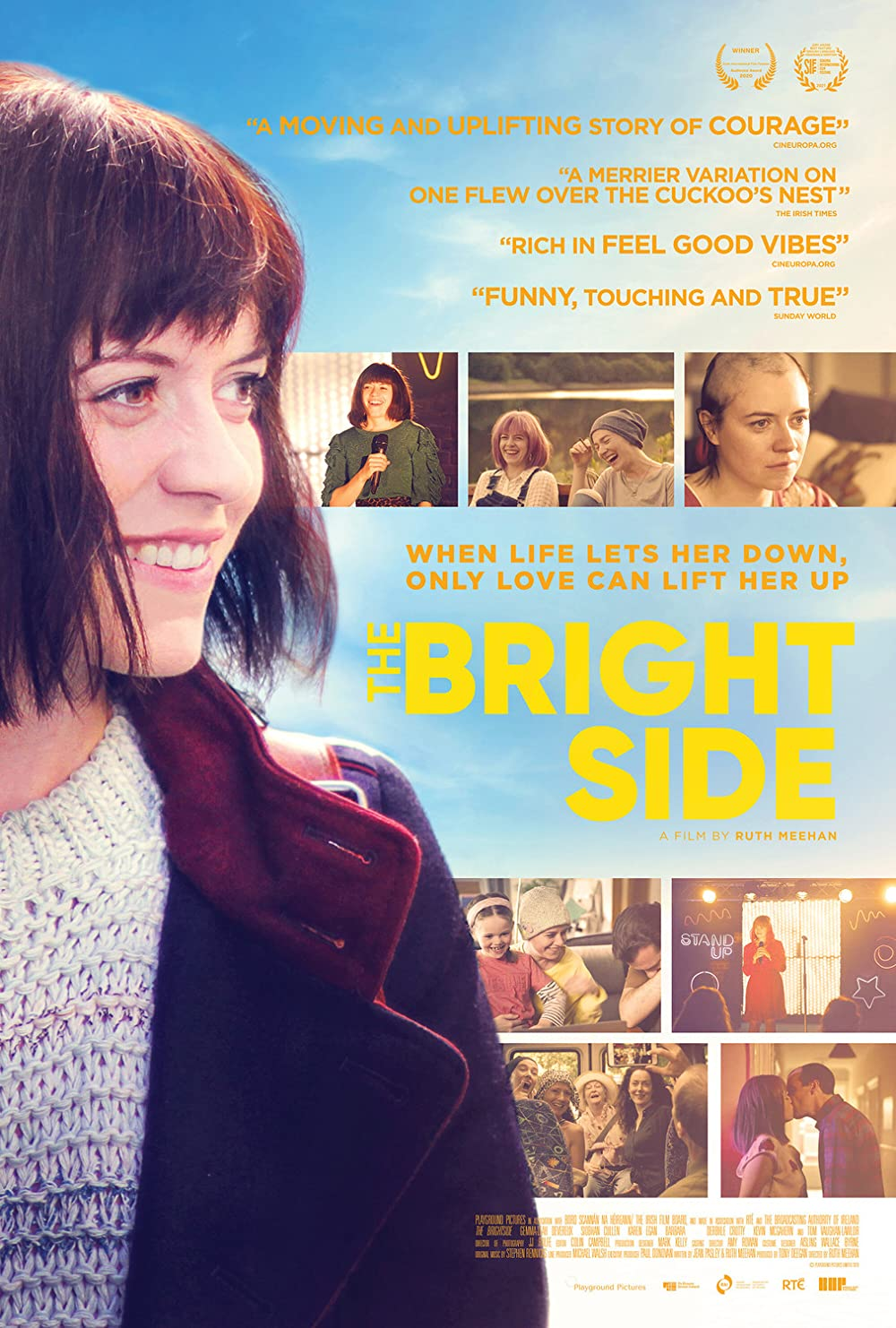
The Bright Side is anchored by Gemma-Leah Devereux, who plays the stand-up comedian who receives the diagnosis that she has advanced breast cancer. From the outset, it’s quite clear that the actress is extremely talented – she has shown up previously in a few small roles in major productions, where she often showcased her impeccable skillfulness as a performer. This film should have been the enormous breakthrough she required – emphasis naturally being on the “should”, since despite her spirited portrayal of the character of Kate McLoughlin, Devereux just falls by the wayside far too often, no one being entirely sure of her purpose to the story. She is neither passive enough to be a quiet observer, nor is she interesting enough to warrant the film orbiting almost entirely around her character. Naturally, this is not an easy role to play – she needed to undergo many gruelling emotional experiences, the actress working closely with Meehan’s script to find this character – but unfortunately, there just isn’t much depth to any of the characters, despite supposedly being an ensemble-based effort. No one quite rises to the level of Devereux, but everyone is doing effortful and meaningful work, which perhaps required a much better platform for these clearly gifted individuals. If a lead performance has to serve as the vessel through which every other character is formed, then there is an immediate problem that requires careful attention, none of which this film seems to possess.
The theme of the “sad clown” is one that has persisted throughout the history of artistic expression, being the epitome of contrast – the idea of someone whose entire existence has been to inspire joy in others, only to have deeper secrets that cause them to slowly fall apart, has been embraced and deconstructed for many years. The Bright Side employs some of this by filtering the story through the existence of the main character’s career as a comedian. This would theoretically make for quite a profound film – the idea of a young woman working through her trauma by the means of raising awareness should’ve been a much better (and far more effective) approach. Unfortunately, all the areas in which the film goes wrong in portraying Kate as a comedian are gradually squandered – the jokes aren’t funny, and as gifted as she may be, Devereux just fails to sell us on the fact that this character is supposedly this well-regarded stand-up comic who has supporters clamouring, playing her as if she was just an amateur taking advantage of the vacant spot on stage during a karaoke evening. The jokes fall flat, and her delivery isn’t much better – it’s a run-of-the-mill exploration of the life of a young comedian working through her trauma by making jokes about it. In other instances, this does work – unfortunately, there just isn’t nearly enough strength behind The Bright Side to push it through being the convoluted and increasingly dull comedy about serious issues it purports to being.
In relating this all to the trope of the “sad clown”, it would be wildly inappropriate to not actually mention the root of the film. The concept of the story is one focused on looking at the keen moments in the life of its complex protagonist, who just so happens to be a well-loved comedian. Unfortunately, much like the humour in The Bright Side falls flat, so does the emotional content, which is barely effective. There is a perpetual hand-wringing occurring between all the actors, since they’re given roles that are barely even recognizable as basic cliches, forcing them to work through some dialogue that can be wonderfully effective, or absolutely putrid, depending on the context of the conversation being had. As one of the most overwrought films of the year, The Bright Side is already something of a disappointment – so for many of the most emotional moments seeming to be drawn directly from similarly-themed stories only increases the unfortunate nature of a film that yearned to be a quaint and charming comedy, but actually doesn’t do anything else other than engaging in some over-sentimental commentary that doesn’t actually tell us anything we didn’t know, manipulating us into feeling emotions that are purely constructed, rather than authentically felt from the story that surrounds them. The Bright Side is a film that tries far too hard to make a few bold statements, it ultimately never comes close to even achieving it, outside of a few genuinely sweet moments, which are sadly few and far between.
It certainly is difficult to disparage a film like The Bright Side, since this should be the kind of project that is at least serviceable, rather than be a jumbled mess of emotions. It’s not a particularly awful film, and it has its moments of genuinely endearing content, which come through in the more quiet moments between characters – but it’s the bold choices made aside from these touching scenarios that proves to be the ultimate challenge for this film to overcome. It doesn’t know how to handle the difficult subject matter, with its initial reaction seeming to be retreading the exact same conventions we have seen several times before. There aren’t any stakes in this film, and they all come across as rather inauthentic when they do manifest, causing us to not only grow disinterested and bored, but yearn for something a bit more reliable. For a comedy about a serious issue like cancer, The Bright Side squanders a lot of potential – nothing is quite as healing as laughter, and the film barely manages to pay sufficient tribute to the people who inspired it in the first place, gradually falling apart at the seams before it even starts to make an impact. I desperately wanted to love this film – it has a feel-good story and definitely had the right components to honour this potential. It is unfortunately let down by a screenplay that has a domino effect, with the oscillation between hackneyed jokes and overwrought hysterics impacting the performances, which are unfortunately weakened considerably by the inconsistent writing. As a whole, The Bright Side had a lot to offer, and it unfortunately emerged without having really made good on this promise, which is to be expected on occasions, but not from something as seemingly simple and charming as this film could’ve easily have been with some effort.
 The Postmodern Pelican