It’s been nearly five years since the most recent entry into this series, which aims to take a filmmaker who I personally admire or feel a strong affinity to, exploring their career and discussing the films that they made over the course of their lives, ranking and critically analysing each one of them. The past few years have been spent carefully looking at a range of artists who I absolutely adore, one of whom is the subject of this discussion, the incomparable and incredibly iconic John Cassavetes, whose career I have spent a considerable amount of time looking into, focusing on his work as both an actor and a director, the latter leading us to this very conversation. My admiration for the director is incredibly strong, with his style and sensibilities being extraordinarily similar to the kinds of stories I absolutely adore seeing reflected on screen – and beneath all of it is a director whose work has always carried an abundance of meaning, leading me to consistently seek out his perspective, which has been carefully preserved in a range of projects in which he worked, many of them on both sides of the camera. He was a logical choice for my next foray into critically discussing a director’s work, and there is no greater pleasure than to dedicate this time to an artist I truly adore, both for his output, and his approach to the artistic process, which remains an absolute inspiration.
One of the primary reasons Cassavetes remains so renowned, decades after his death, is because he was someone whose entire career was something of an artistic revolution. He is often considered one of the pioneers of American independent films – some may consider him the founder of the modern movement, but this has always been a statement that has skirted controversy, since finding a precise place to pinpoint the start of independent cinema in the United States is impossible, depending both on what one considers independent, and who is officially responsible for it. Regardless, while he may have not been the primary voice behind its creation, Cassavetes undeniably took his place amongst the most important independent filmmakers of any generation, using his distinctive authorial voice to direct a number of films that were defined, more than anything else, but their ferocious refusal to adhere to standards. Both the stories he told, and the manner in which he told them, were provocative and unprecedented, whether it be the actual subjects (looking at concepts that mainstream cinema wouldn’t dare touch) or the very intimate methods in which he explored them, Cassavetes frequently broke boundaries in ways that very few of his contemporaries would be bold enough to attempt.
We can’t quite pinpoint exactly the kinds of stories Cassavetes enjoyed telling – his films took place in a range of locations, stretching across both coasts of the United States, focusing on individuals across a range of professions and economic backgrounds. His protagonists ranged from a glamourous Broadway actress, to a salt-of-the-earth housewife, and the milieux in which he drew inspiration took place anywhere from the blue-collar neighbourhoods in which he grew up, to the elite parlours of the high-society. If there was something that we can say about Cassavetes, it was that he was versatile. Yet, he had such a distinctive touch – with the exception of only a few films on which he was hired to direct for a studio (mostly as a way of making money to finance his other movies), we could always tell when we were in the presence of the director and his iconoclastic perspective. Most of this has to do with atmosphere, Cassavetes often making use of a particular tone to tell his stories, and the presence of a group of regular collaborators helped make his vision tangible. He could tell any story and still place his distinctive authorial voice to each and every one of them, which is not a quality that should be dismissed, since it resulted in some of the greatest films produced at the time.
Naturally, one can’t really talk about Cassavetes without bringing up his greatest collaborator, Gena Rowlands. His partner in both his personal and professional life, Rowlands defined her husband’s career just as much he curated hers – they certainly weren’t solely bound to each other (having both made works without the other), but there is very little doubt that they brought out the best in each other. Roughly half of the director’s work features Rowlands, either in the central role, or as a supporting player – and like any strong continuous collaboration between an artist and their muse, their work reflected a keen interest in seeing how far they can take their shared collective perspective on the themes of that particular project, as well as an undying respect for one another. The experience of watching Rowlands on screen is certainly truly unforgettable, since she’s an actress whose work has always been keenly aware of very intricate subjects, and her development of characters, done through her deep commitment to each of her roles, has made her something of an uncredited co-author of many of these films, most of their brilliance coming from how Rowlands inhabits these roles. While we are talking about Cassavetes, it’s almost impossible to separate him from the iconic actress who turned in her best work under his direction – and as will be reflected below, Cassavetes greatest work features her in some capacity. making it a frequently fruitful collaboration between two incredible artists.
Without any further ado, here is the ranking and discussion of the films of John Cassavetes, with full reviews (which discuss each film in depth) linked in the title of each one. These thoughts are short, and only the beginning of what I hope will become a broader conversation about the merits that can be found in looking at Cassavetes, not only as a historically-resonant pioneer of a particular movement, but simply as a brilliant filmmaker with a unique artistic voice.
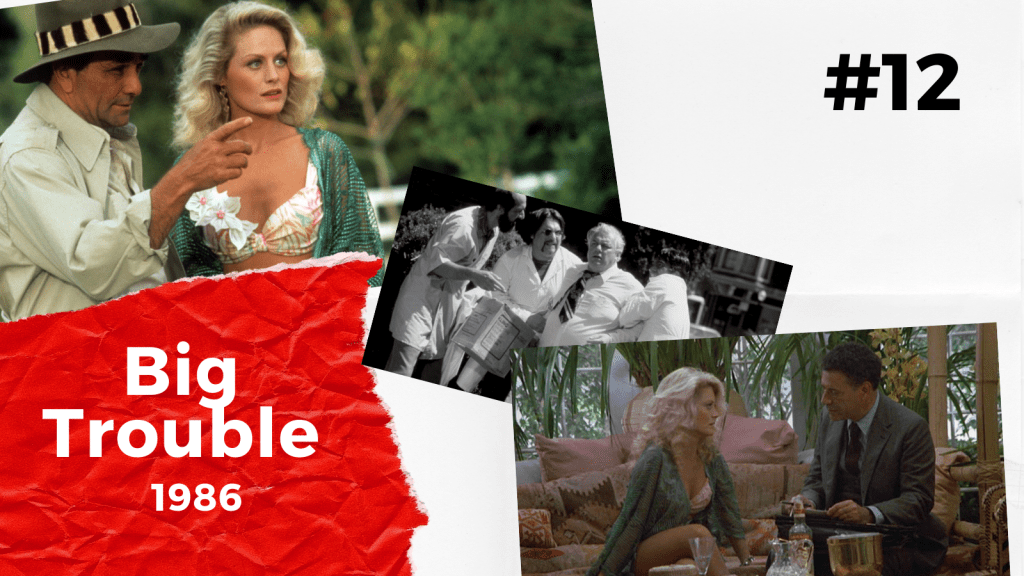
There was never any doubt that Big Trouble would be right at the bottom of the list – even the director himself refused to acknowledge it, referring to it as “the aptly titled Big Trouble“. Not a film that he had much investment in as a filmmaker, since he was taking over from screenwriter Andrew Bergman, it’s a fascinating footnote in his career, especially since it possesses the unfortunate fact of being the final film Cassavetes would ever make, leading it to be arguably the worst final film in the history of cinema (and which has forced many of the director’s devotees to proclaim another film as his spiritual swan-song). The most comforting part about this film is that it isn’t badly directed – instead, it’s not directed at all. Cassavetes was just tasked with recording the madcap energy of the story and its actors (one of which is Cassavetes regular, Peter Falk), and it is a great solace to know that the director was perhaps the biggest detractor of this dreadful excuse for a film, which is only interesting to the extent of realizing how sad it is for one of the greatest directors of his (or any) generation to end his career on such a sour note.
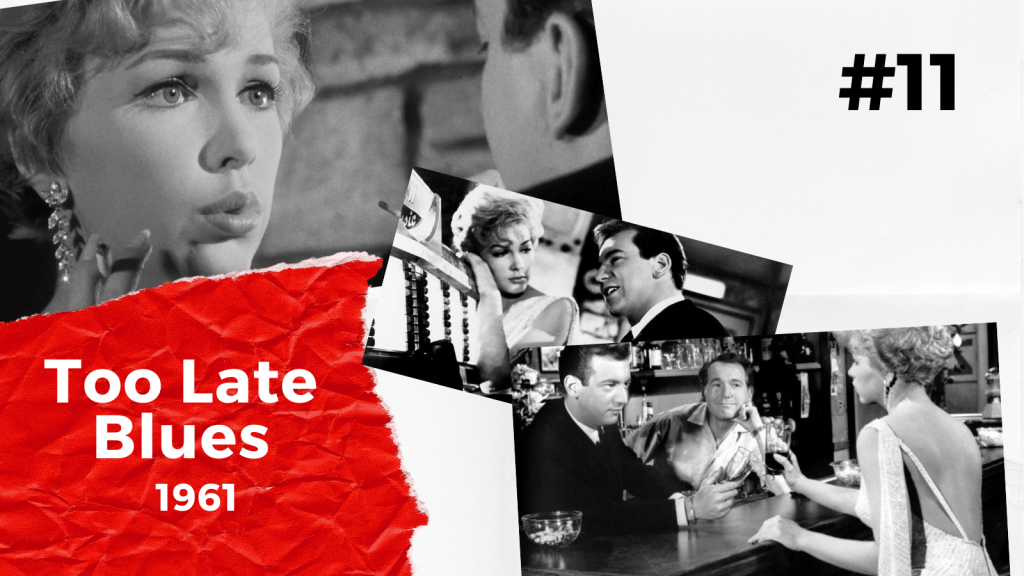
Something that was mentioned above is that Cassavetes was a director with a clear vision, but he was also someone who did not reject the idea of taking on a project that could be produced quickly and cheaply for a major studio, in the hopes of getting some money to finance his passion projects. This was mostly done in terms of hiring Cassavetes as an actor, but there are a couple of directorial ventures that he took on in – Too Late Blues is one of them. Not necessarily a bad film, but rather one with a very distinct sense of artistic expression that feels divorced from the director’s other work, mainly through the fact that it just doesn’t feel like a film that carries that distinctive tone that made Cassavetes’ work so absolutely stunning. This one unfortunately has the weight of being made just after the director’s debut, and thus was going to always be viewed somewhat unfavourably – and the fact that it doesn’t truly carry the same weight, artistically and narratively, is not much doing this otherwise straightforward film any favours.
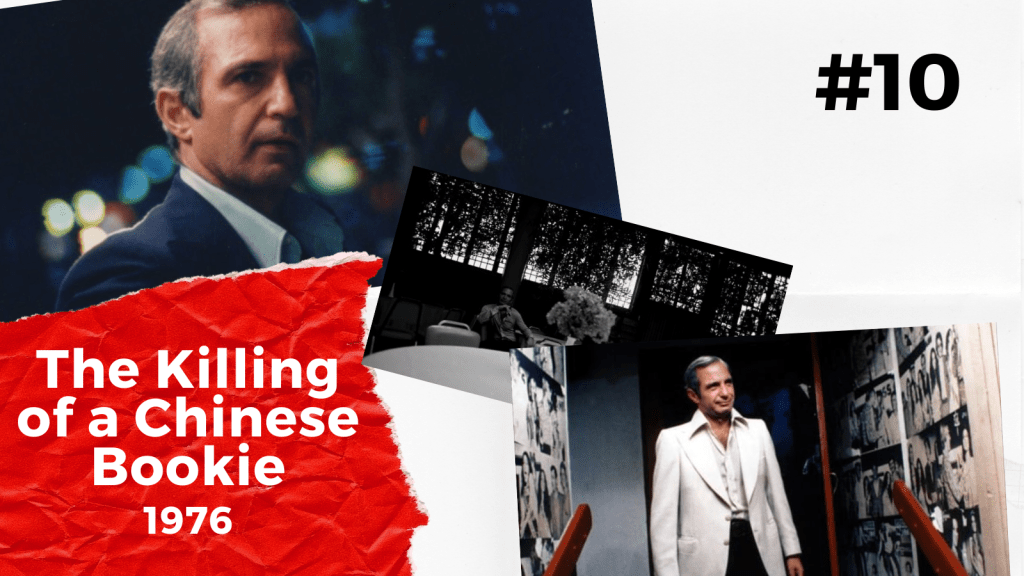
A controversial opinion to place it in the lower tier (since it is often considered to be one of the director’s strongest efforts by many admirers), The Killing of a Chinese Bookie is the most disappointing of Cassavetes’ passion projects. A darkly comic crime thriller about a man constantly running afoul of the mob, it should be one that was a lot more successful than it ultimately was. Not a bad film, but rather one that squanders much of its potential, whether it be the gifted Ben Gazzara (whose performance is not as strong as much of the other work he did for the director), or the story, which is far too labyrinthine to justify the time it take to tell. It has its moments, but it is otherwise too invested in casting a wide net over a genre in which the director was clearly trying to explore (being made the same year he played one of the titular characters in Elaine May’s Mikey and Nicky), it just feels too overwrought and complex to be fully engaging. The Killing of a Chinese Bookie is more of a disappointment than it is a failure, with the director’s attempt to voyage into the crime genre not being as successful as perhaps he expected it to be, the convoluted story making it one of the rare instances of a truly uncomfortable experience for the director – but this certainly didn’t deter him from trying again, which we will see below.
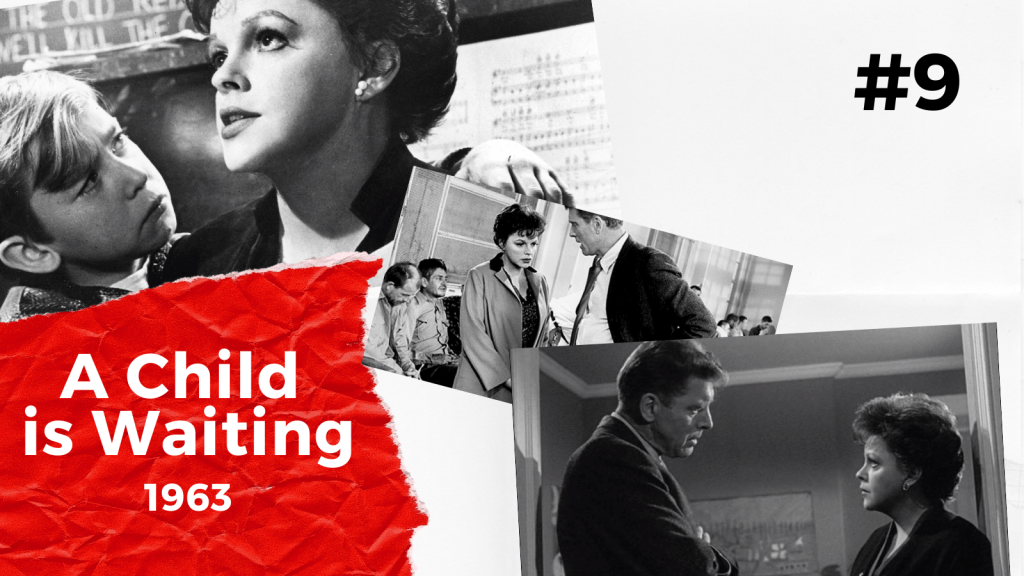
Of the three “director-for-hire” ventures undertaken by Cassavetes, A Child Is Waiting is by far the most forgotten. It doesn’t have the rugged appeal of Too Late Blues, nor the vitriol deservedly placed on Big Trouble. It also happens to be the best of the three – and the only reason it is ranking so low is because of how impersonal it is, which is not a flaw, but rather a limitation. Taken for what it is, it’s a relatively solid film, featuring strong work by Hollywood icons Burt Lancaster and Judy Garland, both of whom are turning in excellent performances, which the director captures beautifully. It’s a decent film, but it wasn’t going to be particularly well-regarded considering the level of work Cassavetes would do afterwards. This was merely a stepping-stone to two decades of incredible independence on the part of the director, who managed to prove his merits as a filmmaker, even when doing something as simple and innocuous as this social issues drama, which neither benefitted nor tarnished his artistic perspective, but rather paved the way forward for more personal and interesting work, giving it a clear purpose, which allows it to be a relatively worthwhile work, if only to see how Cassavetes functions when doing something much more straightforward than his more cerebral, intensely passionate existential dramas.
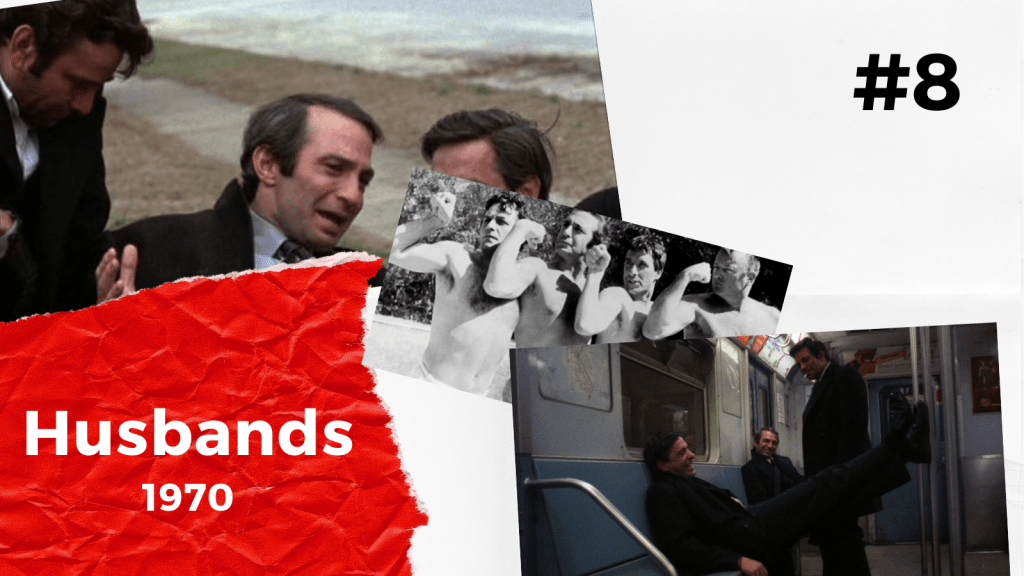
As is the case with The Killing of a Chinese Bookie, there was an inherent challenge that came when Cassavetes tried to make films more focused on male characters and their perspective, in the form of Husbands. He flourished more when it came to directing films in which women take a central part in the narrative (mainly because those women were often played by his muse), and also since his style was more focused on issues relating to the internal psychological states of his characters, which is quite difficult to explore fully when a film centres on a group of men who are defined by their aloof, reckless way of living. It isn’t a bad film, but one that we never quite manage to understand, the impenetrable nature of these characters and their bizarre lifestyles not being nearly as successful a satire as it would appear on the surface – the performances are good (Peter Falk, Ben Gazzara and the director himself turning in great work), but the story is slightly lacking, which is something of a problem, especially when it comes to the more intimate aspects of these individuals, who are far more interesting than this middling film would have you believe – if only Cassavetes had managed to see that same potential.
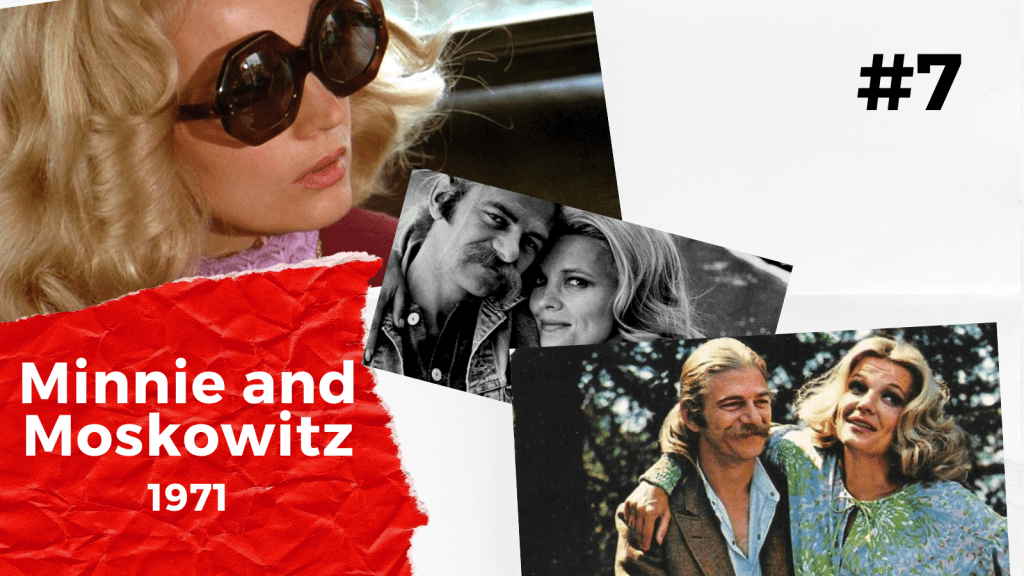
Minnie and Moskowitz is a bit of an oddball in Cassavetes’ career – it is definitely a film that has his distinctive touch in nearly every frame, and features a couple of his regular collaborators in key roles. Yet, it’s the one that is most often forgotten when it comes to his very personal works. It is the kind of film that is not bad by any means, but rather resides comfortably at the midpoint of his career – its incredibly charming and very funny (being the closest Cassavetes ever came to making a romantic comedy), but its also quite scattershot in how it defines its characters, with it being one of the rare instances where Rowlands doesn’t come across as entirely natural (despite being excellent), instead most of the emphasis being placed on Seymour Cassel, who is as endearing as ever, but playing a more opaque character than we normally saw from the actors. It’s a solid and enticing film, but one that ultimately doesn’t hold too much merit outside of a couple of great performances and a few interesting moments that make it very clear that Cassavetes was not as invested in this film, his mind wandering to the next film – and considering what his next project would be, that seems like a fair assessment.
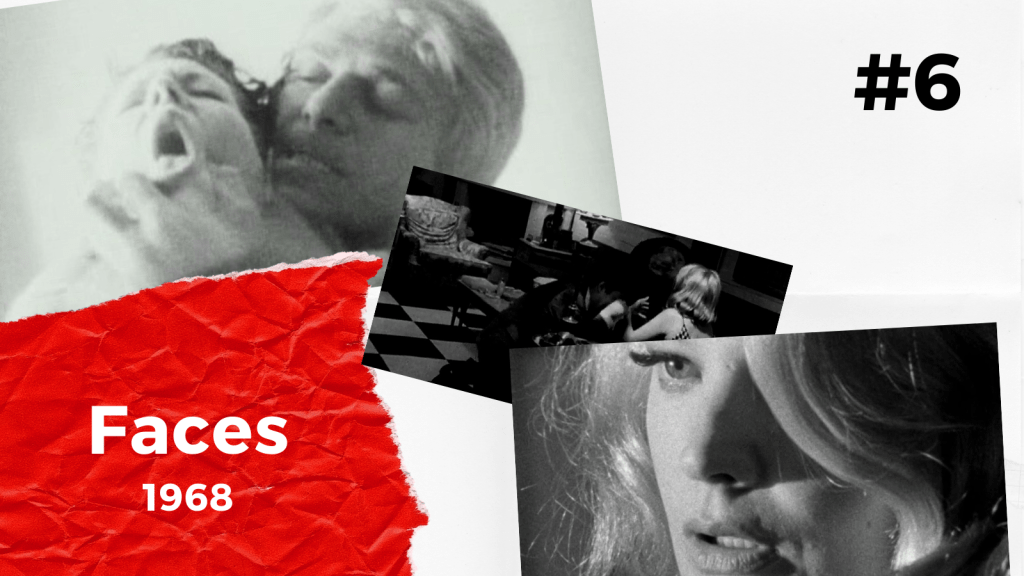
Perhaps the most quintessential Cassavetes film is Faces, which is a relatively early work by the director’s standards, being made after his two more studio-based efforts, and very likely the result of the funding he secured through directing those films. It is the first proper collaboration between the director and two of his most notable stars, as well as featuring excellent work by Lynn Carlin and John Marley, who easily fit into the director’s world. More than anything else, Faces is a film propelled by atmosphere – the story itself is only secondary to the mood evoked by the suburban malaise felt between these different characters. Deception, existential crises and lust all cause these characters to find their lives intersecting. Cassavetes is exploring prominent issues, filtering it all through the curious lens of these people and how they struggle to define their identities, essentially plucking out a few faces in the crowd, and making a film that tells their story, which is one of the narrative components he would employ several times in forthcoming years.
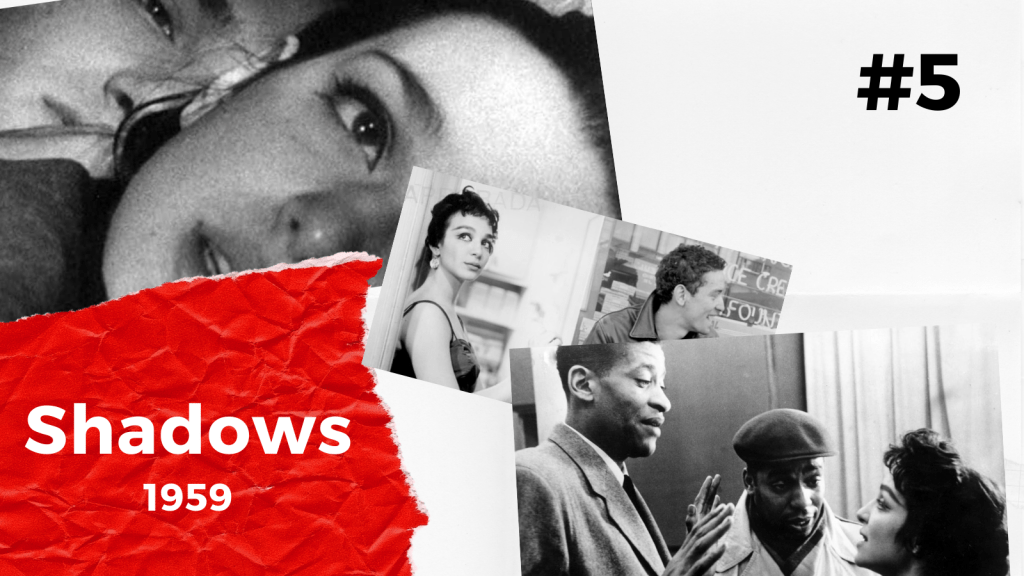
The film that made it possible – so much, that Cassavetes made it twice. Shadows is widely considered the official start of American independent cinema, mainly because it was one of the first instances of a low-budget film actually making an impression outside of the niche audience that would often be the targets for such projects. A bold and complex film that looks at issues relating to identity (particularly on the subject of race), Shadows is an imperfect masterpiece, a drama that shows us a different side of life in New York, evoking questions that relate directly to the issue of self-realization, as filtered through the varying perspectives of a group of African-American individuals, some of whom are perceived to have been more fortunate through being “blessed” with lighter skin. A brilliant companion piece to the recent Passing (which covers similar themes, albeit with a lot more tact), this film is a fascinating social drama that finds the director provoking some very serious conversations, all done through his very simple but effective method of relying on strong dialogue, and the excellent actors cast to deliver it, proving that his debut was a magnificent start to a career that treaded through some similarly engaging themes, asking questions that are still relevant today, over half a century later.
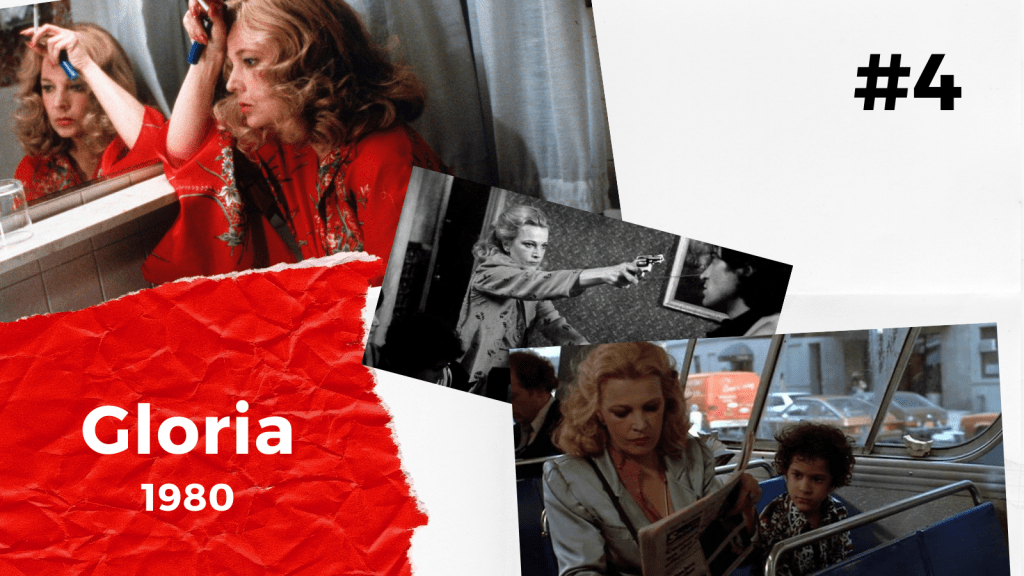
A film that Cassavetes never intended to make somehow becomes one of his best, which is the kind of bizarre irony that can be found throughout his career. A further attempt at the gangster genre, Gloria is a resounding success – unlike his previous foray into the genre, this one knows where its strengths lie (particularly in Rowlands’ extraordinary performance), and manages to look at individuals who have chosen a life of crime, and their psychological response to various situations that challenge and disconcert them. It’s a well-composed film that is also somehow the director’s most joyful, at least in terms of how it looks at the theme of motherhood, which is placed directly in contrast with the crime narrative. Anchored by a splendid performance by Rowlands, and told with candour, wit and nuance, Gloria is a true triumph.
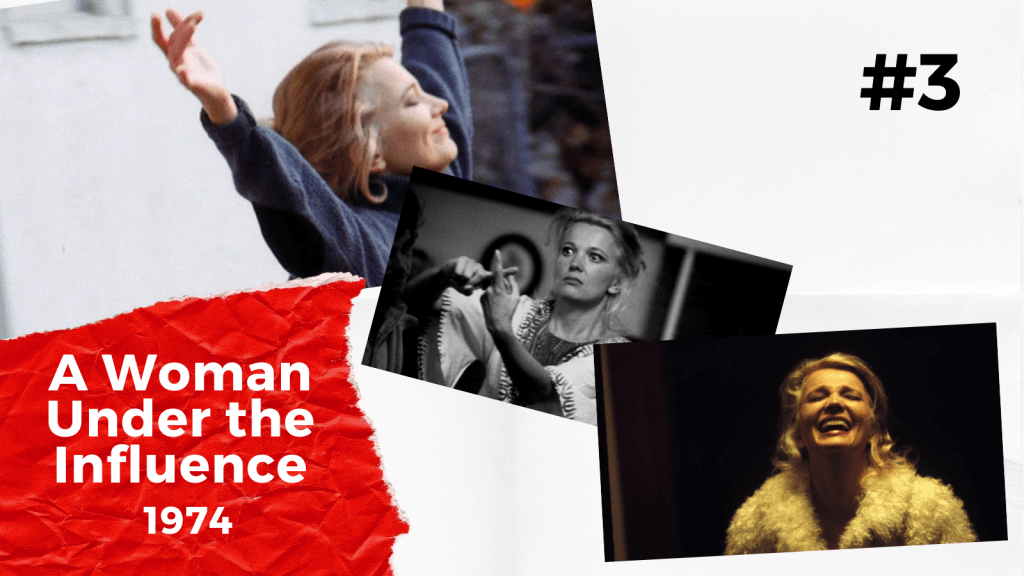
Rowlands’ performance in A Woman Under the Influence is often considered to be the gold standard for acting – but the film around her is just as incredible (mainly since her stunning work defines it). Not the most pleasant work in terms of how it addresses a number of issues relating to mental illness and familial strife, yet rarely ever offensive or flippant, the film is a remarkable work that casts a discerning eye on a woman who simply wants to exist in a world that constantly labels her as mentally unstable, despite the fact that Mabel is perhaps the most logical of the characters that we encounter, someone whose perspective may be unconventional, but sees the world in an entirely different way. A Woman Under the Influence is pure visual poetry – the way Cassavetes uses his camera to capture Rowlands’ exceptional work proves that this is not just a great piece of acting, but a staggering film in all areas, and one that has duly been celebrated as such.
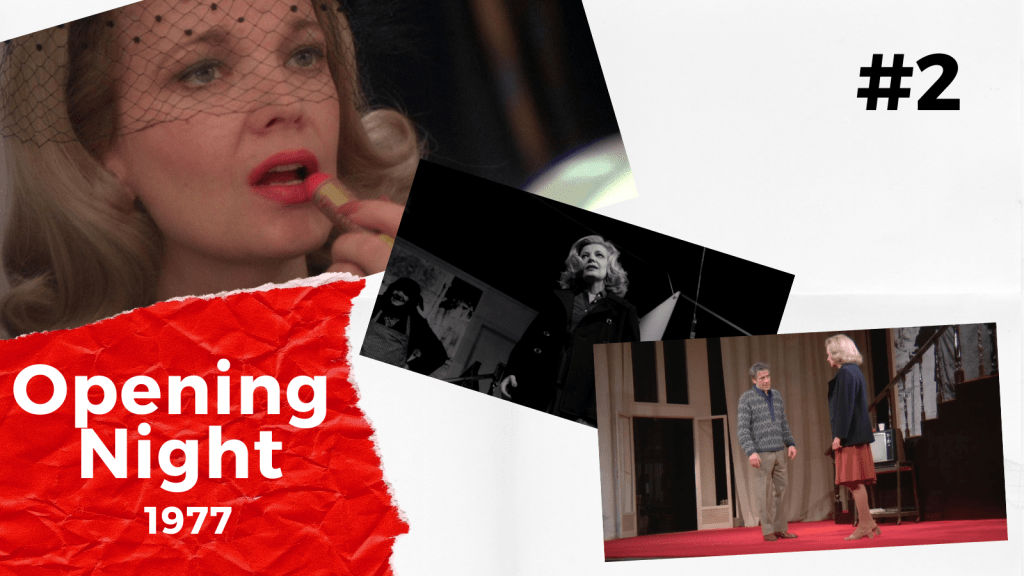
One of the only downsides of exploring the career of Cassavetes is how many of his films are difficult to rewatch. Not because they’re necessarily bad (some of them are, but these are the minority), but rather since they are emotionally challenging. Opening Night is one of the most devastating films of the 1970s – watching Rowlands, in her tour-de-force performance as a Broadway star wrought with guilt after the death of a young fan, slowly slip into existential despair, is incredibly difficult, and it does not make for the most pleasant experience. Yet, there is always something drawing us into this film, an elusive quality that Cassavetes develops through engaging with the protagonist as she spirals out of control, but does everything within her power to fend off the outward manifestation of her psychosis. Its the best work Rowlands ever did, and also has the most profoundly affecting screenplay Cassavetes ever wrote – nearly everything about Opening Night is incredibly difficult to watch, but yet its the one that tends to linger on the most, the mysteries embedded deep within this film making it such an extraordinary experience.
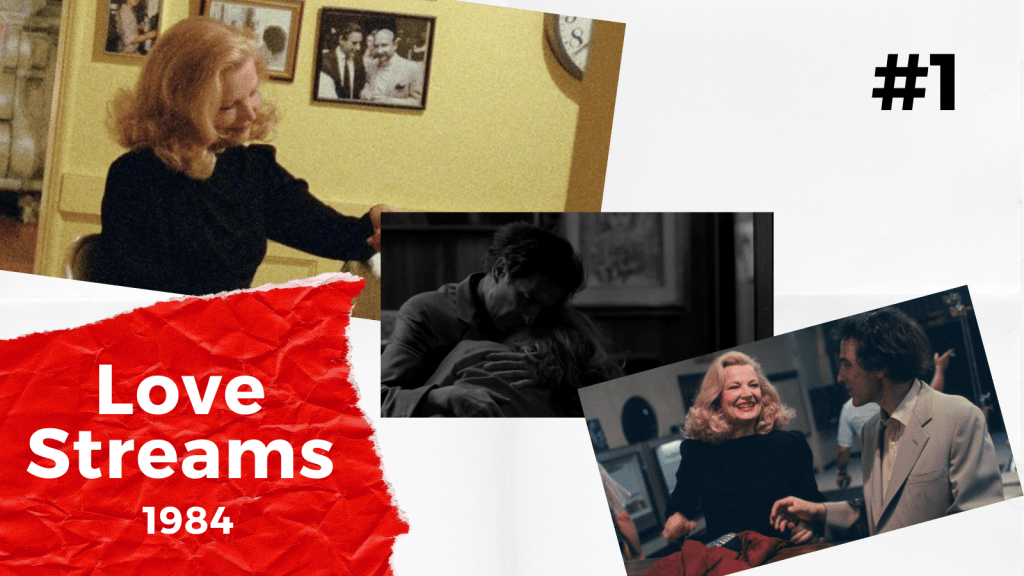
The decision of which film to place at the very top was far more difficult than it would seem – both A Woman Under the Influence and Opening Night were considered for this placement, and would be worthy victors. However, there is something so profoundly beautiful about Love Streams that led me to ultimately awarding it the title as Cassavetes’ best work, for a number of reasons. Firstly, it is the film his devotees consider to be his “last”, in terms of it being the final one in which he had authorial control – so while it may not be his official last film, it is considered his swan song. Secondly, it features career-best work, not only from Rowlands, but from Cassavetes himself. He didn’t often star in his own films, but when he did, the pure electricity that emerged (especially when across from Rowlands) is palpable, elevating the story far beyond its very simple confines. Love Streams feels both epic and intimate, with the scope of the story constantly shifting between broad discussions on the psychological states of these characters, and the small moments that exist between them. However, the most straightforward reasoning is that Love Streams is just an achingly beautiful film, containing everything that made Cassavetes such a wonderful director – compassion, humanity and emotional resonance, all of which are beautifully summarized in this stunning, heartbreaking film that is both emotionally shattering, and deeply optimistic.
Despite the bleak subject matter of his films, its quite rare to find a Cassavetes film that doesn’t have something of a happy ending, even if it is by way of melancholy – and Love Streams defines this perfectly, and is thus a perfect conclusion to both the career of one of cinema’s greatest iconoclasts, and the discussion about his career. Cassavetes is a filmmaker that has meant so much to me over the years, so to have the chance to critically re-evaluate and dissect his films was an enormous pleasure, and one that brought many new insights into my understanding of his career. Cassavetes is a vitally important filmmaker, a man whose artistic curiosities consistently drove his impeccable standard of storytelling, and his enthusiastic work ethic being beyond admirable. He’s a tremendous talent, and someone whose work I continue to enjoy, especially when it comes to revisiting his films and finding new details lurking in nearly every frame, making them engaging, active experiences that are as enthralling as they are uniquely moving.
 The Postmodern Pelican