
For about as long as our species has been labouring, the workplace has bred a range of unlikable colleagues, whether it be incompetent co-workers or despotic managers. Art has never been afraid to point this out, normally in the form of more upbeat content that shows the day-to-day struggles of the ordinary working-class individual and the challenges they face when it comes to their peers, who can often be the source of the most unbearable frustration to those who just want to do their job and go home, without encountering too much hassle in the process. However, there are occasionally those works that seem to take this to an entirely different level, such as Office Killer, one of the most bleak and harrowing satires of the past quarter-century, a violent and disturbing dark comedy that goes with very few other films of its ilk were willing to venture, in both intention and execution. The first and only film directed by acclaimed iconoclastic artist Cindy Sherman (whose involvement here is more than just a novelty for those of us with an interest in the world of photography), Office Killer is one of the strangest and most profoundly unsettling films of the 1990s, a merciless blend of horror and comedy, which collide in ways that not even the most desensitized viewer will find conventional or comforting – and yet beneath all the grotesque violence and macabre humour, there is an oddly endearing comedy about one woman who has just had enough, and intends to make it very clear to her co-workers that she is not someone who will tolerate being taken advantage of anymore, even if she has to resort to the most desperate measures to get her message across.
Looking at the individuals behind the creation of this film, it’s hardly surprising that Office Killer is considered something of a cult film. Beyond being helmed by Sherman, whose name is vitally important in the world of photography, the film is written by a small team of creative individuals, one of them a young Todd Haynes, who was already well on his way to becoming one of the most influential directors of his generation, having directed revolutionary films like Poison and [safe], which may not be entirely conventional, but are works of unhinged genius that inspired countless filmmakers to follow. Office Killer is not as well-known as it perhaps should be, mainly because the combination of the subject matter and the execution of its main ideas is not something that is particularly easy to sell to general audiences, and it often feels as if this film was designed specifically to appeal to those with a penchant for the alternative, formed to become a cult classic rather than a mainstream hit. Horror has consistently evolved and held different targets for its proposed audience for as long as it has been considered a viable genre – and yet even at its most straightforward (which one has to admit isn’t very often, and the film is certainly better for it), Office Killer doesn’t adhere to the rules. Perhaps this is the result of the deranged but brilliant artists involved in its creation, or just the nature of the story itself, but it ultimately becomes something quite enthralling, even when it seeks to primarily disturb and bewilder, which seems to be the central modus operandi of this gloriously insidious dark comedy.
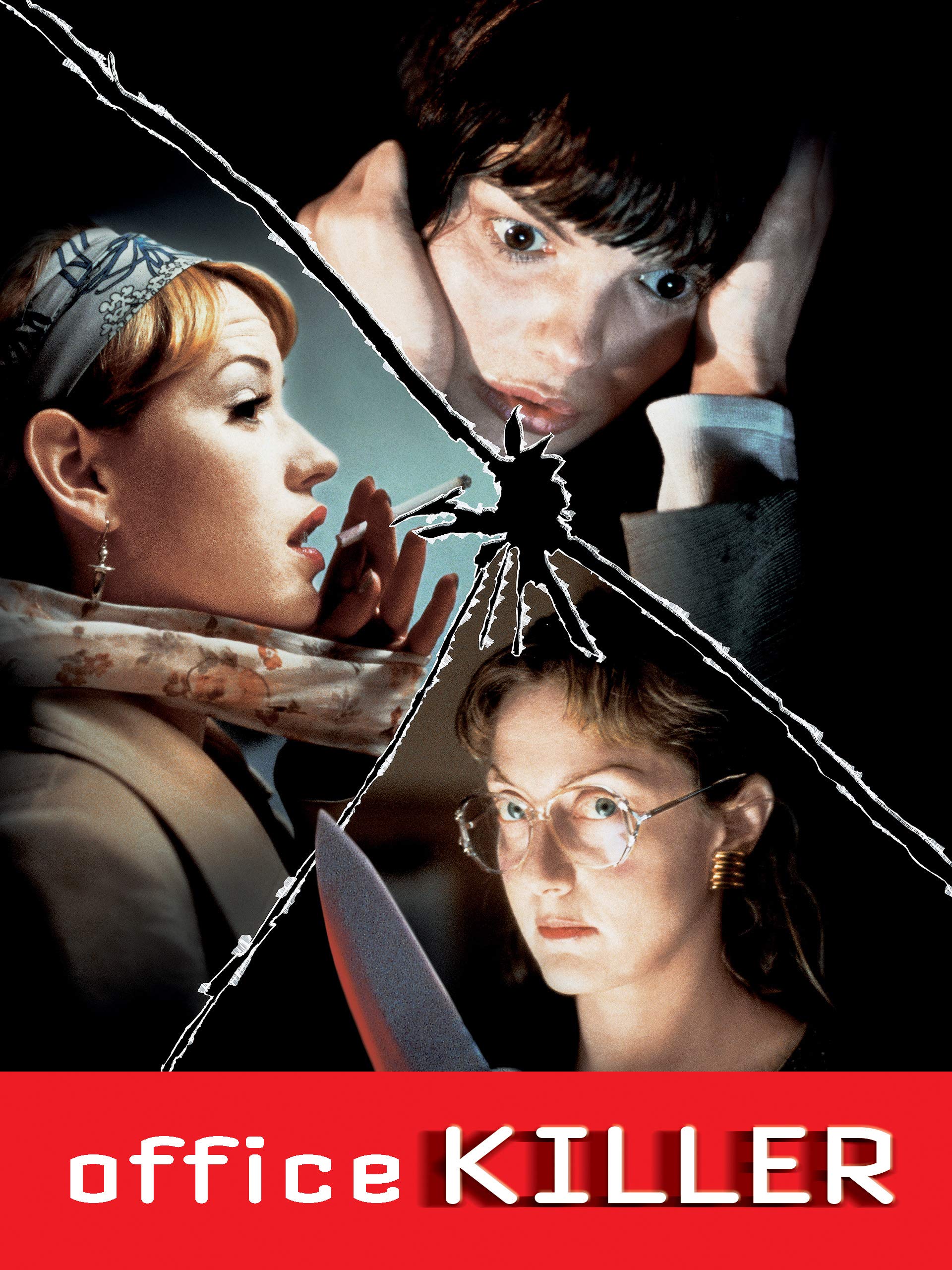
There comes a moment in Office Killer when we have to wonder whether this film was made to be serious, or if it was some elaborate ruse. Part of that is casting Carol Kane in the leading role, and while she is undeniably a very gifted actress who has excelled in the realms of both comedy and drama, she is not someone that we normally associate with stories of bloodthirsty murderers – until we realize this was the point all along. Kane is such a likeable, endearing individual, her presence always elevating the projects in which she appears – but Sherman manages to put this all aside in casting her as one of the most terrifying villains of that era in horror filmmaking, the kind of serial killer whose lack of morals and seemingly endless adoration for violence makes this entire film one of the more unsettling entries into the slasher genre. Kane is incredible, and proves that some of the finest dramatic work is done by those who are more known for their comedic talents. However, Office Killer has a terrific cast of many recognizable performers – Molly Ringwald and Jeanne Tripplehorn are co-leads alongside Kane, being audience surrogates in the form of the main character’s co-workers who slowly start to realize the mousy, reserved editor to whom they barely given a second thought is actually a much more complex individual than they imagined, while Barbara Sukowa (one of the most underrated performers of the past few decades, someone who consistently turns in incredible work without receiving much recognition, especially outside of her native Germany) is a riot in her small but pivotal role of the magazine’s editor-in-chief, bringing the same mysterious intensity as she did in her early days working with the likes of Rainer Werner Fassbinder and his contemporaries. It’s a strong cast, all of which are doing very specific, interesting work that exceeds the more violent aspects of the story.
Each of the characters is fully formed along the lines of the genre, each one representing a different archetype within horror storytelling. Whether it be maniacal killer, the idiotic first victim or the “final girl” (a trope that is very cleverly subverted by Sherman), Office Killer lends itself to a much deeper analysis. Many have approached this film by means of a feminist reading, which is hardly surprising, considering the director is someone whose work is ferociously and fervently feminist in both its structure and embedded values. In essence, Office Killer is a slasher film made by women, about a group of women undergoing a set of challenges and featuring women in the central roles (with a couple of male characters thrown in, but in a way that are barely important to the narrative). Sherman brings her distinct sensibilities to this film, pulling together a variety of interesting strands of meta-commentary, and infusing the film with a genuine sense of nuance in how she approaches these issues through the lens of a horror, where the feminist issues supplement the genre, rather than guiding it. Unlike other recent attempts at adding critiques around gender issues, Office Killer is not weighed down by clear motives to convey a particular message – at its purest form, this is as much a film about an ordinary person being driven to the edge of sanity (but without the common “we live in a society…” critique often thrust on films about unassuming people reaching a breaking point that inspires homicidal tendencies) as it is about the patriarchy and the calls to dismantle it – and yet, it never comes across as overwrought, but Sherman covers these very pressing issues with a genuine sense of terror and giddy, macabre delights that keep us invested in this story, while still repulsing us in several ways.
Office Killer is the rare kind of film that is cobbled together from the best parts of many genres – feminist satire, body horror, slasher film and psychological thriller are all components that seem to have formed this film, which is a rousing and repulsive work of unhinged terror. It’s a real gem that has attained quite a small but dedicated following, and recent retrospectives have started to give wider audiences the chance to engage with this underpraised work of absolute madness. Sherman has yet to step behind the camera in terms of directing a film again, but judging by Office Killer, her talents extend far beyond the realm of photography, her ability to string together a captivating and compelling horror film that feels both subversive and fascinating is proof that she’s one of the great artists of our time. It’s a maniacal, twisted tale of revenge (although one can argue this film parodies such films, since there isn’t any clear reason behind the main character’s actions, outside of the fact that she’s very clearly a repressed psychopath desperately in need of psychological intervention), and through the masterful directing, incredible screenplay and the actors who interpret these bizarre but engrossing characters, Office Killers turns out to be a work of major brilliance, a dark and perverted story all about the lengths to which someone will go to prove that they are worth just as much as others – it just doesn’t always need to resort to a brutal killing spree in ideal cases.
 The Postmodern Pelican