
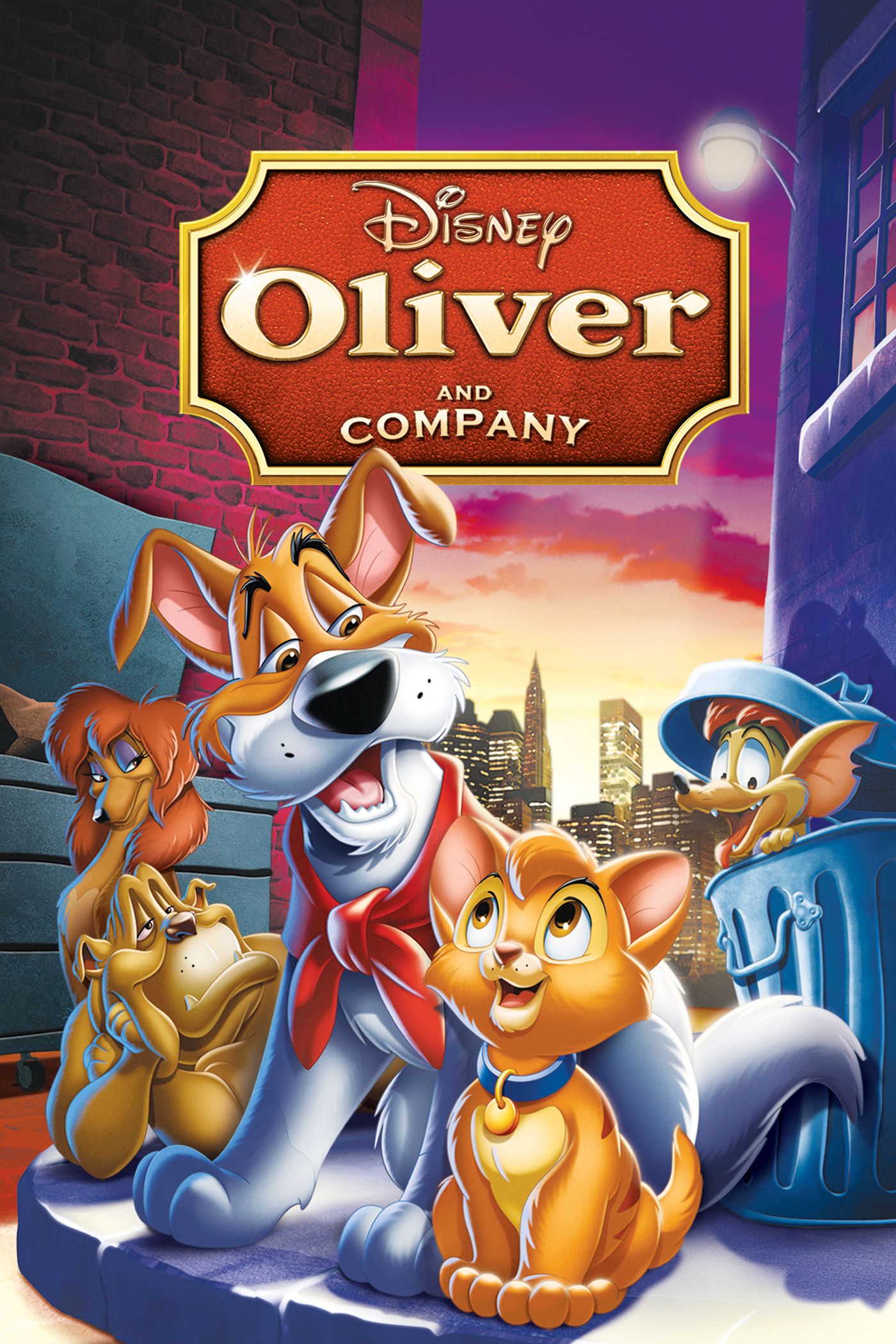
The 1980s were a tough time for the Walt Disney Company – the glory days of their first Golden Era was too distant for them to coast on the goodwill from their classic films, and it would be a few years before they entered into another prolific era of producing brilliant films. This was also a decade where they were more experimental, using the space afforded to them by their reputation to try a few new ideas, not many of them working. However, to entirely dismiss this decade is foolish – not only did it see the release of The Little Mermaid (albeit right at the very end), which kickstarted their renaissance, but there were some terrific gems embedded in this period, such as the subject of today’s review. Oliver & Company is far from one of Disney’s most beloved films – if anything, it’s one that is often considered a failure. However, as relevant as some of these criticisms may be, it’s important to speak from a personal place from time to time – and there are few films produced by Disney or any of its rivals that mean as much to me as this one. The loose adaptation of Charles Dickens’ Oliver Twist (a story that has been done in various forms too many times to actually keep count) is a very special film, one that I grew up watching, wearing out the VHS, and insisting that I purchase the DVD the moment it moved onto that technological platform – and revisiting it now, many years since I last saw it, confirmed two unimpeachable truths in my mind: firstly, this is a very flawed film and secondly, it doesn’t matter at all, because when this film its stride, the result is pure magic, and nothing can distract from that heartfelt charm that firmly sits at the heart of this film.
There are many reasons to love Oliver & Company, which seem to easily outweigh the shortcomings. Nostalgia certainly plays a part in the critical re-evaluation of this film – those who cherished it as children are unlikely to have any ill feelings towards it, and it seems like it’s those animated works that are produced with a lot of artistic merit that seems to stand the test of time. Comparing this film to latter offerings by Disney proves both the merits and flaws that persist throughout – the animation is a lot more simple, and could be considered rough around the edges. However, it’s also warmer and more endearing than anything produced by the studio in the fifteen years, where the stunning hand-drawn animation conveys more emotion than anything the latest computer-generated imagery could ever hope to provide. While it is important to take into account the fact that tradition plays a major part in the love many have for this film, where we prefer the simpler approach to animation since it hearkens back to our childhoods, there is just something so special about Oliver & Company, an element that can’t be attributed to the animation, but rather the fact that this is a film that is just brimming with heart, each frame being carefully composed by a great of creative individuals that dedicated themselves solely to realizing the ambitious concept envisioned by the executives that decided that audiences would adore a contemporary, animal-focused version of a text written over a hundred years previously. Somehow, they turned out to be right, and Oliver & Company became a sensation, at least in terms of finding a solid audience.
Focusing on everything Oliver & Company did correctly is much easier (and far more pleasant) than tearing it apart and exposing the flaws, since while they are quite evident, such as in the story being a bit too flimsy and the resolution being as hackneyed as one could expect, they’re not obvious enough to distract from the ferocious heart that dominates throughout this film. What Oliver & Company lacks in polish, it more than makes up for in raw ambition and a sincere soulfulness, the kind that can only come from a solid collaboration between artists in the creation of something they believe in. Director George Scribner shepherds the coterie of incredible minds involved in the film, which included a staggering thirteen screenwriters, original songs and score by the underrated composer J. A. C. Redford, and a cast of familiar faces (or rather, voices) that lend their talents to these characters. Their collaboration results in a very interesting set of artistic decisions, each component being vital in the final product, which is a beautifully moving story of finding oneself despite the odds that are stacked against you. It helps that, somewhere in this group of writers, they managed to actually focus on the important elements, such as the emotional content and the characterization, essential aspects of a film like this, but ones that can easily be overlooked in favour of more ambitious endeavours. If Oliver & Company proves anything, it’s the value of keeping everything simple.
Taking its cue from the Dickens novel, which has been essentially run into the group as a result of over-exposure, and bringing the distinctive Disney touch to it, the director and his collaborators manage to produce a lovable film in the form of Oliver & Company, which may not represent a peak for the company in traditional terms (despite being a success both theatrically and on home video), but it still carries a heft in terms of how cherished it is by a smaller but no less passionate group of supporters, who yearn for the days when Disney would produce these brisk, 70-minute long gems that may not have much of a deeper meaning or hidden agenda, and instead exist just to offer audiences of all ages some solid, meaningful entertainment. Revisiting this film years later was a wonderful chance to remind myself of how special this film is – it doesn’t take itself too seriously, and it has a very simple narrative that is bolstered by some terrific music (“Why Should I Worry” is one of the best songs recorded for a Disney film) and sincere emotional content that make this a very endearing film that deserves a much better reputation than one of the studio’s lesser works, since even though they’re undeniably playing in a minor key, they still hit all the right notes, and made a work that is a lot better than the more outspoken critics will give it credit for, which only motivates those of us who love this film to further advocate for its wider recognition outside of a merely trivial entry into a prolific canon of stories.
 The Postmodern Pelican