
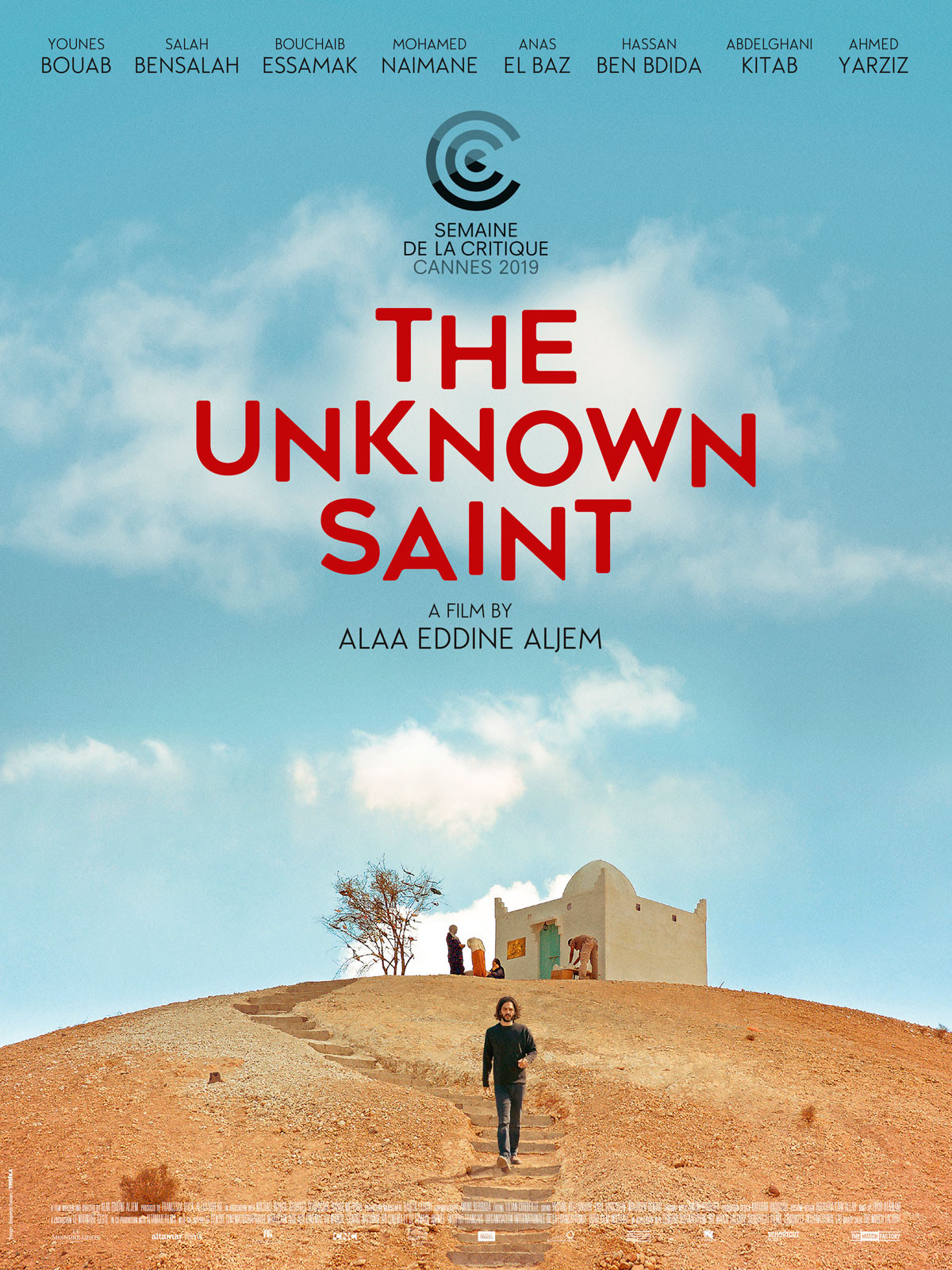
In the middle of the deserts of Morocco stands a hill, upon which a shrine has been built to an unknown saint that was buried there. This structure overshadows the community below, serving as a towering entity that drives both their spiritual and social lives. However, what most don’t realize is that there is something quite different about this building, or rather its reasons for being built. A year prior, it was the site of a frenzied burial – not of a human being, but rather of a bag full of stolen money, which was hidden amongst the arid landscape as a way of allowing the person that concealed it to return at a later date to retrieve it, only to find after his release from his prison sentence that the local villagers have adopted this space as sacred ground, making the possibility of retrieving his fortune exceptionally difficult, since the shrine is now a holy site, guarded day and night by community members who genuinely believe in the miracles offered by this unknown saint, not realizing the hallowed ground they tread on is actually built on something far more unsettling. As a result of this misunderstanding, the entire community has now shifted to centre itself around this shrine, using it as the centrepiece of their village, which only serves to be a problem for an older villager, who refuses to leave his home, since his family is buried there, and he plans on joining them in the ground of his homeland. Also amongst this community is a newly-arrived doctor from the city, who struggles to adapt to the very simple way of life, one where boredom isn’t only common, it’s the local pastime.
This simple premise is the foundation for The Unknown Saint (French: Le Miracle du Saint Inconnu), a fascinating dark comedy written and directed by the gifted young Moroccan filmmaker Alaa Eddine Aljem, who weaves together quite an engrossing story of community values, set to the arid landscapes of his native country, produced in tandem with France. Formed as a series of intertwining vignettes focused on a small group of characters, each one with their own distinct story, the film is a wonderfully peculiar glimpse into the lives of a group of captivating individuals that are unlike anything the viewer is likely to encounter outside of this film. Formed from an ambitious premise that combines scathing social commentary with ethereal meditations on faith and the undying devotion many have to some higher power, The Unknown Saint is quite an interesting project that hasn’t been given much exposure outside of a few dedicated supporters who find the director’s bewilderingly brilliant blend of comedy and tragedy so poignant and worthwhile. This is a film simply ripe for discovery, with the gorgeous filmmaking (consisting of some absolutely stunning shots), terrific performances and a deeply moving message making for a truly enjoyable experience, the kind of film that conveys a message without preaching it, and instead allows the deeper conversations to kindle themselves organically, and after a while, the viewer is invited to take part in the discussion themselves, albeit from afar, where the various cultural nuances play a part in our developing understanding of this story.
It seems almost poetic (or perhaps even outright ironic), that the central narrative concept in The Unknown Saint is the burial of a bag of money, and the subsequent worshipping that comes about as a result of a major misunderstanding about what resides in that grave. The director knew exactly what he was doing when he was crafting this film – Aljem is a filmmaker with what appears to be a masterful control of his craft, so much that he can take a relatively simple premise and spin it into a sprawling cultural epic that tells as much a story about greed and capitalism as it does present the viewer with a touching representation of Moroccan society, specifically those who reside outside of the metropoles or major bustling cities, and instead make their homes far from progressive society. Formed as a parable of sorts, The Unknown Saint is a fascinating combination of dark comedy and heartfelt drama, with the director carefully curating a series of moments that feel quite genuinely insightful, even when they’re done through the lens of outrageous humour, which only strengthens the narrative and makes the message at the heart of the film more clear. This is the kind of text that forces the viewer to question what the moral of the story was, since the film was clearly hinting at some deeper message, but rather than overtly revealing its intentions, it leaves it up to the viewer, who can hopefully use their own understanding of both the origins of faith, and the contemporary reverence held to material possessions that comes very close to religious belief, to make sense of the very abstract implications scattered liberally throughout the story.
Looking beyond the social critiques, which are as entertaining as they are terrifying, we can see how the director put together a film that focused mostly on looking at various sides of Moroccan society, filtering his own experiences through a few interesting stories. At first, the viewer might be at a loss – the narrative jumps around between characters and doesn’t tell us much about who they are, or how they relate to the central premise, and throughout the film, we patiently wait to see the extent to which they’re relevant to the main motif that drives the film. After a while, it doesn’t even matter much anymore, since Aljem is providing us with such a beautifully detailed portrayal of the culture, the specific nuances don’t make much difference, since we’re already invested in the personal lives of these characters, so much that when we do eventually get to the moments where their relevance becomes clear, it almost feels like an afterthought, a neat but unnecessary way to tie everything together. As a darkly comical psychological thriller, The Unknown Saint is a lot of fun – but it carries the most weight in the moments where the director is offering us more fascinating insights into the social system and the various traditions that propel the culture forward, only furthering this film’s ability to appeal to a much wider group of viewers.
The Unknown Saint is a film that keeps us guessing – it is slightly long (at 126 minutes, there are a few moments that could’ve been elided for the sake of brevity, but none egregious enough to have their inclusion be considered distracting), but it uses its time wisely, manufacturing a few fascinating stories that keep us engaged, while still offering us something in terms of an enjoyable experience. The precise qualities that make this so captivating are up to the individual viewer – it is beautifully made (some of the photography in this film is absolutely spellbinding, with cinematographer Amine Berrada doing exceptionally well in capturing the splendour of the wide desert landscapes), and the performances by the ensemble cast are absolutely magnetic, particularly by Younes Bouab, Anas El Baz, Abdelghani Kitab and Ahmed Yarziz, who anchor the film, grounding it within reality, while still surrendering to the very absurd humour at resides at the heart of the story. It’s a peculiar but engrossing film that offers us both the solid entertainment of a good thriller, the genuine laughs of a strong comedy, and the deep provocations of a philosophical drama – and somehow, the convergence of these disparate genres leads to a deeply insightful dark comedy that dares to be different, and seems to be relishing in its ability to look beyond the surface in matters relating to every aspect of our lives.
 The Postmodern Pelican