
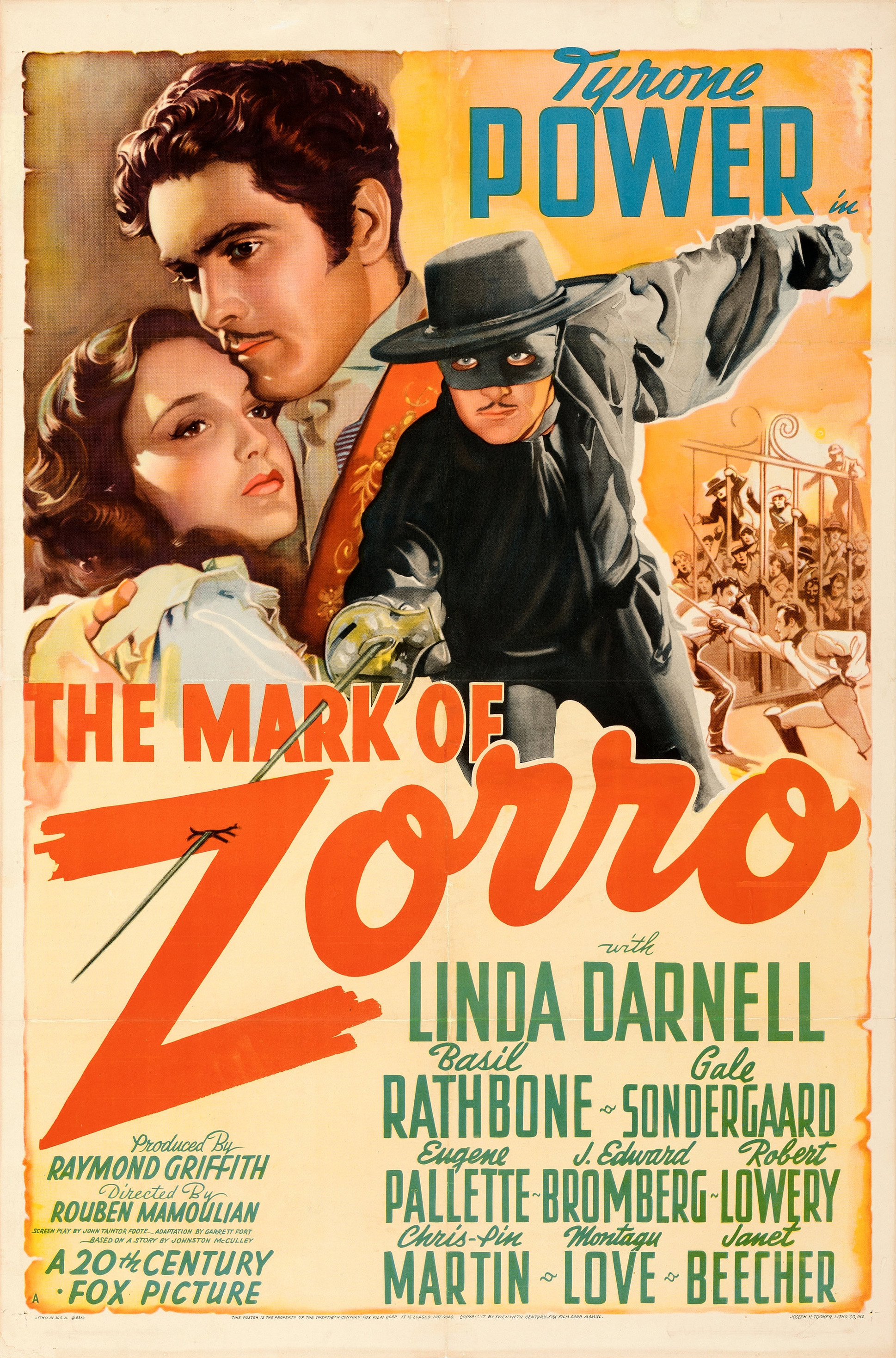
When it came to the swashbuckling genre – a kind of film that barely exists anymore, outside of a few ill-fated attempts to revive it – you got a wealth of different styles. These were films propelled by action, romance, mystery and even some comedy, many of them occurring in tandem, creating enthralling and captivating stories that gave audiences a wide range of genres to enjoy, all contained within a single work. The Mark of Zorro stands as one of the better-regarded entries into the genre, working its way up from being a very quiet critique of Mexican society (something that many subsequent adaptations of the Zorro stories tend to overlook), into an engrossing action epic that never loses any sight of the most important component, the heartful sense of intrigue that makes a film like this so enthralling. Rouben Mamoulian, one of the more interesting journeyman directors working at this particular time in the Golden Age of Hollywood, took a few well-noted risks in the creation of this film, working with screenwriter John Taintor Foote to put together a few key elements embedded within the original story, allowing the film to stay within the boundaries of traditions, while making some bold directorial decisions that situate it in the rapidly-growing culture of entertaining action films that allowed filmmakers to push boundaries that were previously unavailable to earlier artists. The Mark of Zorro may seem like a minor work, a niche entry into a genre that is almost entirely forgotten outside of a few major films that keep it alive, albeit as a novelty – but as we can see through this film, even one that has slightly faded can still entertain and enthral in equal measure, which makes a profound difference when revisiting these years of early, ambitious filmmaking.
It’s incredibly unlikely that when Johnston McCulley wrote The Curse of Capistrano, the five-part novel that was serialized in 1919, that “The Zorro” (“The Fox”) would become one of the most unexpectedly successful heroes in the history of 20th-century literature, spurring numerous adaptations that saw many different filmmakers and actors interpreting this fascinating Mexican hero. Not necessarily the definitive work, but the one that gave audiences their first introduction to the character, The Mark of Zorro is a fascinating film – and there are many different reasons behind its success. Part of it comes on behalf of the director, who appeared to have a very deep attachment to this project, beautifully guiding this film forward in such a way that demonstrates a clear and keen attachment to the material. Mamoulian was a director who may not have had the most prolific career (an astonishing achievement for a director working during this period in Hollywood), and could make a project that shone effortlessly with only a little bit of effort – and whatever drove him to dedicate so much of his time to carefully building this world, it clearly worked, since The Mark of Zorro is a wonderful piece of filmmaking. It moves at a perfect pace, never being too rapid, but also not lingering too long on unnecessary exposition, allowing the story to cut to the chase almost immediately, and eventually converging into a delightfully swift but always stunning action comedy with as much heart as there is skillfulness on both sides of the camera, which elevates the film and makes it so unexpectedly impactful.
A film like The Mark of Zorro really depends on the level of charisma possessed by the person who occupies the leading role – and in 1940, you could barely find someone better suited to this kind of swashbuckling action and comedy than Tyrone Power (especially if Erroll Flynn was available), who brought his natural charisma to the screen in a way that seemed earnest, but still had that glamour that came with Old Hollywood, where the overly macho persona wasn’t something to be critiqued, where it was brimming with masculinity, but in a way that was effective and endearing, rather than being as toxic as it would become in subsequent years. Power had such a distinct persona on screen, being simultaneously mysterious and relatable, someone who could captivate the screen without distracting from the film around him. He fits perfectly into this world, and is one of the few major actors that seems to be actively putting in an effort to tap into the Mexican origins of the story, rather than being just another American playing a character from the region (the actual problems with having a film focused on Mexican social and cultural issues, told and interpreted entirely by a white cast, is another matter). This is designed entirely as a star vehicle for the actor, and he lives up to the potential offered to him in the role. It’s not complex work, but Power has great chemistry with the entire cast, and plays Zorro as charming as he has ever been – and while he’s not the heroic vigilante of later films, he has the same sense of moral grounding that makes him such a fascinating character.
The Mark of Zorro is not a groundbreaking film – for those seeking an entry point into the swashbuckling genre, there are better films to serve as your introduction. However, there is always value in looking at the deeper meaning behind a film, and you can find it spread liberally throughout this film, which may present us with dazzling, extravagant filmmaking, but in a way that hints at a certain degree of depth. Naturally, no one watches a film like this for the sake of plumbing for meaning – instead, we go to the movies to see films like The Mark of Zorro for the sake of having a good time, which the film offers in abundance. It might not reach the peak it seemed to be implying it was aiming for (with the really interesting content coming slightly too late for everything to be neatly packed into the admirable 90-minute running time), but this doesn’t mean it lacks value – and throughout the film, we’re invited to become a part of this world, following these characters as they venture forward through a grotesque version of Mexican society. It’s a wonderful piece of early action filmmaking, and just a generally compelling film in every way, which makes it a worthwhile endeavour for anyone seeking to just surrender to the clutches of old-fashioned Hollywood escapism.
 The Postmodern Pelican