
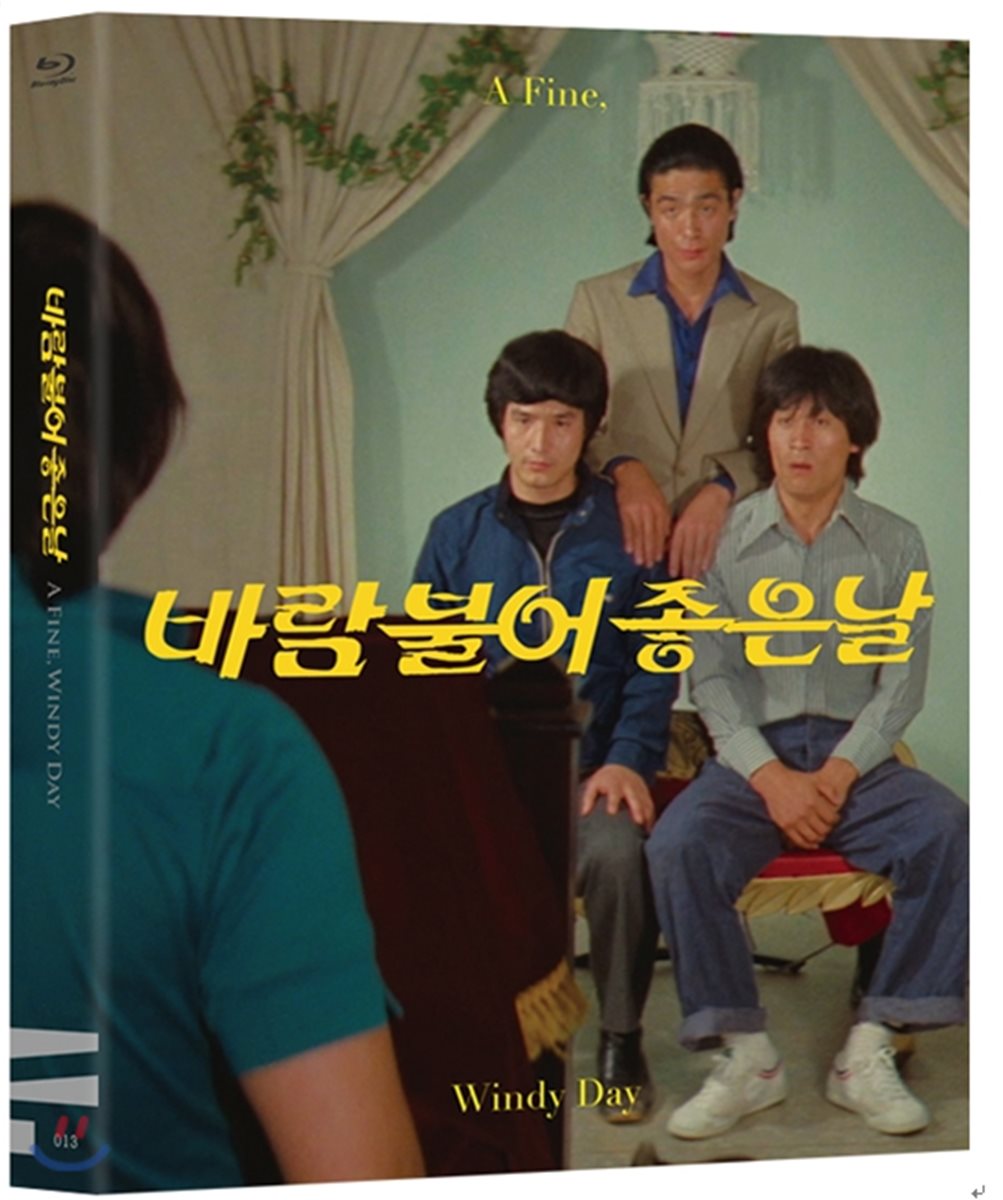
The question that we all need to ask when it comes to A Fine, Windy Day (Korean: 바람 불어 좋은 날), is whether this is a story about people living in a city, or a tale of a city and the people who occupy it. This may sound like the same concept, but it’s an important distinction to understanding what director Lee Jang-ho does in this ambitious South Korean drama is weave together a series of episodic moments in the lives of a trio of characters who gradually come to learn about each other through being placed in a number of challenging situations. A coming-of-age drama told from the perspective of a few interesting individuals as they navigate the hostile waters of Seoul in a time when the city was in flux, A Fine, Windy Day is a powerful glimpse into the human condition, told by a director who seemed to have a better understanding of society and its various machinations than most other filmmakers working at the time. Delicate, nuanced and often very funny, his work here is remarkable – and drawing some impressive performances from his cast of relatively inexperienced actors, and allowing them the freedom to develop their characters on their own time, Lee manages to not only tell a captivating story, but also immerse us in this quietly disconcerting world that is presented in stark, vivid detail, to the point where some of the most unsettling material is produced with a kind of delightful exuberance that would normally pull us out of the film if he weren’t so enthralled by the charms that persist throughout it. A landmark of South Korean cinema that predates many of the most notable mainstream successes by several decades, A Fine, Windy Day is a fascinating piece of filmmaking, and a worthwhile two hours for anyone with an interest in looking into a different side of society.
A subject that isn’t spoken about very widely when it comes to films produced in Asia in the 1970s and 1980s is the concept of Americanization. It’s not an issue that was ignored, but rather served as a foundation on which a film could show its opposition. During the rise of American global dominance, a lot of more vulnerable nations clearly felt the encroaching threat of their culture being overtaken, and South Korea was certainly not an exception. This is a fascinating subject that Lee explores thoroughly in A Fine, Windy Day – but unlike some of his contemporaries, the director doesn’t seem to be intent on instilling fear in the concept, but rather embracing it. This film is one composed of dualities – many of the most profound scenes take place at the intersection between the two cultures, such as a centrepiece moment that sees the main characters in a discotheque – Michael Jackson’s “Don’t Stop Till You Get Enough” plays to the mild enjoyment of the attendees, but it takes a fond remembrance of more traditional Korean music to get one of the protagonists fully invested in the experience, which results in a beautiful and very funny collision of the cultures. Seoul was a city that was radically changing – it wasn’t entirely rejected the influence of American culture, but rather trying to balance its inevitable impact with an attempt to hold on its own traditions. For those ready to embrace the new globalized world, this was a seamless transition – but for others, it ended up being a much bigger challenge, especially those who still found themselves drawn to their homeland and the customs they grew up with. Lee paints a vivid portrait of a city changing, almost constructing it in real-time – and both visually and through the dialogue, the director composes something truly powerful.
Duality is a pivotal aspect of this film, and Lee ensures that there’s a particular symmetry to the story he’s weaving on screen for us. Taking the form of a quiet character study, the film looks at the contrast of a group of individuals in Seoul, some of which have grown up there are thus well-equipped to handle the changing nature of a major city, while others have ventured from more rural areas, and not only have to adapt to the challenges of living in a bustling city, but also acclimate to the rapid change they see happening around them. The film draws many parallels between this story and the classic fable of the country mouse and city rat, even overtly mentioning it throughout the narrative, which immediately allows us to see the direction Lee was intent on taking this story. Detailed, but in a way that feels genuine and insightful without coming across as overly pedantic about the subject matter, nor all that overwrought (balancing gravitas and sweetly-sentiment humour in a way many more seasoned directors often struggle), the film weaves together a vivid tapestry of lives. It may not always been the most coherent – the story jumps around frantically, to the point where it feels like the film is scrambling to make sense out of the proceedings – but it compensates for slightly inconsistent storytelling with a genuinely interesting portrayal of the people who populate Seoul, showing them in their everyday lives while quietly dismantling expectations, demonstrating their individual lives, as well the ways in which they overlap, resulting in an absolutely stunning, engrossing social drama with some delicate touches of endearing comedy, carefully placed into the story to give it depth and nuance.
A Fine, Windy Day is ultimately an oddity of a film – we have recently grown used to South Korean cinema being very polished and stylised, especially in the last two decades, where the likes of Bong Joon-ho, Park Chan-wook and Hong Sang-soo have elevated their national cinema to the global stage with their own distinct styles and methods of preparing a film. As a result, A Fine, Windy Day can be seen as quite bewildering – it is rough around the edges and clearly a work in progress, but one that conveys every bit of effort that went into its creation. It’s far from a perfect film, and there are many instances where it could’ve been improved (it runs a few beats too long, and there are certainly a few moments that could’ve been cut out to make it flow with more consistency), but it has its charms, which ultimately means more than the small shortcomings that we encounter throughout it. Lee has a lot of talent, and while he hasn’t ascended too high into the canon of his country’s great filmmakers (at least from an international perspective), his work is solid and well-crafted, with narrative flaws being cancelled out by a genuinely sweet and endearing approach to putting a story together. A character-driven drama that invites us to voyage with it deep into the heart of working-class Seoul, where we encounter a range of fascinating individuals going about their everyday life and trying to fit into a world that doesn’t always make sense – and the result is a charming, lovable comedic drama with an enchanting touch and a genuinely insightful sense of self-awareness, which only further proves to make A Fine, Windy Day an even more wonderful piece of cinema.
 The Postmodern Pelican