
“What is Hollywood by Babylon and sunshine?”
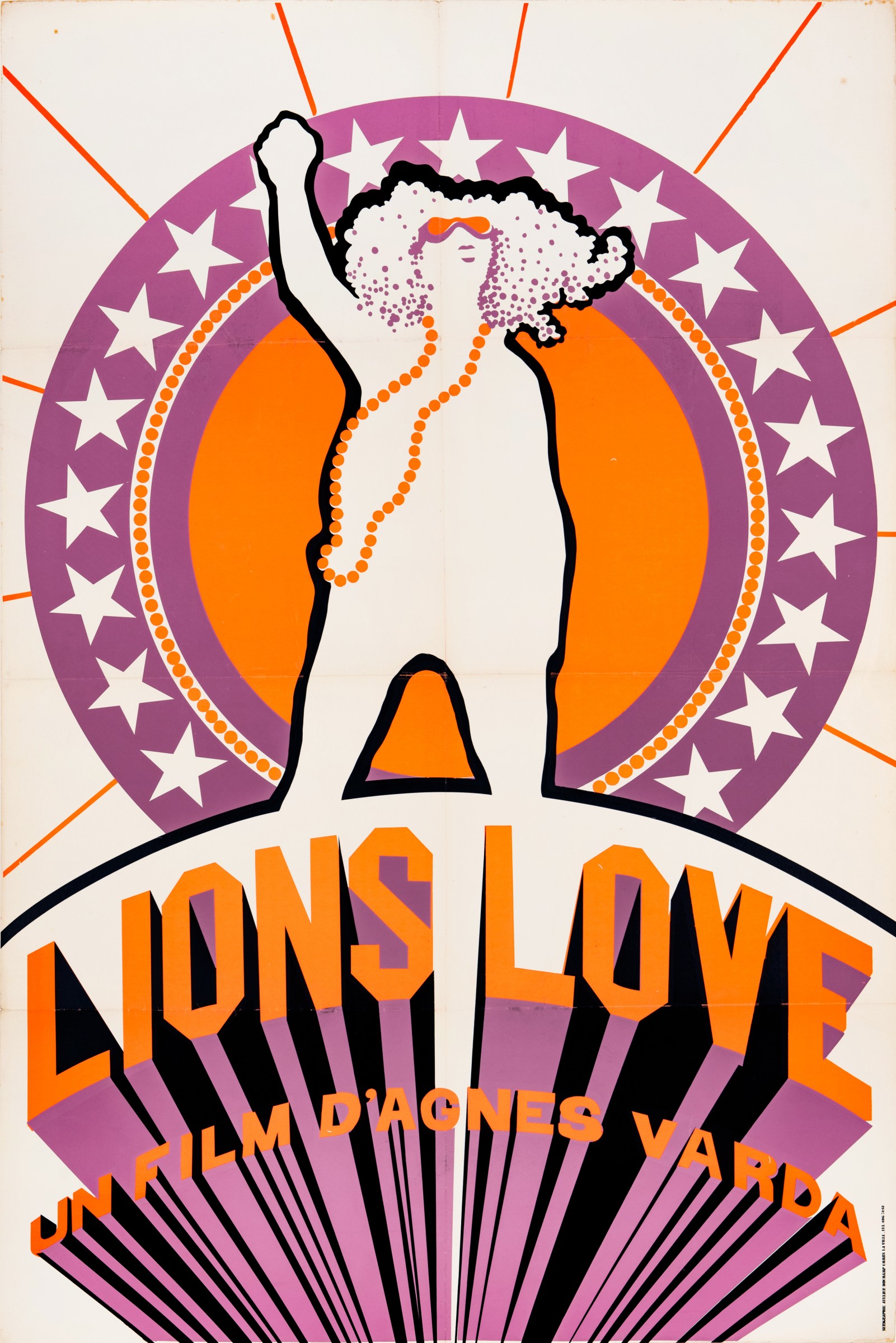
At some point in the 1960s, revolutionary filmmaker Agnès Varda spent some time in Los Angeles (and a few other parts of America, mostly settling on the West Coast), directing a variety of narrative and documentary films, some of which stand as her best work, and her most experimental. The centrepiece of this sojourn to the United States is Lion’s Love…and Lies, her masterful showbusiness satire that finds her at her most vitriolic. The director’s English-language debut (and one of the few projects she directed in the language), this film is a fascinating experiment more than it is anything else, a provocative and daring glimpse into the world of entertainment that is brimming with the energy of which Varda, at her peak, was never in any real shortage. A blisteringly funny look into the trials and tribulations of a trio of slackers trying to enter into the entertainment industry, played by Viva, an iconic Warhol Superstar, and Gerome Ragni and James Rado, who are better known as the lyricists and original performers of the now-iconic counterculture musical Hair (which has a few very clever references embedded into this film), the film is an insightful series of observations on a particular time and place, as filtered through the curious gaze of one of the most iconoclastic filmmakers to ever work in the medium. Varda set out to make her version of a Hollywood satire, one that would gradually strip away the veneer of glamour to reveal something that may be unsettling, but is truthful in only the way her bold excursions into the human condition tended to be.
As the quote at the start of this review suggests (which are taken from a monologue on the history of Hollywood, as delivered by iconic American independent filmmaker Shirley Clarke, who plays herself in the film), Lion’s Love…and Lies is a film intent on looking into different sides of showbusiness. The fact that Clarke, herself a defining figure of American film, despite apparently never having visited Los Angeles prior to being cast in this film, was the person delivering this oral history of the industry seems quite contradictory to the idea of a city built on the dreams of millions of ambitious people who aspire to join the elite few selected to define the world of entertainment. Yet, it all makes perfect sense, because Varda isn’t a director who always tended towards the obvious, and if she was going to make a careful deconstruction of the vicious cycle of showbusiness, it was certainly going to be a very different experience. The concept of Varda making a film about Hollywood is almost equilateral to Clarke’s presence, since they’re both outsiders peering into a world that they may have admired, but were never truly able to break into (although they both easily could have – their tendency to stay within their respective realms was clearly a result of making a conscious decision to not sell out to the industry). In the process, both women bring their own unique perspective to the proceedings – one of them in front of the camera, one of them behind it (although there is a memorable scene – which may or may not have been unscripted – where they quite literally change places), and incite some fascinating conversations surrounding the role of gender and sexuality in a time when it was rarely more of a hot-button topic in the discourse, and manages to be a truly captivating indictment on the changing gender roles that confounded as many people as it outright liberated.
On the surface, Lion’s Love…and Lies is a film that functions as a Hollywood satire, with much of the narrative focusing on the musings of a trio of young actors trying to make their way through a cutthroat industry. However, Varda isn’t so much interested in the specifics of the film industry as she is the more internal lives of these characters, and the bolder ideas that they represent. Most of the film-related discussion is split between vague meetings with “the producers”, or glimpses into the culture of Hollywood, with Varda holding more reverence for the Golden Age than she did the current direction, as evident with the almost sacrosanct approach she takes to looking at some of the glamorous stars of yesteryear in several sequences. Lion’s Love…and Lies is instead a merciless satire of the free-love movement that defined the 1960s, but from the opposite end, where the decade was ending, and a sense of melancholy persisted over a culture so intent on holding onto their youth. Situating itself in Los Angeles only heightens this nostalgic sensation, as it was a city in flux, changing as time went on, while still being caught between generations – the older group who wanted to hold onto the mystique of showbusiness, and the younger upstarts who hoped to dismantle the entire fabric of the industry. Perceiving all of this through the lens of Varda’s camera affords us the opportunity of seeing the melancholy of the back-end of the Vietnam era through the eyes of a complete outsider, someone who had no investment in the United States or its culture other than her own insatiable curiosity, which all amounted to a complex and insightful look into the changing mindset that swept across the nation and caused a lot of radical change between generations, which is often not spoken about as widely as it should, despite being a formative moment in the culture.
As we’d expect, Lion’s Love…and Lies features the perfect collision of concept and execution, with Varda’s filmmaking being particularly excellent. It is certainly her most playful film, at least until her more mature years when she made a conscious point to embrace the silliness of life that one tends to discover as they age. Here, she is still the young, passionate feminist filmmaker with simmering anger, and the need to express herself through her chosen art form. She experiments wonderfully with form here, taking on a stream-of-consciousness approach the works particularly well in terms of demonstrating how these characters float through life, in a daze of narcotics and delusion. It also aids in blurring the boundary between fiction and reality, something quite vital to the film’s success, since the inability to tell what is staged and what is authentic is a major component in setting the foundation for this story. The meta-textual elements are intricately woven into this otherwise simple narrative, showcasing the multitudes of ideas that intersect throughout this city (which is less of a destination, and more of a never-ending transient journey, as Clarke mentions upon her arrival), and which propels the residents forward in their own individual efforts to make a name for themselves in a place where just as many dreams manifest as are utterly destroyed. It’s a wildly ambitious project, but Varda’s ability to make us feel as if we are present in every scene, watching the lives of these characters unravel before our eyes, is simply exquisite and helps us understand how she could truly do anything, even when working in a world she had very little familiarity with, outside of her own admiration for the industry.
Lion’s Love…and Lies is a film that invites us to peer into this world, and sample from the wildly deviant urges of a trio of people who are driven by their lust for not only worldwide recognition, but the luxury of simply being able to refer to themselves as famous. However, their hunger manifests in peculiar ways, as proven by Varda’s very experimental way of showcasing their burgeoning careers in comparison to the general societal malaise that dominated in the last years of the 1960s. It’s only fitting that the final moments of this film are a three-minute, static shot of Viva looking directly at the viewer, wordlessly staring back at us in the same way we have been observing her own inner life. It’s uncomfortable and profound, and only something that a director as self-assured in her ability to extract the meaning from any moment could’ve successfully executed. We’ve been invited to assert our own penetrating gaze on this story, observers of an elusive industry, voyeurs to its participants. The second half may be more heavy-handed in how it explores some notable events from this period – there’s a lengthy deviation into footage taken from news reports of Robert F. Kennedy’s assassination, which lends the film a certain gravitas, and anchors it within the real world, preventing it from collapsing into the effervescent absurdities that defined the first half. It’s a peculiar film, and one that is often elided when it comes to discussing Varda as an artist, mainly because it isn’t entirely cohesive with the more personal films she directed before and after it – but as an experimentation of both form and content, and a piece of fascinating provocation that she was known to dabble in from time to time, Lion’s Love…and Lies is a wonderful piece of filmmaking, and all the more proof that Varda could weave the most enchanting stories from the most simple premises, which only makes for a more thrilling, engrossing experience in peering at the lives of others and actually extracting something meaningful from it.
 The Postmodern Pelican