
When looking at any form of postcolonial literature written by an author that is part of a previously marginalized group, we can see some degree of “writing back”, whereby they are constructing works that not only describe their experiences or those of their ancestors, but also serve a discursive function, commenting on the issues that were faced in the past, almost through a dialogue. Ernest J. Gaines is one of the most important writers in the history of his national literature, having worked in the realm of African-American history for most of his career. Many quite rightly consider his masterpiece to be The Autobiography of Miss Jane Pittman, which often stands alongside a few other significant works in being harrowing accounts of the time between the Emancipation Proclamation in 1862, and the height of the Civil Rights Movement, over a century later. A faux-biography of a fictional woman who was witness to changes in the United States of America over the course of a century (with her story stretching from her pre-adolescence, all the way to her 110th birthday), the story is one that touches as many people as it does inform them. In his adaptation of the novel, John Korty crafted something very special, working with screenwriter Tracy Keenan Wynn to bring Gaines’ stunning work to the screen in a way that felt true to the spirit of the book, but also willing to plumb emotional depths that aren’t always capable of being conveyed on the page, but which can easily be portrayed on screen. Casting a small but powerful cast, and working tirelessly to find the unimpeachable truths, The Autobiography of Miss Jane Pittman is a radically important work that has been an absolutely essential work since the first moment Gaines put pen to paper, and allowed his thoughts to flourish into something absolutely extraordinary.
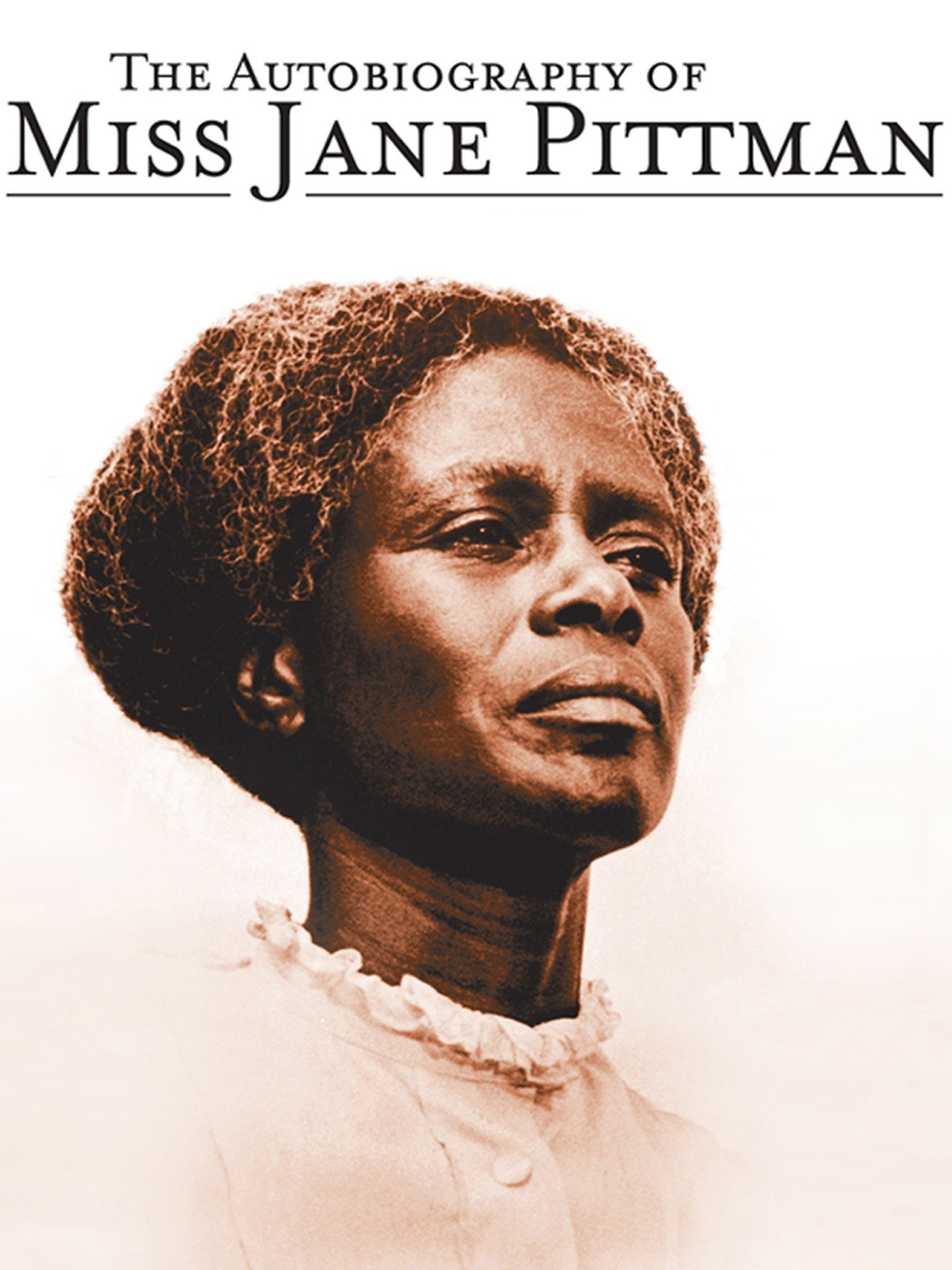
The titular role in The Autobiography of Miss Jane Pittman is one that is strangely not given the credit she deserves, since she is one of the great heroines of 20th century American literature – someone whose entire life we track, from the naive days of her early childhood (where she was given the slave-name “Licey”, which is subsequently changed to the more proper and dignified “Jane” after a chance encounter with an empathetic Yankee soldier), to her final days as a frail but plucky old woman who may have grown weak and feeble physically, but has never wavered in the mental capacity and moral conviction she shows throughout her life. It goes without saying that this part was played by one of the only actresses of her generation whose entire life and career can be summarized in almost the exact same way. Cicely Tyson was beyond a titan of the industry, being a historically resonant figure that didn’t shatter boundaries – she eviscerated them with a ferocity we don’t normally encounter. Her performance in The Autobiography of Miss Jane Pittman is both one of her finest, as well as one that is all too often overlooked, which is a dreadful shame, since there is absolutely nothing in this performance that can be considered anything less than astonishing. Jane is a simple woman who uses her resourcefulness and strong moral grounding to guide her, regardless of the challenge – and Tyson plays her with a dignity that brought out the authenticity in the character. It’s not so much a case of demonstrating Jane’s humanity (which she has in an abundance) but using it both a way to push the story forward, and as a discursive tool, existing for the sake of sending a poignant message about her journey. What has always been so wonderful about Tyson’s performances is that she always produces the most dynamic performances, the fiercest and most committed portrayals emanating from her diminutive frame, which gives her a simultaneous sense of being both elegantly ethereal and the epitome of a salt-of-the-earth performer, willing to dig deep to the core of each and every one of her characters, bringing them to life with a vivacity that she maintained until the very end.
Tyson’s performance holds this film together – smaller appearances from an ensemble of gifted actors are complementary to her work here, rather than being of an equal calibre. However, it doesn’t matter all that much when we consider how The Autobiography of Miss Jane Pittman is fashioned as a century-spanning journey, following the titular heroine as she makes her way through a radically transient version of America, seeing the shift of mentalities and change in socio-cultural perceptions occur before her very eyes. The film does well in representing her journey as one that isn’t just that of a passive observer, glancing as the winds of change blow across the land. It’s people like Jane Pittman, who may not have had a say in governance or legislation, but who fought for a place at the table, that made some of the most considerable strides in the movement towards earning equality in a nation that was apparently built on the idea of liberty, albeit only for a select few who met a very limited set of criteria. We are all born pawns to a system, and we can either passively sit aside and let it pass us by, or we can find a way to make our voices heard. In the cast of The Autobiography of Miss Jane Pittman, one of the most militant advocates for equality turned out to be a diminutive older woman who may not have had the strength or intelligence of those who make the decisions in the country, but had more than sufficient dedication to the pursuit of what she genuinely believed to be right. It’s a difficult conversation, but it’s own that needed to be started, and which continues today, since many of these issues are still incredibly relevant, and have evolved into some modern discussions on representation and inclusivity.
There is a need to view The Autobiography of Miss Jane Pittman as both a descriptive portrayal of a century in American history, and as a socially charged call to arms. This is a film that does have a beautifully poetic ending, but it’s one that is far from resolute, and doesn’t claim to be the final word on any of the issues. The fact that Jane Pittman managed to depart the world having made a difference doesn’t mean that the film is implying all the problems she experienced died alongside her – instead, the story shows the importance in doing what is right, and understanding that even the most inconsequential individual can be a valuable player in terms of the fight for equality. Half a century since Gaines’ novel was published, as well as the production of this film, there are still burning issues being fiercely debated in contemporary halls of discourse that are represented by the battles presented to us here. The characterization of the titular individual as someone willing to fight whatever battle she believed could change the course of history in some small way is key – tenacity is certainly a perfect descriptor of what this film does in using Jane Pittman as a figurehead of an entire movement, the kind of instance where a single figure is used to represent an enormous group of people – in this case, over a century of disenfranchised citizens who were treated as sub-human, and who had to fight harder than anyone else to have their voices elevated to the point of merely being a whisper in the raging conversations surrounding human rights. Yet, fighting the good fight has brought victory through exposure and visibility, which is very evident in this story, which takes a beautifully tender approach to commenting on the role of the individual in a massive movement.
One person can make a difference, regardless of how insignificant one may feel their voice is – and very few works of literature have been better in encapsulating this idea than The Autobiography of Miss Jane Pittman, which takes an ambitious idea and turns it into something incredibly believable, and entirely convincing in its own small way. Both the film and the novel that it is based off are pioneering works that sought to not only represent history, but also look towards the future. It’s not clear what those involved in telling this story thought the future held – but considering how optimistic it is, and how it ends on a note that work still needed to be done, but that we were at least getting somewhere, shows how we are on the right track. The Autobiography of Miss Jane Pittman is an absolutely essential work – it stands alongside many of the finest pieces of African-American literature, whether those rooted in reality, or those only loosely based on the past, where fictional characters are used as symbols of a movement that is still marching towards resolving issues surrounding equality to this very day. Anchored by a performance by one of cinema’s finest stalwarts, and executed with a tenderness that helps balance the harrowing subject matter, the film is an absolute triumph, and a work of singular importance that just doesn’t ever abate in its relentless quest to solving issues that pervade our culture, and will only be resolved through unity, dedication to equality and, more than anything else, common respect for one another. Once we get to that point, the legacy of the people Jane Pittman represented can finally ascend into the canon of influential people that made a significant difference without their names even being known to the world.
 The Postmodern Pelican