
“The day’s clear reality dissolved into the even clearer images of memory that appeared before my eyes with the strength of a true stream of events.”
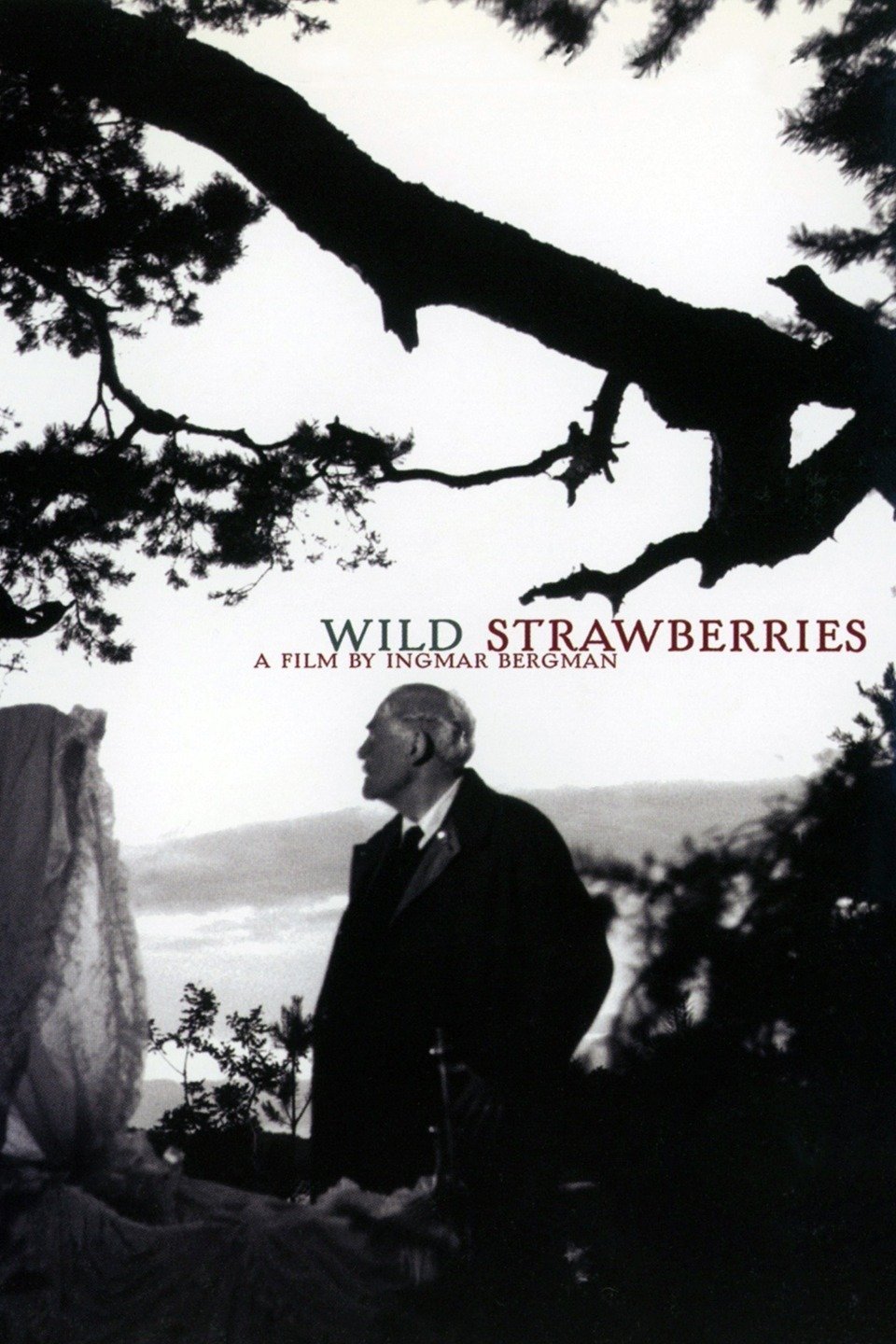
These profound words occur towards the middle of Wild Strawberries (Swedish: Smultronstället), one of the many unimpeachable masterpieces handcrafted by the incredible Ingmar Bergman, produced at a time in which he was gradually attaining the status of a master of the medium. A film forged out of the concept of memories and the literal revisiting of the past, Wild Strawberries is an exceptionally profound and incredibly moving manifesto on the value of holding onto the most cherished moments that we’ve experienced, since we aren’t ever sure of when and where they may be useful. Bergman was a maestro in all aspects, and while it isn’t his first masterpiece (especially since he had another film this year that is held in even higher esteemed), it is still an undeniably poignant experience that takes us on a journey into the mind of a complex series of characters, and works through a variety of intricate issues that reflect the director’s keen understanding of the human condition. It feels like the start of a new period in the director’s career (or rather, a parallel stage), in which he was able to explore deeper themes that relate less to the broad cultural strokes of his more boisterous and extravagant productions, and serve as a more intimate foray into the human mind, taken from the perspective of the one filmmaker that perhaps understood it better than anyone else. Melancholy, heartbreakingly beautiful and even occasionally funny in how it exposes some deeper truths through well-placed wit, which is par for the course for a director who has always been able to use a deft combination of humour and pathos in his construction of truly touching, earnest stories.”The day’s clear reality dissolved into the even clearer images of memory that appeared before my eyes with the strength of a true stream of events.”
The title, which roughly translates to “the place where the wild strawberries grow”, situates us in a story that is going to pay endless tribute to the value of looking to the past and finding beauty in the wilderness of memory. There’s a rugged charm to this film that can’t be neglected, with many viewers likely set to be surprised by how fascinating this film can be at times. There’s a tendency to view films like Wild Strawberries as laborious, effortful works in well-meaning but impenetrable art, not effervescent celebrations of life and all the unexpected avenues it often takes. Bergman was a director who always knew how to elevate his material far beyond simply being overly-contrived, meandering stories about people going through psychological torment, and if there was ever a film that proved how he could make something special out of nearly anything, it is this one. Every moment of Wild Strawberries is filled with some emotion – whether it be sweetly sentimental humour, deeply saddening melancholy, or just a frantic jumble of beautifully raw ideas of what it means to be alive. Through refusing to trivialize the journey of the main character to a series of inauthentic musings on the past done through the entertaining but vapid method of looking at the past through a rose-tinted lens of nostalgia, but instead actively pursuing a deeper understanding of the protagonist and his journey to the present moment, Wild Strawberries manages to be a delightfully honest and refreshing dosage of human drama, facilitated by a director whose intentions are always admirable because they come from his own overt fascinations with the people he came into contact with throughout his life. Heartfulness and intelligence come into collision throughout this film, but yet come to be entirely symbiotic, working towards a deeply compelling sense of easing us into a world that is defined by a mystical sense of melancholia that we don’t see presented in a form as profoundly moving as it is through Bergman’s impeccable vision.
Wild Strawberries is often remembered as the film that gave Victor Sjöström, one of Sweden’s most beloved and versatile actors, the opportunity to give one final great performance, and there are certainly few films better to have as your swan song than this one. Not only is the story one that is profoundly moving when put in contrast with the actor’s own life and how he himself was a man of a certain age, looking back into the past, it also is simply an extraordinary showcase for his magnificent talents. Sjöström was a tremendous actor, and even if Wild Strawberries is the only performance viewers see from him, it’s not difficult to discern that he was an actor with a particularly strong set of gifts. He is elderly and filled with complexities, but he is far from miserable or crotchety, which seems to be the standard for stories of older people reminiscing on the past, where their more dour persona as they age being contrasted heavily with their joie de vivre from their younger years. There isn’t any trace of inauthenticity anywhere in Sjöström’s performance, which feels lived-in and real, and built on a foundation of a strong relationship between the actor and his director, who understand that bringing a character such as Isak to the screen requires more than a veteran performer and a good idea. They’re helped along by a wide cast, many of whom were Bergman veterans (Ingrid Thulin, Bibi Andersson and Max von Sydow are all peppered into the film and have varying levels of importance to the story), but ultimately, Wild Strawberries belongs entirely to Sjöström, who can extract all the emotion from every scene, leaving us both enthralled and heartbroken each moment he is on screen, which is truly indicative of a very strong, and perhaps even historically-resonant, piece of film acting.
There is a vibrancy to Wild Strawberries that we may not expect, and which serves to only surprise us the more we venture into this world. Films about revisiting the past, especially moments that are not normally as joyful as we’d like to remember, are not supposed to be this enthralling, yet Bergman manages to captivate us without any effort, holding our attention and keeping us engaged and enthralled with his precise and earnest manner of gradually uncovering a set of complex ideas through beautiful, poignant and (most importantly), unbelievably simple, cinematic techniques. It helps that the form the film takes is so wonderfully straightforward, yet still very unique – focusing on the main character literally stepping into his memories and living through them again as a visitor to his own past is inspiring, and has developed into a regular trope for other filmmakers, who took a similar approach in tribute to Bergman – Woody Allen in particular made fantastic use of various narrative strands of this film, with Stardust Memories being a similarly-themed story of a respected individual in his field reminiscing on his past while on his way to receive an award, while Another Woman also sees a complex intellectual protagonist stepping into her own memories and engaging with them from an aged perspective. It’s not difficult to pay homage to Bergman, and Wild Strawberries isn’t only one of his greatest achievements as a filmmaker, but also as a cinematic entity, since every frame is pulsating with a liveliness that is simply begging to be explored, deconstructed and analysed from every potential angle, which only strengthens the power of the story and makes it all the more enticing.
Wild Strawberries is a film that takes a variety of quiet moments and shows how, when put together, they can resound with the ferocity of any of the greatest works of art that came before or after it. Heaping praise on an Ingmar Bergman film seems almost pointless, since if there is anyone who doesn’t need more credibility, it’s the great Swedish filmmaker, who continuously showed his immense skills as both a visual stylist and narrative storyteller. It all comes together beautifully throughout the film, each moment filled with an exuberance and a quietly calibrated sense of humour that complements the deep existential discussions provoked throughout the story. It’s difficult to explain all the ways in which Bergman evokes something so special throughout this film, since so much of what makes Wild Strawberries such a rivetting piece is the fact that it has the ability to burrow into the psyche of the viewer, feeding off our own personal experiences and interpretations of what it means to be human. In many ways, this film is exactly that – a melancholy tale of memory that conceals a buoyant celebration of life, told through the intricate exploration of one man looking back at his experiences, and coming to terms with the reality that, while his life may not have been perfect or free of flaws, it was one that formed him into the person he is today. For better or worse, there is always value in realizing that we can’t change the past, so its better to embrace it and know that, whatever the road it was that brought us to the present moment, that there is always a reason to reflect on the elements that made us the people we are, and continue to define us going forward.
 The Postmodern Pelican