It should go without saying that 2020 was a year unlike any other – as a global population, we had to adapt to unprecedented changes that shook our very existence and presented us with a new set of challenges not many of us expected to have to endure. However, what came about as a result was a sense of unity – and there wasn’t any shortage of individuals in the entertainment industry that threw their weight behind the fact that film is a medium that binds us together, since we all have been known to enjoy a film from time to time. Despite nearly the entire year being enveloped by a world-changing pandemic, everyone knew that the show had to go on – and as a result, we were presented with some incredible films, most of them being made prior to the world shutting down, and shown to us in ways that will have an indelible impact on how we consume film. This is neither the time nor the place to go into an in-depth discussion on the merits and shortcomings of the release model that every studio had to adapt to over the last twelve months, but rather a chance to celebrate the efforts of many to defy the odds, bringing their work to an enormous audiences.
In many ways, 2020 was a banner year for representation – inclusion is steadily becoming a much bigger priority in the film industry than ever before, with more films by women and people of colour not only being made, but also given exposure to audiences on platforms that were previously more difficult to reach. Naturally, we still have a long way to go – but if there was ever a time to look back in pride at how the glass ceiling has been shattered for some impressive authorial voices that don’t quite fit into the confines of what was previously considered profitable, it can be found in the diverse range of films produced and released over the last year. It’s a process that can only be accomplished by taking it step-by-step – but for many of these directors, their modus operandi was to take enormous leaps, which resulted in a wide array of fearlessly brilliant works that helped shape 2020 into one of the most interesting years for cinema in recent memory, not only because of the external situation, but also by virtue of the decision to do what is right, and give considerable space to a broader spectrum of voices, which should not become a trend, but rather the definitive standard from which the film industry operates.
Now, onto the list. Firstly, this piece is arriving later than usual – as per tradition, I publish this list the weekend of the annual Academy Awards, as this is essentially the de facto end of the cinematic year, with the gala celebrating the previous year in film being the conclusion to the preceding months and the distinct works they produced. Rather than break with tradition, I decided to adapt as well, resulting in a list I have reconfigured endlessly in the last few weeks, trying to find the perfect set of films that could demonstrate the diverse range of work we saw in 2020 (some of them earlier this year as well). It is even more important to recognize them, since they often weren’t just passive pieces of entertainment, but also comforting companions as we ventured into the unknown future through a never-ending series of lockdowns and quarantines, which are still ongoing. There is a light at the end of the tunnel, but even when there was a sense of hopelessness, many of these films accompanied us along the way.
As per convention, we’ll start with a list of honourable mentions – the films that were good enough to warrant inclusion here, but not enough to crack the definitive list. After that, we’ll have the fifteen best films of 2020, a truly extraordinary year for cinema.
Honourable Mentions
(in alphabetical order):
Eurovision Song Contest: The Story of Fire Saga
The Best Films of 2020

Michael Winterbottom makes many films, not all of them are particularly successful, and he has been known to have a few notable duds in his prolific filmography. However, a key to his success has been his longtime partnership with Steve Coogan, the two having produced some absolutely stunning works over the past few decades. Greed is a film that doesn’t appear to be all that interesting at first, since its subject matter isn’t immediately striking. However, the gradual disintegration of social norms turns it into one of the most biting satires of the past few years, a ferocious, cutting indictment on consumerism and capitalism that takes its time to establish a clear tone, but uses it to incredible effect. A film that incites those familiar feelings of existential dread that come from a truly terrifying work of fiction, Greed is more terrifying than most horror films, funnier than nearly every comedy of the past year, and more insightful than the most thorough examination of capitalism we’ve seen recently.

There is something so seductively fun about The Burnt Orange Heresy, Giuseppe Capotondi’s European-set art heist thriller. Whether it be the masterful performances (anchored by the incredible Claes Bang and his interactions with Elizabeth Debicki, Donald Sutherland and Mick Jagger), the stunning cinematography or the deceptively brilliant screenplay that is always hinting at something darker lingering below the surface, this film is a fascinating exploration of some potent themes relating to art and how we consume it. The definition of a hidden gem that unfortunately suffered from getting a wider visibility due to the past year’s challenges in getting films seen (it’s not one that immediately strikes a viewer as the most compelling at-home viewing), but it’s worth absolutely every moment, and brings out such a fascinating set of themes that we don’t often see reflected in films nowadays, hearkening back to a time and place best preserved in the previous decades of cinema.

The film world has certainly never had a shortage of literary adaptations, especially those by Jane Austen, with every few years bring out yet another one of these timeless tales. Yet, despite the story being told many times before in both period-accurate and more contemporary adaptations, it’s Autumn de Wilde’s adaptation of Emma that perhaps feels the most refreshing. Whether it be through the performances (the beguiling Anya Taylor-Joy anchors the film marvellously, and is joined by an ensemble cast of some terrific actors, all doing their part to play these iconic roles), the gorgeous costumes and production design, or simple de Wilde’s free-spirited attempts to take the viewer on a journey into the period of Austen, finding the endearing charm through actively engaging with the material, hitting all the right comedic beats and finding the humour in a text that is supposed to be flowing and romantic, but rarely has its quirky charms used as the centrepiece for the entire narrative. Exuberant, upbeat and soaringly beautiful, de Wilde may not have made the definitive version of Emma, but hers is by far one of the most effortlessly entertaining we’ve seen so far.

Set in dual periods, Tigertail tells the story of a Chinese immigrant to America, who has to adapt to a world he doesn’t understand. As a young man, he had to overcome the language barrier, as well as the culture shock. In his older years, he may have developed an understanding of the superficial qualities of his life, but still have incredible difficulty in grasping the more metaphysical aspects, such as reconciling the past with the present in a way that helps him move towards a constructive future. In his directorial debut, Alan Yang establishes himself as an essential new voice in cinema. Tigertail is a film about memory, and despite his young age, the director understands implicitly all the questions he is provoking – the value of looking to the past and understanding that it can’t be changed, but rather used as a blueprint as we head towards the future, as well as the importance of cherishing every moment with those we are close with, since not only is life challenging, it’s also unpredictable, and brings with it a sense of volatility that could rob us of the most valuable moments. Beautifully-made, and anchored by Tzi Ma, giving the performance of his career, Tigertail is a true gem, and the kind of quiet, ruminative experience that immerses us in a particular version of reality, and helps us find meaning in an otherwise confusing world.

In theory, the premise of First Cow shouldn’t work as well as it did – but this can be said about nearly every film Kelly Reichardt has directed. The master of quiet, meditative dramas that explore themes of Americana from distinctly unique perspectives that may not immediately strike casual viewers based on their general themes, her films are always poignant and incredibly well-made. It took her a couple of decades and a lot of hard work, but she finally broke through into the broader culture with First Cow, for which an argument could certainly made for it being her greatest work to date. A rumination of existence through the lens of a story of the early days of American capitalism, the film is a fascinating character study that boasts some of the director’s most innovative and experimental ideas, all of which gradually converge into a hard-hitting portrait of a previous era, and the lessons that can be taken from those who made their fortune in unconventional ways, a concept that is as timeless as this film is bound to become, especially as future audiences gradually start to discover its brilliance.

Family means everything. No one seems to understand this better than Lee Isaac Chung, who joins in the ranks of many other filmmakers (some of which are on this list) who finally receive recognition for their efforts after working in relative obscurity for years. Minari is absolutely sensational – a slow-burning story of a Korean family making a life for themselves in rural Arkansas in the 1980s, the film takes its time establishing a central theme of finding one’s identity in a time and place that isn’t quite as accepting to outsiders as they would like. Simple, but in ways that are effective in bringing out the underlying themes of cultural collision, and featuring some truly impressive work from virtually the entire cast (with Korean acting legend Youn Yuh-jung and newcomer Alan Kim being the highlights of the film), Minari feels like a warm embrace, a charming and endearing drama about shifting social mentalities, and the importance of maintaining family values, as the only way one can hope to make it through difficult times is to depend on those who are closest to us, both physically and emotionally.

“Dying is easy, comedy is hard” – never has a well-worn adage been more relevant than in Kirsten Johnson’s astonishing documentary, where she sets out to record her father, a once-prominent psychologist, and his gradual descent into dementia. Based on the premise, you’d think that Dick Johnson is Dead is a dour affair – but this couldn’t be further from the truth, since this film is not at all about anticipating death, but rather celebrating life. It is hilarious, and finds the humour in the grimmest subject matter, and plays on the shock value that only comes from someone intrepid enough to abandon all societal norms and take on some of life’s more difficult questions in their own way. Beneath all the charming absurdity, there is a melancholy that only helps us see deeper into the realities of life, and demonstrates that we don’t have to fear the great inevitabilities of our existence – we’re all going to die anyway, so why not have some fun while we’re at it?
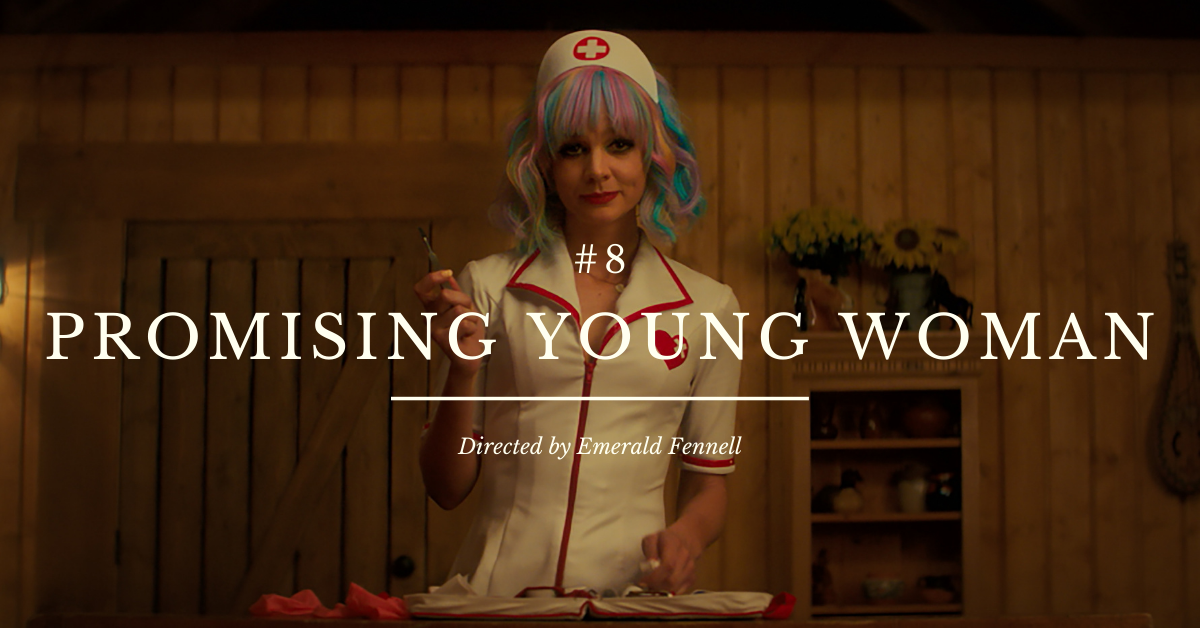
In a year filled with unforgettable directorial debuts, one in particular stands out more than many of the others, Emerald Fennell’s fascinating dark comedy, Promising Young Woman. On the surface, this film doesn’t seem like much more than a satirical psychological thriller. However, as we immerse ourselves deeper into this world, we start to realize the depths to which it is willing to descend, constructing a terrifying story that questions gender roles, and eviscerates the social order that allows certain individual (in essence, men who exhibit the signs of toxic masculinity) the power over others. Fennell’s deft combination of darkly comical satire with something that comes very close to resembling unhinged horror (and with an impressive performance by Carey Mulligan at the centre), allows Promising Young Woman to thrive as a perfect example of socially-minded filmmaking, and a film that was made to address some profoundly disturbing issues that plague our society, to the point where such works of art need to be created not only to respond to these tendencies, but to actively oppose them and hopefully provoke some kind of change in the process, even if it is only igniting the discourse and starting conversations.
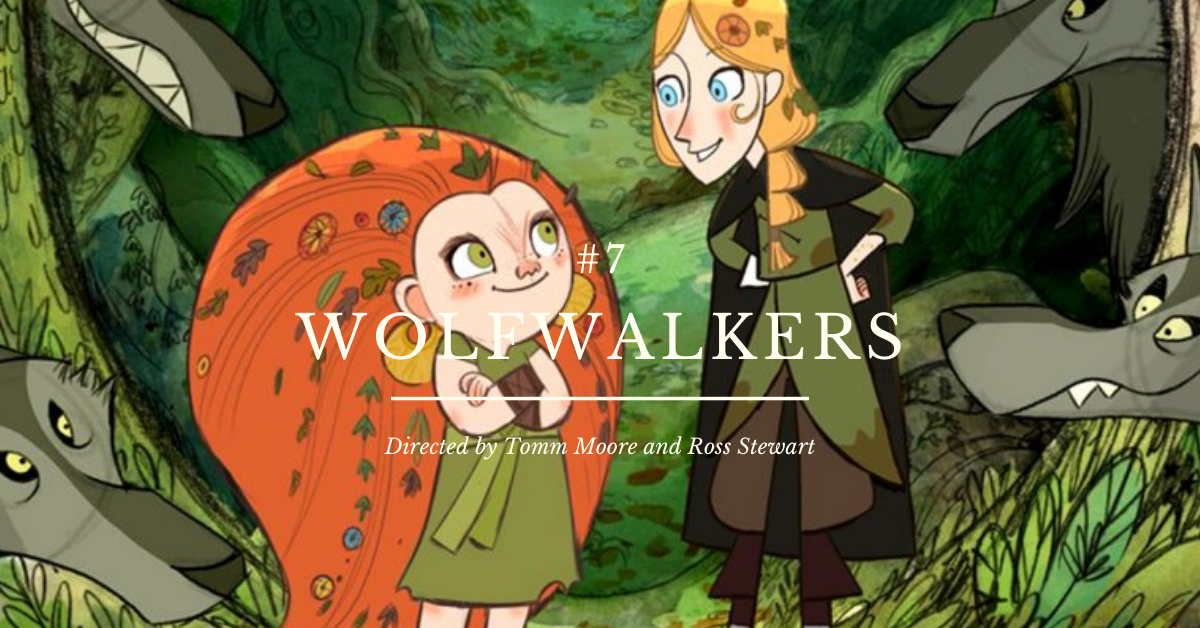
Animation doesn’t always need to push boundaries or be thoroughly innovative – it’s more than appropriate for a film to just simply exist on its own simplicity. No one understood this more than Tomm Moore and Ross Stewart in Wolfwalkers, the third entry into the former’s loose trilogy that aimed to bring Irish folklore to wider audiences through a series of stunningly beautiful animated fables that tell of different moments in the nation’s history, as well as introducing viewers to some of the myths and legends on which the culture has been built. This film is not lacking in any area, not even in those that animated films often struggle – the emotions are authentic, the story is impeccable and the animation is some of the most beautiful ever put on film. Yet, even at its most enthralling, Wolfwalkers is never anything other than insightful, honest and effortlessly simple – and serves as yet another reminder that a couple of major studios should not have the monopoly on the animation industry, since more independent productions are just as good, if not even better, as exemplified perfectly in this film.

Radha Blank burst onto the scene with The Forty-Year-Old Version, a hilarious and irreverent comedy that is simmering with a fury that hints at some of the greatest debuts in film history. Beautifully poetic, but executed with such charm and irreverent humour, we never know where we stand with Blank in this semi-autobiographical account of the trials and tribulations of being an artist of colour in a time when one’s identity is often trivialized for the same of consumerist consumption, with the idea of “blackness” as a commodity being a subject that many filmmakers are too fearful to explore, but which Blank is more than happy to assert her own perspective on throughout this masterful, darkly comedic satire that comes from a place of profound experience. Blank occupies nearly every role with this film, and defines herself as one of the most essential authorial voices working today. A great debut isn’t one that only introduces us to a bright new talent, but also makes us endlessly excited to see what they’re going to do next, and much like the rest of the cinephile community, I’m waiting on tenterhooks to see Blank’s next project, since she announces herself as someone with an essential and unimpeachably powerful vision that is going to only enrich the contemporary cinematic landscape.
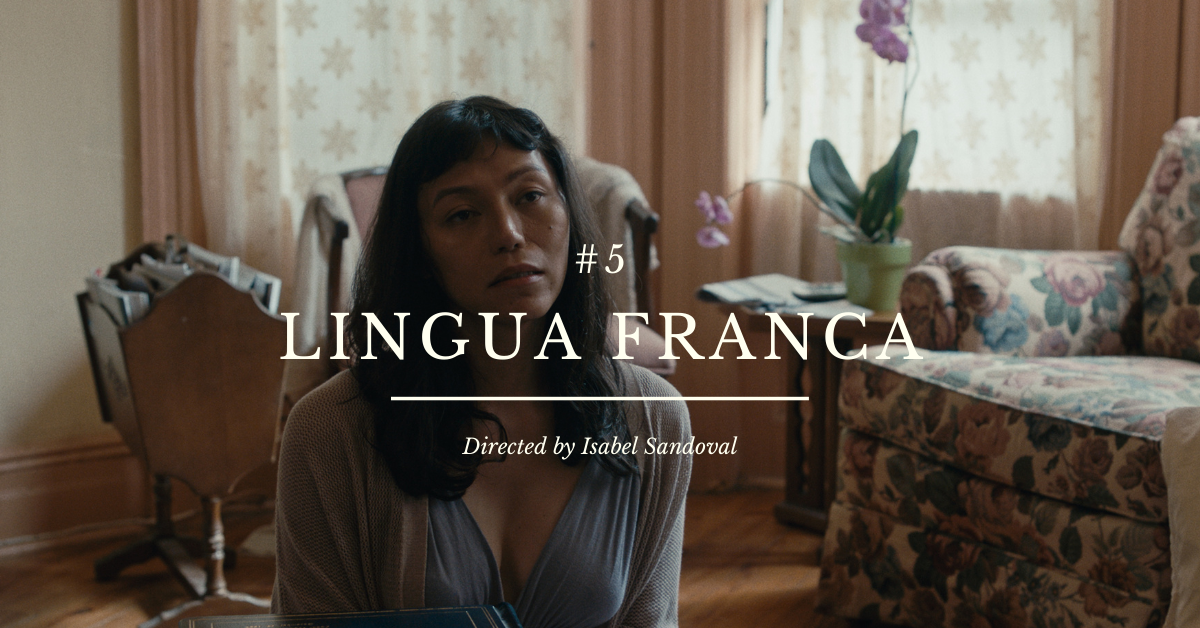
How wonderful is it that the contemporary cinematic landscape contains the rambunctious spirit that is Isabel Sandoval, and her incredible authorial voice? One of the most exciting filmmakers working today, Sandoval may not have made her debut here, but rather the film that launched her onto the international stage. Lingua Franca is a powerful film – an intricate exploration of identity, taken from the perspective of an artist who has been actively working to redefine the boundaries of how we talk about issues surrounding sexuality and gender, all of which are filtered into this film. In addition to be a profound demonstration of queer issues, the film is a poignant story of the immigrant experience, perhaps defining the concept of the American Dream better than nearly every other similarly-themed film, especially considering how it hails from a filmmaker who has a personal connection to some of the fundamental themes embedded in her story. Invigorating, compelling and composed with an authenticity that will strike any viewer, Lingua Franca is one of the year’s most poignant exercises in exploring identity, and focusing on the moments in our individual journeys that are worth celebrating.
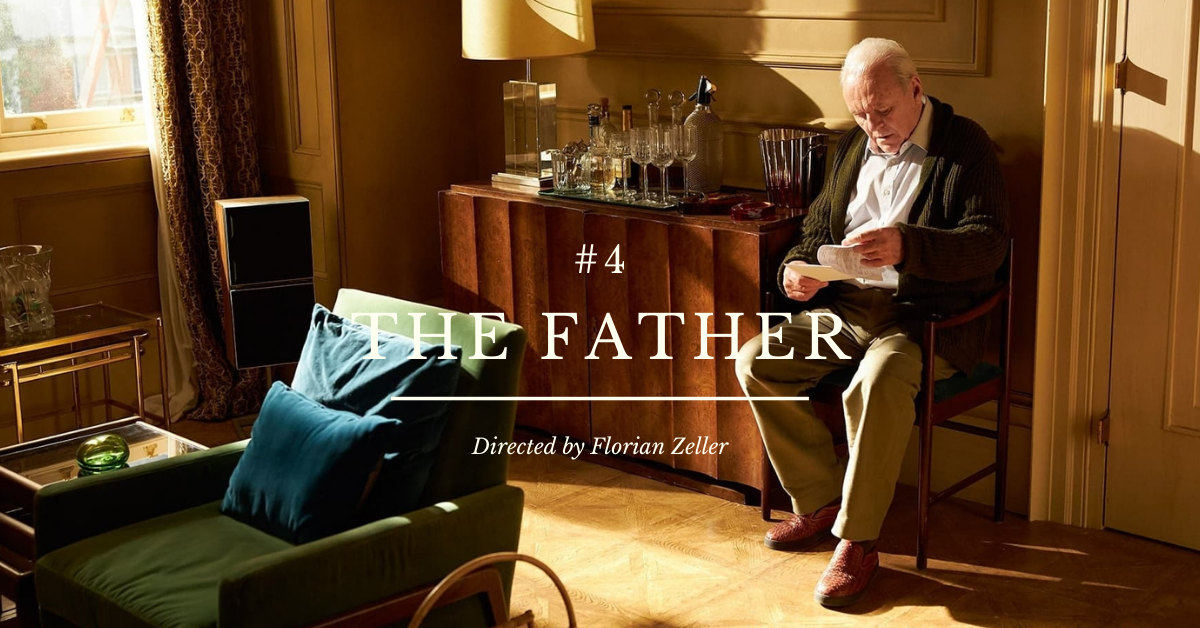
The Father is a carefully constructed portrait of a man desperately holding onto not only his sanity, but his entire grasp on reality. Anyone who has seen a loved one suffer from the effects of dementia are going to find this film both challenging and cathartic, yet entirely worthwhile at every moment. Florian Zeller, in adapting his own massively acclaimed stage production, makes a bold entry into a secondary career as a film director. His style is precise and well-composed, and he brings a sense of traditional theatrical structure to this film, which makes it more than just an ordinary stage-to-screen adaptation. It’s also helped massively by the incredible Sir Anthony Hopkins, who is turning in arguably his best performance in nearly thirty years, showing that he still has the capacity to command our attention and keep us captivated, proving that age doesn’t do much damage when someone has the unrestrained talents that Hopkins has regularly shown throughout his career. Harrowing, unsettling and truly beautiful, The Father is a film that means so much, and understands the value in cherishing every moment, since we never know when those memories will fade away forever.

Justine Triet’s Sibyl is a blisteringly funny work that sadly flew too far under the radar, so it barely managed to find the audience it deserved. This is a shame, since Triet puts together one of the most effective comedies of recent years – on one hand, it is a poignant feminist manifesto and exploration of identity, told through the perspective of a woman trying to find her place in the world. On the other, it’s a scathing satire of contemporary life, opposing our continuing tendency to descend into debauchery and hedonism, driven by standards concocted by the media. Featuring career-best work from Virginie Efira (one of the most exceptional young actresses working today, and someone who is bound to be a mainstay in the future if this performance is anything to go by), and the always-delightful Sandra Hüller, Sibyl is a terrific work that warrants so much more attention, being hilarious without ever needing to sink to the level of being cheaply outrageous or excessive in how it approaches the comedy that covers some slightly darker, psychologically-charged subject matter.

Inarguably, it’s a bit of a cheat to put two films in this position – but there are certainly reasons for it. With the exception of the film that tops this list, very few works of art managed to move me and make me feel the most visceral emotions than these two films – and it just so happens that they were both directed by the same person. Putting them together is an intentional choice, since it shows how diverse Spike Lee is as a filmmaker, as well as demonstrating the similarities that exist between his work. In Da 5 Bloods, he curates a story of identity set to the backdrop of the Vietnam War, which allows him to explore concepts of race and its relation to the broader political machinations of the United States. In American Utopia, he brings David Byrne’s incredible stage production to the screen, so audiences are able to experience the esteemed musician bringing us all together under the common language of music. One film is about division, the other about unity – yet, they’re both so impeccably crafted, and exist in symbiosis, existing in dialogue with one another, even if they weren’t designed as such. One is a concert film, the other an epic war drama – they’re about as different as two films can get, yet they still incite a fiery passion in the viewer, who will doubtlessly be moved by the array of emotions on parade throughout the few hours of filmmaking that these films share. Spike Lee is finally getting the recognition he deserves as a filmmaking icon, which is truly overdue, and if these two films are anything to go by, he’s far from done.
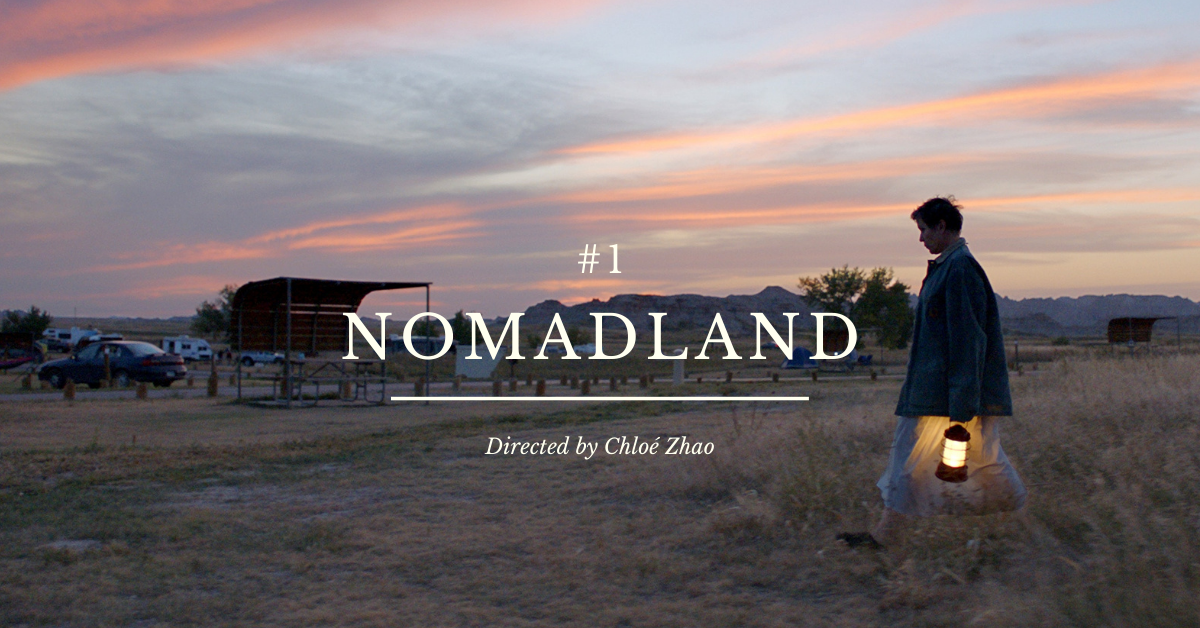
In my few years of doing an annual list of the best films of the previous year, I’ve encountered two situations when it comes to the film that tops the list – the first is one I see relatively early, but which makes such a substantial impression, it never leaves that position. The second is one that I see relatively late, but can’t help from falling in love with immediately, meaning that everything else in its path has to take a step back. Nomadland is quite simply the year’s greatest cinematic achievement. Chloé Zhao has steadily been growing into an important directorial voice, but with this film, she finally broke through and established herself as someone to pay attention to. A beautifully poetic, and perhaps oddly prophetic, account of a woman realizing that the only way to find herself is to hit the road and see where it takes her, is one that I think can speak to all of us, especially those who have felt the dreadful feelings of loneliness and isolation that tend to come to us when we least expect it. Yet, despite some slightly downbeat subject matter and a premise that doesn’t immediately lend itself to much joy, Nomadland is a resounding celebration of life and all its idiosyncracies – how else can the human condition be explained better than as a myriad of interconnecting stories, each one of us having something to contribute, whether it is a specific skill, or weathered wisdom that comes about as a result of our experiences. Poignant, heartwrenching but uplifting like no other film from the past year, Nomadland just represents everything cinema should aspire to be, and is likely on its way to becoming a film that will define the coming decade.
– – –
So, there we have it – the best films from a year many of us would prefer to forget. Cinema has rarely been more vital than it has been over the past several months. Not only did it help us pass the time (especially in those long, aimless days spent at home during the various lockdowns we all had to endure), but these films were sources of comfort, a safe place for all of us to spend a couple of hours while the world struggled to work through a pandemic. There is still a long way to go, so we’re not entirely in the clear yet – however, the film industry seems committed to continuing to produce films, which shows that there is not much sign of them stopping, which only makes it more likely that we’ll continue to get films that inspire hope and encourage unity. Art has rarely ever been more essential than it is at the present moment, since it brings us together and gives us the chance to see our common humanity reflected on screen – after all, film is often far more than just escapism, as we have seen quite regularly with these astonishing works of fiction and non-fiction that continue to provoke the most visceral emotions in the global audience.
 The Postmodern Pelican
A great surprise! And such fun to see a diverse, eclectic list that defines as much about you as a person as it does about cinema in 2020. I loved this.
I prefer to identify moments that move me. No different than anyone else, I adore Nomadland. One moment that resonates with me is when Fern’s ally Vanguard breaks down. The mechanic explains it would be better to get another van. I thought the film was about the rejection of a traditional home and the embrace of one’s free spirit. Frances McDormand broke my composure when she haltingly explains that Vanguard has been carefully built for her needs. My heart opened as I realized the the unemployed widow wasn’t denying the need to belong but seeking to fulfill that basic human need in an unconventional manner.
In Promising Young Woman, director and screenwriter Emerald Fennell startles us quite early in the film. It’s morning. Cassie is returning from a late night. She walks down a street near a construction zone. A trio of men begin to sexually ogle her. Diminutive Carey Mulligan summons an internal indignation that turns the situation on its head. In a moment we understand Cassie’s rage and the rage of all women who are thrust into such an untenable situation.
I have long admired the writing of August Wilson. Ma Rainey’s Black Bottom is a flawed adaptation of his play. Yet, the role of a yellow pair of wingtips is beautifully filmed. Levee pays the outrageous price of $11 for the shoes, we begin to under the musician’s drive for artistic and economic success. And when they are scuffed we ache with the acknowledgement of how the dreams of a black man are so easily, needlessly dismissed. I love when filmmakers give us the information but expect us to discern the import.