
Nicole Holofcener is such an enigma of a director, or rather the films she makes are. Throughout her career, she’s remained steadfast in her conviction to explore the trials and tribulations of a small group of characters who represent both her own neuroses as an artist ingrained in the alternative school of filmmaking, and the broader social consciousness that seems to fascinate her so much. The best way to describe the majority of what Holofcener tends to focus on is that she is a director who makes hilarious films about the most miserable individuals imaginable, which would be a dreadful prospect had she not proven on every occasion, even with a film as laic and unconvincing as The Land of Steady Habits, that she can touch on a raw nerve of the human condition without venturing too far out of the comfort zone that drives her and makes her work so utterly captivating. Friends with Money occurred midway between her career, after she broke out as a serious talent, but before she was truly embedded in the canon of great independent film directors, making this a film that worked actively to show her as someone capable of putting together a thrilling story without being impelled to satisfy particular artistic quotas or meet specific criteria that govern what can appear in a film, a quality of the mainstream that Holofcener has spent much of her career fighting against, and to exceptional effect, since she has contributed massively to the movement towards appreciating this form of storytelling on its own terms. There are some moments where I genuinely believe that Friends with Money could be Holofcener’s best film – and in a relatively small body of work that has yet to have a truly damaging misstep, it’s quite a claim that requires rumination to fully comprehend, which isn’t difficult when it becomes clear what a masterful piece of comedy she has produced with this glorious excursion into the spirited passion only someone like Holofcener could hope to provide.
Any synopsis or analysis of Friends with Money will doubtlessly refer to the fact that it adheres almost entirely to Holofcener’s noted tendency to make films about people talking – and in a method that she first employed very successfully in her debut feature film, Walking and Talking (which is part of the canon of great films that summarize their entire plot in the title), she often crafts something that pays careful attention to a small group of characters, normally with pre-existing relationships to one another, exploring their inner quandaries through having them directly address them to the people around them. An early pioneer of what would come to be referred to as mumblecore (while being separate enough from the movement insofar as there was certainly some degree of direction in what Holofcener was aiming to do, rather than wandering through the world aimlessly and presenting a snapshot of these rambling, metaphysical journeys), the director beautifully composes stories about humanity, condensing them into very likeable films about some truly despicable characters – and it’s this contradictory duality that makes films like Friends with Money so compulsively watchable, since we simply can’t take our eyes off the peculiar version of the world Holofcener is portraying. It’s not so much the method in which these conversations are being had, but rather the message they are able to convey – and as she’s shown throughout her career, both in films that she has written or directed, Holofcener can touch on some resonant issues many filmmakers would struggle to capture with such earnest vivaciousness, which is immediately a cause to find value in an otherwise very simple film.
Friends with Money is also the one film of Holofcener’s that not only has aged better than all the others (since a few of them rely on the element of surprise), but also because it is a film that rewards multiple viewings. It focuses on a quartet of individuals and a gaggle of peripheral characters that weave in and out fo the film, and thus has a lot of context that needs to be established, since its a true ensemble piece that gives an equal amount of attention between the main characters (and at only 87 minutes, Friends with Money is a very economical piece). Never one for overt exposition, or an over-reliance on detail, Holofcener rather allows the stories of these characters to come out organically through the dialogue, small clues peppered into every conversation that give us insights into the lives of these women and their romantic interests (or the lack thereof), and a variety of subtle allusions, normally conveyed in the most inconsequential gestures of moments of striking expressivity that give the film its nuance, and allow us to become so thoroughly invested in the lives of characters we’d otherwise not be too concerned about, since their privileged lives and petty grievances are not traditionally compelling outside of Holofcener’s brilliant work. When people remark on the strength of Holofcener as an artist, it’s normally mostly directed to her ability to write beautifully-complex characters that have so much nuance embedded in them, we’re surprised they’re fictional constructions, since the director seems to know each one of them so well, and made sure that they were reflected on-screen with sincerity, which isn’t something that many directors can easily attest to achieving with such meaningful results.
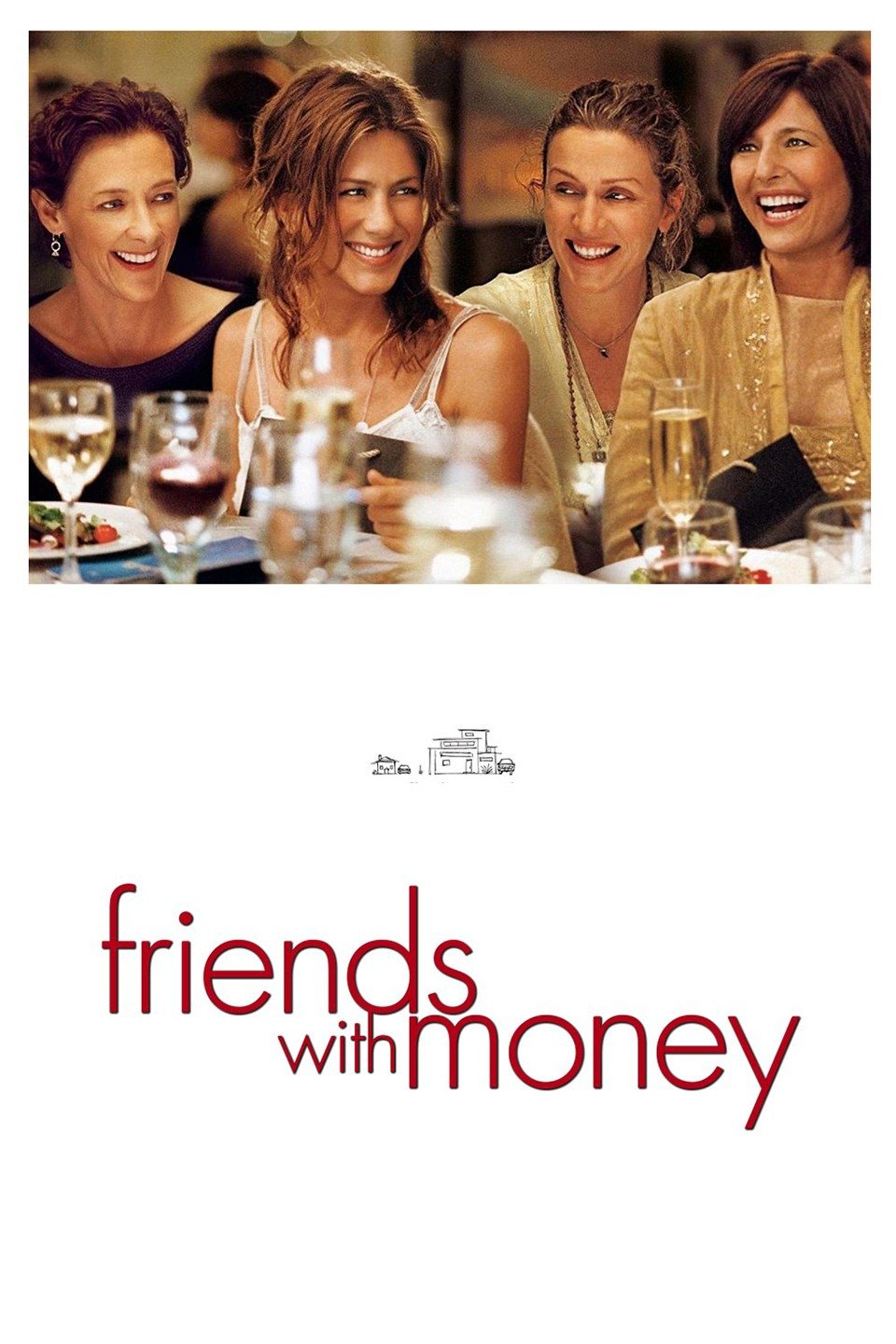
A conversation of the effective characterization of the individuals at the core of Friends with Money obviously can’t be complete without a discussion on the cast. Holofcener tends to be very creative when it comes to her casting, working with a combination of regular collaborators and newcomers that fit seamlessly into her world. This film sees her reuniting with her most regular star, Catherine Keener, who is (for the first time) not the lead, but rather a notable part of the central ensemble, playing the conflicted television writer whose marriage is failing. Joan Cusack is the wealthy woman who is at a loss at how to spend her fortune, which conflicts with her very caring and lovable nature that wants to help everyone she encounters. However, as terrific as Keener and Cusack are, it’s nothing we haven’t seen from either of them, with the most attention in this film rightly going towards the other half of the ensemble, namely Jennifer Aniston and Frances McDormand. On a few years removed from her iconic run in Friends, this film comes at an opportune time for Aniston, who was working tirelessly to prove herself as an actress with some serious skills beyond a slight weekly sitcom. She’s very good in Friends with Money (which would’ve been an appropriate title for the story of the cast of her show after eleven years on the air), but it’s nothing we haven’t seen before, which is much less of a dismissal, and more of a compliment to her magnetic talents. McDormand is on the opposite end of the spectrum – a lovable character actress known for her acerbic wit and dedication to character, she’s a standout in this film, playing the conflicted Jane, who isn’t quite sure of who she is anymore, and hides behind a veneer of callous humour, which is sold with great ferocity by quite simply one of the best actresses of her generation. The entire cast of this film is fantastic, and even in much smaller roles, the supporting ensemble is terrific and contributes to the director’s distinct portrayal of human behaviour.
For those going into Friends with Money expecting something other than a simple, enjoyable comedy, this film may be a disappointment, since it is quintessentially the work of a director who is always steadfast in her commitment to a very particular set of human ideas, never deviating too far from her brand of comedy rooted firmly within the realm of realism, which has given rise to her style, and meant that she has been at the forefront of these very simple humane comedic dramas that don’t have a lot of flair to them, but are rather delightful irreverence and a slice-of-life approach that makes them such heartful, endearing works of fierce independence. Assembling a terrific cast composed of character actors and major stars, and giving them a tremendously interesting script to work from, and one that gave each one of them the chance to play memorable characters, Friends with Money is a great deal of fun. It may not be revolutionary or even all that original (since we’ve encountered these subdued comedies that focus on intersecting stories between a group of characters – it’s almost as if Holofcener was attempting to make her version of a Robert Altman film, which is certainly not a risk that should go unnoticed), but it’s insightful, funny and has a lot of soul that keeps it buoyant, while still allowing it to be a critical commentary on the lives of a group of interesting women and their less-than-ideal romantic interests, which makes this such a compelling, and perhaps even forward-thinking, work of independent filmmaking.
 The Postmodern Pelican