
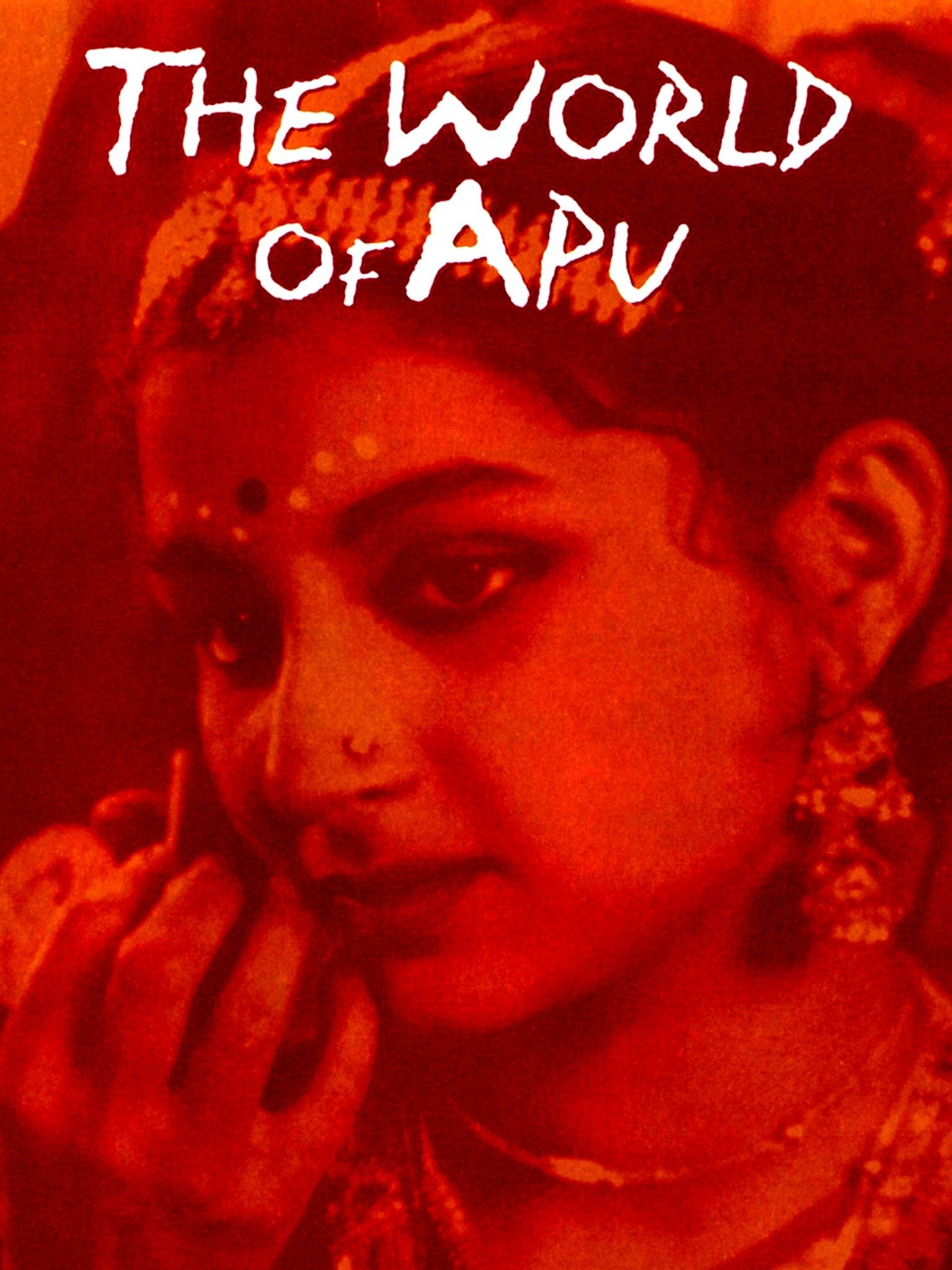
The World of Apu (অপুর সংসার)is less of a film, and more of the end of a journey – and as we can all undeniably attest, sometimes the destination isn’t the part we look forward to, but the methods of getting there. The concluding chapter in Satyajit Ray’s masterful The Apu Trilogy is quite simply one of the finest films to ever be produced, not only in its native country of India, but in terms of cinema in general, particularly because of how it takes us on this incredible journey, filled with fascinating diversions that influenced how we perceive life at its most fundamental core. Ray, who is also one of the greatest artists to ever work in the medium, managed to do something nearly impossible with this film, creating one that stands as both a terrific achievement in isolation (and while I will always recommend that the entire trilogy is watched in order, its difficult to deny that this is a great standalone film on its own terms), but also functions as the final entry into a trilogy that changed cinema, bringing together various strands of social realism and exploring them with conviction, honesty and a deep understanding of the human condition, which Ray has proved himself to be one of the most significant masters in conveying. The World of Apu is just a marvel – and much like the previous two films, it stands as one that doesn’t see the director treading the same ground or exploring all the same themes ad nauseam (instead using them as contextual background to a range of new ideas unique to this film), but also one that forms an astounding trio of films that play off each other, each one building on the themes of the last, with the final moments allowing this stunning story to come full-circle, ending in one of the most satisfying, beautifully poetic resolutions in cinema history. Not enough praise can be thrown at The World of Apu, a film that isn’t only a staggering achievement, but an endlessly important one, both for what it stood for, and the countless other artists it inspired since its release over half a century ago.
There have been many arguments over the past few decades about whether one can view this as a solitary work, or if having been through the previous films was absolutely necessary. It is almost unimaginable to think that someone would choose this as their first entry into the story of Apu, if for the sole reason that it means the previous two films aren’t likely to be watched, which would rob the potential viewer of two of the most incredible films that precede this one. However, as strong as it is on its own, The World of Apu is a culmination of half a decade of work, and many hours of filmmaking, with it forming the final chapter in an astounding trilogy that may not be entirely dependent on an active knowledge of its origins, but does reward those who put in the effort to watch all three. Everything that is introduced in Pather Panchali and Apajarito was leading up to this film, particularly in the final few scenes, where the titular protagonist returns to a small village, this time to visit his son, who is now roughly the same age as Apu was during our formative encounters with him in the first film. There is a cumulative power to The World of Apu that is far too difficult to describe – whether it be in the story reaching an incredibly satisfying ending, or the fact that there is just so much emotion brimming from seeing the conclusion to his journey (or rather, the one that Bibhutibhushan Bandyopadhyay had envisioned when writing the two novels upon which the trilogy was based), there is value in working through this world as Ray intended. Each moment across the three films is important, and even those that feel inconsequential or unimportant have someplace in the larger context, and the payoff is just staggering, with the smallest detail from the first film becoming a vital moment in this one, creating an artistic symbiosis that is truly incredible to witness, and all the more meaningful considering how much work went into the creation of this story.
Over the past few days, we’ve been on quite a journey with The Apu Trilogy, and revisiting it after about a decade has been such a revelatory delight, especially since time has only made this more of a poignant experience. Nearly everything that can be said about these films has, and I’ve covered a decent amount of ground in unpacking the precise reasons Ray made a trio of masterpieces. However, there is something about The World of Apu that is so distinct to this particular film, a quality that is not necessarily absent from the others, but rather more noticeable when looking at this one. The life of Apu Roy was one mired with tragedy – in every single one of these films, multiple characters in the life of Apu die in tragic ways, and his relationship to each death is dealt with starkly differently – in Pather Panchali, the passing of his elderly aunt (what we can gather is the character’s first encounter with the finite nature of life) is treated like a horrific discovery, while in this one, the death of his wife in childbirth is just as shocking, but for reasons that are so much more complex than a child encountering death for the first time. None of these films use death as its primary plot device, but rather carefully curate the sensation of loss in different ways, using them to develop the character and give him a weariness of the world that continues to beat him down, causing every bit of positivity he develops over time to instantly be destroyed when he realizes how volatile life is. These are incredibly sad films – but it is The World of Apu that goes a different direction, particularly in the final act, by employing something we hadn’t seen before in the previous films: relentless optimism. After nearly six consecutive hours of misery, peppered with brief moments of what appears to be happiness but turn out to be only further devices for Ray to put his main character’s resilience to the test, it is a wonderful sensation for the trilogy to end on a note of incredible hope. It may be slightly vague, since it concludes with the main character quite literally venturing down a path to an uncertain future, but the tone and intention clearly conveys a sense that his journey is going to be far more pleasant – and it does help that he has some company.
The version of Apu at the centre of this film isn’t the joyful little boy of Pather Panchali, nor is he the diligent, idealistic student of Aparajito – instead, he’s a man trying to find his place in the world, and when he realizes that his positive disposition can’t support the burden of loss he has suffered, he flirts with the idea of simply giving up – which is why the final act of the film, where the story is resolved by essentially returning it to the starting point of the entire trilogy, is so effective. It conveys a sense of hope, and considering Apu has become a nomadic priest who is heading to Calcutta, there is clear correlation with the vocation of his father, who regularly set off for the city as well – only this time, Apu’s son is accompanying him on the journey, leaving us with the likely possibility that young Kajal is going to have a much happier life than Apu, by virtue of the fact that his path is starting alongside someone. It’s a subtle and doesn’t instantly strike you in the moment, but rather comes about gradually when thinking back on the film – but it’s in these thoughts that simmer after experiencing this beautiful trilogy of films that mean the most, since it gives us the chance to come to terms with our own emotions, and dealing with our particular relationship to the nearly universal themes at underpin this film. Perhaps what is most striking about this trilogy is how personal it feels – not necessarily only in terms of the director and his experiences (and this entry in particular seems to hold the most resonance, since the character of Apu was roughly the same age as Ray was when making these films), but also in how they touch on some very common themes. We don’t need to have a comprehensive understanding of the complex social and cultural practices of Bengal in the early 20th century, but rather our own childhoods and early adult years are what prepare us for the emotional impact this film has on us. It’s a beautifully poetic way of telling a story, where an artist isn’t only relaying their own experiences, but opening up the world of their work enough for the viewer to attach themselves onto it, and assert their own particular perspective onto the characters, each one of us likely finding something to relate to in this gorgeous coming-of-age story.
It’s always a strange sensation to reach the end of a story that occupies multiple episodes or films, especially if its particularly well-told and made with conviction. It often feels like we’re saying farewell to old friends, having accompanied them on a particular journey, and now have to separate and go our own way. The Apu Trilogy is absolutely one of the definitive examples of this phenomenon, which isn’t at all a mistake – every moment we’re ensconced in the world Ray creates for us, the more we feel as if we’re a part of this character’s life, not merely an observer, but a companion as he goes on his long and difficult journey, both physically and mentally. The director does well in gradually opening up the world over the course of the three films – he pushes the boundaries of where the character would go, from the boundaries of the forest he was born in during the first film, to the city walls of the second, to the entirety of India in the final film – and the fact that his journey ends in such a vague manner only compounds the feeling that anything is possible for this character, his life ahead being yet another adventure, one which we are unfortunately not witnesses to, but can use our own perspective to determine where this ragged road is going to lead him. It’s beautiful and poetic filmmaking that far exceeds the “slice of life” tropes that have often been asserted on films like this – Ray hand-crafted a delicate, heartfelt exploration of the human condition, laying it over three distinct films, each one brimming with resonant emotions and an enormous amount of soulfulness that just feels so deeply authentic and true to the spirit of the film surrounding it. In short (because there are few films that inspire more discussion than the three at the centre of this trilogy), Ray made an absolute masterpiece in both The World of Apu and the triptych of films of which it is the final component. It’s a stunning piece, and while he did have a prolific career that stretched nearly half a century and saw the director touch on many very important and fascinating issues, The Apu Trilogy will always be his crowning achievement, and truly an exemplary piece of art that says more about existence than any work of academic philosophy, solely because it is so intent on celebrating life and its many idiosyncrasies, which makes it such an incredibly powerful and deeply moving work of fiction.
 The Postmodern Pelican