
In the tranquil parks and plazas of Seoul reside a small group of elderly women who spend their days patiently waiting to sell bottles of Bacchus-F, a popular energy drink, to a variety of men who come their way. In reality, these beverages serve to be a signal that these women are actually prostitutes who use these drinks as a means to ply their wares, and indicate their actual line of work. These women, dubbed “Bacchus Women”, are controversial in South Korea, as they are technically engaging in highly-illegal activities, but their age causes conflict with the very traditional principles of the country, as well as playing on the morals of those who have to apprehend them, as it is quite obvious that none of them are doing this for the sake of pleasure, but instead because it is all they are capable of doing in order to provide for their family. One such woman is the subject of The Bacchus Lady (Korean: 죽여주는 여자), the achingly beautiful drama by E J-yong, who handcrafted an unforgettable film about a woman trying to make her way through a hostile world that has grown only more opposed to her methods of making a living. The director, in putting this film together, knew exactly the burden he was taking on by choosing to tell this story – and through his commitment to giving a voice to those who dwell on the fringes of society, he offers an insightful exploration of their lives outside of the sensationalist articles written about them that frame these women as maniacal deviants, as well as giving audiences some deeply moving insights into a world many of us may have not known about had it not been for this film. A masterful drama that features one of the greatest performances of its decade at the centre, and a tenderness that goes a long way in captivating the viewer, The Bacchus Lady is one of the most poignant and heart-wrenchingly beautiful films of its era, and an absolutely essential work.
The process of finding a good story is definitely the beginning of any great work of literature, but its both the research that goes into making it convincing, and the later execution of both the concept and the knowledge garnered in the process, that is just as imperative. E had an exceptional idea here, and his decision to centre an entire film on a minuscule subset of the South Korean population, and in the process comment on a wide variety of social issues, was absolutely genius, and led to a staggering drama that can stand among the very best films produced during that period. Yet, the intricacies to what makes The Bacchus Lady such a rousing success aren’t nearly as clear to see, and it takes some deep analysis to understand where the film finds its strengths. However, when you have something that is so well-formed and complex in how it is composed, it becomes an absolute pleasure to penetrate it and unravel its myriad of mysteries. A social drama that is made with the sensitivity of someone who genuinely felt some kind of kinship – or at least a genuine interest – with the subjects he was depicting in his story, The Bacchus Lady feels like an important work of representation, albeit the rare kind that makes it clear that, while it is very sympathetic for the individuals it is focusing on, it isn’t going to spend time condoning their actions as being moral or ethically-sound. In this regard, E is taking a very quiet approach, standing back and allowing the story to transpire organically without getting too much in the way of providing commentary. It is a socially-charged film that manages to be both descriptive and discursive at different points, and if we’re willing to give ourselves over to this mesmerizing drama (which is not difficult, since it is such a beautifully-poetic film), we find ourselves taken on a deep journey into the life of a single woman who is doing whatever she can to survive, ready to face the consequences if they were to finally catch up with her.
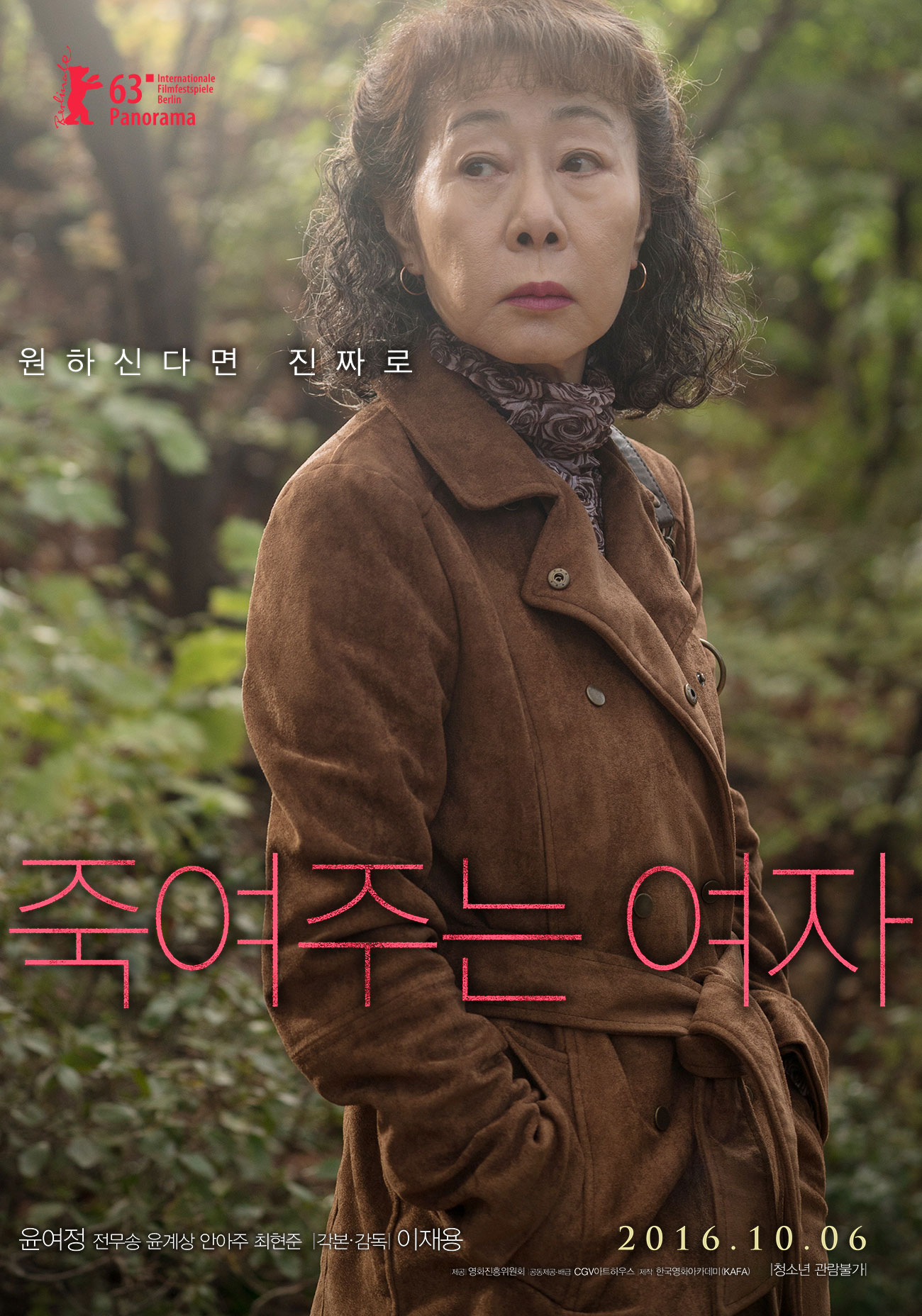
As a character-driven piece, the casting of The Bacchus Lady is absolutely key. Luckily, South Korea has never had a shortage of brilliant actors, many of which would’ve been a perfect fit for the role of So-Young, a woman who has surrendered to a life of cheap prostitution as her only way of making money, since there isn’t much place in modern society for an elderly woman to make a living, especially one that has led such a mysterious life, where her origins are almost entirely unknown. Youn Yuh-jung is cast in the role, and she truly gives a spellbinding performance that is immediately captivating from the first moment she appears on screen. A highly prolific actress who has managed to achieve enormous acclaim in both her native country and internationally, Youn was a perfect first for the part, playing So-Young with a conviction rarely glimpsed. This is a part that seems to have been tailor-made for the actress’ specific capabilities, drawing on her inherent empathy as a performer, and ability to plumb absolutely any scene and find the gravitas, even when the role itself may be more thinly-written, likely due to the knowledge that Youn would find something compelling to fill in the gaps that the direction intentionally leaves for her. As one of her country’s most beloved actresses, the decision for Youn to take on this role may appear bewildering, since it isn’t one that is all that likeable in theory – but considering this film is less about the actual act of prostitution, and more about the circumstances surrounding the character and her reasons for being in such a position, it gives Youn the chance to explore a wildly fascinating role that allows her to dig deep into the psychology of a woman who has been the victim of far too many obstacles, reduced to a position of subservience to a system she never asked to be a part of – and the fact that Youn executes these intimidating ideas with grace, poise and unimpeachable humanity only makes this more of a marvel.
As both a representative of an entire group of women who find themselves in such positions, and as an individual, So-Young is a fascinating character, and the film dedicates a large portion of its time to getting into her head and giving insights into what would drive someone to lead a life that is not only incredibly illegal (with it being well-known to all who engage in these activities that it is only a matter of time before they’re apprehended), as well as very dangerous, it also isn’t one that affords its participants much freedom, as they make very little money, barely enough to get by. We’re drawn into her world, which is quite a feat, since we never learn that much about So-Young, despite getting to know her quite well over the course of the two hours. Instead of getting a full backstory filled with details from the outset, we’re instead introduced to this ambigious elderly woman to who we come to grow increasingly attached through the gradual unveiling of various aspects of her life. Her story is told in fragments, which we gradually find scattered throughout this performance, each new scene revealing another aspect of So-Young, whether it be her past (we learn late in the film that she was in a relationship with an American soldier, with who she possibly had more than one child that she had to give up for adoption), or the reasons why she continues in her line of work. The combination of a beautiful script and an astonishing portrayal by Youn converges into such a strikingly profound depiction of a single individual on a journey of self-discovery that may have several unexpected diversions, but still comes across with conviction and earnestness. It’s the sign of a remarkable collaboration between artists, and the dedication that comes through when hard work equates to magnificent results.
In the end, the aspect of The Bacchus Lady that is most notable is how remarkably non-judgmental it is. E is not the first filmmaker to centre a film around a group that isn’t perceived positively in terms of public sentiment, and he’ll undoubtedly not be the last. However, his compassionate approach to the subject matter is truly incredible to see, and is indicative of an artist whose interests reside less in presenting an objective, socio-cultural critique, but rather cutting to the core of what makes these individuals so special and worth the time it took to explore their lives. It takes a wonderfully delicate approach to the subject matter, gradually unveiling insightful character details that supplement our understanding of not only their specific line of work, but also a range of other concepts embedded in South Korean culture that give outsiders yet another opportunity to bear witness to new nuances of a culture that hasn’t always been given the international platform it deserves. Anchored by a truly extraordinary performance by Youn Yuh-jung, who proves herself to be one of the finest performers to come out of her country (and who is finally gaining an appreciation from international audiences for some recent work she has been doing), and made by a director whose distinct visual style and earnest approach to challenging material makes him someone that any logical viewer will want to explore, since there is something very special about his work. Poetic, heartfelt and exceptionally meaningful, The Bacchus Lady is an extraordinary work, and a film that should be seen by anyone with even a passing interest in character-driven stories that speak to both the mind and the soul, enriching our understanding of not only a specific culture, but the human condition in general.
 The Postmodern Pelican