
Representation matters, perhaps more than anything else in cinema. We’ve seen every conceivable story portrayed on screen, but those that normally strike the most significant chord are the films that touch on issues close to the heart of the viewer, whether its those from a particular community, or the general audience at large. We tend to gravitate towards the stories that show us reflected on screen, particularly the ones that show a side to our identity that may not have been present in a more conventional space. In this regard, Darius Marder has made something close to a masterpiece in Sound of Metal, a film that looks into issues surrounding the deaf community and the various challenges those afflicted with the condition face, particularly those who lose their hearing later in life, following the harrowing adjustments that they need to make for the sake of living a full life after such a monumental change. One of the year’s most fascinating breakthroughs for the young director, as well as an opportunity to give yet another great performance to its lead actors (and in the process shine a light on an incredibly unheralded industry veteran who finally is given his moment to prove his worth as a performer), Sound of Metal is an extraordinary achievement. Whether you approach it as a representation of a wave of socially-charged independent films that seek to tell the stories no one else will, or simply as yet another entry into a canon of great films that tackle very serious subject matter with tact, nuance and tenderness, this is an absolutely astonishing achievement, and a film that is bound to stand the test of time as a work of unparalleled sensitivity in how it presents the stories of individuals that take up an approximate 5% of the world’s population, but rarely are given the chance to see themselves reflected on screen with such dignity.
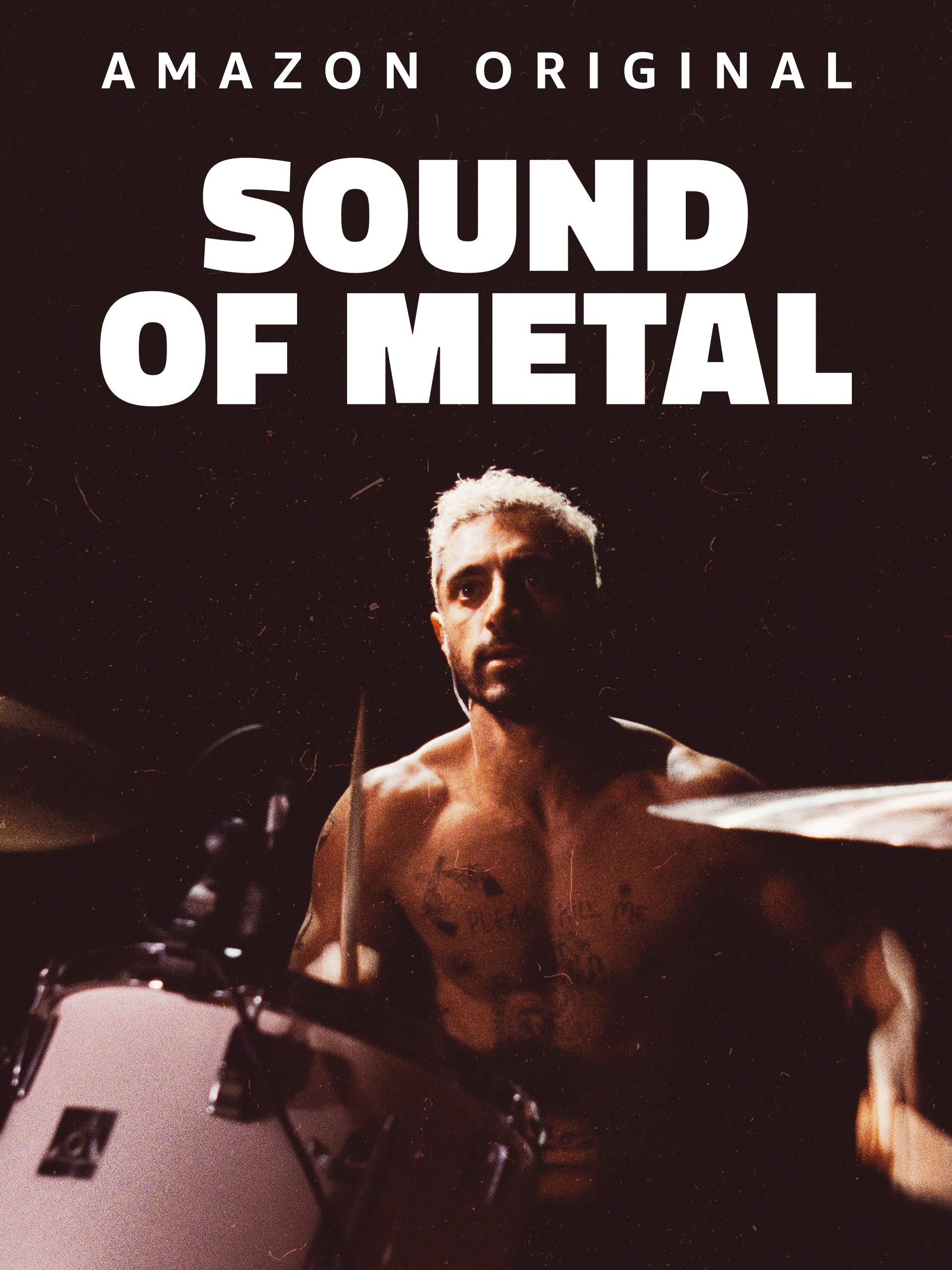
Sound of Metal is a film that exists at the intersections between three very different storylines – the primary narrative focuses on a young man (Riz Ahmed) who works as a drummer in a heavy metal band with his girlfriend (Olivia Cooke), and subsequently learns that he is going deaf after suddenly losing most of his hearing one day. He is now faced with a number of challenges, such as the return of some personal demons relating to addiction, after having been sober for years. In an effort to help himself recover, he is encouraged to take up residence in a facility run by a seasoned veteran (Paul Raci), who specializes in helping the deaf community recover from addiction. The film weaves together the two main plot elements – disability and addiction – alongside a profoundly moving story about finding one’s own way in a world that is becoming unrecognizable and hostile to them, and how it is incredibly difficult to fit in when every instinct we have as humans is to turn away from everything that we consider different. These different narrative threads are composed into an achingly beautiful manifesto on individuality and coming to terms with one’s own identity (which may not be as infallible as we’d like to believe), and whether functioning as the rare glimpse into the world of the Deaf community and their culture – which is presented absolutely gorgeously here – or as a manifesto on overcoming addiction and fighting our personal problems, Sound of Metal is absolutely stunning and warrants every iota of acclaim it has received, as a breakout for its director and as a film that wears its heart on its sleeve, and has some incredibly fascinating conversations that would be unprecedented without a recent renaissance of independent films willing to contribute to this discourse.
The lingering after-effects of Sound of Metal are most vivid when we’re thinking back on the story Marder constructed, and the trio of performances that helped bring it to the screen. The film is led by Riz Ahmed, who is well on his way to becoming a defining actor of the current generation. A chameleon of an actor, he blends into any role and brings a dedication to all his parts that ultimately resulted in his reputation as one of the best young actors working today. The role of Ruben is a difficult one – it needs someone who we can be convinced is a drummer in a hardcore metal band at the start, thus requiring a rugged intensity, which is then followed by a steady decrease in his public persona as he gradually comes to terms with the fact that he’s irrevocably changed. Olivia Cooke is quite a dominant force in the first half of the film as Ruben’s loving girlfriend and fellow musician, and while she may understandably disappear halfway through (as the character doesn’t factor into the latter parts of the narrative, with her presence being an intentional choice in developing the protagonist), but she makes a wonderful impression with the small but meaningful amount of work she is given. The revelation in Sound of Metal comes from the most unexpected source – Paul Raci, an incredibly obscure character actor who has toiled for decades in the industry without any recognition, is finally given the spotlight, playing a role designed to be a breakthrough for a hardworking industry veteran. As the empathetic proprietor of a rehabilitation facility, his moments are brief but unforgettable – he brings a tenderness to the role that can only come from first-hand experience, and while Raci himself may not be deaf, being the hearing son of deaf parents gave him invaluable insights into the community, and allowed him to bring to life an individual that leaves a lasting impression, in a film that thrives on the intimacy of its characters.
There is a version of this film that can be read as an extension of the Kübler-Ross model of the five stages of grief (denial, anger, bargaining, depression and acceptance), asserted here on the framework of a man losing his hearing, rather than dealing with death. The film appears to be structured on these five principles, occurring in that precise order – it starts with Ruben denying his hearing loss and attempting to go about his life normally, ignoring the guidance to avoid loud noises (and for someone who is a drummer, returning to your line of work seems inappropriate), followed by a period of anger, where he lashes out at those around him, including those closest to him. Bargaining takes the lion’s share of the film, as Ruben negotiates his place in the world – he agrees to take part in a programme that will, in the words of his mentor, give him the responsibility to “learn how to be deaf” – and it’s in these moments where Sound of Metal is most profound, since its focuses on the protagonist grappling with his own insistence that this is only temporary (with his undying belief that he is going to get the surgery to regain his hearing, regardless of the cost), in contrast with the secret knowledge that he won’t ever be the same again. It occurs almost in tandem with depression, especially in the final act of the film, where Ruben does get the surgery, but realizes that there is very little technology and science can do to repair the human body – and while he may be able to hear again, the quality pales in comparison, to the point where the stunning final moments, when he is confronted with a cacophony of sound, drives Ruben to tear out his earpieces and instead embrace the silence. It’s a powerful moment in a film built on acknowledging the importance of life’s smallest details, which many tend to take for granted, and may not even realize how valuable they are until they’re gone.
Sound of Metal is a staggering film – it’s not always easy to seamlessly put together a work that addresses some hefty issues while still telling a compelling story, but Marder proves that he is a major new talent. Not many filmmakers are able to make an entry into the industry with such an ambitious project and have it succeed, but as we see throughout this film, the director’s striking style and ability to mine every moment for both emotional and psychological complexity makes for a truly incredible experience. Anchored by a trio of wonderful performances by rising-stars Riz Ahmed and Olivia Cooke, as well as a late-career breakthrough for Paul Raci, and written with precision and honesty, Sound of Metal is an absolute triumph in every conceivable way. Disability representation is not foreign on film, but it still has a long way to go – and while there has been some provocation about whether the individuals involved in this film were the appropriate people to tell the story, the sensitivity with which they approach these issues, and the gradual refusal to trivialize the struggle, making this an incredibly compassionate, heartfelt human drama that gives a voice to those who are rarely given such a platform to have their stories told. This is one of the year’s most exceptional films, and a firm indicator that Marder is an exciting new voice in contemporary cinema, with his earnest and intricate approach to this film immediately making it something worth seeking out, since its soulfulness and consistent efforts to be an intense but meaningful portrait of an under-represented community isn’t only admirable, but also deeply and unequivocally resonant on both a human and artistic level.
 The Postmodern Pelican
This review is an exquisite piece of writing. I am going to watch this again reflecting on your insights.