
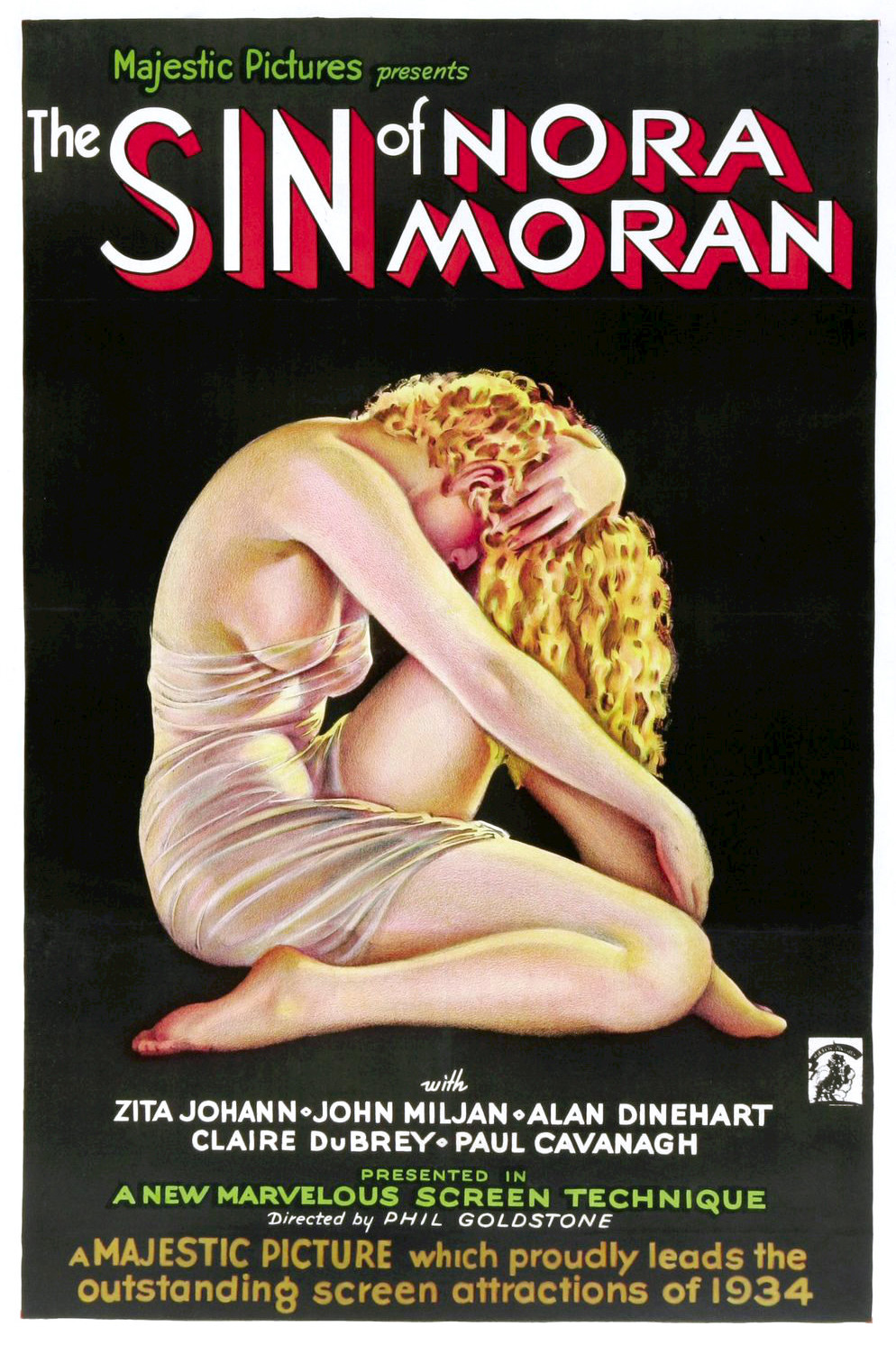
When it comes to going with the most simple approach with filmmaking, Hollywood took a while to adjust, especially during the era in which cinema was still quite new and revolutionary, and every film was considered to be a crucial step towards normalizing it as the dominant form of literature in a world slowly being driven away from other means of entertainment. However, the short, ambigious era between the end of the silent era, and the start of the Golden Age, is one that is endlessly fascinating for a number of reasons, particularly the fact that many directors took the time to employ some incredibly simple methods to their filmmaking. This period, known as the Pre-Code era, is one that brought out some exceptional works, most of which were made as a response to the fact that films could now take on some more controversial topics, since there wasn’t a rigorous form of censorship that dictated what could be shown on screen. This era lasted only five years between 1929 and 1934, but looking into this period, we can see some exceptionally compelling works that traverse the boundaries of what was then considered decency, and instead went in their own direction, exploring stories that would take a few decades for the industry to fully accept in the same way. Amongst these is The Sin of Nora Moran, a film that truly lives up to the scandalous nature of its title, and even overtakes it through its demonstration of some revolutionary themes – murder, the death penalty, female sexuality and a wealth of other ideas are intricately woven into this film by director Phil Goldstone and co-screenwriters Frances Hyland and W. Maxwell Goodhue (who was adapting his own short story “Burnt Offerings”), perhaps not going too far with this premise, but still bordering dangerously close on some intimidating concepts that would have immediately been the subject of protest by the arbiters of the eponymous Hayes Code, which was only a year away.
Keeping everything simple is often the difference between a successful film, and one that fails by going hopelessly out of control, especially when it comes to more challenging subject matter. The Sin of Nora Moran seems like it should be a convoluted film at first – it’s an early entry into both the height of 1930s melodrama, and an early forerunner of the film noir, with elements of both being present here. Add in a vaguely surreal story set in the circus, along with a legal thriller and vaguely sinister crime procedural, and you have a film that predated many of the most esteemed genres of storytelling, long before they were popular. Yet, despite going in many different directions in terms of its conventions, The Sin of Nora Moran is never overly complicated, nor does it attempt to fit an endless amount of content into its paltry running time (at only an hour in length, there was certainly not a lot of space for the film to manoeuver around its varying genres). Instead, it takes a very straightforward story, employs a range of experimental techniques that are more supplementary to the premise than they are essential in shaping it, and ventures into the unknown, bracing for whatever challenges are ahead of it – and without missing even a single beat, the film manages to be a triumphant, powerful odyssey that is as compelling as it is intricately-composed of a variety of ideas, all of which are working together in perfect harmony, which is rare considering how combative many of them proved to be in later works. Everything in The Sin of Nora Moran seems to be perfectly woven together, each moment absolutely essential and fascinating, which makes for a film that isn’t only rivetting, but deeply thought-provoking as well, which may not be expected for as humble a film as this.
An almost complete abandonment of traditions is essentially what drives The Sin of Nora Moran and makes it such a compelling piece. A cursory glance at the premise tells you that this is certainly not something that feels like it was produced in the 1930s – it was more rare to find tales of rebellious women going against the system and facing the most serious of consequences. The film is centred on a murder, committed by a woman who not only went against the conventions of the time, but also did it for the sake of an illicit relationship with a well-regarded politician, which only adds to the complexity of the film. The Sin of Nora Moran is a film about the degradation of America, taken from the perspective of someone who harboured a clear critical disdain for the supposed American Dream, which was a fundamental subject of literature at the time, especially in the years surrounding the Great Depression, where stories of success and a thriving economy were common, but always from a slightly folkloric perspective – these were essentially fantasies being sold. The Pre-code era allowed for narratives that fought against these principles to come to fruition without needing to layer sentimentality over it – it was perfectly plausible to make a film that deconstructed the class system, took aim at socio-political ideology, and boasted unabashedly proud explorations of human sexuality, and the underlying perversions that often go unsaid in mainstream productions. Without these aspects, The Sin of Nora Moran would not have been nearly as successful – and in many ways, a large reason behind its resounding heights that it reaches without much effort, comes on behalf of how Goldstone and his collaborators refuse to infantilize the premise. We’re always compelled to believe that what we’re seeing is authentic, which makes for a fascinating experiment that pays off with remarkable results.
Over time, The Sin of Nora Moran has been obscured by a range of other films that traversed similar territory, only with more panache and polished approaches to the stories. However, one element that this film has over many that followed it is a raw, unflinching honesty that is informed by some area of very strong emotion – whether it comes from anger, curiosity or moral despair, Goldstone was making something quite profound with this film. It’s short running time and relatively simple production values hide a truly dynamic film – one that is filled with a bold, undeniably profound sense of understanding of the issues present throughout it, as well as an experimental perspective that keeps it utterly engaging, with the director’s unique flourishes adding a certain degree of complexity to the proceedings, which is a fascinating concept that works very well when we consider how The Sin of Nora Moran is an outlier in many senses. A distinct poeticism guides most of this film and keeps it captivating, even when it is at its most challenging – and through the course of telling its story, it inspires a wealth of commentary into several profound issues that are simply not spoken about with such candour, even by modern standards. It’s not an easy film, and it forces us to challenge everything we know to be sacred. However, through the process of unveiling a series of uncomfortable truths, The Sin of Nora Moran makes a deeply effective impression that is difficult to compare to anything else, since this is such a singular work, and about as close to a forgotten masterpiece one can find from this era.
 The Postmodern Pelican