
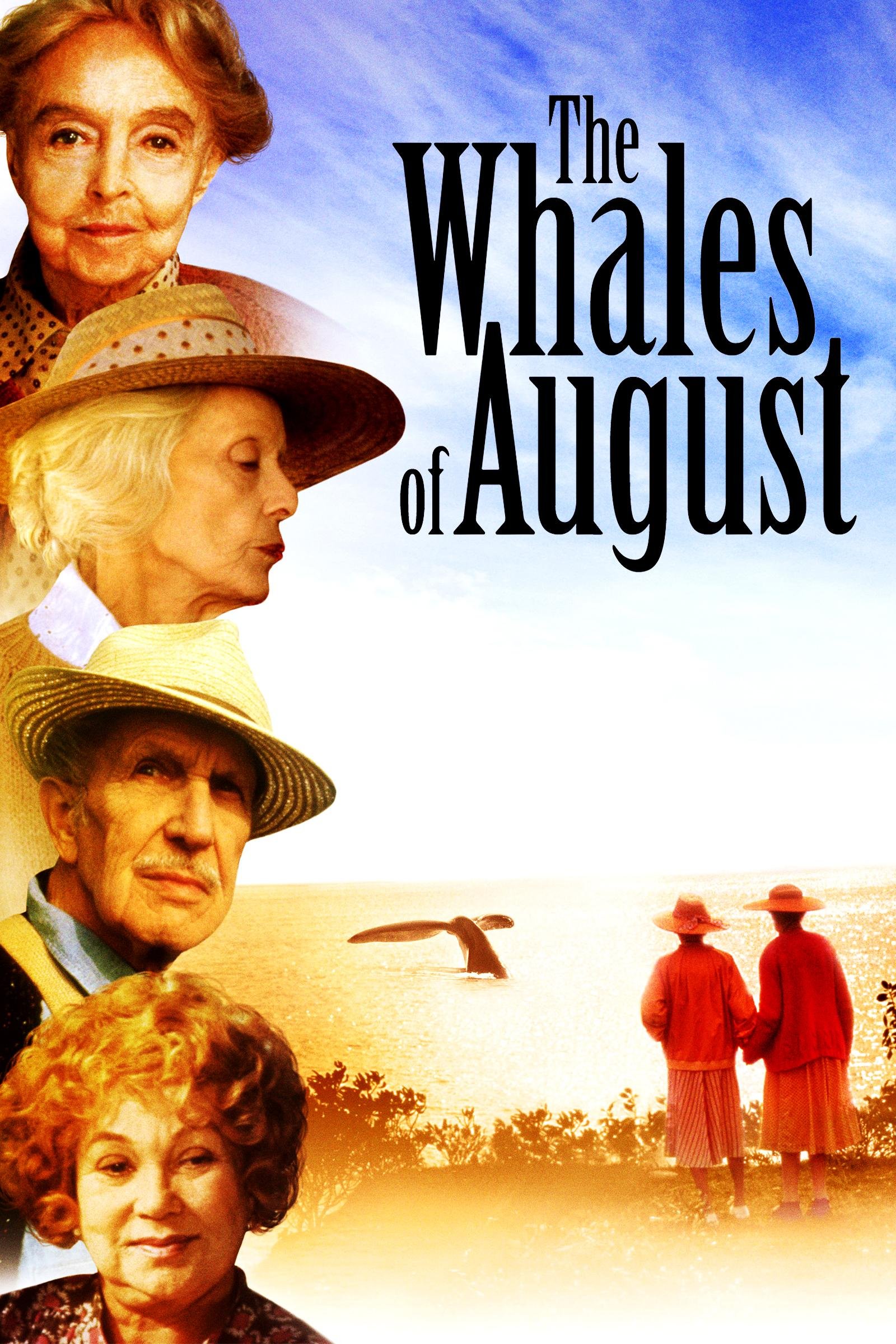
It’s a familiar feeling that many of us get from time to time when watching a film – the opening credits begin, and we see some familiar names, particularly those who are known for being indicative of quality, and we know that we’re about to see something very special, particularly when there is an aura of prestige associated with the story. There’s a certain delight in watching a film that employs some magnificent performers and gives them excellent material, and the chance to play off each other. Lindsay Anderson’s adaptation of The Whales of August, the small but incredibly interesting play by David Berry, is not a film that is often spoken about, despite having all the qualities necessary to make for a compelling film – a simple premise, a gifted filmmaker and, most importantly, a small cast composed of the epitome of acting royalty. In no uncertain terms, the opportunity to see Bette Davis and Lillian Gish (in what would be essentially the swan song for both legendary actresses) was too irresistible to pass up – and what is most surprising is that it took me this long to finally watch it, since everything about it is indicative of precisely what I love about these kinds of stories, which are essentially just well-told explorations of the human condition, portrayed from the perspective of characters who are speaking from personal experience, and brought to life by gifted performers who lent their incredible talents to the screen in truly unforgettable ways. The play is a simple but solid story of two sisters reconciling their past tension over the course of a summer, coming to terms with their own personal quandaries and realizing the value in forgiveness and cherishing each moment as if they were one’s last – and the result is an utterly riveting work of fiction that pays tribute both to the original material, and the people who brought it to the screen, on both sides of the camera.
By the time The Whales of August went into production, neither Bette Davis or Lillian Gish had anything to prove. They were canonical icons of the Golden Age of Hollywood, defined entire eras almost entirely on their own (Gish wasn’t referred to as “The First Lady of American Cinema” without reason), and made an indelible impact on the entire art of filmmaking right from the start. Yet, well into their old-age, they deliver performances here that are brimming with the vivacity and passion they had shown at their peaks – they prove that one can never be too old to assert the energy needed to bring interesting characters to life. Occurring right at the end of their careers (with this being the last film for Gish, the penultimate for Davis), it’s difficult to separate the fact that this wasn’t only a chance to see these iconic actresses on screen together, but also a melancholy parting letter on their behalf, a heartwrenching farewell to two legendary actresses that decide to turn in one last great performance each – and with that came a dynamic strength that immediately positions their work here as amongst their very best. Naturally, it’s not a challenging performance for either actress on a theoretical level, so it’s hardly surprising they were both so incredible – and instead attention went to harnessing the spirited brilliance that lay beneath the surface of these performances, creating truly unforgettable filmmaking. Anderson took advantage of the opportunities presented to him when it came to adapting this material, and instead of settling for expectations, he decided to take a few major risks in casting and producing this film – and it paid off splendidly, since we have an almost historical document of two of the finest screen performers ever to work in the medium, providing us with a final glimpse into their exceptional talents, and a poignant chance for them to prove their mettle right up until the very end, which not many actresses of their calibre manage to achieve.
On the surface, it’s clear that the material wasn’t going to pose much of a challenge to the director, since the premise is so simple and lends itself to a kind of theatrical profundity that underpins this kind of straightforward human drama. Therefore, all Anderson needed to do was to cast the film well, and allow the story to unfold naturally through the performances given by the small group of actors he is working with. However, this doesn’t mean that Anderson didn’t have his work cut out for him, especially considering he was directing some of cinema’s most important figures, and part of the process involved bringing out the particular qualities in each actor and making effective use of them. Anderson implicitly understands what each of these actors are capable of, and made sure to focus on each individual strength, extracting mesmerizing performances across the board. Bette Davis, in the role of Libby, is prickly and aloof, but has a heart of gold that gradually makes itself more evident as the film goes on. She’s sharply contrasted by Lillian Gish as Sarah, whose geniality and tenderness makes her a worthy opponent for the more standoffish Davis. They work exceptionally well together, and both have moments of genuine brilliance. Davis commands the screen, being consistently funny with her witty retorts and often ludicrous complaints that make Libby an outrageous character – but there’s always a sense of lingering sadness lurking beneath every scathing comment Davis provides, which makes the final scenes of this film so much more touching. However, it’s Gish who leaves the most significant impression – her eyes are as penetrating here as they were during the peak of her stardom during the Silent Era, each glance conveying a panoply of emotions that speak more than any words possibly could. She enchants the screen, breaks our hearts and leaves us thoroughly moved by the strength of her performance.
Outside of the two performances given by the lead actresses (as well as scene-stealing supporting role by the incomparable Vincent Price, who is as devilishly charming here as ever, and the delightful Ann Sothern, who is a riot in her few scenes), The Whales of August is still a profoundly moving film. Considering this hails from a director more known for his subversive work in kitchen-sink realism and scathing satire, it’s surprising that Anderson would choose this project – and much like his two leads, this occurred right at the end of his career (similarly to Davis, the director made one more ill-fated comedy a few years later). However, looking beyond a brief, superficial glance, we can easily see why Anderson was interested in this project – its a poetic, human story about individuals navigating a world they don’t quite understand anymore. Perhaps a far cry from his more socially-charged dark comedies of previous decades, The Whales of August is a remarkable change of pace for the director, who sedates his style and instead focuses on the specific machinations of a relationship that is both tumultuous and loving. Anderson was always incredibly aware of the humanity underpinning every story, and this text presented him with the chance to look at it from a slightly different perspective. He brings his distinct visual style – some of the compositions in The Whales of August are absolutely stunning, and effusive praise must be paid to director of photography Mike Fash, who shoots this film with precision, capturing every intricate detail – and a grand sense of humour to the proceedings, creating a work that is brimming with life, consistently challenging the audience to look deeper and find the message embedded deep within this story.
It’s easy to get caught up in the fact that The Whales of August is a showcase for its two lead actresses – in many ways, it almost exclusively is. However, the realization that this doesn’t matter, and that the performances given by Davis and Gish are more than sufficient in keeping this film afloat, and often defines the direction the story goes. Yet, there is a lot more to this film, and it is worth experiencing not only for the performances given by two true iconoclasts, but also for the achingly beautiful narrative that they’re woven into. Anderson touches on themes of family, ageing and the great inevitability of death, putting together a vivid tapestry of the human condition that finds both profundity and humour in a very simple story that relays some of the most fundamental aspects of our shared experiences. It’s such a delightful film, one that is driven almost entirely by its characters (thus why the performances given by Davis and Gish notably take up the vast majority of discussions around this film), who interpret the story with good-natured humour and pathos, while still finding the time to make some remarkably poignant statements in between the moments of unimpeachable authenticity. It’s not a particularly complex film in execution, but its ideas and intentions are incredibly distinctive, and makes for a riveting film that may appeal more to those attuned to these kinds of acting showcases, but will undoubtedly move anyone with even just a passing interest in the delicate, beautiful exploration of the soul that Anderson puts together in this stunning manifesto on life and its many unexpected, but oddly inspiring, contradictions.
 The Postmodern Pelican