
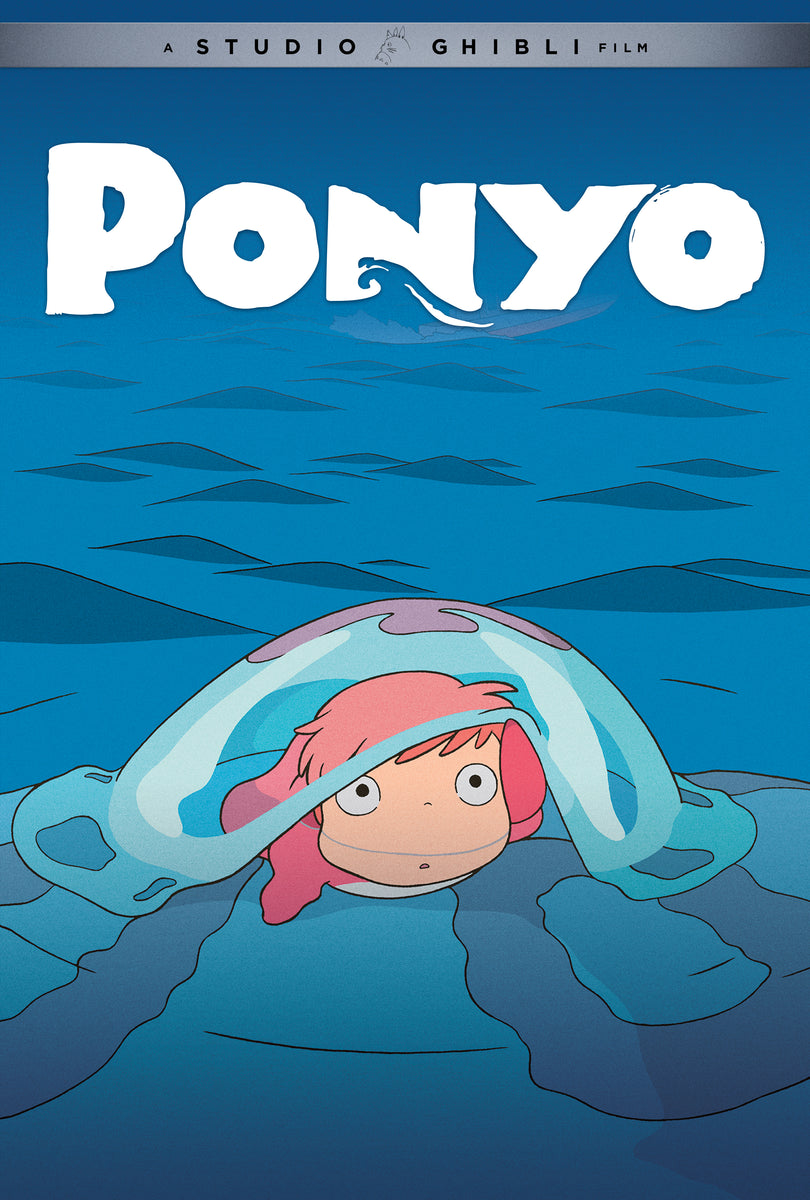
There’s a peculiar quality of certain artists that comes with a combination of high-quality creativity being associated with them, and longer periods between producing new work. Hayao Miyazaki is one of the most beloved filmmakers of his generation, not only because his films are revolutionary and brilliant, but also because they’re produced so rarely, each one of them is something of an event, whether one was present for their initial release, or if they’re looking retrospectively as earlier works. Like many of his contemporaries, Miyazaki wasn’t immune to slightly weaker works, since not everything he produces can be an immediate masterpiece, with some of them instead becoming slow-burning pieces that get their success over time. A few of his films massively benefit from being seen later on, since there is a lot of value that can come from encountering them without the deafening discourse that claims that the director has produced another masterpiece being in direct conflict with those that feel that he has made one of his weaker films. One film that has tended to be divisive to some degree is Ponyo (Japanese: ), one of his forays into more child-focused filmmaking that I found to be just as enjoyable as some of his canonical masterpieces. An upbeat, buoyant work of unadulterated joy, which is sharply contrasted with a heartbreaking story of family at the core, Ponyo is a film that burrows its way into the viewer’s heart. It may struggle to stay afloat in the way that some of Miyazaki’s more notable works have tended to, and the flaws often levelled against it aren’t entirely without relevance – but beneath these superficial issues, there is a heartful little film lurking beneath the surface, ready to captivate any viewer willing to surrender themselves to the forthright vision of a director always so deeply in command of his artistry.
The general sentiment that seems to persist about Ponyo is that it is very good, but occupies the lower-tier of the director’s filmography, normally finding its way towards the bottom, which doesn’t necessarily suggest this was a failure, but rather that it didn’t hit the impossible heights as some of his other work. It’s difficult to argue with reasoning that sees this as a bit slight in comparison to films like Spirited Away and My Neighbour Totoro, but it’s also impossible to deny the outright charm that trickles through absolutely every frame. Miyazaki is one of the few filmmakers that puts together films that genuinely feel as if they were made with love, coming directly from the heart of an artist whose work reflects a keen understanding and neverending curiosity with the world around him. He has the soul of an optimist and the brain of a realist, so it’s a challenge to dismiss Ponyo as slight, particularly when we can see how the director balances these two sides of his artistic vision, channelling them into a multi-layered, bold expression of nothing but raw emotion packaged in the form of a gorgeous, resounding animated comedy that has every quality we adore about his work pervading every moment. While this film does have a lot to prove, the manner in which it finds its heart and creates an unforgettable story about several broad concepts – childhood, the relationship between children and their parents, and an ecological message that is present but never overwrought – instantly makes this another triumph from a director who only seems to deal in victories, to the point where even his weakest work can stand shoulder-to-shoulder with some of the most successful works of its era.
Ponyo has nearly all the qualities of a great Miyazaki film, with the director managing to infuse this film with all of his artistic brilliance, both in the story he is telling, and the manner in which this manifests on screen. It goes without saying that this film is absolutely gorgeous – there are some scenes in the film that are amongst the most stunning work the director has ever done, with his animation being just as exceptional as we’d expect. It’s always helpful to complement a strong story with an unprecedented level of artistic genius, and every frame of this film looks like a painting, which is very much par for the course with Miyazaki. He weaves together such a complex narrative in between these moments, telling a compelling story about two children – one of them a scruffy little boy, the other a goldfish who strikes up a connection with him on chance, and becomes human, albeit only temporarily. Reality once again merges with fantasy in this film, each moment having the sensation of carrying multiple meanings on both an abstract and direct level. Miyazaki’s films may be simple, but they still manage to be so exceptionally nuanced, woven together with the elegance of a filmmaker who truly understands how to find the heart in the most unexpected places. It makes watching a film like Ponyo such an enthralling experience, since we’re being kept engaged with a story that will have resonance for many of us in some way, and utterly transfixed with the absurdly gorgeous animation – the centrepiece scenes, where the small seaside town is ravaged with bad weather that turns into a cataclysmic disaster, is amongst the most beautiful work Miyazaki has ever done – and there simply isn’t a shortage of moments here that stop the viewer dead in their tracks, capturing their attention and hypnotizing us with its depth of meaning and striking beauty.
Thematically, we’re always being urged to look deeper when watching a Miyazaki film, since endearing storylines and visual splendour aren’t enough to make these masterpieces. Instead, we can find a genuine sense of heartfulness pervading through each moment of this film, with the director ensuring that he’s not just making something ambitious without setting the necessary foundations that tend to make the most significant difference between his work, and the work of imitators that pale in comparison. Audiences tend to form emotional connections with these stories, and while Ponyo may on occasion be slightly more heavy-handed in its approach, particularly in the central conflict, it manages to rise above a less-than-ideal third act, and deliver a breathtaking coming-of-age story that looks at the importance of family, which is certainly one of the driving factors behind most of Miyazaki’s work, and the aspect that he tends to return to most often in his films. The two main characters in this film are the embodiment of all the different aspects of childhood – overt optimism, unending hope and a relentless search for the magic that we genuinely believe exists in our younger years, and which the director successfully evokes, to the point where we momentarily feel the same giddy, enchanted sensation that we may not have experienced in years. It’s such a delightful approach that feels so authentic – not a single moment in Ponyo rings as false, even when it feels somewhat rushed into a certain conclusion, where a more laidback approach would’ve been much better, especially since so much of Ponyo is centred on two young people finding themselves confronted with a daunting world, and still deciding to press one, not necessarily ignoring their fears, but rather using them as motivation to keep going, which is one of the fundamental messages woven into the fabric of this film.
There’s likely an alternative version of this film that exists in the ether, whereby it simply allows the grandeur of the world to flourish, without the confines of a strict story – but even in its eventual form, Ponyo is a stunning achievement that makes even the most cynical viewer believe in magic once again. We could easily remark on how poignant the story was, or how stunning the animation manages to be – but this is all very much aligned with what we have been led to believe is true of Miyazaki, an artist who has only directed a handful of films over his long career, but with each one being a distinct, vivid work with its own world to explore, and message to impart. Ponyo may be something of a minor work in contrast with some of the director’s other films, but this is more a testament to Miyazaki’s longevity and strength as a filmmaker than it is to the quality of this specific film, which still manages to be exceptionally clever and heartfelt, even when it is gasping for air at some sporadic moments. It compensates for any minor flaws that keep it from being perfect with a deeply moving sense of tenderness and heartful humour that serves the film so exceptionally well, finding the humanity in a story that is very much about the process of coming into your own identity. Combining heartfelt, family-oriented comedy with a rousing fantasy plot is a tricky errand, but if anyone was going to do it convincingly, it would be Miyazaki, who has been trading in these exact stories since the inception of his career, and who has shown himself to be a truly gifted artist through every wonderful work that he has given to us. Ponyo is due another look, since being caught between some of the director’s best work may have caused it to fall short of the appraisal it deserved at the time, which is truly quite unfortunate for something as vibrant and enduring as this – but it’s never too late to give something another look, since you are more likely to glean some deeper meaning from it when given the chance to explore this wonderfully endearing world, created and curated by one of cinema’s most notable visionaries, and someone who has truly made history with his work.
 The Postmodern Pelican