
“This is a movie dedicated to all those common but great proletarians”
These are the final words spoken by the narrator towards the end of Marius and Jeannette (French: Marius et Jeannette), director Robert Guédiguian’s gloriously triumphant ode to the unimpeachable beauty of modern romance. It is a perfect summary of the previous ninety minutes, in which the director took us on a journey into the lives of a group of people, with two in particular being the focus, and how they navigate a world they would like to think they understand, but come to realize is filled with new obstacles that not only challenge them, but also allow them to see life in an entirely different way. This is a film that touches on many complex issues – class struggle, ageing and finding love in the wake of tragedy, and Guédiguian weaves them all together so beautifully, crafting an unforgettable work that is as touching as it is outright hilarious, a delicate comedy that carries real heft, especially when it comes to commenting on issues much bigger than the limits of this very quaint film would have you believe it is capable of. As my introduction to Guédiguian, I found Marius and Jeannette to be an absolute delight – an easygoing, heartfelt film that looks into some of life’s most fundamental concepts, and lays everything bare, pleasantly traversing some resonant issues without ever becoming heavyhanded. Beautifully poetic, and absolutely stunning in both theory and execution (as well as being filled with some unforgettable performances from a gifted cast), Marius and Jeannette is a resounding success, and a film that never allows its charming exterior, which promises a lightweight and effervescent comedy, to distract from the more serious core that the director consistently flirts with, creating a truly exceptional tapestry of some very basic issues that converge into a stunning, simple story of life, condensed into a series of small moments that lead to some revelatory conclusions that will make even the most cynical viewer feel some kind of encroaching hope, particularly in the situations presented here that seem so similar to what many have experienced themselves.
F. W. Murnau had the right idea when he gave his masterpiece of poetic romanticism Sunrise the subtitle of “A Story of Two Humans” – as we’ve seen with many of the most successful works on the matter of love and passion, all one needs to tell a compelling story are two well-crafted individuals who navigate the sometimes perilous world of falling in love, and the various challenges that come with it. Marius and Jeannette is such a perfectly-calibrated work of romance and other challenging experiences, one would struggle to find a single note of inauthenticity anywhere in the film – instead, we’re presented with a stunning story of two ordinary people meeting by chance (although the film does tend towards commenting on whether or not this was a coincidence, or if they were meant to meet all along, by virtue of their close proximity to each other), and going through the motions, working on the new emotions presented to them through encountering this new individual, and finding some value in these feelings, which gradually flourish into love. It’s a very simple kind of romance – there’s a lack of overwrought emotion, and while the story does follow the familiar path of falling in love, coming into conflict and then eventually reconciling, the structure is carefully put together, giving it the sensation of complete genuineness, where each narrative beat seems like it comes from a place of truth, plucked from reality and elegantly placed into the centre of this story, whether to help move the plot along, or simply contribute to the easygoing nature of the film, which is equally as effective in conveying everyday life (as evident through the peripheral characters that weave their way throughout the film) as it is telling a gorgeous story of passionate love, and the different forms the sensations of the heart can take when they come into contact with logic and reason, which have often been shown to be the most fierce rivals to the kind of relentless, powerful romance that Guédiguian and the cast are so intent on exploring here.
Guédiguian’s approach to telling this story is one clearly derived from a minimalist sensibility – when you have such well-written characters (constructed in conjunction with the actors, making this a clearly collaborative effort on the part of everyone involved in its creation), and a strong story that knows precisely in which direction it intends to go, there’s very little need for anything else. Ultimately, this is a film that reduces romance to the most fundamental level – the vision of it presented throughout Marius and Jeannette is one that draws from the most visceral, basic sensation of longing, which Guédiguian controls perfectly, showing the right amount of restraint and situating this film somewhere between a lovable comedy about two people falling in love, and a heartwrenching drama that covers the reasons why they are so hesitant to surrender to these urges, exploring their past traumas and showing them as fragmented individuals that yearn for a warm embrace, but aren’t always able to find it when they need it, or accept it when it’s given to them. Marius and Jeannette is often quite an intense film in how it peers into the lives of these characters with a voyeuristic sincerity, hoping to uncover something more about them that isn’t clear in the manner with which they present themselves on a daily basis. This mostly becomes clear as we learn more about their past, and how they found themselves at this particular point in their lives, having gone through experiences no one else around them knew about, which gives them a particular outlook that makes romance a tumultuous experience on both sides. Ultimately, Marius and Jeannette isn’t a film simply about falling in love – it’s one about realizing how one is worth being in love with, and the obstacles that come with any kind of relationship. It’s a fascinating way of looking at love, and through simple but effective means, Guédiguian is able to pull it off wonderfully without striking anything other than absolutely earnest sincerity throughout.
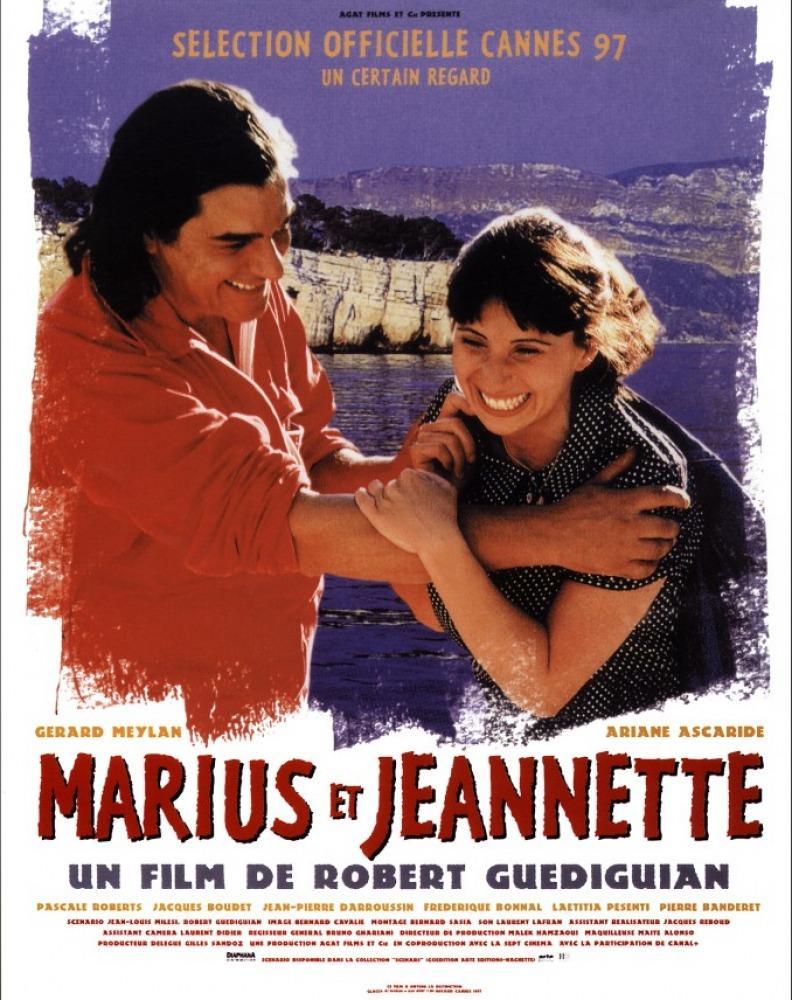
By virtue of its title and premise, Marius and Jeannette could simply not have been effective had it not been so carefully constructed as a character-driven piece, which is normally the aspect of the film that is most frequently cited as being its most notable quality. Guédiguian, in working with his close-knit circles of actors in the repertory style he is known for, creates a vivid tapestry of the human condition through looking at it from a very personal level. From the first frame, we’re invited to get to know these characters – not only are we captivated by the feisty Jeannette and the enigmatic but gentle Marius, but also every other person in this film. The plot often deviates into briefly looking at the lives of other characters, which Guédiguian does through situating this story in something of a commune, a group of small apartments shared by a variety of individuals that form a makeshift family. This communal approach is reflected in the performances the director extracts from his actors – Ariane Ascaride is astounding as Jeannette, a woman trying her best to provide for her family while still holding onto her own individuality, which is contrasted beautifully by Gérard Meylan’s Marius, who gradually moves from a lumbering representative of the very people who Jeannette consistently fights against, to the person who helps her realize precisely what she’s worth, giving her the love she deserves, and in return receiving the sense of belonging he has been yearning for since a tragedy robbed him of his livelihood. Marius and Jeannette does well in portraying these individuals as authentically as they can – each interaction is brimming with truth, and while it may oscillate between poetic and awkward, it gives the film a sense of reality, reflecting the trials and tribulations of a couple working towards seeing if they have found a match, someone who doesn’t only appeal to their craving for love, but also helps mend the wounds of the past. It’s fascinating how such complex commentary can be embedded in relatively simple performances, but through the immense work done by these actors to get to know their characters, and their incredible naturalism in front of the camera, it’s hardly a surprise it worked so exceptionally well.
Romance is certainly a tricky business, and while art has always been occupied with representing it in various forms (perhaps more than any other subject), there aren’t many works of cinema that can boast having the level of profound humanity that Marius and Jeannette carried. It’s a very lightweight film, focused almost solely on the interactions between people that would otherwise be perceived as slight and inconsequential in any other film. Yet, through this very simple approach, and his ability to derive every bit of dramatic potential from even the most straightforward, unassuming conversations, Guédiguian captures the spirit of not only pure romance, but various other fascinating ideas, infusing every frame of this film with such a delightful sense of well-conceived humour and an emotional pathos that not many directors can claim to achieve. Marius and Jeannette is a truly charming experience, and while it can sometimes be somewhat expositionary at certain points (since the film has the task of giving us insights into both the past and present lives of these characters), it’s an otherwise beautifully poetic glimpse into the individual quandaries and shared experiences of a group of ordinary people. As the postscript mentioned at the start of this review said, this entire story was constructed as an ode to those who are invisible to art – the working class who have plights that are too minor to be notable elsewhere, and who go through life without leaving much of an impression – but it’s individuals in these precise situations that gave Guédiguian the material to create such a lively, fascinating portrait of existence. Funny, but carrying an emotional heft that can rival any more prosaic drama, Marius and Jeannette is truly a stunning achievement.
 The Postmodern Pelican