
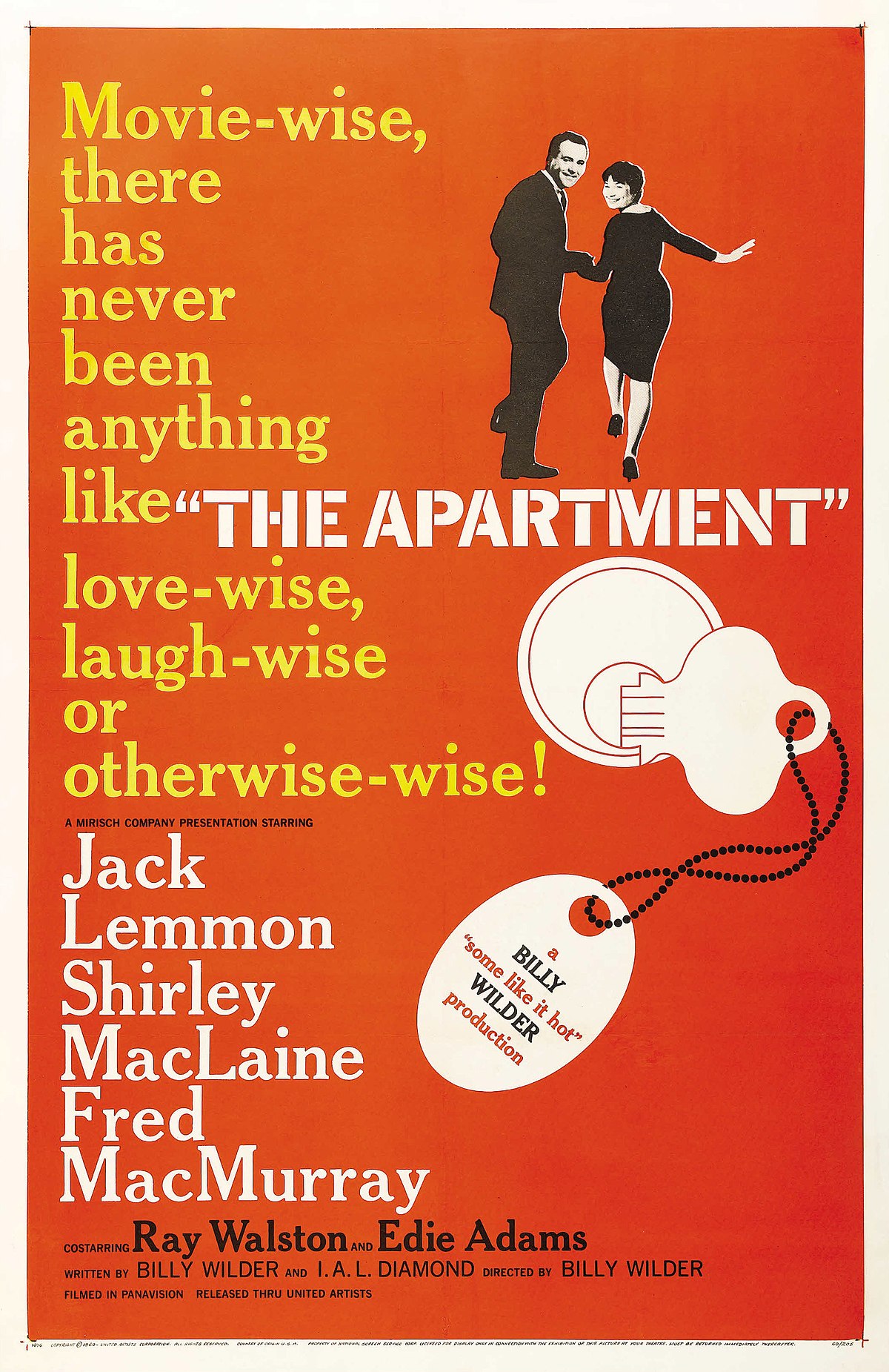
There are various elements that go into making a great film – an interesting story, a well-cast group of actors playing compelling roles, visual splendour and execution of some meaningful ideas that resound with audiences, regardless of genre. However, what does it take to make a canonical masterpiece? Someone who seemed to be able to answer this question better than anyone else was Billy Wilder, whose career is composed of so many films that far exceed the boundaries of brilliance, they become ingrained in the culture. One of the director’s most interesting works is The Apartment, his fascinating romantic comedy that has come to be seen as one of his signature works, standing alongside the likes of The Lost Weekend, Some Like It Hot and Sunset Boulevard as one of the many films that could qualify as the representing peak of his talents. Like many great filmmakers, Wilder’s career is difficult to pin down to a single masterpiece – he has such a wide array of fantastic films, his magnum opus is far more difficult to discern, especially when he thrived in putting together stories that give the viewer the chance to abandon the outside world for a few hours, and commit to the poetic situations he creates, regardless of the specific genre in which he was working. Nonetheless, The Apartment tends to be the film that comes up the most in discussions of Wilder as a filmmaker, and understandably so – it is the purest distillation of his skills as both a writer and a director, as well as someone capable of extracting so much from his actors, to the point where everyone involved in this film were giving career-best performances. It’s not an easy accomplishment to make a film that so rapidly approaches perfection, but if anyone was going to do it, why not Wilder?
What becomes increasingly clear the more we venture inwards into this film is that Wilder was a fundamentally interesting filmmaker who could weave cinematic gold out of the most paltry yarn – and thus even when working from a relatively lacklustre story that needs some degree of suspension of disbelief to be truly effective, he handcrafted a poignant comedy that enthralls the viewer, but not without hinting at something below the surface, a more meaningful depth that we have come to expect from a director like Wilder, who peddled in resonant filmmaking better than most. Writing about The Apartment is a daunting task – revisiting it is always a wonderful experience, but putting pen to paper and describing what it is that makes this such an impactful film is for more intimidating than many would expect. Yet, unlike many canonical masterpieces, this film doesn’t seem to need in-depth discussions towards it merits – Wilder had such a control over his craft, simply stating that this film was directed by him equates to roughly half of the explanation as to why this has become such a substantial part of film history. There are definitely some aspects of The Apartment that beg for some attention, particularly when we look deeper into it and understand where Wilder might have been able to improve (I personally don’t subscribe to the dominant belief that this is a perfect film – if anything, it comes very close, but has some slight imperfections that are occasionally the most endearing part of the entire piece), but for the most part, Wilder created an unforgettable film that has so many awe-inspiring moments, both narratively and visually, and which is so committed to the underlying sense of individualism, the final product is so riveting, every minor shortcoming fades almost instantly, leaving us with an absolutely delightful piece of cinema that feels so much more lucid in Wilder’s capable hands than those of many other filmmakers.
Part of the cultural cache of The Apartment has entailed posturing the performances given by the film’s leads as some of the most definitive of the era. Jack Lemmon and Shirley MacLaine were doing some of their best work, and while I maintain its neither’s peak, they’re both stunning performances from two actors who consistently push the boundaries of the form in unexpected ways. Lemmon is the heart of the film, playing C.C. Baxter with a combination of deft charm and relentless likability, derived from his status as the definitive everyman actor. The Apartment has Lemmon at his most endearing – everything that often gets said about him as a performer can be found in his portrayal of Baxter, whether it be his upbeat geniality, or his ability to play on his own reputation as a journeyman actor willing to take on characters that don’t have any discernible qualities outside of their wonderfully unique humanity. While he may be the beating heart of the film, Lemmon is complimented almost beat-for-beat by MacLaine, who plays the lovable Fran Kubelik with pluck and grandeur in equal measure. It’s a delightful performance from an actress who was working hard to shed the image of simply being the female performer in a variety of entertaining but otherwise forgettable Rat Pack vehicles, and in many ways this was one of her first forays into a truly dramatic role (which only makes her wonderfully compelling sense of humour all the more interesting in the context of the film). Lemmon and MacLaine have incredible chemistry, and every frame of The Apartment is filled with a joyful charisma both actors bring and sustain consistently throughout.
What is almost an unimpeachable fact is that The Apartment is a true comedy classic – there are many who consider this to be the greatest comedy ever made (rivalling Some Like It Hot, which also tends to gravitate towards these conversations). It’s not quite clear what precisely made Wilder such an exceptional comedic mind – perhaps it’s his basis in working for the likes of Ernst Lubitsch (whose quintessential “touch” Wilder never failed to evoke in discussions of his inspirations), or the fact that he spent so long perfecting the craft over several decades, both as a writer and a director, by the time he got to The Apartment, he had already managed to develop a keen sense of what makes audiences laugh, which was often represented in outrageous comedies that never fell victim to the persistent threat of becoming overwrought, simply because it addressed some deeper issues directly, rather than actively avoiding them. Wilder and collaborator I.A.L. Diamond (whose creative partnership brought out some of the greatest films of their respective eras) put together such a compelling story of human identity that never fails to evoke laughter, even in the most seemingly dour moments. What separates The Apartment from many other comedies around this time is that it doesn’t always go for the low-hanging fruit – its humour is derived from a sense of authenticity, a genuine understanding of human behaviour that allowed the writers to construct situations that were always hilarious, but not recklessly so. Everything in The Apartment can be traced back to some fundamental quality of the human condition, which Wilder and Diamond convey so beautifully on screen. How else do we explain their ability to extract so much meaning from situations that would otherwise be far less effective had they been under the guidance of a director more concerned with inciting laughter, rather than provoking thought?
This is fundamentally what makes The Apartment such a compelling work, since it comes from a place of genuine humanistic curiosity. The film is built from the perspective of describing existence through a simple but meaningful array of situations, and the eccentric characters that tend to define them. This not only makes for an enthralling comedy with many hilarious moments, but also uncovers a deeper range of concepts that gradually come to the fore the deeper we look. There’s an underlying sadness to The Apartment, a kind of tender melancholy that creates the sensation of complete authenticity which is barely seen from other mainstream comedies. While on the surface it appears to be directly inspired by a long culture of screwball comedies that had gradually declined in previous decades, there’s a very tender core that speaks more to the dramatic side of the story, which manifests in small but meaningful bursts. Wilder so carefully navigates both sides of the story so well, finding the pathos in some outrageous situations, and always taking the high road, especially when it’s absolutely necessary for the film to be more focused on the humane qualities, rather than being excessive about the more comedic side of the story. What starts as a broad comedy of manners gradually grows into a tender-hearted affair (no pun intended) about two lost souls finding each other by chance, and realizing the immense power that the moment we find kindred spirits with which we can be truly vulnerable. The deft combination of comedy and drama works towards establishing The Apartment as an absolutely masterful work that never seems to be all that distant from reality in its own way, which makes all the difference when looking at how Wilder so beautifully plumbs such emotional depths.
Writing about The Apartment is both a delight and a challenge – there really isn’t anything that can be said about this film that hasn’t been covered countless times before. Ultimately, this is a classic of cinema for a reason, being a poignant blend of comedy and drama, with broad overtures of romance that only become increasingly present as the film lets go of its more novel premise and starts to embrace the theme of loneliness and individuality that pulsate through it. Wilder made a film that stands as a personal favourite of mine, and while I do think there are some moments where he’s playing it safe (and where very little of the comedy reaches the heights it did in Some Like It Hot or One, Two, Three, which are two equally-brilliant comedies that occurred on either side of this film), the genuine awe-inspiring wonder that the director demonstrates through the construction of this film is absolutely admirable, and consolidates it as a truly masterful piece of fiction. It’s almost a rite of passage for young devotees of classic cinema to work their way through this delightful comedy, many of the best parts of it coming from the most unexpected sources of true emotion. However, the experience of watching it throughout the years, consistently revisiting it and finding new information about it, is particularly striking and absolutely warrants the astronomical reputation this film has received over the past decades. It’s not a perfect film, but rather a brilliant work that embraces its flaws, and in the process becomes an incredible work of cinematic artistry.
 The Postmodern Pelican
The premise of The Apartment is ludicrous. The audience is asked to believe that a number of highly paid business executives would choose to intimidate an ambitious underling to lie in the rumpled sheets of his apartment for romantic assignations rather than get a clean hotel room. The genius of Billy Wilder is that he moves things at such a clip that we don’t linger on how unsanitary this all is. Once the audience takes a breath and contemplates the specifics of the situation, this film loses much of its allure.