
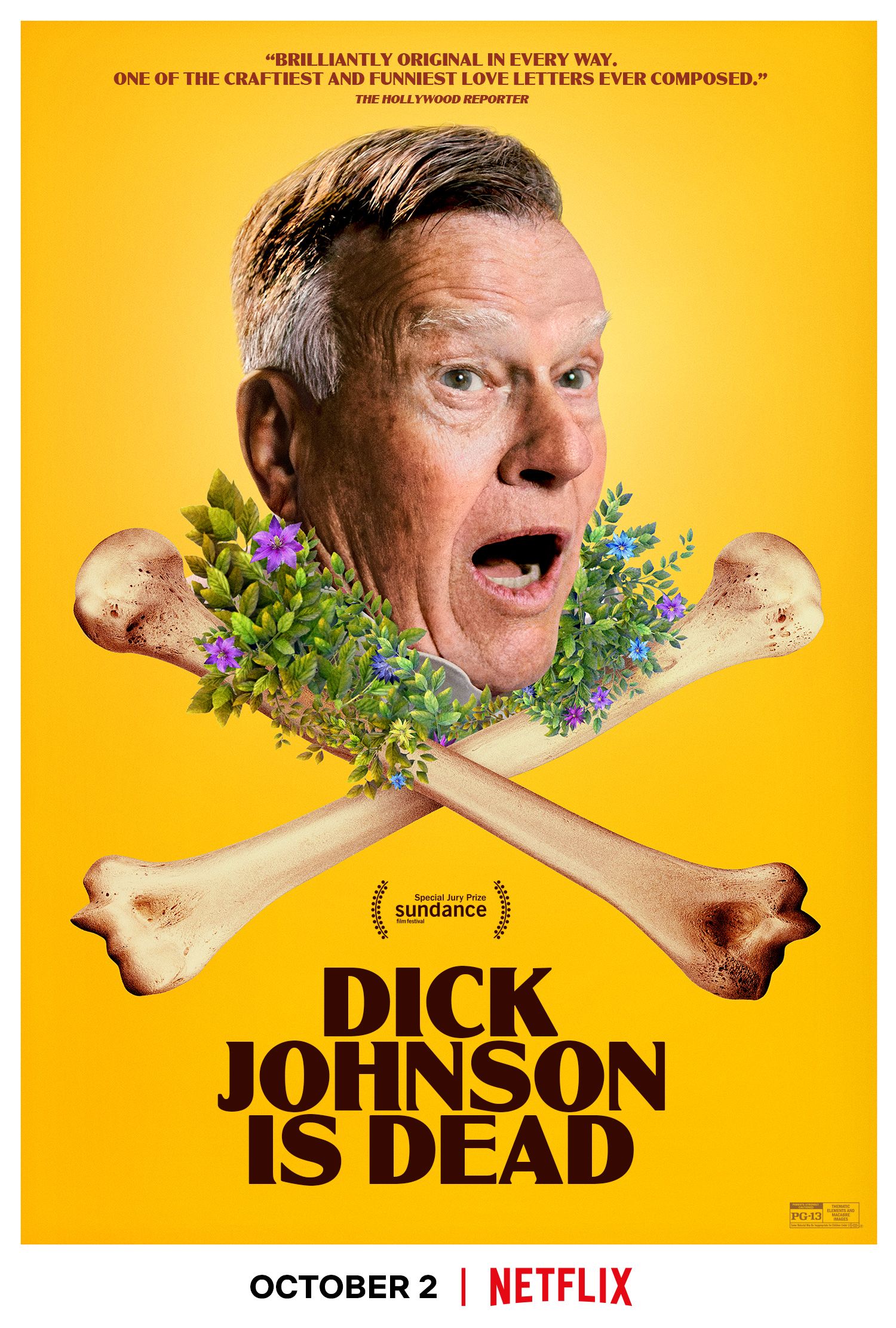
Death is inevitable – this is a fact we all learn quite early on in our lives, and it’s something that we all have to come to terms with in some way. However, this hasn’t stopped countless people throughout history from attempting to delay death in some way – whether through trying to prolong their life through means of health and fitness, or partaking in some deranged practices that supposedly can lengthen it our stay, the fact of the matter is that we’re all headed towards that great inevitability. This is essentially the thesis statement of Dick Johnson is Dead, a hauntingly beautiful and bitingly hilarious documentary from Kirsten Johnson, who finds herself taking on the daunting challenge of looking at death from both the perspective of the person dying, and those around them. What is often neglected in even the most heartfelt works that look at death, is the toll one’s demise can take on those who loved them – sometimes it’s those who are left behind that suffer the most, with the experience of seeing an empty chair at the table or expecting a phone call that never comes through. This is what Johnson is exploring in this film, and joins the ranks of an elite few set of documentarians such as Sarah Polley and Chantal Akerman in realizing the most compelling stories don’t come from outside, but rather from within – and opening up her domestic life to the public to see through the lens of her discerning camera, Johnson crafts one of the most unforgettable documentaries that may be anchored by the intimidating idea of death, but is actually a poignant celebration of life, an intricate and heartwarming tapestry of the (meta)physical journey a daughter takes with her father, capturing every moment of his life, in the hopes that she will not only have a wonderful way to remember him when he’s gone, but also to document the person she and so many others clearly admire, before its too late.
There is a school of thought that is vehemently opposed to the kind of filmmaking that took place in the creation of Dick Johnson is Dead. By its very definition, a documentary is supposed to capture reality and be focused on the authenticity of a certain subject – but where does one draw the line between prodding real events, and becoming voyeuristic? For a filmmaker like Johnson, there really isn’t a distinction, but rather a spectrum on which the director conceives their premise and is willing to go, within the realm of reason and decency. Johnson is operating from a place of complete intimacy – there are normally allegations against documentaries that try and capture an outsider’s perspective of ordinary people, to the point where it becomes exploitative and inappropriate, especially when its a complete stranger looking to infiltrate something like a family. Dick Johnson is Dead is far from this in any way – the director has a strong personal attachment to this premise, which ultimately results in this becoming a film as much as the titular figure as it is about the filmmaker herself. She gradually finds her way into the narrative as the film goes on – whether showing us her process of recording commentary, or her direct interactions with her father in moments of nothing but familial tenderness. It’s an approach that may feel awkward and stilted at times – but it’s in the moments of unscripted, unexpected vulnerability that Johnson manages to convey the most sincere meaning. This is a very raw film, and not one that has a sense of any kind of clear direction – unlike more polished documentaries, there’s a lack of an overarching framework that the director follows in Dick Johnson is Dead, which functions more as a series of moments that work towards a particular message, which only really manifests properly in the exhilarating final sequence, where reality and fiction blur and culminate in one of the most striking endings of the modern era. In short, what Johnson does with this film is quite astonishing, but it requires patience and the willingness to look beyond the unconventional avenues the director travels through, because it is all truly worth it by the end.
Dick Johnson is Dead is a stunning film precisely because it dares to be different, and despite its grim subject matter, Johnson employs an unprecedented level of playfulness that makes this an extraordinary experience from start to end. The best description for this work is as less of an objective film about death, but rather more of a visual diary about the journey towards it, taken from the perspective of not only the person facing this great inevitability, but also those closest to him. Johnson is a director who understands the value in creating a dialogue – any film is a conversation, whether it be between individuals, concepts or even different media, and she captures this spirit through the process of making this film. A vivid mosaic consisting of recorded conversations with her father, staged sequences that dip into the realm of surreal fiction, and genuine home movies, all of which merge together to create one of the formidable entries into the small but memorable canon of absurdist documentaries. Perhaps such a description may be reductive – after all, Johnson isn’t setting out to dismantle the very fabric of non-fiction filmmaking, but she’s also not one to play by the rules, and her incredible approach to the material, where she views the story of what she expects to be her father’s slow demise as more of a series of moments that piece together his life through different means, is paramount to the film’s enormous success. Had this been a more linear film, or one that didn’t make use of a kind of macabre dark comedy, its point may not have come across with nearly enough potency. For a film that values its originality, and its intimacy as much as it did, it’s not surprising that Dick Johnson is Dead is a work that employs a very dark sense of comedy to the proceedings – as we see throughout it, Johnson and her father are not immune to bouts of deranged humour, and the director weaves these moments into the film, situating them alongside many of the more difficult discussions, to create something absolutely stunning and unforgettable.
Oddly enough, despite the wealth of films that tend to try and add some levity to the terrifying concept, Dick Johnson is Dead may be the funniest film ever made on the subject of death. There are so many indelible images in this film, and it’s difficult to pluck out the authentic ones, and those that are staged as part of Johnson’s increasingly comical attempts to process her father’s impending demise. Ultimately, it doesn’t make much of a difference, since in both instances the underlying message remains exactly the same – it’s a film made by someone who receives the news that her beloved father has been diagnosed with dementia, and that he is going to gradually lose his senility, while those around him have to watch his eventually lose all his capacity to function normally. Clearly not being one to sit passively by and allow this to happen, Johnson instead decides to spring to action, pick up her camera and record every moment she can of her father. This gives Dick Johnson is Dead its multimodal appearance, where different forms of storytelling come into focus, creating a poignant glimpse into the life of a man who is gradually on his way to losing it. It’s a gripping, seriocomic portrait of a man on the precipice of death, and the daughter who combines her filmmaking prowess and darkly comical sense of humour to work through the trauma that she knows is inevitable. She navigates the maelstrom of emotions with tact, class and humour, always finding a sophisticated approach to exploring her quandaries, while never neglecting to give the audience something that carries some meaning. She does well in traversing the narrow boundary between an insightful documentary and a self-indulgent series of polished home movies, and the result is something quite effective – and while it may be often heavy-handed in how it deals with some of these issues (as well as slightly manipulative, especially in one of the final scenes, where the audience is led to doubt ourselves), but it makes up for this in an unforgettable coda that quite literally takes the form of the filmmaker standing in her closet and talking at her phone – and the final shot of this film is one that is bound to be indelible and indicative of this era in documentary filmmaking.
Yet, despite sounding truly grim and downbeat, Dick Johnson is Dead is nothing short of an exhilarating work of documentary filmmaking, precisely because it doesn’t play by any conceivable rule. This is most evident in one central aspect of the film that only becomes clear in the final moments – Johnson isn’t scrambling to record every moment she spends with her father (as many tend to do when their loved ones are given what is essentially a diagnosis of a prolonged process of dying), but rather a means to celebrate his life and everything that he stands for. The director finds the perfect balance between comedy and tragedy, deriving a sweetly sentimental melancholy from looking critically at her father’s life up to that point, and his gradual decline, which she captures with as much love and tenderness as she does his moments of lucidity and genius, which are certainly in abundance in this film. However, what makes Dick Johnson is Dead so incredibly moving – and ultimately so absolutely devastating – is how this isn’t a film that can be reduced to theoretical concepts. We can remark on how Johnson uses a primarily postmodern approach to her subject, or the means of contrasting reality with heightened versions of what she perceives it to be (which is reminiscent of Joshua Oppenheimer’s use of staging fictional recreations in his similarly-bleak The Act of Killing) – but this all means very little when it becomes clear that the director is working from a place of intimacy, using this film as a way of processing her own complex emotions and splashing them across screen in a way that feels like we’re being given direct insights into her life and the various challenges she encounters while going through the motions of saying a very long goodbye to a man who she so clearly reveres. It’s a hauntingly beautiful portrait of a father-daughter relationship that may be running on fumes by the time the film ends, but is just as compelling as even the most elaborate work of fiction. Both a great story of an unbreakable familial bond, and a tender parting letter to a loved one, Dick Johnson is Dead is a triumphant work of unrestrained honesty that isn’t afraid to have difficult conversations – in fact, it’s entirely built on them – and in the process finds itself saying more about life and death than many other films. Filled with tears – both of laughter and sadness – and made with a kind of sincerity that is increasingly rare in many modern documentaries, this is a truly unforgettable experience, and the perfect reminder to cherish every moment – and enjoy them all, since you never know if they might be your last.
 The Postmodern Pelican