
I recently wrote about revisiting Barry Sonnenfeld’s adaptations of The Addams Family for the first time since I was much younger, and what wonderful experiences they were, especially since they hold up so wonderfully all these years later, so the nostalgia is not misguided or ill-conceived. Conversely, I had a look at Hocus Pocus again, another film from around the same period that is often lovingly embraced by audiences who grew up with it – and unfortunately, this is a case of rose-tinted glasses changing the way we perceive a film, since this is one that didn’t age nearly as well. To be clear, this isn’t a well-placed deconstruction of what is essentially an important part of the childhoods of many viewers – it’s a wonderfully entertaining film, but one that needs to be taken in context rather than being seen as some triumphant, flawless classic. It’s an exceptionally enjoyable film, but one with enormous imperfections that sometimes cause the film’s goodwill to run the risk of complete disintegration, with everything that is beloved about this film holding on by a slender thread that perpetually feels on the verge of breaking. Kenny Ortega is certainly not a director we associate with much ambition or an immense amount of quality, but rather solid, mindless entertainment appropriate for the entire family that doesn’t do anything all that unique, but rather provides us with a brief diversion. Hocus Pocus is exactly what you’d expect from a horror comedy produced by Disney a quarter of a century ago, for better or worse.
Once we’re prepared with the knowledge that what we’re seeing isn’t going to actually be all the revolutionary, at least not in the same way it felt when we first encountered it as children, we’re equipped to look at it through more a discerning perspective, without abandoning the spark of joy such a work continues to bring us. Normally, we need to ask ourselves a simple question – is a film like Hocus Pocus beloved because its good, or because we remember it fondly, and weren’t quite as critical in our younger years than we are today? The answer isn’t all that clear, and a blend of both is probably the most accurate descriptor for the film – a Halloween classic by all accounts, this film sets a foundation for a series of films that blend family-friendly horror with more bombastic comedy, which dates it to a very specific temporal moment, but one that is defined less by its outdated humour, and more by the feelings of nostalgia that come with it. Looking at Hocus Pocus critically is bound to bring out some difficult opinions, especially since there are those who might make the frightening realization that it may not actually be as good as we remember it to be. Reconciling childish naivete with the yearning for our more innocent days is challenging, but it can be easily done the moment we conclude that realizing what we loved before isn’t perfect doesn’t mean we shouldn’t enjoy it just as much – this is the essence of nostalgia, and for all intents and purposes, Hocus Pocus defines this very principle, perhaps better than many other films that have achieved such iconic status purely for the sake of being fondly remembered.
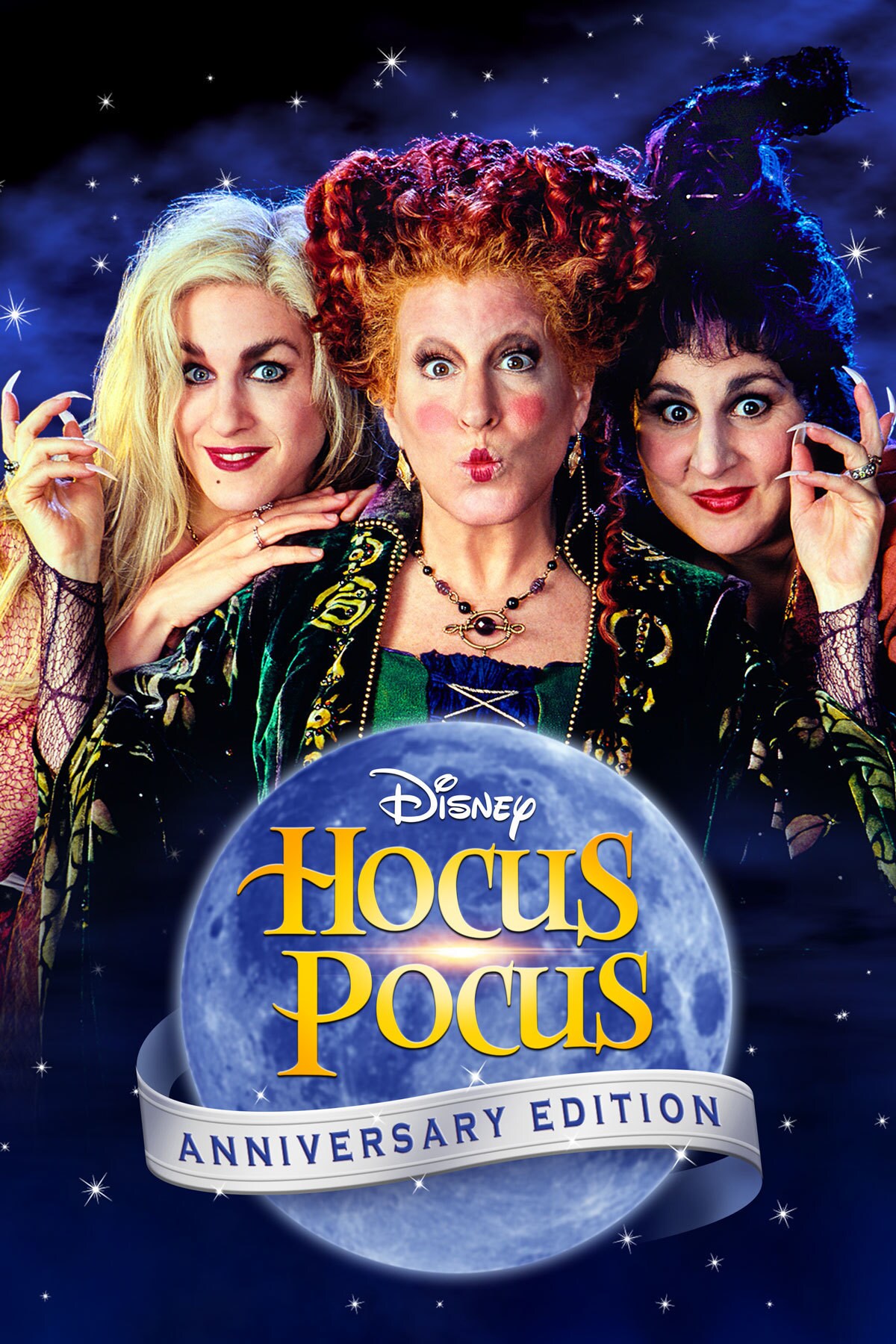
Inarguably, the aspects that are most remembered about Hocus Pocus are those that are actually worth watching – the trio of actresses playing the Sanderson sisters are fantastic. Bette Midler is having the time of her life in the part, and while the role of Winnie isn’t particularly complex, she makes the best of it. Ortega realizes that he’s working with a real legend, so makes sure to give the actress the chance to flex all of her talents – she’s a wonderful scene where she sings a passionate rendition of “I Put a Spell on You” that is the centrepiece of the film, and lingers much more than any of the storyline. Midler is supported wonderfully by Kathy Najimy and Sarah Jessica Parker, who are little more than props for her magnificent portrayal, but manage to have great moments of their own, without stealing too much attention from Midler, who is already in command of every scene she’s in, giving a deliciously high-camp performance that just resounds with the might of a multitalented entertainment icon in the prime of her career. The rest of the cast varies, from outrageously bad to adequate – the former mostly comes in the form of Omri Katz, who somehow manages to squander every little bit of potential his role had by giving a truly atrocious performance. Katz does his best, but the combination of poor delivery and stilted acting makes this quite a poor performance in a film that didn’t require much from him, but still finds him failing to deliver anything close to a charismatic performance. Vinessa Shaw and Thora Birch come out nearly unscathed, since they managed to give charming performances that handled the lacklustre material a lot better than we’d expect. They don’t do much, but they have some absolutely lovely moments throughout, which makes the film pleasant, and not much else. The cast of Hocus Pocus (outside the witches) are clearly just there to help the story move forward, which is perfectly understandable, but considering how the film seems to be cutting corners, a more dedicated approach would’ve been appreciated.
Ultimately, Hocus Pocus is a film that works better if we don’t try and rationalize everything. It is neither a masterpiece nor a complete failure, and its reputation as a childhood classic for many isn’t entirely unearned, since it has the trimmings of the kind of film that we tend to look back on with a lot of fondness, ignoring the more egregious problems that might bring it down somewhat, but not at the expense of the entertainment value of it all. It’s always a challenge to revisit films from our younger years, since the risk of being disappointed is a lot higher than the discovery that it has held up very well. However, if we suspend disbelief for a short while, and just avoid picking at every narrative scab that persists throughout the film, we can see how wonderfully charming it is, and understand precisely what it possesses that made this such a bewitching work for many of us. The definition of a film that is best appreciated with a more generous perspective, as a bit of mindless entertainment as opposed to a work of art, Hocus Pocus is still very fun, and surprisingly does hold up if we’re considering the more fundamental aspects that went into its creation. More appropriate for a crowd of family and friends with tons of snacks and a genuine desire to have fun, rather than as a singular cinematic experience, Hocus Pocus has its merits, and not much else – but that’s ultimately more than enough, especially when it wasn’t striving for anything other than what it provided in the end.
 The Postmodern Pelican