
“You’re still a bit small to know all about life”
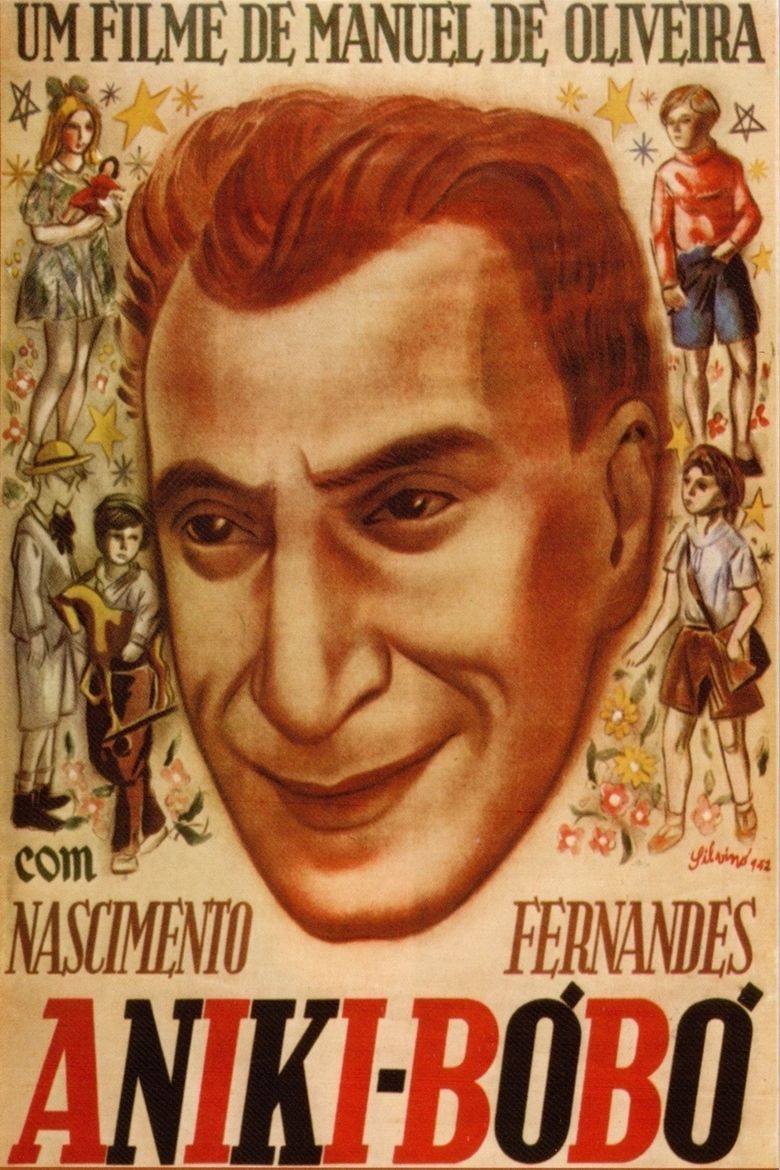
Youthful innocence and childhood mischief are the two fundamental concepts that blend together in Aniki-Bóbó, the incredible and highly-influential directorial debut for Manoel de Oliveira, undeniably his country’s most important filmmaker, and someone whose name evokes the very idea of both cultural fortitude and artistic integrity. The kind of film that isn’t only a classic, but a definitive part of the nation’s history, I was so pleased to finally do my civic duty and experience it for myself (and it was about time), almost as a rite of passage, since this is undeniably an iconic work of Portuguese comedy. In no uncertain terms, Aniki-Bóbó is everything it should be based on its reputation – a funny, bittersweet exploration of various issues through the guise of childhood, de Oliveira’s work here is so incredibly poignant, but still undeniably bold in its endeavour to be as charming as it could possibly be, a reliable and entertaining experience that never once loses the spark of genius that persists throughout it. Rooted in the traditions of magical realism (while famously being a forerunner to Italian neo-realism, which was only a few years away), Aniki-Bóbó is one of the great classic European comedies that gives the audience something to think about alongside the laughter, which is always a fantastic combination, especially for films that go on to become entries into the canon of beloved works that don’t only entertain, but also reflect reality in a way that is authentic, earnest and utterly honest, which is all that it took to make de Oliveira’s film (arguably the prolific filmmaker’s most beloved work) one of the most eccentric and fascinating glimpses into mid-century culture, all by way of the most delightful humour imaginable, and the tender touch of a filmmaker whose profound understanding of his culture, and the underlying tenets of human nature, made him one of the great observers of our condition.
The great swell of patriotism that Aniki-Bóbó still inspires, nearly eight years after its release, is not an accident – this is the kind of national comedy that each country tends to hold in incredibly high esteem, a charming work that transcends all individual barriers and unites everyone under a kind of common adoration and admiration. This seems like an excessive way to describe a film that may appear to be nothing but a boisterous, slight comedy on the surface, but any surface-level analysis of Portuguese cinema will undoubtedly cite Aniki-Bóbó as one of the country’s most important works, often recalling fond memories of the first time they saw it, or the various interactions they’ve had that centre around it – whether experiencing it in childhood, or later in life, it’s a film that leaves a solid impression on the viewer, especially those that hail from Portugal itself. This status as a truly beloved classic is certainly not without reason – there’s a charm to this film that we don’t see reflected very often, at least not in such a clear and concise way. We tend to appreciate what is familiar to us, even more so than the things that thrill us – and de Oliveira essentially making a film centred around a group of children (a great literary device that aids the artist in making statements about bigger issues without having to do all the work of contextualizing it), and places them in a familiar place – in this case, it’s the seaside town of Porto, which should be a source of familiarity for any compatriots – and putting them in situations that are entertaining and joyful, and letting the rest of the film flourish as a result of this simple but effective approach to storytelling, with the director masters with such precision, and would continue to develop as his career flourished, and he became the undeniable elder-statesman of Portuguese cinema.
In terms of the tone and the story it tells, Aniki-Bóbó isn’t particularly serious, nor does it endeavour to be much more than an enjoyable series of vignettes centred around a small group of children and the various adults who they encounter along the way. de Oliveira is able to capture a side of reality that often doesn’t get explored, particularly in more serious fare. Aniki-Bóbó is a film that may appear like a mindless comedy, but has a profound depth that makes it so extraordinarily compelling, especially when addressing the more complex themes that underpin an otherwise joyful film. Child protagonists are very effective when they’re used well, and de Oliveira knew precisely how to work with these actors, emphasizing both their immense youth and towering talents, which is even more impressive considering how these were not professionally-trained performers, but rather local children that he shepherded into appearing in the film. Seeing the world through a child’s eyes is always a great artistic tool, and Aniki-Bóbó manages the feat with precision and effortless charm, evoking the pathos without becoming complacent in simply recording children and their antics. The children are all exceptional, and their inexperience as performers is used to the film’s benefit, since they’re far from precocious or aiming to give portrayals that hint that they may be wiser than their years – instead, they are entirely authentic, with each reaction and expression coming across as entirely genuine. Aniki-Bóbó isn’t a film propelled by the performances, but it does help that it sets the foundation for a rivetting story through these wonderful characters and the remarkably talented young actors playing them.
There’s a unique structure to the film, and how we perceive these characters – we’re shown life through the lens of those who are at the beginning of theirs, and thus we’re able to see familiar concepts repurposed through the eyes of those who may not quite understand them (always a very charming aspect of these stories), as well as being witness to a very precise kind of narrative, where the director isn’t concerned with the story itself, but rather capturing the spirit of youth, and interweaving it with a particular atmosphere evoked from the location and culture he was intent on exploring. He hoped to evoke some kind of narrative that represented innocence in its purest form – free of any context other than conveying a sense of reality, and where we could simply see how life isn’t always constructed by chapters, but sometimes streams of experiences that form us into the people we are early on in our lives. There’s a simplicity to the work de Oliveira is doing there that feels far more fitting for a story like this than any other work that treads through familiar territory can (this reminded me of a European version of Hal Roach’s iconic Little Rascals series, which is similar in how it explores childhood through the humorous situation, but still somewhat weaker in terms of focusing on the more impactful sides of such stories). Aniki-Bóbó is made with a kind of upbeat naturalism that simply doesn’t find its way into the culture, at least not in ways that are actually successful. Moreover, this is a film that has bound audiences together, regardless of age or other inconsequential details, since everyone can relate in some way to what’s being depicted on screen, even if only marginally.
Adherents to this film have claimed that the premise can be summarized through the simple maxim of “children will be children” – and this is absolutely true, but the manner in which de Oliveira explores it is worth noting on its own. Aniki-Bóbó is a wonderful film precisely because it manages to be a metaphysical odyssey to something that should be familiar to all of us, that reckless and joyful sense of freedom we have when we’re young, and which we yearn for later on in life. It is consistently very funny, but still manages to touch on some deeper themes without being overwrought or unnecessarily sentimental, a common problem when looking at films that focus on such tricky subject matter. Ultimately, this is a film that really wears its heart on its sleeve, and it more than willing to go the distance to prove its mettle as a wonderfully enchanting comedy that challenges conventions, while still remaining perfectly within the confines of the genre, making it a perfectly-structured dosage of pure glee that will entertain absolutely everyone. The cultural idiosyncrasies may add context to the film and help it flourish, but it’s not necessary to understand exactly where de Oliveira was coming from in this regard, since everything about Aniki-Bóbó is universally resonant and so perfectly-calibrated to the human condition, making for truly compelling filmmaking that never abates in how absolutely delightful it is in both concept and execution, keeping us engaged from beginning to end.
 The Postmodern Pelican