
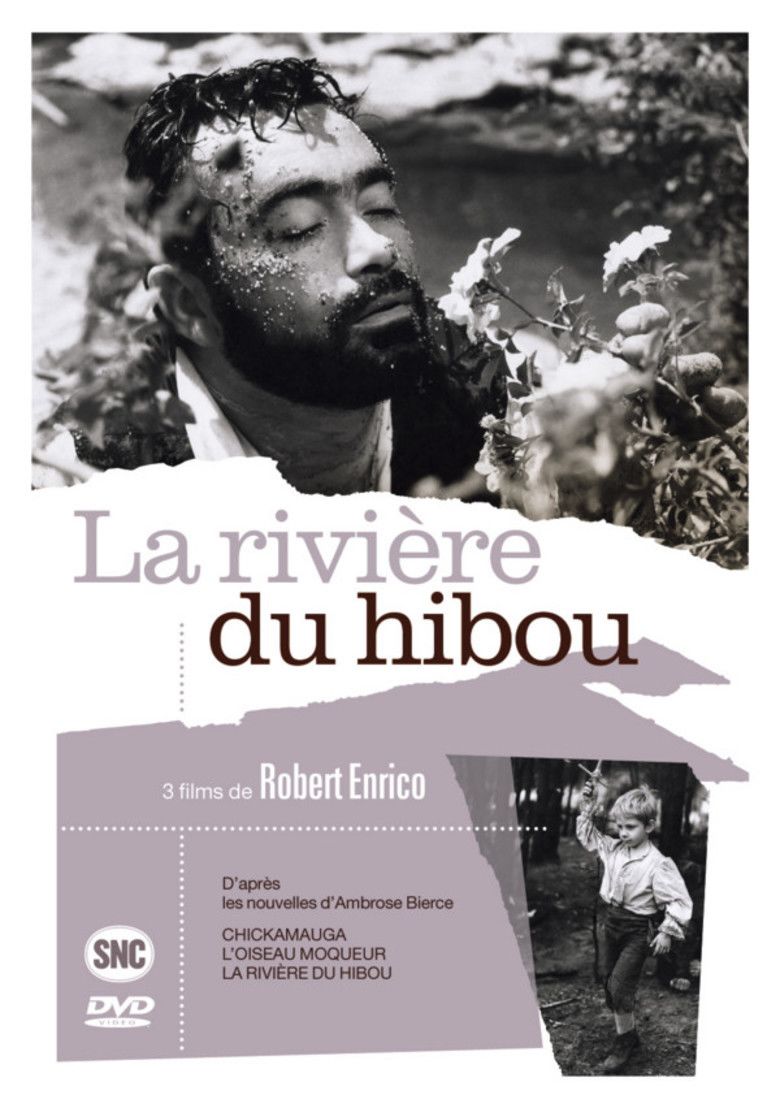
If you knew your death was only a moment away, what would your final thoughts be in that brief space between life and demise? This is the fundamental concept explored in Ambrose Bierce’s classic short story, An Occurrence at Owl Creek Bridge, which was adapted into an incredible film by Robert Enrico, who captured the themes of the original source material through visualizing its key concepts and exploring them through the guise of a very simple, but thoroughly effective, experimental drama. At one twenty-five minutes in length, and almost entirely void of dialogue, An Occurrence at Owl Creek Bridge (French: La Rivière du hibou) is an impressive achievement, and all the proof one needs towards the idea that some of the most affecting and brilliant works of fiction are those that don’t take up much time, but rather thrive on the bold approach to tell a story in a smaller form. Enrico truly did something quite exceptional with this adaptation, creating a hauntingly beautiful piece of filmmaking that is perpetually questioning certain metaphysical concepts without becoming too ensconced in the mechanics of philosophical theory, paying tribute to the story, which has been canonized something of a literary classic, and bringing life to the fascinating ideas evoked by Bierce that has resonated with readers and viewers ever since it was first introduced to them. Everyone remembers where they were when they first encountered An Occurrence at Owl Creek Bridge, and whether in the form of the short story or this adaptation of it, it’s quite difficult to deny the poignancy of the ideas evoked throughout.
It’s not often that I find myself so entirely stumped by a film that I struggle to verbalize some of the core concepts and reasons why a film achieves what it set out to – in the case of An Occurrence at Owl Creek Bridge, one would think that it’s a result of the length, since it may be possible some of the ideas weren’t fully developed by the short running time. This is obviously not particularly relevant, since some of the finest works of filmmaking have been a fraction of the length of Enrico’s film here. Perhaps what makes An Occurrence at Owl Creek Bridge so difficult to speak about is the fact that it touches on something far more challenging than many films – it is essentially a work that takes place entirely within the context of a single moment, where a man occupies the ambigious space between life and death and begins to ruminate on his own existence, coming to terms with his fate in the only way that makes sense: to fantasize about his escape. An Occurrence at Owl Creek Bridge (as a story) has a very bold premise, and much of its value comes in how it subverts the very nature of time, which was audacious at the time of the original publication, as well as when this film was made and released (and captivated audiences all around the world with its stark honesty and unconventional approach to some haunting ideas) and remains just as striking today as it did in the past, with its unique approach to some poignant themes that are delivered with such genuine curiosity of the ideas the original story was built on being the primary reason why some have proclaimed An Occurrence at Owl Creek Bridge one of the most unexpectedly moving pieces of filmmaking produced at the time. Such high-praise doesn’t come easily, but Enrico’s adaptation has aged remarkably well and is just as unsettling and profoundly complex as ever.
However, all these deep and insightful conversations about how Bierce (and by extent Enrico, when referring to this adaptation) plays with the concept of time, are rendered inconsequential when it becomes clear that the aspects that make An Occurrence at Owl Creek Bridge so compelling are also those that are left entirely unsaid. The power this film yields lie in the areas in which it is most abstract – as mentioned previously, this is a film built without much dialogue (the only words we wear are faint military commands that are intentionally barely audible, to contribute to the sense of detachment felt by the main character in his state of limbo, and an upbeat celebratory song that punctuates his escape), with therefore necessitated some other choices to be made in the construction of the story. Enrico understood the value of an image, and An Occurrence at Owl Creek Bridge is filled with unforgettable moments that are often very subtle and not only make an immediate impression at the moment we witness them but linger with a profundity that simply could not be extracted from even the most verbose, ambitious work of filmmaking. The film succeeds because not only is it very effective in how it realizes some intimidating concepts, it also keeps everything so fundamentally simple – it has a fascinating approach to a psychological idea that manifests wonderfully on screen, and even when the twist is made clear, it never feels as if the film is trying to take us by surprise since the ending is so stark and unsettling, it’s quite impossible to see at as the anecdotal fable that some may think it to be.
The combination of a strong set of ideas and the incredible ability to realize them with audacity and intrepid earnestness is precisely what earns An Occurrence at Owl Creek Bridge the status it has accumulated over the years. This is a timeless work desperately in need of a wider audience since there is such a poetic depth to this film that isn’t often found even in films substantially longer. The film treads through some disconcerting territory, and is intentionally incredibly bleak and unsettling – but it’s all for the sake of the incredible message the film communicates, which somehow (despite being less than half an hour) manages to be more compelling and riveting than many other films that also attempt to look at similar themes, but without the good sense to realize that sometimes the most simple approach is the one that leaves the most significant impression. An Occurrence at Owl Creek Bridge is truly a masterwork – it doesn’t avoid some of the more difficult ideas that come with it (although it never gets the time to become gaudy), but the result is a truly chilling piece of filmmaking that ventures further than one would expect from this kind of project, and its insightful understanding of some intangible concepts is truly a sight to behold, and all the proof one needs for this film to be consolidated as an essential work of cinematic storytelling.
 The Postmodern Pelican