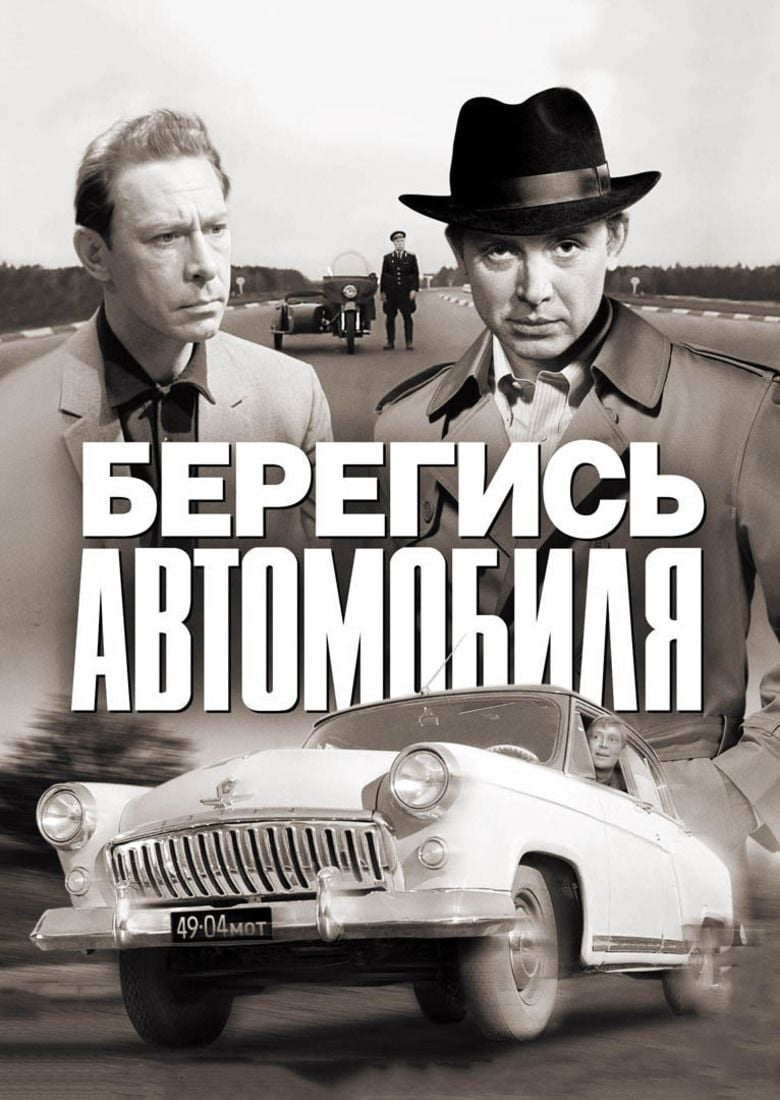
 A sub-genre of cinema that I have grown to really appreciate in the past few years are the Soviet comedies that started to be produced almost concurrently to the heightening tensions of the Cold War. I’ve explored several of them in depth, looking at how they’re the most rebellious examples of post-traumatic filmmaking, as they dare to criticize their intimidating society, crafting their stories around the subversions of the socio-cultural standards they were forced into enduring during the draconian rule of a political system that dismissed the concerns of their citizens. So much can be said for these films, and there is always an immense amount of correlation between the content of even the most buoyant Soviet comedy and the bleak history around the time when it was produced. Yet, what makes these films so bewilderingly brilliant is how they find new ways to critique and challenge – and even when working from the opposing perspective, whereby it looks at the more rebellious nature of society from the perspective of the state, which prioritizes decorum and order, the films always appear to be truly compelling and unbelievably original in many ways. Beware of the Car (Russian: Береги́сь автомоби́ля) is one of the more interesting entries into the canon of great Soviet films – its a boisterous, hilarious and often outrageously revolutionary comedy-of-manners that combines genres in wonderfully inventive ways, and coerces us into one of the most intrepid journeys into the roots of Soviet culture made during this film. Daring and extraordinarily complex in its intentions, but incredibly simple in how it realizes them, Beware of the Car overcomes its more vague political underpinnings by being an exceptionally charming comedy that is nothing short of an exuberant exercise in building a memorable story from the fragments of a difficult moment in history.
Yuriy Detochkin (Innokenty Smoktunovsky) has always been involved with driving vehicles in some way – he used to work as a taxi driver before an accident gave him a traumatic brain injury that slowed his development slightly, and led him to be retrenched from his humble career. Now a timid, middle-aged life insurance broker, Yuriy is seemingly an ordinary, functioning member of society. What most are unaware of is that he secretly steals the cars of the corrupt government officials and politicians who he deems to be unworthy of their wealth, and sells them to the crooked car dealerships looking for cheap vehicles to pass over to their desperate clientele. Yuriy doesn’t keep the profits for himself – instead, with the exception of travel expenses, he donates everything he earns to an orphanage, as he sees these innocent souls as being more worthy of the benefits of political gain than the corrupt bourgeoisie representatives who become wealthy in truly unorthodox ways. Trailing this mysterious thief is Detective Maxim Podberezovikov (Oleg Yefremov), a skilled private investigator put onto the case. He doesn’t realize that the culprit is not some malicious criminal, but rather his own friend from the amateur theatrical troupe that he belongs to – not being aware that the mild-mannered Yuriy, who is playing Hamlet opposite his Laertes, is the man he is searching for. However, he eventually does discover the truth and is conflicted, as while a crime has been committed, the specific nature of it makes Yuriy not necessarily someone who he believes should be punished, as his generosity supersedes any apparent wrongdoing in the eyes of a detective who finds himself, for the first time in his professional career, valuing the individual over the situation.
If this premise sounds vaguely familiar, it’s most likely due to the fact that Eldar Ryazanov was making something that can be considered a Soviet-era version of Robin Hood, particularly in the positioning of an ordinary man swindling the rich and giving to those who need the support the most. Beware of the Car is a very simple film, with a storyline that operates mainly as something of a fable – this is clear in the opening moments when the narrator waxes rhapsodic about how no one is exactly sure where this story took place, with the specific location being almost entirely inconsequential to the premise, as it could be reflective of any society. Logically this isn’t entirely true, as so much of Beware of the Car is built from the foundation of communist rhetoric and the precise socio-cultural malaise that defined the region at this time. However, the principle is certainly very strong in how Ryazanov was putting together a film about morality, one that echoes with many of the tenets of political system’s more idealistic promises (the veracity of what it represented here still remains to be seen, but is mercifully not all that important to the film as a whole), particularly in how it focuses on the most humble criminal, a man whose entire existence is propelled by his desire to assert revenge on those who he sees as undeserving of their wealth by redistributing what he steals to those that are far less fortunate. It’s never entirely clear whether Beware of the Car is in support of the political beliefs of the Soviet Union, or if it is an immensely complex critique that conceals itself so well, it actually portrays the state in a positive life. However, whether mildly propagandistic or brilliantly subversive, the film is taking inspiration from the pure ideological roots of the system as a way of constructing a wonderfully potent dark comedy that is made with the intensity of many of Hollywood’s great film noirs, adding in the acerbic Eastern European wit that goes underappreciated far too often.
Like all fables, Beware of the Car is a very simple narrative that ends with a compelling lesson that extends beyond the confines of this exact story and harbours meaning that should be assimilated into the lives of all viewers (even just the structure of this kind of story is so wildly aligned with the tenets of communism). Ryazanov, whether intentionally or not, attempts to make a poignant story of a man searching for a place in a society that he has been rejected from since an accident rendered him something of an outcast – still functioning, but not in a way that would make him has respected as those around him, he seeks out some retribution for those who have perpetuated the struggles of the disadvantaged. Taking its cue from several Russian novels that position complex but well-meaning protagonists at the centre of a society that is inherently against them (Dostoevsky was particularly adept at this, with novels such as The Idiot and The Double being wonderfully sardonic character pieces that venture into the human soul). The director is certainly not making any attempt to conceal his moralistic intentions with this film – Beware of the Car carries a very important lesson, which is naturally executed through some of the most subversive humour produced during this film. Comedy is a tool that doesn’t only entertain, but can also create some sense of cohesion, binding groups that may otherwise be divided over the more serious fare that is normally associated with filmmaking from this era of Soviet history.
Ryazanov conveys a potent message in such a way that all the necessary elements are made extremely clear, albeit without becoming overwrought. Instead, making use of some of the most deliriously charming comedy in Soviet history (which is far less of a contradiction than it appears, as there are many works produced during this time that were considerably lighter affairs, but with depth underpinning the levity). The audience is still given an entertaining experience, an exuberant thriller that keeps them engaged, but where gentle humour is employed to convey a certain message – the precise content of what Ryazanov was attempting to say with Beware of the Car is likely to be different for each viewer (and it could be an effective gauge in determining one’s alignment on certain social and economic issues), but the general concepts are incredibly strong. The film is one built on the idea of desperation – the protagonist doesn’t steal for the sake of personal gain (as he’s a good, hardworking cog in the social machine), but rather to provide to those who need it the most – the director skirts the issue of welfare by making the beneficiary an orphanage, and can avoid any conflict with the concept of equal pay for equal work. There’s a great deal of commentary that underlies Beware of the Car, and it could be extremely easy to derail any conversation of this charming comedy into one about the various idiosyncrasies of the political system at the time – but to do that would simply betray the fact that Ryazanov was making a very simple, poignant comedy that carries additional nuance by virtue of its roots in reality.
Narratively, Beware of the Car is a terrific piece – but we shouldn’t undermine the skill that went into the realization of this ambitious premise, with the director going to great lengths to not only infuse the story with an impressive blend of comedy and graceful humility but also to help these themes manifest through an audacious approach to the visual and creative style. The film is constructed with immense precision, being a clear product of the previous few decades in cinema. Most significantly, it borrows liberally from many silent era comedies, particularly in how it uses the physicality of its actors to create something of a metalanguage, a form of non-verbal communication in many scenes that conveys more than the (inarguably powerful) spoken words ever could. In this regard, Innokenty Smoktunovsky and Oleg Yefremov are terrific as the co-leads, playing two individuals who may be deviant in their approach to what should be considered not only legal, but also intrinsically moral, but bound by their shared belief in doing what is right above acting in one’s own self-interest. Their performances are characterized by both wonderful comedic timing and extraordinary pathos, with both of them using their incredible expressivity to convey the inner machinations of these complex characters. The city itself (which is never specified as per the opening scene’s narration, even though there are allusions to it taking place in Moscow) is portrayed as a character on its own – intimidating, looming and labyrinthine, Ryazanov creates a fascinating landscape, which often fits into the work done by the German Expressionists and cinematic Modernists in their use of shadow and framing to evoke a certain constrictive, otherworldly image of the city.
Beware of the Car occurs at the perfect intersection between narrative and creative genius, being one of the most beautifully human films ever produced by the Soviet Union. Whether you want to look at it as a rousing celebration of the apparent unity that the political system brought on its citizens, or a scathing indictment on the nature of communism and its inevitable path towards corruption, it’s difficult to deny the incredible poignancy with which this film is put together. It is a sincere story of taking and giving, being entirely aware of the message, which it investigates thoroughly, while never resorting to preaching about virtue. It can often be slightly saccharine, particularly the final few scenes, where the protagonist is allowed to enjoy his freedom temporarily, which is seemingly unnecessary for a film built around the fact that he’ll inevitably pay the consequences, even having committed crime for the sole purpose of doing good. One of the rare Soviet comedies that is more upbeat than it is sardonically satirical, Beware of the Car is a wonderful triumph, an effortlessly entertaining caper that is as thrilling as it is heartfelt, taking a simple story and turning it into a perfectly-calibrated comedy that touches on social issues, which remaining as endearing and delightful from the first scintillating moment of unhinged comedy, to the poignant ending scene, where the themes of the film dovetail in an unexpectedly moving way, proving Beware of the Car to be nothing less than a positively powerful work of mild-mannered, mid-century mayhem with a great sense of humour and a lot of authentic soulfulness.
 The Postmodern Pelican