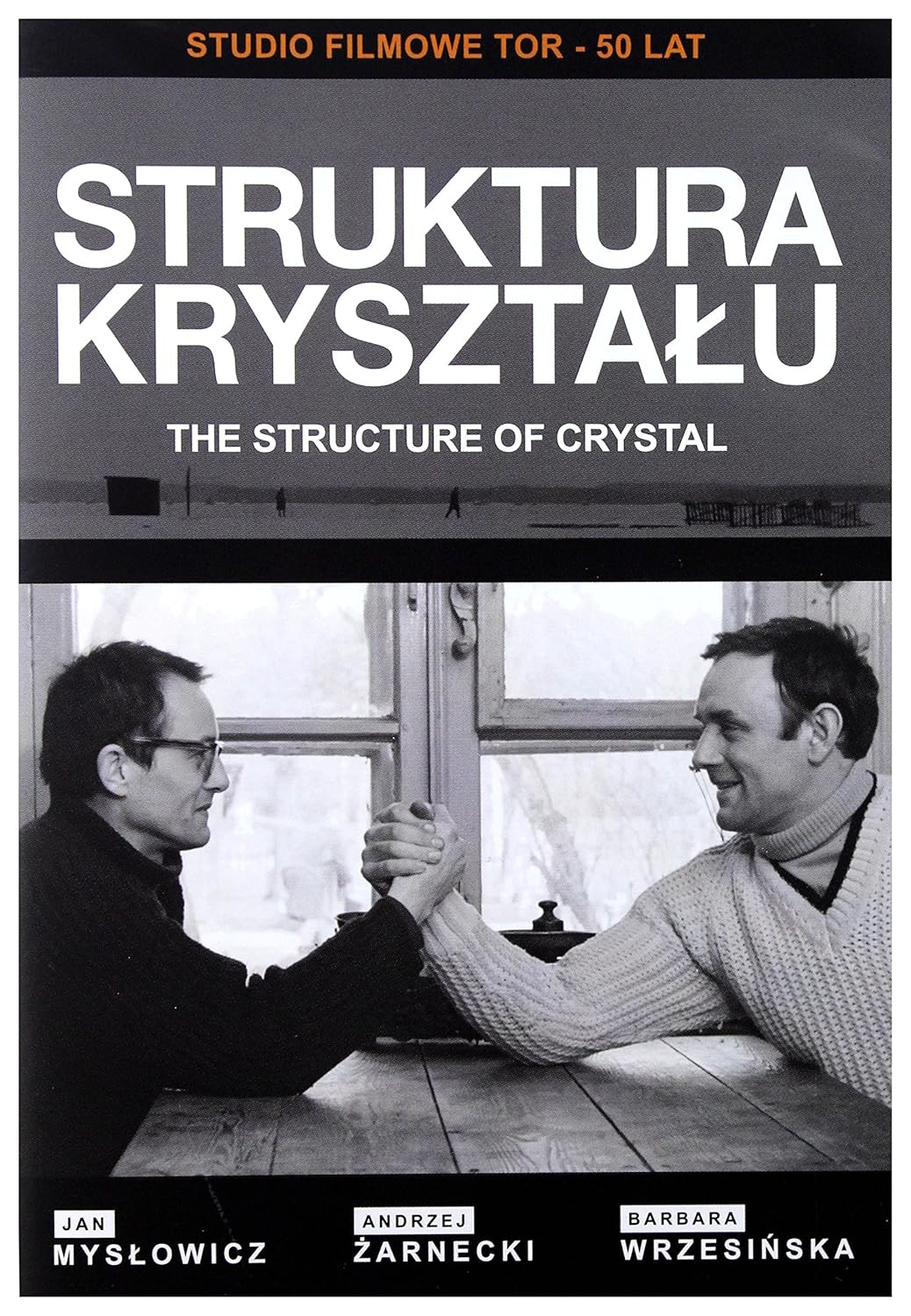
 Two old friends are reunited years after finishing their studies. Jan (Jan Myslowicz), a scientific genius, gave up his aspirations of leading an academic life by retreating into the countryside, where he got married to a humble schoolteacher (Barbara Wrzesinska), and leads a relatively simple life in his tranquil surroundings. Marek (Andrzej Zarnecki) stayed behind and built a relatively successful character in academia, becoming a well-regarded academic in Warsaw, and earning the respect of the physics community as a whole, in which he is widely considered an expert in the formation of crystals. Marek decides to take a break from his career for a few days, venturing into the countryside where he is soon spending time with his old friend, secretly trying to persuade him to give up his pastoral existence and pursue a career in the field he spent his life working towards mastering. However, Jan is defiant to the idea of abandoning his simple but meaningful life – its a fulfilling existence that may be void of many luxuries, and he and his family may not be earning enough to live extravagant lives, but they are comfortable, and more than anything else, they’re happy with the life they have chosen. Over the course of his visit, Marek soon finds himself captivated by the sedentary life – playful frolics through snow-filled fields, thrilling sled-rides through the quiet village roads, and the joys that come with a tranquil life all go towards convincing him that sometimes the most fulfilling parts of life are those that seem the most straightforward.
Krzysztof Zanussi had a talent for portraying humanity – the vast majority of his films take the form of endearing dramas and upbeat comedies that don’t offer much other than being steadfast representations of humanity and the various minutiae we encounter in our daily lives. My first encounter with the director was his extraordinary language-themed comedy, Camoflague, in which he used an academic summer camp as the setting for one of the most fascinating character studies produced at the time, a film that provoked many deeper questions without ever becoming all that complex on its own terms. The Structure of Crystal (Polish: Struktura kryształu) follows a similar set of ideas, being a calm and reserved comedy that touches on deeper themes, such as class difference and the role our surroundings play in how we perceive the world around us, and our place within it. Zanussi is a director whose work reflects two very different capabilities – not only is he a brilliant writer and director, but also a remarkable social critic, capable of putting together incredibly intelligent films that don’t seem to amount to much at first, but slowly envelope us in their poignant, memorable approaches to the human condition, where certain questions are investigated, with emphasis being placed on those that aren’t necessarily all that urgent, but become compelling through the director’s intricate understanding that life is not just composed of the large complexities, but also the smaller idiosyncrasies, all of which converge into a colourful existence that he portrays with such elegance and grace, as well as infusing an enormous amount of heartful humour into this straightforward, but utterly heartfelt, expression of nihilistic joy.
While not necessarily a film that intends to be overwrought or incite some kind of social change, The Structure of Crystal is a film that focuses much of its attention on some class issues, particularly in how it positions the two main characters as being similar in nature, but remarkably different in how they live their lives. Taking its cue from the conventional “town mouse and country mouse” storyline, Zanussi is inspired to tell the tale of two seemingly opposite individuals coming together and finding common ground, without the conflict normally found in these stories. Anchored by a trio of compelling performances, particularly from Myslowicz and Zarnecki, as the humble hermit and bold city intellectual respectively, and told with a kind of sincerity that isn’t proposing some bold and ambitious comment on social issues, but rather a film that focuses on a set of very simple, but extraordinary moving, themes. The Structure of Crystal is a film about friendship more than anything else, and the five-year space between encounters, and all the quandaries that have filled up that gap in their friendship. The two protagonists are ordinary individuals navigating worlds they are not familiar with – for Marek, it’s as simple as submerging himself into cultural surroundings far from his comfort zone. For Jan, it’s slightly more difficult, as the arrival of his friend brings new questions of his own purpose in life – is he making any difference in the quaint countryside hamlet that he calls his home, or should he heed the call to go and contribute his immense knowledge to institutions, and make some tangible change through contributing to the scientific community? The Structure of Crystal is a film about negotiating the differences accrued in the years after two people have deviated in the paths they take, and the question of the manner in which we resolve such issues without changing our own ambitions.
There’s a certain nihilistic sensibility underlying this film – not necessarily the kind that is constructed to be filled with despair, where the director presents us with scathing commentary on how truly banal life is. Zanussi rather approaches this issue from a more delicate perspective, serving as an affectionate story about two friends reconnecting after years apart. There’s definitely an unquenchable joy that pervades the film, which stands in stark contrast to the subject matter, which is theoretically much heavier and more profound than this relatively upbeat film would lead you to believe. The director doesn’t necessarily negate the seriousness of the questions he proposes throughout – the film does deal with some larger concepts that aren’t normally very present in these kinds of films, but rather works around the dour nature of the issues through demonstrating a keen understanding of the human condition. The Structure of Crystal uses tedium as a tool, rather than a limitation – the characters live very simple lives, and their days are spent doing much less than one would expect had they lived in a bigger city – in a way, the film is romanticizing such a lifestyle, where individuals can live carefree lives without having to worry about the many anxieties inflicted on city-dwellers. Naturally, Zanussi is not entirely an idealist – he does demonstrate some of the harsher conditions of people that decide on a life like this (one scene in particular, where Jan and his wife discuss the next month’s payments, and how they’re going to make do with the very little they have, is especially striking), but instead of positioning this as plight, he portrays it as the result of some choices, and that even though it may be difficult to endure it time, there are merits to this kind of lifestyle.
The Structure of Crystal is a remarkably lucid film, most likely derived from the fact that the director ventured to make something extraordinarily simple, leaving behind the despair and instead trying to focus on the most positive side of the sedentary lifestyle at the core of the film. The story is quite heartfelt, the result of the director’s more delicate approach to the subject matter, and manages to be quite humble, defying the pretensions that could have so easily consumed this film and made it quite a laborious exercise. It’s rare to find a film that openly goes against the more troubling quirks of the genre, and where the elegance it affords the story allows it to overcome its laborious pace, instead allowing it to flourish into an incredibly moving, and frequently joyfully funny, demonstration of the human condition. There was no doubt that Zanussi could have easily made this film a bleak, overwrought and overly-preachy testament to the flaws of both an urban and luddite lifestyle. Instead, The Structure of Crystal opted to be far more endearing and meaningful, and this tends to make a significant difference, especially in a film that proposes the bold, challenging concepts that reside at the centre of the story. It’s an idiosyncratic piece that doesn’t forego infusing an immense amount of heart into a more serious plot, resulting in a wonderfully entertaining, but also oddly thought-provoking, tale of two different paths taken, and the eventual reunion that sees them express the experiences gained during that time, and all the lessons that go with it. The Structure of Crystal represents simple, but highly-effective, storytelling that makes a bold statement while saying the least.
 The Postmodern Pelican