 Right from the start, I’ll mention how Nevia is one of the most astonishing pieces of contemporary filmmaking I’ve seen in quite a while – there have been many works that took a daring approach to representing existence over the course of the past few months, but not many of them were as effective as Nevia, the story of a young woman trying to find a place in a world where she’s never quite belonged. This film isn’t the archetypal “slice of life” drama that really only resonates with those who can relate to the plight of the lead character, or those in its country of origin that can understand the social machinations that director Nunzia De Stefano uses as the basis for her deeply moving exploration of the human condition. Even outside of its native Italy, this film manages to be a compelling work of realistic fiction – the struggles of everyday life are put at the forefront of the film, where we follow the trials and tribulations of an ordinary individual as she navigates a treacherous social system that puts people like her at risk of incurring irreparable spiritual damage, not realizing that life’s challenges, for better or worse, are something that everyone will eventually have to endure. De Stefano evokes the spirit of youth, and the insatiable hope that comes with it, in her beautifully-intricate social drama that is as heartbreaking as it is utterly compelling.
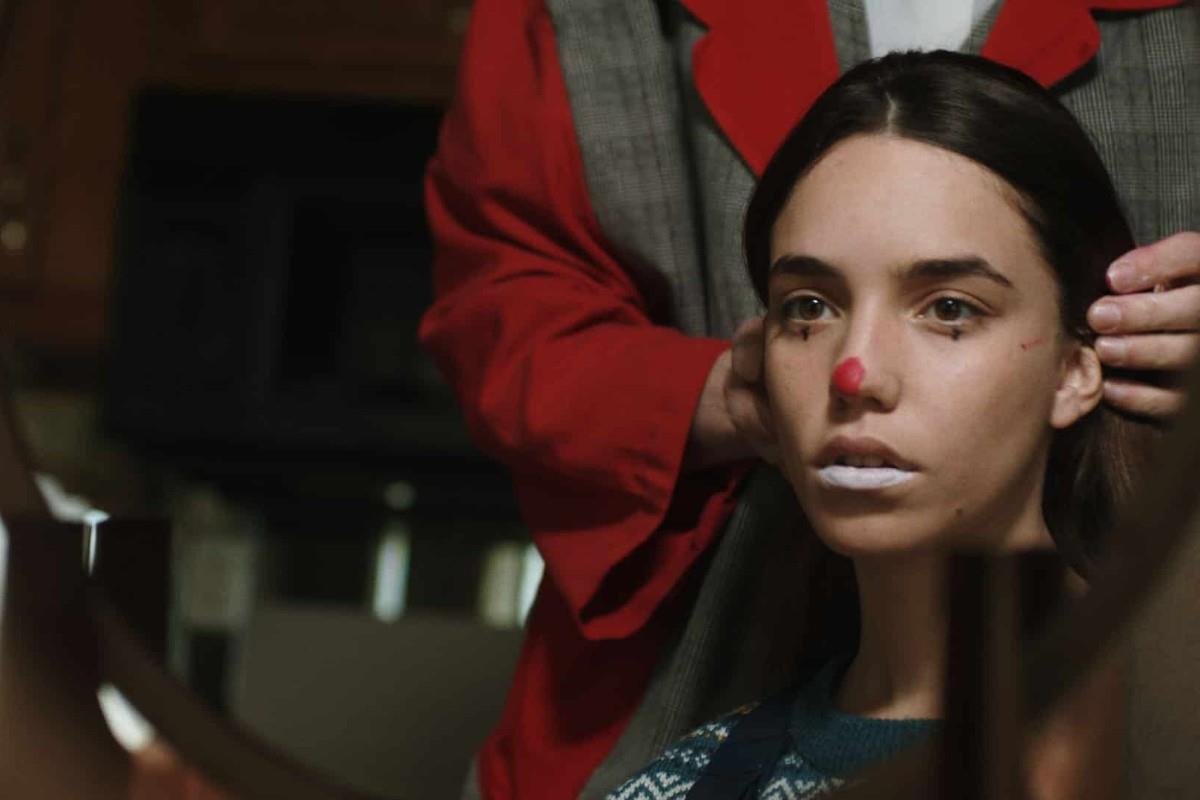
Nevia (Virginia Apicella) is a young woman living in working-class Italy. Her parents are nowhere to be found, with the implication being that she and her sister are the unwanted product of an affair by a woman who did not want to be a mother. As a result, they live with their grandmother, who tries to provide for them in any way she can – and it turns out that she has to take to turning her home into a brothel, where the girls are shuffled off the house of their aunt (Franca Abategiovanni), an eccentric but lonely spinster who treats the children as if they’re her own, which she yearns to have. Nevia is a rebel by nature – her days are spent hustling to try and make some money, and whether it be in collecting the trash of her neighbours for a small fee, or selling her clothes at a local market, she is intent on providing for her family. A circus soon comes to town, and Nevia starts to feel the sense of belonging she had never quite experienced before, and in befriending many of the workers there, she starts to realize that there is more to her life than she initially believed, a potential that no one had previously seen before in her everyday life, that could propel her to moving above dire poverty and becoming someone who can make a difference. However, she soon discovers this is far easier said than done, and there are far too many people standing in her way for the transition between these different stages of life – but Nevia retains her revolutionary spirit, and is willing to fight for everything she believes in, no matter the cost.
Nevia is a film that takes the form of a deeply powerful feminist statement – made by a director who has put female issues at the core of her work before, the film is mainly concerned with exploring the coming-of-age of a young woman in a society inherently against people like her. The most chilling moment in the film comes when Nevia’s aunt says “it’s bad luck to be born a woman here”, and as we see throughout the film, this proves to be true. It isn’t necessarily focused on the injustices wrought on the main character, but rather the challenges she faces growing up in an environment that tends to forget about her, where she is forced to endure certain experiences that would otherwise not be expected of someone born in a different position. This is where the social realism underpinning the film really comes to life, because the majority of this story takes the form of the titular character doing what she can to find her voice, trying to break out of a position where everything seems to be against her succeeding – her age, her gender and her economic status means she is almost entirely invisible, and with the growing tensions between her grandmother and her, Nevia finds herself even more motivated to make a good life for herself. She refuses to take the easy way out by surrendering to the charms of a local bourgeois teenager, who showers her with gifts in the hopes of winning her affections, desiring to make a life for herself and her sister, rather than relying on someone else to support her. There’s something initially very frustrating about Nevia, particularly in how she fights against the system that seems to be relatively standard, only to have her instincts proven when she finds herself victim to the manipulations of a variety of people who seem to be using her as a means of benefitting themselves. De Stefano infuses this film with a kind of feminist anger that always feel genuine, mainly because she avoids cliches, and keeps everything relatively grounded, which gives the film an authenticity that only helps it flourish and become a poignant statement on the plight of working-class women in desperate situations.
De Stefano also does so well to extract some astounding performances from her cast, who she tasks with interpreting her script and giving it the nuance that only beautifully detailed performances can provide. The cast is led by Virginia Apicella, who commands the screen in a way very few would’ve expected considering how young she is, and how much of a newcomer to the industry she is. The titular role in Nevia is one that would be challenging for an actress, as it requires a kind of understated intensity that is rarely glimpsed, let alone sustained for the entirety of the film. Apicella takes the challenge in stride, delivering one of the most incredible performances of the year, abandoning the quirks that normally come to be associated with teenaged characters, without removing her too far from reality. Nevia isn’t feisty, but rather understandably rebellious, and her struggles are not superficial, which Apicella conveys with such gorgeous lucidity, it’s bewildering how this performance hasn’t made more of an impact since this film premiered. Pietra Montecorvino plays Nevia’s grandmother, who does her best to provide for her grandchildren but finds herself struggling, forcing her to resort to the kind of work she thought she had left behind for good years before. Franca Abategiovanni contrasts Montecorvino, playing a woman struggling to exist in a world that has left her behind. There’s a perfectly adequate film that could’ve been made from the story of these two sisters who are almost entirely polar opposites – one an alluring ex-prostitute, the other a lonely spinster who thinks herself too ugly to even fathom finding someone to love. However, in the context of this film, they’re merely welcome supporting presences in the story of a young woman trying to find her way in a challenging world, and while they may not be the saviours Nevia thinks they may be, they’re certainly compelling characters that enrich the film much in the same way they contribute to bringing the story of the protagonist to life.
Nevia is a film that proudly proclaims itself a product of the school of neo-realism, eerily fitting in alongside some of the older films produced in the country by the likes of Roberto Rossellini and Vittoria de Sica, both of which seem to be very clear influences on De Stefano’s work here. The director endeavours to tell a story about poverty and the working-class that is moving without being heavy-handed, and she narrowly avoids every bit of overwrought sentimentality in favour of something more honest. She’s not afraid to disregard conventions, and openly refuses to soften the emotional blow this film deals, mainly because of how personal this story clearly is to her. This is a film about hope, despite the fact that it doesn’t really have much of a happy ending. It’s about not stewing in the frustration of social stagnation, and working towards improving your life, whatever the cost may be. It doesn’t dismiss the importance of family, but is also bold enough to show the disheartening truth that sometimes its those closest to us that hurt us the most. The honesty through which Nevia is executed is the reason why its such a resounding success – its complexities, while perhaps a bit too potent at times, form a vivid picture of a side of society hardly ever give the attention it is here – and through telling her own story, or rather one inspired by her own life, the director is capable of making great strides towards the kind of heartwrenching narrative cohesion that her thematic compatriots have been striving to capture for decades.
With this film, Nunzia De Stefano makes an astounding social drama that feels both towering and intimate. The coming-of-age story is one that has been explored many times before, but rarely with this kind of passion, where the sordid details of a difficult childhood are not concealed, but openly explored. The director makes some bold choices with Nevia, and considering how she was working from the perspective of telling a story inspired by her own life, she’s able to break the boundaries between fiction and reality in a way that feels authentic. This is a film mainly about social rejects, shunned upon by society due to their economic status, or their gender in a social system inherently against them due to ambiguously-defined social standards that afflict even the most well-regarded of individuals. The decision to situate a large portion of this film’s emotional arc in a circus is very effective, as it allows De Stefano to comment on the theme of social rejection without it being overwrought, which is a daring but ultimately worthwhile decision because it gives the film a certain gravitas that allows it to be entirely authentic. Ultimately, it’s a film that says a great deal through the must subtle means, which may not always work, but when done with the sensitivity and gracefulness that it is here, it’s difficult to not be entirely captivated by this meaningful social drama that has astounding performances, a wonderful story and more than anything else, a sentimental view on the human condition very few filmmakers ever seem to capture in the quiet vivacity demonstrated here. For that reason alone, Nevia is an incredible work of semi-fiction that isn’t only profound, but thoroughly memorable as well, because it says more about humanity than most contemporary works of realism.
 The Postmodern Pelican