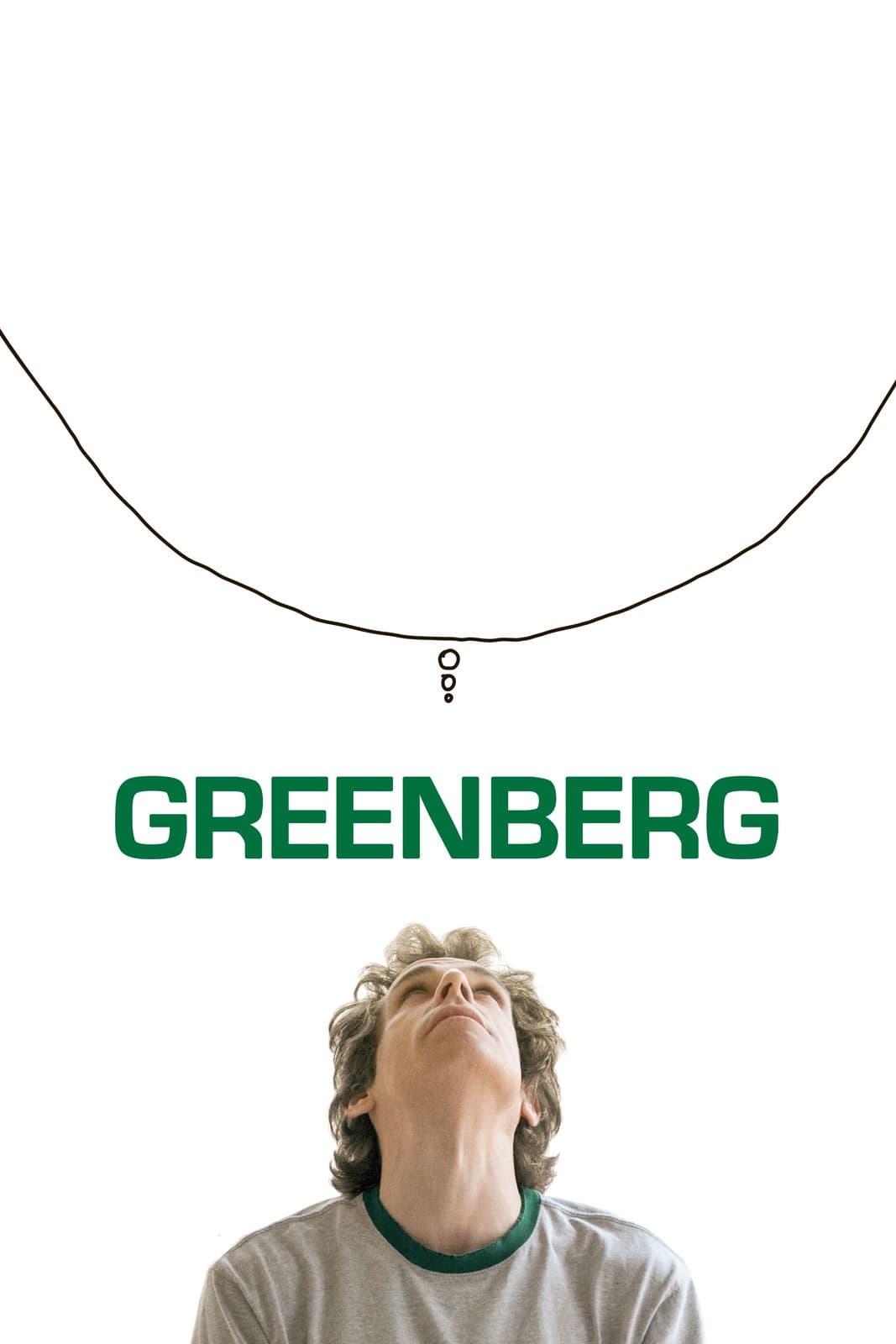
 Florence (Greta Gerwig) is a young woman in Los Angeles working for the affluent Greenberg family, helping them with daily errands and being an invaluable presence in their lives. However, they’re going on an extended vacation to Vietnam, which means Florence’s responsibilities will be temporarily put on hold – that is until she meets Roger (Ben Stiller), the brother of her employer who will be staying in the house and taking care of it while the family is away. Roger is an enigmatic man – he may or may not have spent time in a mental hospital for some ambigious condition, and is currently trying to reconcile his past mistakes and grow as a person, which is proven to be extremely difficult when it becomes clear precisely how the quality keeping him from growing is not his ailment, but his attitude. Florence finds herself initially fascinated by Roger and his idiosyncrasies, and even begins to demonstrate the budding feelings of romance until she becomes repulsed by his behaviour. His childish nature and his inability to move forward after a tumultuous past makes him both a compelling, but ultimately deeply tragic, figure who fails to recognize those around him, especially the people hoping to help him. Yet, can Florence truly stay away from a man who incites such an excitement in her? Everyone else seems willing to give him a second chance, so why should she be the outlier – and even when his flaws are made glaringly clear to her, how can she resist falling for a man who seems to be the only person who truly understands her, even when he really seems incapable of any form of empathy.
I’m not quite sure what Noah Baumbach was trying to say when he made Greenberg. It’s not a bad film, but it’s also not his best work – if anything in his oeuvre meets the criteria of being just adequate, this is certainly it. There’s not really much simmering below the surface, which is odd for a director like Baumbach, whose work has often been the epitome of thoughtful social critique and elegant, subtle comedic ingenuity. Neither of which seems to apply to Greenberg, but that doesn’t mean it fails to try to match his previous work. Made during the director’s foray into more serious fare, occurring after The Squid and the Whale and Margot at the Wedding, which are both films that take darkly comical looks at more grave issues, this film doesn’t quite live up to those standards in any palpable way, being satisfactory for those who appreciate Baumbach’s meticulous style of creating earnest characters in realistic situations, but never quite going far enough to stating exactly what it intends to say, to the point where the film as a whole falters and becomes a piece that inspires nothing but muted ambivalence, where we can applaud it for its raw representation of reality, but can’t avoid being repelled by nearly everything else. It’s a perfectly fine film, but coming from a director who would subsequently direct some of the greatest independent films of the current decade, to see him start it with such a middling work is somewhat disheartening – when you’re at your lowest creatively, sometimes the only direction is up, and I can say with full confidence that Greenberg is the weakest Baumbach has been since his formative years.
The precise shortcomings of Greenberg aren’t ever made all that clear, but they’re very evident and detract from the many merits that could’ve been present in the film, but unfortunately fail to materialize due to Baumbach not seeming to have a coherent idea of where he was going. The biggest problem with this film is one that seems to be the closest to a lucid storyline – this is a remarkably sinister film in terms of its subject matter. We’ve obviously seen a multitude of films that look at a young woman falling in love with an older man, and there’s always the added bonus of having him be a fragile, childlike wreck with personality flaws repurposed to be an irresistible vulnerability. Naturally, the object of her affections may or may not be abusive and inherently malicious, which is perfectly acceptable, as the film could always just throw in a past with drug addiction or mental illness as a way of justifying it. Baumbach has on occasion made it clear that some of his films are based on his own experiences – The Squid and the Whale was his way of working through memories of his parent’s divorce, and Marriage Story was at least partially inspired by his own divorce from Jennifer Jason Leigh (who helped form this story and had a memorable small role in it – she’s one of the very few truly good aspects of the film). The jury is still out on Greenberg, but the view of middle-age that he presents to us here seems a bit too close to home. Separating the art from the artist is only right, but whatever he was trying to say with this film and how he constructed a central character so deeply flawed, he becomes an antagonist to himself, seems less like an attempt to develop a fully-formed individual, and more of a way of working through his own quandaries, which is perfectly fine, if only the result wasn’t something as borderline insidious as Roger Greenberg.
Baumbach is certainly an important figure in independent cinema – his work in the 1990s were pivotal moments in the formation of the sub-genre that would go on to be known as mumblecore. Greenberg is the film that most matches what his contemporaries such as Joe Swanberg and the Duplass Brothers have been doing in their films, and seemed poised to be as promising as these kinds of low-key independent comedies tend to be. This goodwill based solely on the style he’s going for lasts all of a few minutes because it doesn’t take long for us to realize that Greenberg just isn’t as smart or interesting as it thinks it is. In fact, it’s remarkably boring, even for a genre built on the idea of ordinary people going about their lives. Mumblecore is inherently connected with realism, but Greenberg takes it to a grotesque peak, being almost parodic of the kinds of films it’s clearly trying to associate with. Whether or not Baumbach was trying to mock the mumblecore movement isn’t clear, but considering how the film actually never takes any deconstructive steps towards looking at its fundamental qualities leads me to conclude that the reason for this film’s failure is just laziness on the part of a director who took an already taut concept and relinquished it of any real creativity, to the point where this is just early Woody Allen without the wit, warmth or intelligence, with the only element being left behind is the questionable behaviour of a nebbish who, in this instance, is impossible to connect with or even just like in the way we tend to even enjoy seeing the most despicable characters represented on screen.
Roger Greenberg could be the most unlikable lead character of the past ten years, and a big part of that is Ben Stiller, who is giving one of his weakest performances to date. I don’t say this with any pleasure, because I tend to be more lenient on Stiller, and have openly praised him for some of his more challenging work, even when general audiences and critics refuse to acknowledge his merits as an actor. The difference between Greenberg and some of the actor’s worst performances is that, unlike in other instances, he seems to be trying to do some effective dramatic work, but is let down by a script that almost feels as if it was written for someone else – Roger is not a milquetoast, at least not in the sense that Stiller seems to be playing him at. He’s a former lothario who enthralled women and was the envy of everyone – Stiller plays him as a hopelessly delusional middle-aged man without any charm, to the point where we don’t quite understand how to connect to this character as anything other than a vessel for the middle-aged director to funnel some of his own quandaries, which is not something that should be done with such carelessness, or even at all unless the person making it knows that human suffering is not the folly of cinema, especially not when it’s as blatantly self-indulgent as it is here.
Stiller is still partially to blame for this mediocre performance because he’s elevated worse characters many times before and actually given pretty remarkable performances with the most paltry material, and he just doesn’t seem to be trying here, relying too heavily on Baumbach’s script as is, rather than making any individual decisions to take this character further than the archetype he’s being conveyed as. The same could be said for Greta Gerwig, an actress who I have grown to absolutely adore as an artist, on both sides of the camera, but who was at her worst here. She’s amassed criticism, especially in these early acting roles, of being too artificial and dependent on her alternative personality to sell these characters, and while her quirky charms work splendidly in films like Frances Ha and 20th Century Women, they’re nothing more than a distraction here. Baumbach doesn’t seem to care too much to give Gerwig anything particularly special to do here, rather depending on her offbeat personality to sell a character that could’ve so easily been elided from the film as a whole without even a dent being made. She’s a glorified object of desire, which is a shame because the roots of a promising character are certainly there – it’s just the performance fails due to Baumbach’s lack of interest in her as an individual character.
Greenberg isn’t entirely bad in terms of the performances, especially because the supporting cast is populated by some terrific characters, who manage to considerably elevate the material and make it somewhat bearable. Jennifer Jason Leigh, who is credited as helping develop the story, has a two-scene role that not only proves how she’s beyond illuminating as a screen presence, but also able to take a thankless role such as the ex-girlfriend of the protagonist, and develop her into something special, especially in as short a space as she’s given here. Leigh is just a terrific actress, and I could’ve very easily watched an entire film centred around Stiller’s character and his fruitless attempts to win her back – it would’ve given Leigh the chance to capitalize on a very interesting character, and perhaps also grounded Stiller’s performance, developing it beyond the unlikable misanthrope he ended up being. Rhys Ifans also has a pivotal supporting role in the film, and is as tremendous as always – a seminal character actor in every sense, he’s terrific as Ivan, the best friend of the main character, and a recovering addict trying to pull his life together when his friend is constantly dwelling in the past. Once again, this is another character that an entire film could’ve been focused on, which would’ve only bolstered this troublingly bland piece. A central shortcoming this film seems to be afflicted with is that not only are Stiller and Gerwig given characters who we can’t connect with, but their chemistry is also non-existent, to the point where even the most romantic of moments appears to be entirely artificial. Both actors are individually good in other circumstances, but something gets in the way of an effective collaboration between them and derails the entire film.
As much as I wanted to find some merit in the film, and especially because I don’t necessarily despise it (it really is the definition of serviceable), there’s just nothing to like about Greenberg. I’d even call it a failure, mainly because it isn’t all that funny (and considering Baumbach has managed to seamlessly blend comedy and drama in brilliant ways in the past, this is almost unforgivable), it isn’t all that insightful when it comes to honing in on the human condition, and ultimately just isn’t interesting in any discernible way. It’s difficult to conceive of anyone really enjoying this film – it’s awkward, uncomfortable and filled with misguided attempts at humour that never quite land. Had Baumbach repurposed this as either an outrageous comedy (which would’ve been off-brand for him, but not necessarily in a bad way) or a straight drama (which he had never done before), perhaps the result would’ve been something more worthwhile? Greenberg is just a dull film, one that never quite gets anywhere special, other than being a clear attempt to tell a story that no one really wants to hear, especially when it’s delivered with such disdain for the people it is representing. Sometimes that works when it’s made by someone who had a clear idea of what it wants to convey, which is certainly not the case here.
 The Postmodern Pelican