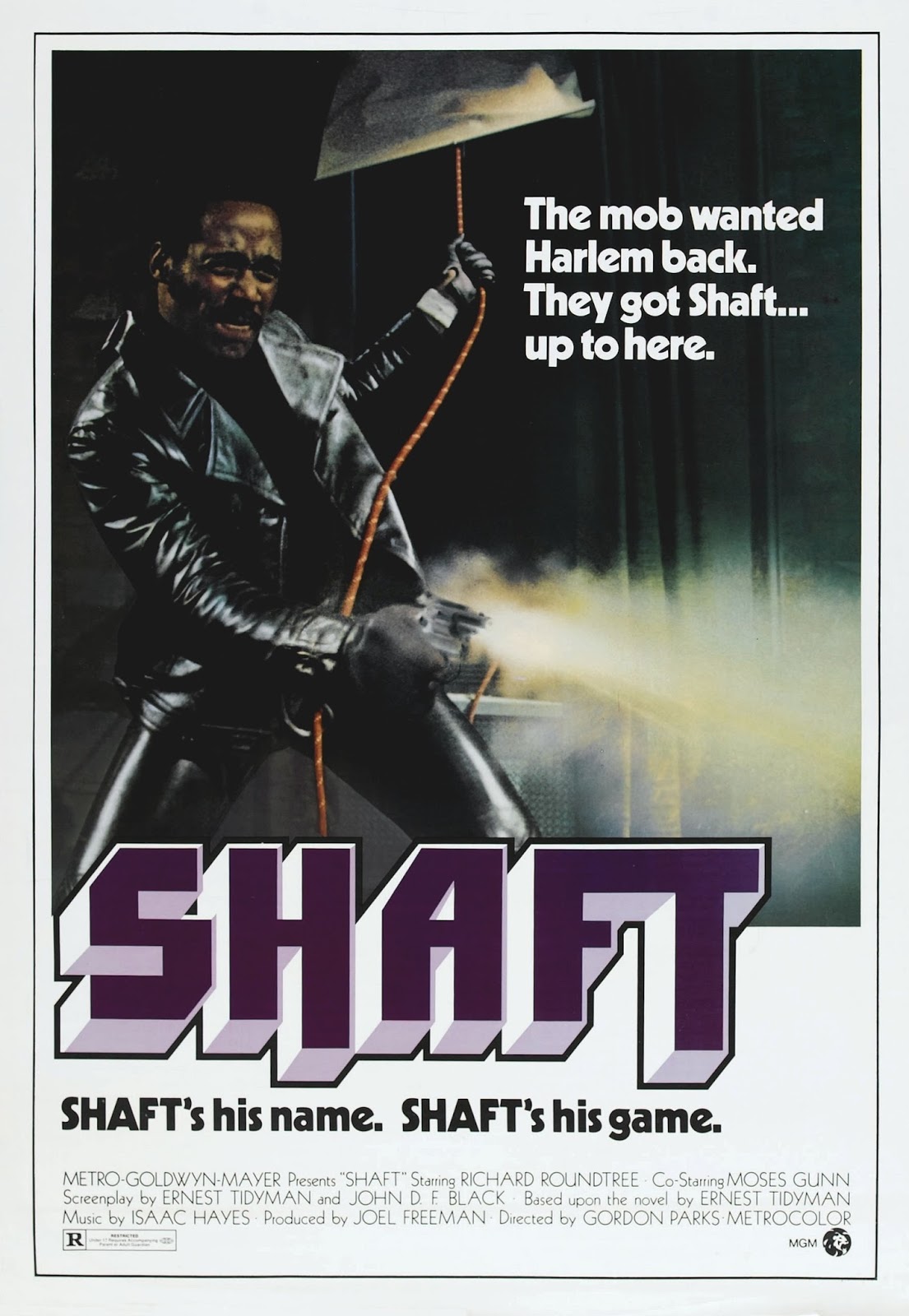
 I sometimes wonder if Gordon Parks knew he was making film history with Shaft. From the very first moments of the film, where Isaac Hayes’ soothingly seductive voice regales the legend of John Shaft, as we see the titular character walk through Time’s Square, it is clear that something very special is happening. This is a film that serves two purposes: to be a brilliant neo-noir that takes the audience on a simple but enthralling journey into the crime syndicates operating out of New York City, and more importantly as one of the formative moments in blaxploitation cinema, a film that would go on to inspire countless filmmakers, both at the time in which the film was made, and those who would come in later decades, bringing along with them the devil-may-care attitude of this film. Perhaps lacking some of the originality later films would exhibit, Shaft is an excellent film, a watershed moment not only in the action genre but in terms of representation in cinema. Not the first blaxploitation film, but most certainly one of the most significant, its difficult to argue with this film’s status as one of the most iconic films of its kind, and the first of a long series of fascinating character studies that look at the intersections between different groups, not through heavy-handed means, but thrilling action and alluring storytelling that never takes itself too seriously to become uninteresting.
Shaft (Richard Roundtree) is one of New York’s most notorious figures – a private detective who is known for his ability to solve any problem, regardless of the consequences, his heart is always in the right place, even if that means his morals need to be perpetually shifted to facilitate some of his more questionable methods. He receives an assignment that even he is reluctant to take on – a malicious Harlem crimelord has had his daughter kidnapped. The culprits are members of the mafia that are trying to incite a feud between the different syndicates, which could eventually turn into a race war if it isn’t promptly resolved. Shaft isn’t given much of a choice, especially because he is in a unique position, occupying the ambigious space between lawmaker and criminal, legality and immorality. Not caring about the reward, nor paying much attention to the potential ramifications, he sets out to complete his mission, with numerous sources – the police, the mafia and the Harlem mobsters – constantly derailing him in his efforts to resolve this very volatile situation that could have long-lasting consequences if he doesn’t execute it properly. However, there’s no fear: Shaft is the right person for the job, and even if he tends to leave a trail of destruction, he certainly does get the work done.
What makes Shaft such a fascinating film, especially looking at it in retrospect, is that despite being an incredibly important film, both artistically and socially, it never believes itself to be anything other than an entertaining action film. There was a tendency with blaxploitation films produced in the following years to grandstand some of their issues and make a point of demonstrating how socially-conscious they were in the hopes that it would lend the film some credence and draw attention to how apparently important it was. Shaft stands in contrast because it intends to do nothing else other than providing audiences with an entirely new kind of hero, someone who isn’t defined solely by certain aspects, but rather just happens to incite some discussions on inclusion. Shaft was never intended to merely be just a black detective, and to reduce him to such is troubling, because this film is so much more than just an attempt to defy stereotypes or shoehorn diversity into a predominantly white genre. Shaft takes some smaller ideas to a mainstream platform, which effectively makes this one of the most influential blaxploitation films ever made, mainly because its production value, attention to creating a story that was more cohesive than it was niche or targeted at a particular audience and its general charm all create a film that makes a lasting impact on the action genre in general. This was a film that demonstrated that an action movie could be both intelligent and thrilling without faltering on either side throughout its entirety – sometimes a film can just tremendously fun, but still have the gravitas to expand it beyond simply mindless entertainment.
The character of John Shaft is even more fascinating – clearly designed to be a more contemporary successor to the likes of James Bond, Shaft features the same suave charm and reckless brilliance that makes these kinds of literary figures so interesting. Roundtree is excellent as the first actor to play the role (and is most definitely the best, even if the reboots and sequels, while unnecessary, still have their charms). The film does very well to never linger too long on introductions – the iconic opening theme tells us more about the character and develops him more than any direct exposition or explanation could have possibly done, which both creates a certain folklore surrounding the character that makes him feel as if we are already acquainted with him, as well as allowing the story to not waste any time, launching directly into the plot, making this is a much more economic film than most others in the genre tend to be. Shaft had the difficult task of not only telling an enthralling story all on its own, but also setting up a series of films, and its quite clear from the beginning that they weren’t making this film with an end in sight – this was evidently going to be a character that would return several times, yet we’re never overwhelmed with the feeling that this is leading somewhere else. Establishing a franchise while still telling a complete and cohesive story is not an easy feat, especially for a film as small as this one, but Parks does exceptionally well, and Roundtree is an astounding lead, especially considering he didn’t have much guidance in interpreting a character designed to succeed a long culture of cinematic heroes, as well as abandoning some of the more taut qualities these kinds of characters tend to have.
What makes Shaft so compelling is that it isn’t restricted to just being a blaxploitation crime film – in fact, it deftly avoids the sometimes myopic views these kinds of films take when it comes to telling a captivating story. There’s a certain social cohesion that pulsates through the film, demonstrating how it was made with the intention of not just being a crime film, but also a statement on culture at the time. While not ever foregrounded in the way it could’ve been, there are so many different ideas that this film approaches, making it somewhat ahead of its time – racial matters, sexuality and even the idea of toxic masculinity are present in this film, which conveys a sense of deeper understanding of the world. Shaft is often remembered as being the film that introduced us to the effortlessly dapper and resourceful private detective, but rarely as one of the most impactful moments in the history of action cinema – not only was this a thrilling film but one with immense social resonance. Naturally, the film is not too preoccupied with the social message – after all, it isn’t supposed to be a moving film, but rather an entertaining one. Therefore, it’s only a pleasant surprise to find that there is a lot of substance to the film as well and that while we may come for the spectacle, we stay for the meaningful character development and wonderfully concise approach to a very taut genre.
Shaft is a surprisingly great film – anyone who has some knowledge into film history around this period will undoubtedly tell you how influential this film was, yet often neglect to mention how emotionally resonant it is as well. There’s a lot simmering below the surface of the film, so much that it often doesn’t even manage to explore all of them. However, considering the amount this film had to work with, we can’t fault it for not finding time to adequately explore each of the interesting themes it takes on – its at least notable that they do employ them into the overall narrative, rather than just leaving them out or neglecting to show how, despite focusing on a very specific story, there’s more than one kind of person that populates these kinds of films. In all honesty, while Shaft may be predictable and often quite absurd, it is still a brilliantly-constructed crime thriller that has great performances, a memorable attention to detail (the way New York City is portrayed in the film is astounding) and a multicultural, diverse approach to a story that greatly benefits from some tinkering in terms of how it takes on an entire city in such a small space. There’s no denying it – despite its flaws, Shaft is a revolutionary film and a magnificent action film that has equal amounts of heart and humour, making for a truly compelling film that proves to be a worthwhile introduction to what was to become a highly influential and extremely inclusive sub-genre of filmmaking.
 The Postmodern Pelican
Despite the brilliance of Isaac Hayes, the pieces comprising “Theme from “Shaft’” seemed to destine it for the also ran pile.
Until three years earlier, no African American had ever been nominated for writing a Best Song. In fact, only two African Americans up to 1971 had ever won an Oscar. Both were performers.
The song contained profanity – a first for a Best Song winner. The lyric used then hip language. John Shaft is “a sex machine to all the chicks.” In the traditional black call and response lyric, the female chorus informs Hayes, “We can dig it.”
A side note: The Detroit background singer who snaps at Hayes to “Shut yo’ mouth” is veteran television sit-com actress Telma Hopkins. That little nugget in the back of the brain makes one sit up and look differently the next time Aunt Rachel is on a Family Matters rerun.
The song has a lengthy introduction of nearly two minutes before the lyric begins. “Theme from “Shaft’” relied on a distinctive guitar riff and synthesizers to set the tone. A review of snubbed songs shows that the music branch of the Academy didn’t embrace instrumental music.
When Isaac Hayes rolled onto the stage during the Oscar ceremony in billows of smoke and donning a chainmail shirt that showed a lot of black skin, it was a momentous occasion. When presenter Joel Grey called Hayes as the winner and he jogged to the stage from the back of the theater onto the stage, a locked door was opened. And it wasn’t unlocked, it was kicked in.
“Theme from ‘Shaft” was undoubtedly the best choice for Best Song.
Following the lead of director Gordon Parks and musician Hayes who made an Oscar winning, moneymaking movie, other black artists followed suit in the 1970s with a plethora of pictures umbrellaed with the term blaxploitation. Then popular and now legendary musicians such as Curtis Mayfield, Marvin Gaye and James Brown wrote vibrant music that fueled these films.
The Academy will not nominate another black artist for Best Song till 1981.