 If someone were to make a film that occurs at the precise intersection between film noir and gothic horror, it would probably look very much like Joseph H. Lewis’ masterful mystery, My Name Is Julia Ross. A tight and economical thriller that features a bevy of remarkable performances, a very simple story that is executed with brilliance that distracts from the more predictable elements of the plot, and an intricate attention to detail that frequently takes us on a dark journey into the human condition, even when the film tends to be a bit more conventional than it should’ve been. Perhaps never managing to reach the heights of some of the more innovative noir films produced during this era, where the genre was at its peak, we can’t discount Name Is Julia Ross as being anything less than just as daring as the rest, even if the final product is something that may not be overly original, and has seen many similar stories told over the years. Lewis made a riveting mystery film that always keeps the viewer engaged, and just compelling enough to last its rather brief running time without resorting to trite conventions.
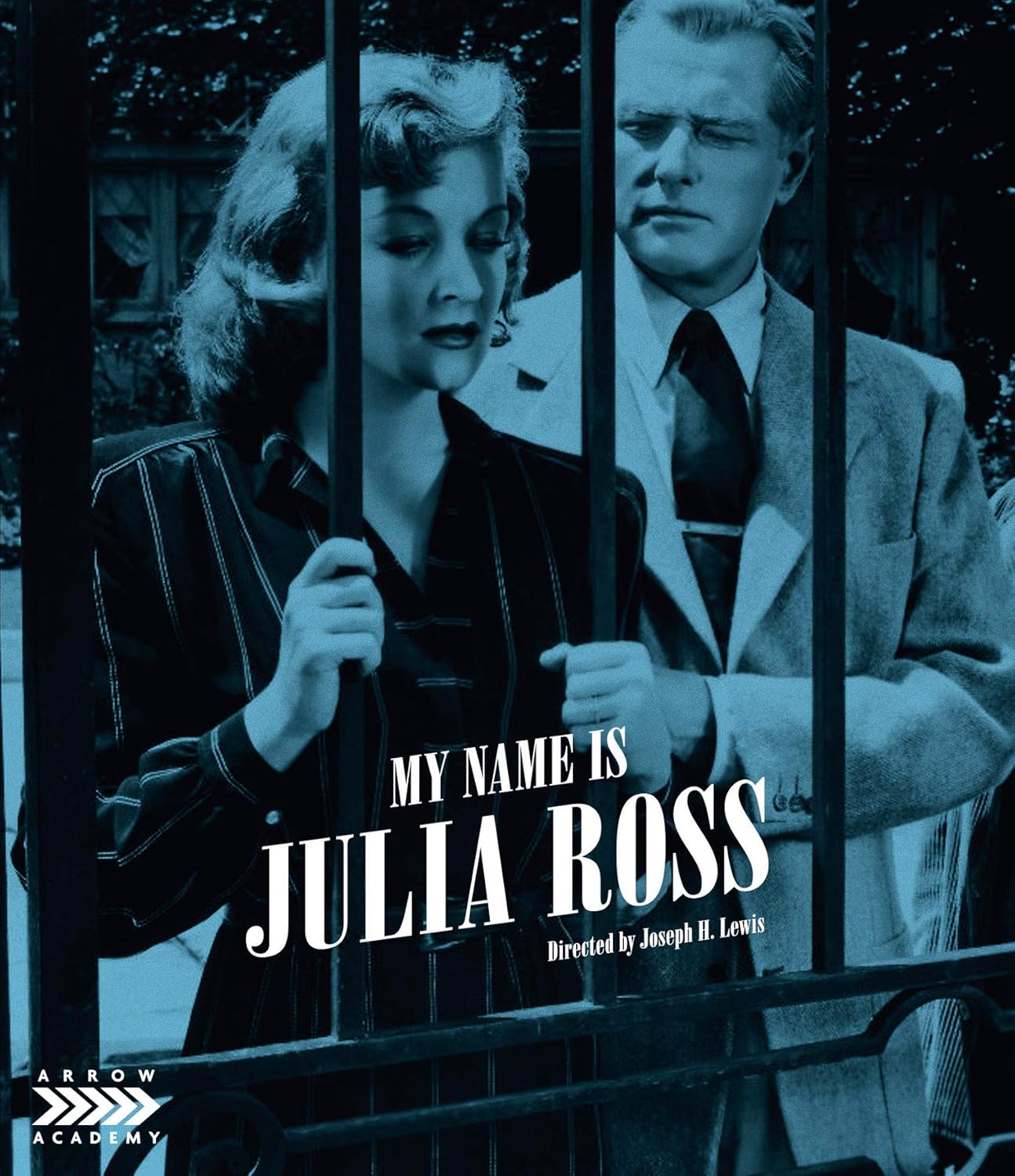
The titular character (Nina Foch) is a young woman who has just found her way to London in the hopes of seeking employment. An appointment at a local agency gives her the opportunity to work as a personal secretary to the wealthy Mrs Hughes (Dame May Whitty), a genial and warm woman who embraces the young protagonist and gives her some guidance – or so it would seem. Not long after finding herself employed by the Hughes family, Julia wakes up – the only difference is that she’s no longer in a lavish London apartment, but a mysterious mansion somewhere on the coast of Cornwall. Even worse, she is constantly referred to not by her own name, but rather as “Marion Hughes”, the newly-betrothed of her employer’s son (Insert Name), who appears charming but actually turns out to be a cold-blooded murderer, who worked in conjunction with his mother and her servants to bring a new woman to their isolated mansion, where he hopes to kill her to satiate his appetite for murder that started years before with the demise of his first wife in this very house. Confronted with a family who is holding her against her will, as well as her desperate pleas for help from those who aren’t aware of the plot being accredited to her mental instability, Julia finds herself not only losing her identity but also in great danger of losing her life altogether.
There are many merits that can be found in My Name Is Julia Ross which contribute to its successes and make it one of the more entertaining films in its genre. What I admired the most about this film was how intent it was when it came to getting to the point of the story – there’s absolutely no space given to exposition or elaborate introductions. Lewis effectively launches directly into the story, not wasting any time on unnecessary detail, and saving all the effort for the central mystery which governs the film. There aren’t many films that take such a bold approach – My Name Is Julia Ross could have so easily been twice as long as it ended up being, but then it would’ve lost the impact it harboured through its shorter running time – at only just over an hour, the film is remarkably brief, but effectively so. It has the punch of many of the great film noirs, with none of the meanderings that sometimes serve to only occupy empty moments. The simplicity of this film will always be the primary reason why it succeeded, with those involved understanding they weren’t working with revolutionary material, so instead of approaching it as others in the industry would, the decision was clearly made to get the story told in as prudent a fashion as possible – narrative thrifting is very rare when it comes to these kinds of formulaic mystery films, and it doesn’t always work – yet its a resounding triumph in My Name Is Julia Ross, which benefits greatly from a more frugal approach to the story.
Much like many other films in the genre, My Name Is Julia Ross is built on a few performances, some of them being better than others. The main role is portrayed by Nina Foch, who does well playing the character of the poor woman thrust into a precarious position solely because she was foolish enough to believe in the kindness of strangers. Perhaps not a very interesting character when taken on her own terms, Julia Ross is made memorable by Foch, who finds the nuance in an otherwise archetypal “damsel in distress” construction. Dame May Whitty steals every scene she is in – its always a sign of a remarkable performer when they can both make the viewer feel both deep adoration and utter disdain, sometimes even simultaneously. As the unexpected villain of the piece, Whitty (much like Foch) takes the character further than just the bundle of traits that are normally used when piecing together characters like this. My Name Is Julia Ross quite interestingly subverts expectations by going against many of the conventions utilized with films like this – perhaps not in a way that was intentional, but rather shows commitment to making something that didn’t merely follow the structure, but used it in a way that could tell a gripping story without taking the risk of alienating the audience through its often very bleak storyline.
Another area in which My Name Is Julia Ross works very well is in its dedication to the simple but effective mystery stories of prior years, where deception and shrouding of the truth thrilled audiences, whether in the printed or visual form. The story is too simple to ever harbour anything that could be misconstrued as convoluted, which was an issue that plagued far too many films in the noir genre around this time when the concepts were bolder, but the filmmaking not being facilitative of such audacity. By keeping everything in My Name Is Julia Ross quite rudimentary, Lewis is able to hearken back to the days when such intricate stories were told through such unfurnished means. The focus in this film is on the characters and had this film been able to find a way to expand on its story without it becoming predictable or unnecessary, some further development of these characters, especially the villains, would’ve been appreciated. However, the ambiguity of the film also serves it very well – none of these characters (including the protagonist) are ever given comprehensive backgrounds, which all contribute to the mysterious nature of the film. Not knowing anything about these individuals, but still watching their antics with the same intense fascination is a compelling experience, and makes this an even more impressive project.
Perfectly combining the intelligence of the film noir with the sinister nature of the gothic horror, My Name Is Julia Ross is a very intense, but no less entertaining film that primarily serves to be a great showcase for the cast, all of which are doing astounding work in interpreting a story that could’ve so easily been disregarded as another run-of-the-mill noir, and an attempt by British filmmakers to capitalize on the growing popularity of the genre across the pond. It proves to be a tenacious film, one that overcomes several obstacles in its endeavour to be enthralling without deviating too much from expectations, because while we all appreciate something new, innovation can sometimes be a shortcoming when the resources, whether tangible or on the theoretical level, just can’t adequately realize these ambitions. Lewis made a very successful film with My Name Is Julia Ross, which is frequently fascinating. Not many films are able to be this daring when it comes to such a simple story, but through its careful attention to detail, its refusal to do more than is required, and its commitment to infusing it with generous amounts of humour and intelligence, make this an effortlessly great entry into the canon of film noir that may not be as beloved as more famous constituents into the genre, but is no less entertaining or enthralling than the bigger films that inspired it.
 The Postmodern Pelican