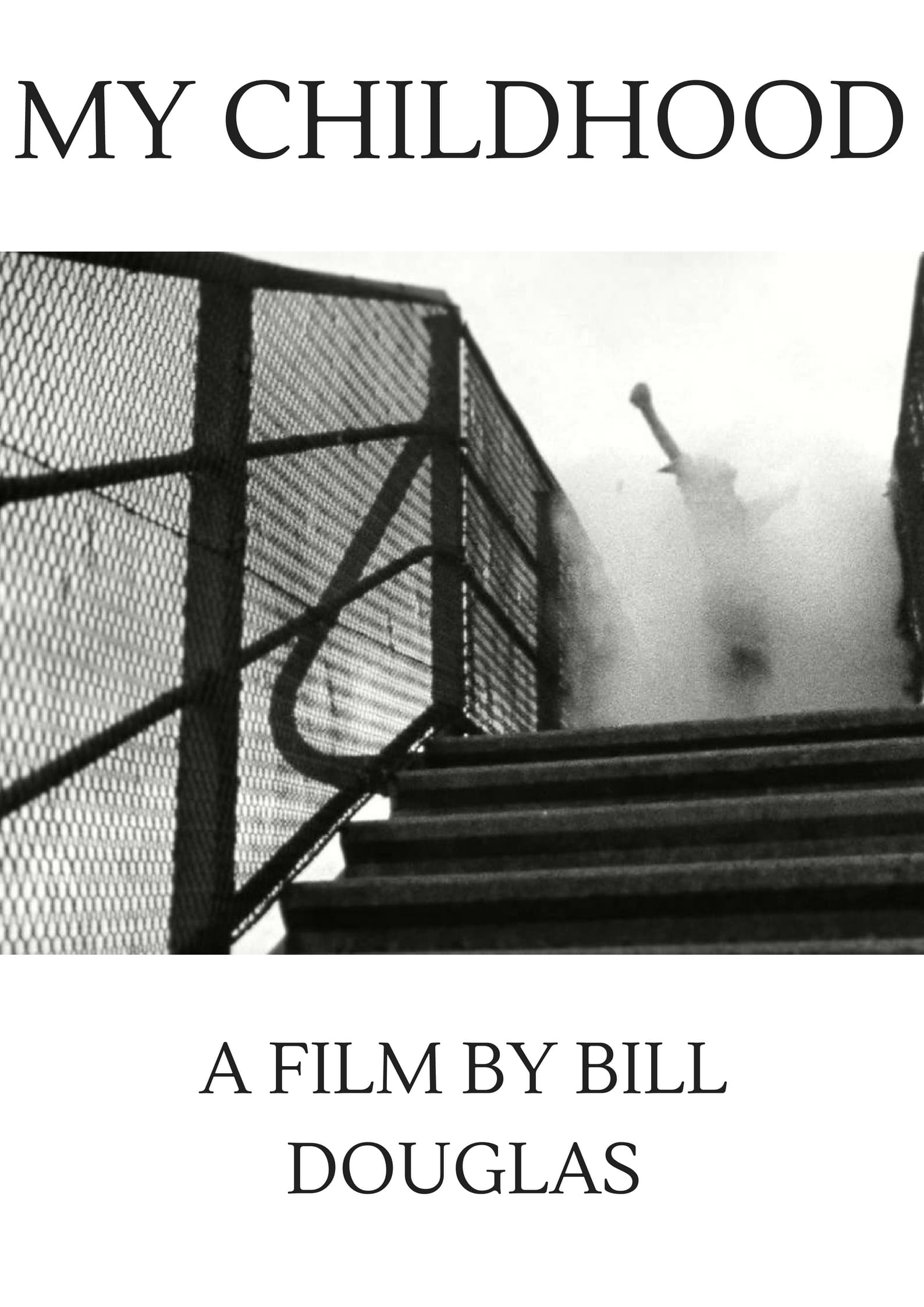
 The experience of growing up is one that has been represented on countless occasions across all forms of artistry, with many launching themselves into the past to creatively comment on some of the intricacies of our formative years. Bill Douglas was one of the many filmmakers who set forth to explore his own childhood through a trilogy of films that portrayed his upbringing in working-class Scotland. The first of these films was My Childhood, a bleak but endearing drama about his formative moments before entering into adolescence, and the trials and tribulations that come with a poverty-stricken life. A film that oscillates between extreme despair and unbridled warmth (already an achievement for a film that runs less than an hour in length), and featuring some of the most profoundly moving commentary on the experience of coming of age in a time and place that seems too hostile to facilitate ordinary growth and development, Douglas’ work here is beyond impressive. It’s a steadfast celebration of life and its many challenges, especially when they occur in our earlier years, when we haven’t yet acquired the wisdom or capacity to understand the true scope of human existence, but where our innate tendency to survive is more than adequate to allow us to move forward, despite the circumstances.
My Childhood is an enigmatic film – by all means a small and impactful film, there is so much simmering below the surface, it lends itself to an epic scope that goes against its very condensed execution. Douglas made this film through methods normally employed in documentary filmmaking. Mostly aligned with the sub-genre of kitchen-sink realism that was omnipotent in British filmmaking around this time, My Childhood provides an autobiographical edge to a poignant story of growing up on troubling times. It is often brutal and raw, with the grittiness of the film being far more affecting than it would be had it not been so clearly influenced by the director revisiting his own memories of childhood – and regardless of how this film is underplayed as being pure fiction, this kind of emotion and detail rarely materializes out of imagination. The filmmaking is simple, and Douglas keeps everything as minimalistic as possible – even his recreations of the working-class village and its inhabitants are subdued, with the era in which this film takes place being important, but not the focal point. My Childhood is a very straightforward film, and one that works the best when it is the most subdued. Throughout the film, silence seems to say more than the sporadic moments of dialogue, where the expressivity of the actors, and the way Douglas frames the story in a way that allows the story to move along without any exposition or explicit motivation, all builds towards a heartbreaking but beautiful crescendo.
The bleak nature of the story is reflected in the film around it, where the truth about life, the situations that need to be mourned and those that should be celebrated, occur not as major events, but as minor victories – a stranger giving the main character a coin, the joy of making a new friend (even if he is a German prisoner of war, a concept our young protagonist can’t fully grasp) – or small failures that may trouble us, but are pivotal to growth, and can be overcome by the realization that its only temporary. The film sees Douglas giving his own perspective on a certain childhood, certainly one that is at least partially based on his own, in a way that defies the carefully-curated structure normally employed by these kinds of films. Rather than one triumphant tale of overcoming adversity, the film is segmented into a series of moments that don’t have any particular impetus or resolution (the first moment of genuine clarity as to what is happening occurs well into the film), but rather just exist to be a snapshot into this childhood, and the formative moments that would influence him as an adult. Childhood innocence is a pivotal concept and one that Douglas looks at with a keen eye, crafting a fascinating visual memoir that takes an uncompromisingly honest look at the challenges that come with growing up in a time of social and political upheaval.
The film is remarkable because not only does it serve to be a profound meditation on the experiences of growing up in difficult circumstances, condensed into such a short time, it also manages to examine some deeper issues that inform a lot of the social meaning that underlies the film, and extends further than just the life of Jamie and his family, but society at large. Even if they’re not foregrounded or investigated in much detail, themes such as poverty and social inequality are central to the film, as is the idea of mental health, which had not yet developed into the area of concern that we have mercifully started to recognize it as now. Perhaps the most unsettling them is that despite being set in a quaint, idyllic village, My Childhood takes place during the Second World War, a fact not entirely evident, with references to it being subtly peppered throughout the film, most notably in the character of a kindly German man who befriends the protagonist, who is eventually revealed to be a prisoner of war, forced to work on the fields as a consequence of his part in the conflict. Douglas never makes it overtly known exactly what he’s implying with some of the imagery in the film, but it all works towards the ambigious but fascinating underlying message of the film, whereby he’s showing life as something that exists outside of the protagonist’s mind, and that he is merely one of many people experiencing this working-class despair, trying to break out of the cycle of poverty, even when it seems entirely impossible.
One of the seminal films about growing up, My Childhood is an important film, one that looks at different issues through the empathetic lens of Douglas’ camera, where he goes back to his own experiences and presents them with unflinching honest and genuine earnest, showing us a side of life that is hardly ever done with such simple tact, where the most impactful moments are those that don’t demand attention immediately but linger on the mind. A film adhering to the belief that showing is far better than telling, there are parts of this film that are so authentic through their raw honesty, which is only achievable through the pursuit of a new kind of cinema (one that Robert Bresson famously defined as “pure cinema”, where the membrane between the art and the admirer is non-existent), where the truth is paramount, even if it becomes difficult to watch. My Childhood is a remarkably honest project, one produced with fondness rather than sentimentality, and a sense of trying to capture the vivacity of youth without ever misrepresenting it as being without its own challenges. A poetic ode to childhood, and a harrowing but beautiful glimpse of life in its most simple form, My Childhood is an extraordinary piece of filmmaking that stands as one of the most genuinely moving films about growing up ever produced, and a beautiful exploration of themes that are both personal and universal, and will resonate with anyone who has ever experienced the kind of uncertainty and lack of direction in their formative years.
 The Postmodern Pelican