 The Last House on the Left is a dark, often offensive and generally unpleasant experience. It is also one of the most audacious films of the 1970s, and a remarkable addition to the canon of highly original constructions of terror. Occurring right at the intersection between gritty exploitation and disconcerting horror, Wes Craven makes quite an impressive debut that immediately established himself as a filmmaker who would help redefine horror. By no means a perfect film, but one that has somewhat unfairly been written off as just being excessive and overly violent in its imagery and intentions, The Last House on the Left is a daring horror film that may take a relatively pedestrian approach in terms of its story, as well as consisting of moments that don’t always add up to a coherent whole, but remains a sordid tale of revenge that is as thrilling as it is quite openly terrifying. Perhaps not benefitting from the same reevaluation that some similarly gritty horror films from the era tend to have received in recent years, Craven’s debut does deserve another look for a number of reasons: its simplicity, its effective use of violence and its combination of dark humour and unsettling imagery to create a film that will surely enthral and disturb in equal measure, which seems to be exactly what Craven was going for with this unflinchingly uncomfortable masterwork of independent horror.
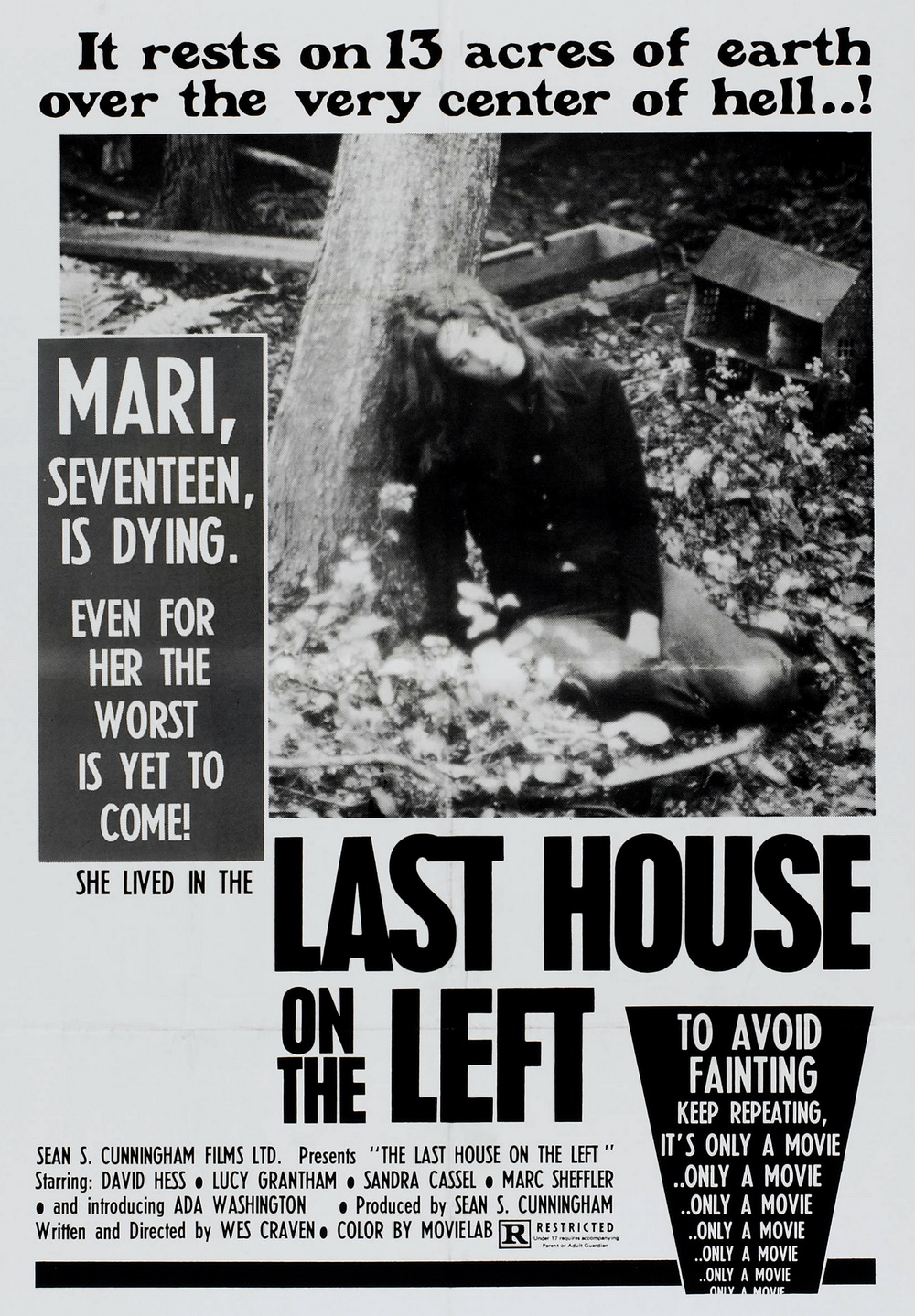
Quite simply, The Last House on the Left follows Mari (Sandra Peabody), who has just turned seventeen and is on her way to a concert with her friend, Phyllis (Lucy Grantham). Their night on the town takes a dark turn when they encounter Junior (Marc Sheffler) after searching for some marijuana. What they don’t realize is that the timid young man is a part of the gang of ruthless criminals that recently broke out of prison, led by his father, Krug (David A. Hess), the vicious Sadie (Jeramie Rain) and the perverted Weasel (Fred Lincoln), who lives up to his name in every way. The group lures the girls into their sordid games of sexual perversion and violence, taking turns torturing them in the woods of their suburban town. Just on the other side of their vile playground sits a home, which they don’t realize belongs to one of their victims, and when the fiends have finally satiated their appetite for destruction, they seek shelter, not being aware that Mari’s parents (Eleanor Shaw and Richard Towers) reside there. As soon as they discover what they had done to their daughter, they make sure to get their revenge, becoming just as violent and vindicative as the criminals they are unintentionally sheltering.
Produced as one of the many horror films that purported to be based on a true story, there is a general unpleasantness underlying The Last House on the Left, one that would be unbearable had Craven not understood precisely how to use this discomfort in a way that not only heightens the tension but also captivates the viewer. It’s rare that a film built out of such despicable components manages to be so entirely engrossing, where the viewer, as disturbed as they may be, just can’t bring themselves to look away from the gloriously deranged pandemonium that we’re witnessing. Craven never actually condones what these characters are doing, but also refuses to include morality into the film, whereby there is a lesson to be learned at the end of it, through the resolution of the villains, and a happy ending that ties up all the loose ends and allows the protagonist (who, in this film, was killed at the end of the second act) to recover from the harrowing ordeal. Craven dares to make a film so chilling and disconcerting, but also so intricate in how it presents its story without any semblance of hope, that makes it such a brilliant piece. Not a film made to necessarily enjoy, but rather to be submerged in, forced into a chaotic world of violence and despair, where the director holds the audience hostage through his intrepid understanding that nothing quite gets beneath our skin like a well-executed horror film.
Perhaps the most disturbing aspect of The Last House on the Left is how it feels so realistic – not only does it begin with the false disclaimer that it is based on real events, but the entire film is executed with a grounded approach to the story. Part of this is the result of the lower budget, with Craven making great use of limited resources so that rather than detracting from the story, it adds to it. The use of handheld cameras gives it a grittier, more intimate appearance, and contribute to the general uneasiness, as the terror begins to permeate the boundaries between the film and the audience. The aesthetic of The Last House on the Left feels very much aligned with many independent horror films of its period, where smaller or non-existent budgets weren’t obstacles for young filmmakers, but rather challenges that provoked these rising directors to make films that could effectively stand alongside the bigger productions being made concurrently, but on a fraction of the cost. The independence this film seems to enjoy is one of the reasons it succeeds so much – while it may not have been embraced very warmly at the time (even being highly censored our banned outright), it stands as a highly original work, one that lends itself to excellent reevaluation from modern standards, where the techniques itself may have aged, but the intentions behind it remain just as brilliant as ever, and proof that terror knows no tangible boundaries, and that something as small as The Last House on the Left can become an iconic piece of horror filmmaking.
The Last House on the Left does earn its reputation for controversy, which is part of why it’s so effective. Watching the film today is just as harrowing as it was back then, not only because the storyline is universal and very much something that resonates as being a legitimate fear many of us have, but also because Craven’s penchant for darkly comical humour is not missing in this film at all – while he may have found the perfect blend of comedy and horror with the Scream franchise, as well as infusing The Hills Have Eyes with some subversive comic relief, in The Last House on the Left, the humour isn’t used to break the tension, but rather to build it up. Whether in the music choices, which are often far more upbeat than we’d normally expect based on the accompanying images or the constant use of cynical gallows humour in the way the characters are represented, Craven makes the controversial decision to use comedy in a way far darker and more inappropriate than anyone could ever conceive. This isn’t a funny film at all, but rather a cold and bleak film that has moments of unsettling humour that only creates a more hostile and disconcerting atmosphere. I’m not entirely sure if it works as well as it should, because these moments are genuinely jarring and don’t quite fit into the film, but it all depends on how intentional they were, and what Craven was trying to do when he chose to go towards a more subversive narrative structure, one where he could insert a few jokes to only amplify the disturbing storyline and the horrifying themes the underpin the film.
It wouldn’t be surprising if no one genuinely likes The Last House on the Left, because it is an inherently despicable film. It is a low-budget exploitation horror that presents us with an unnecessarily violent story that doesn’t really lead to a coherent terminal point in terms of the narrative, and where violence results in even more violence which only increases until there’s nowhere else for the film to go. Yet, we can’t dismiss the merits of what makes this such a cult classic – whether we look at it as the daring debut of one of horror’s great auteurs, or an example of effective exploitation cinema, or one of the great early independent horrors that would go on to launch the careers of many other filmmakers who were inspired by Craven’s minimalistic approach to representing terror, or just as an example of chilling, terrifying storytelling the grabs the viewer’s attention and leads us down a path that is so bleak and upsetting, the ending (which is quite flippant in how cheerful it is) is not only welcome but entirely needed. The content is disturbing, the execution inappropriate, and the concept utterly brilliant. It is also one of the few horror films that remains just as effective today as it was upon its initial release decades ago, which isn’t to say the film itself aged well, but the intentions behind it speaking to a much broader set of filmmaking ideals. It is an audacious and relentlessly dark film that remains unwavering in its commitment to terrifying cinema that is as deranged as it is utterly unique.
 The Postmodern Pelican