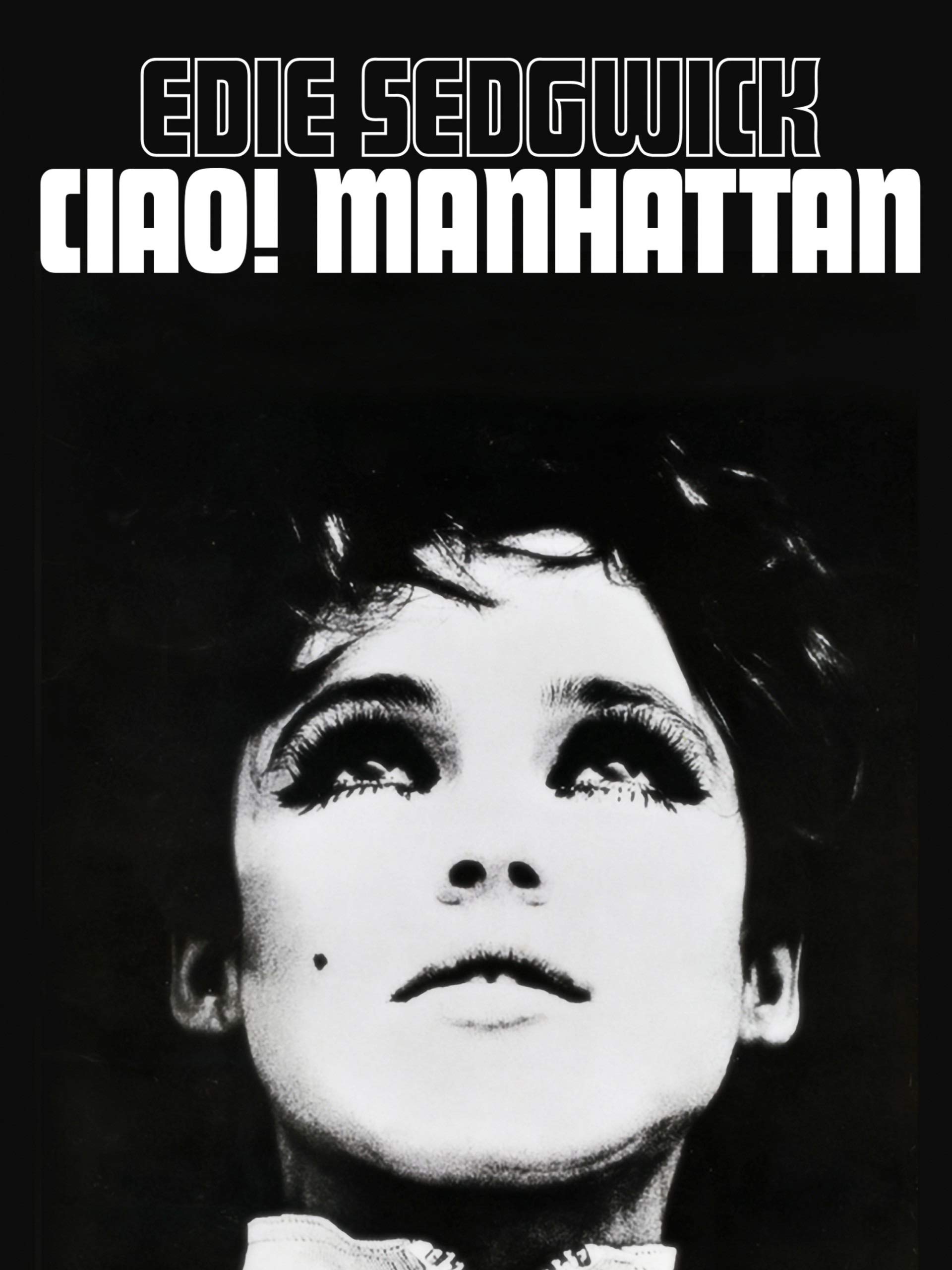
 You’d be forgiven for thinking Ciao! Manhattan is nothing other than the pretentious avant-garde malarkey produced during the heyday of Andy Warhol’s Factory, where art films were produced on a seemingly endless conveyor belt of post-war ennui, in which the artist and his creative partners could take the opportunity to express themselves by showing off the young people who sought out fame and acclaim by being associated with the most famous man in the art world at the time. However, when you look deeper, this film is much more than that – John Palmer and David Weisman made something that serves to be a poignant elegy to the world of celebrity, a heartwrenching portrait of a young woman consumed by the idea of fame, falling victim into a cycle of drug use and emotional abuse, told through the eyes of the various people in her life that came to know and love her, whether intimately or from a distance. In casting Warhol superstar Edie Sedgwick, the directors crafted a poetic film that sees the performer, who died just after filming was completed, playing a character based on her own life, navigating a world she did not understand, and one that was not very kind to her, despite her efforts to make a name for herself in it. Highly experimental but deeply meaningful, Ciao! Manhattan is a truly extraordinary piece of independent filmmaking that flourishes on the strength of its story, and its compassionate but harrowing representation of some very bleak themes.
Edie Sedgwick, despite her young demise, was a true icon – perhaps it was her lifestyle that led to her untimely demise that allowed her to become one of the definitive members of the Andy Warhol collective – in addition to her striking beauty, she had a fierce intelligence and a genuinely curious mind, which are demonstrated in Ciao! Manhattan, where she adopts the persona of Susan Superstar, a character not unlike herself – having moved to New York when she was young and impressionable, intent on living the free life of the artistic bohemians she admired, it didn’t take long for her to find herself caught in the debauchery that comes with such lives, especially in a cityscape that was notoriously unkind to those who didn’t realize the challenges that come along with such a decision. The film oscillates between two time periods, the past and the present – the framing device being her return to her home in Malibu, where her wealthy mother, a caretaker and a stranger she met on the road, all care for her and aid in her recovery, both from drug addiction and other forms of abuse that she encountered along the way. Edie relays stories of her experiences in Manhattan, how she rose to become a famous model sought after by editors of Vogue, courted by film studios and the muse of many artists who find her unique beauty and unconventional personality the perfect model for their views of the ideal modern woman. She truly lived up to her title as “The Face of 1965”, and in many ways, she helped influence this period of alternative artistry through her involvement with many of the people who defined it.
Ciao! Manhattan is not a particularly easy film – even when looking at it far afar, it becomes clear Palmer and Weisman weren’t intending to make something with mainstream appeal, but rather something a lot deeper and more meditative. Structurally, the film is aligned with some of the major experimental works at the time, insofar as it doesn’t employ a linear narrative, nor does it necessarily follow a single character. Sedgwick is at the core, and serves to be the anchor of the film, but there are deviations into the broader world of the drug-fueled Manhattan she was a part of, told either through her own stories, all of which clearly had some element of truth to them, and through monologues by others, such as fellow Warhol Superstars, or strangers who she influenced in some way. Told in two different ways – the present-day scenes were filmed specifically for this project, the scenes set in the past mostly cobbled from footage from earlier in Sedgwick’s career, whether from the films she made at The Factory, or her modelling work. Everything converges into a melancholy tapestry of the life of an icon, with different fragments of her life sewn together into this uncompromisingly bleak portrait of a woman who sought out fame and ended up dying too early as a result.
At its core, Ciao! Manhattan is a film that looks at the idea of celebrity, which should instantly qualify this as an eternally relevant film, as the idea of people seeking out fame and going to any extent to achieve some level of recognition being something that resonates with every generation – who of us doesn’t yearn for the sensation of being beloved by the entire world? Far from a positive film, or one that is particularly motivating to those seeking out fame to hold onto their dreams and pursue their ambitions with everything they can possibly muster. It shows a different side of fame and demonstrates that beneath the veneer of glamour, liberation from societal expectations and sexual freedom, there are recesses that come with being a public figure, which ultimately proves to cause Sedgwick to meet a tragic end. Drug addiction is a central theme of the film, and one that the directors don’t deviate from – but instead of making an assertive statement on how they feel about it, they remain relatively neutral, such as in instances where Brigid Berlin sits in a bathroom and passionately talks about her active drug use and the joy she derives from it (although the regret and despair underlying her monologue is impossible to ignore, and her own rise to fame during this time would make an equally fascinating story). The filmmakers don’t make a direct statements, and never manoeuvre their film to appear to take one particular objective approach – they let it flourish on its own, but their own frustration is very clear – perhaps not to Edie or any of her peers, but rather to the institution that produced a culture of addiction and abuse that destroyed just as many innocent people as it lured in.
Ciao! Manhattan is a revolutionary film, and its approach to the subject is quite unique, becoming something that defies categorization. It blurs fact and fiction in a way that prevents us from ever pinpointing exactly what this film is intending to say. It could be considered a semi-documentary, as while it is constructed as a fictional tale of Susan Superstar, the correlations between the character and the person playing her are too significant to merely be the product of imagination. The film is remarkably intimate, and it is never clear where Susan Superstar ends and Edie Sedgwick begins – everything about the character is so immensely related to the performer, and separating them isn’t only ill-advised, but also impossible. Ciao! Manhattan is a eulogy to an iconic performer, told through her own words and delivered through the guise of a fictional piece, which serves to be a voyeuristic glimpse into the life of a counterculture icon. There’s a sense of dislocation from reality pulsating through the film, where nothing appears to make much sense, a lot of what we see is incoherent and difficult to decipher, and it often stands on the boundary of being outright exploitative – but it is an effective film, a heartbreaking testament to a woman decaying before our eyes, where her own delusions tell a harrowing story of a young life being wasted by the search for fame in a world designed to destroy those without the conviction to resist grotesque temptations.
You can break Ciao! Manhattan into two essential components. On the surface, it is a wonderful piece of pop culture history, a time-capsule of a different time in the artistic zeitgeist, when being a celebrity was a very different experience to how it is today. However, it also consists of a much deeper set of ideas below the more superficial exterior, and becomes one of the profoundly daring films of its time, not only being provocative in the form it takes, but also in the content. Utilizing a storyline built around the rise and fall of a counterculture icon, Ciao! Manhattan is a very difficult film to watch, especially when the films takes a brutally honest turn in portraying the life of its subject. It is a heartwrenching experience, and it can be harrowing to witness the decline of a woman who found herself destroyed by the world she desperately sought out, a victim to the vices she craved, to the point where self-destruction was unfortunately inevitable. It isn’t surprising that Sedgwick was associated very heavily with Andy Warhol, who famously quipped that everyone has their fifteen minutes of fame – but with Ciao! Manhattan, Edie Sedgwick has found a way, albeit in death, to remain immortal, which is, in the end, all she ever wanted.
 The Postmodern Pelican