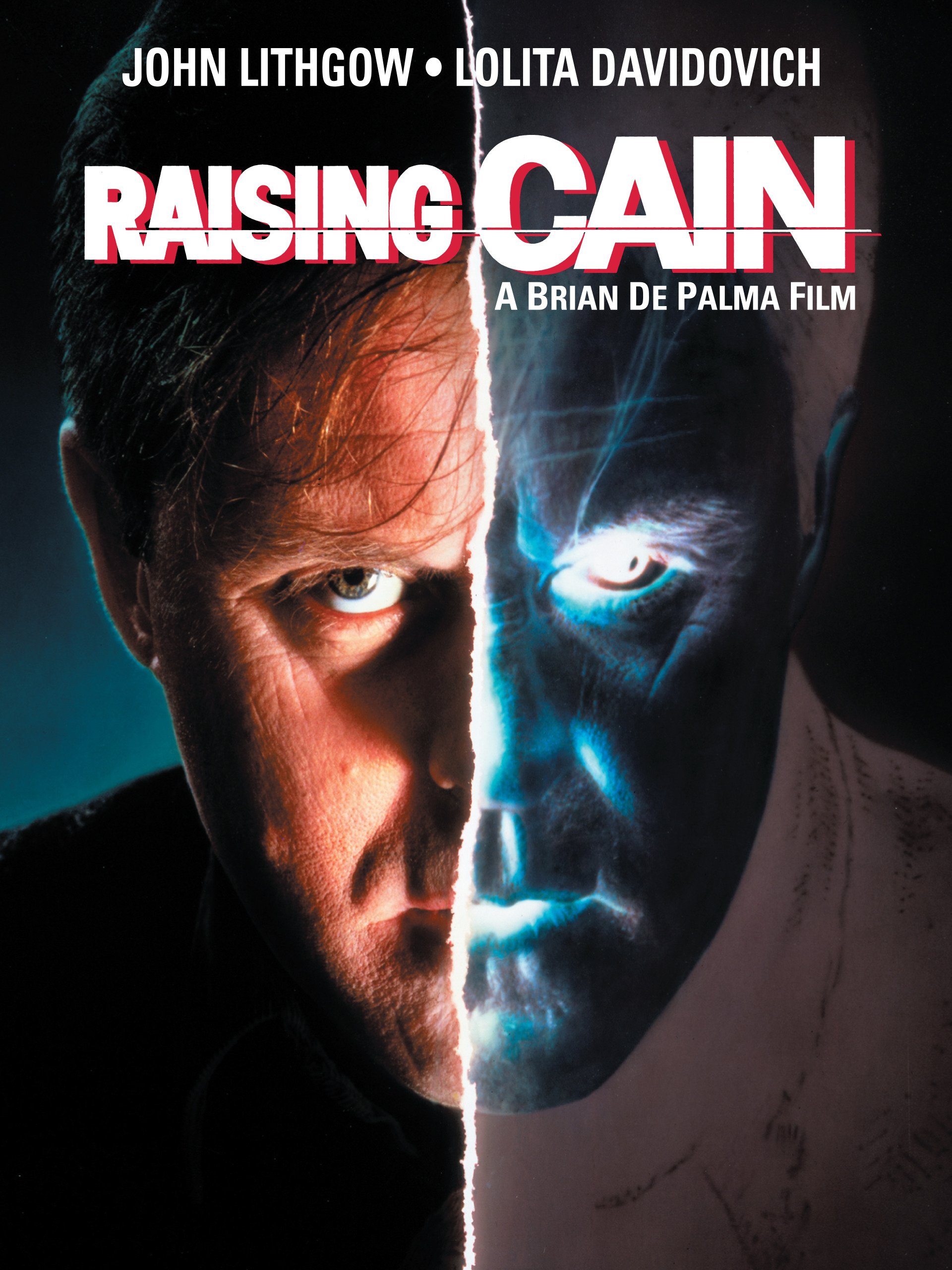
 The 1990s were certainly a strange time. Political tensions were at an all-time high, society was growing accustomed to a new set of standards, and the entertainment industry was growing more audacious. I can’t personally say that the 1990s produced the best films, but it would be wrong to suggest they didn’t make some of the most awful but entertaining ones. Raising Cain is trash, but the best kind: an absurd premise, combined with a sincere conviction to the story itself telling, hailing from an acclaimed director and starring one of the finest character actors of his generation makes for truly captivating viewing, with the film being lurid and gaudy, but also extremely enjoyable, in the way that trashy thrillers from this era tended to be. I can’t stress how much of a good time Raising Cain is when it puts in the effort (which is unfortunately very late) – it certainly isn’t a great film, nor is it particularly good. However, it is definitely not a bad film, and even defies mediocrity by being so ludicrous and over the top, it is impossible to ignore. This is the best thing a film like this can be if it can’t be great, is to be memorable, and Raising Cain never leaves the mind of the viewer, who will undoubtedly be enthralled by the pure narrative anarchy presented by this film.
Carter Nix (John Lithgow) is a loving father and a well-regarded child psychologist who is raising his daughter with his wife, Jenny (Lolita Davidovich), a doctor. What no one knows is that Carter unfortunately suffers from a multiple personality disorder, and often takes on the form of a variety of other individuals, such as a criminal named Cain, a shy child named Josh and a quiet matron named Margo, all coming about as the result of Carter’s abuse at the hands of his world-renowned psychologist father, who imbued his son with a mental disorder that caused him to develop the numerous personalities, under the guise of science. Years later, Cain has started to take control of Carter and slowly begins to harvest children for an experiment, as a way of allowing his father to continue his perverted study, years after being arrested for criminal activity. Jenny very soon realizes what is happening, and with the help of a group of officers and a sympathetic friend or two, she goes on a mission to prevent her husband (or the personality purporting to be in control of her husband) from continuing his reign of terror, which puts many people, including their own daughter, at risk of becoming nothing more than a piece of a twisted psychological experiment.
Based on the synopsis, Raising Cain sounds like a decent psychological thriller, and the fact that it was directed by Brian De Palma, who had helped redefine dark thrillers with films like Dressed to Kill and Body Double, was also a very promising sign. Unfortunately, this film was a far cry from what the relatively high (but not astronomical) expectations would have you anticipating based on the storyline, which is extremely promising. The merits and shortcomings in this film are just about evenly-spaced and contribute equally to the successes and failures of this film. As of writing, I am still not entirely sure what I thought about the film, whether I tend towards it being good or bad. However, what is certainly something that can be said with full conviction is that this is an extremely entertaining film – it is by no means a film that is intentionally as absurd as it turns out to be (and no amount of revisionism by those involved that this was meant to be a dark comedy will ever be convincing enough to deny that they were truly intent on making an effective thriller), but it is also definitely nothing close to being as awful as some more cynical viewers will tend to suggest. It stands squarely in the middle, and whether you want to see it as a mediocre but diverting psychological thriller that never quite hits the beats it wants to hit, or as an inadvertent camp masterpiece, which unintentionally presents us with the most ridiculous of stories, depends on the viewer, and how you feel about something so utterly insane and convoluted, you can’t help but be drawn into the enigmatic core of this incredibly strange piece of speculative fiction.
Raising Cain can be quite clearly divided into the good and the bad, which makes for difficult viewing, but wonderfully easy writing. We’ll start with the bad because despite having many issues, the film is certainly not poor enough to be unable to overcome some of its challenges. The worst part of the film by a country mile is Lolita Davidson, who gives an utterly atrocious performance, and not one that could even be revisited and appreciated for its camp value. The problem with her performance is that she is playing a supporting role occupying the space of the protagonist, which causes her to not only be in far more of the film than her character needs (she is not even close to being interesting enough to be the focus of the film), but also to have the deficiencies in the part, both the way the character is constructed and her performance, showcased concurrently. It is certainly a poor performance from an actress who has had a relatively solid career, and it isn’t clear as to why precisely she had to deliver such a weak performance, because there were signs that it had the ability to be a lot better than it was. At the very least, she is able to deliver some of the film’s most memorable lines, such as her dramatic line-readings of “She’s home!” and “your father is dead!” that feel as if they have been torn directly from the pages of the most hackneyed television movies in existence.
The other major issue with Raising Cain is that it is as predictable as they come. The structure is so familiar, and while it does focus on quite an interesting concept (the concept of identity is one that was very effective here, and does work quite well in the context of the film), it often feels so trite, and the element of surprise that De Palma genuinely believes this film harbours is actually lost through the fact that we could see the twists coming much earlier than they do. This isn’t to say that the film is entirely cliched – there are some revelations that are genuinely unexpected, but for the most part, the film doesn’t make the best use of its premise. Had it done so, there is no doubt that Raising Cain would’ve been a much better film. Unfortunately, all potential has been abandoned in exchange for cheap thrills that may be fun while they last, but are otherwise not particularly impressive when considering how the director has managed to work in the genre of psychological thriller with great effect many times before, making the casual disregard for the story here almost inexcusable. It feels somewhat insulting to the audience the way in which the film insists on telling us absolutely everything, not giving us the chance to make these inferences ourselves, which are already remarkably expected. It becomes almost parodic the way it seems to think that it is some highly experimental postmodern masterpiece when in actuality it is little more than a trashy but entertaining thriller that does exactly what we’d expect it to do.
However, the good does slightly outweigh the bad in this film, with Raising Cain having two genuinely great performances at the core. John Lithgow gives an astounding performance as the titular character(s) and proves himself to not only be a consistently great screen presence but also a very unique leading man. This was not a particularly easy set of roles to play – each of the different personalities are wildly different, and his portrayal of each of them is a lot better than many would give him credit for. In fact, Lithgow’s performance deserved a much better movie, because not only is he playing to the rafters in the best way possible, he’s genuinely having fun with the role. Even when the material isn’t there for him, he delivers a really terrific portrayal of a man struggling with his identity. Frances Sternhagen is the other performance in the film that is worthy of something a lot better – appearing late in the film as a sympathetic but pragmatic psychologist assigned to analyse Carter and his personalities, she is excellent. She has a monologue that serves to be the centrepiece of the second act and sets off the events that improve Raising Cain significantly. This is a film that is considerably better towards the end than the beginning (the first two acts are mostly dull, with moments of brilliance found occasionally), but the ending, where the focus shifts from Jenny to the rest of the ensemble, particularly Lithgow and Sternhagen, is where the film takes flight, and actually begins to resemble something fairly decent.
Ultimately, there’s nothing else to say about Raising Cain than that it was a lot of fun. It may get off to a bad start – the opening few scenes are extremely confusing, which isn’t helped by the fact that De Palma was clearly trying to construct some deeply profound atmosphere, in actuality, it was just extremely convoluted. It does take nearly the entire duration to find its footing and deliver a compelling story, but when it does, it appears very promising and had those involved understood how much potential this story had, and put in the effort to render those ideas tangible, we’d be sitting with a much better film. However, Raising Cain serves its purpose – gauche and heavy-handed, and not always particularly friendly to the viewer, its still difficult to not be entertained by this film – whether you adore it or despise it, ambivalence is not an option, especially when the absurdity of this story starts to slowly take charge, flourishing into a melodrama, unintentionally hilarious camp disaster that may be narratively deficient, but is undoubtedly compulsively watchable, and the perfect satiation for the camp cravings we all get on occasion. Its a lot of fun, and a good distraction, but it is hard to see Raising Cain being remembered as much more than this.
 The Postmodern Pelican