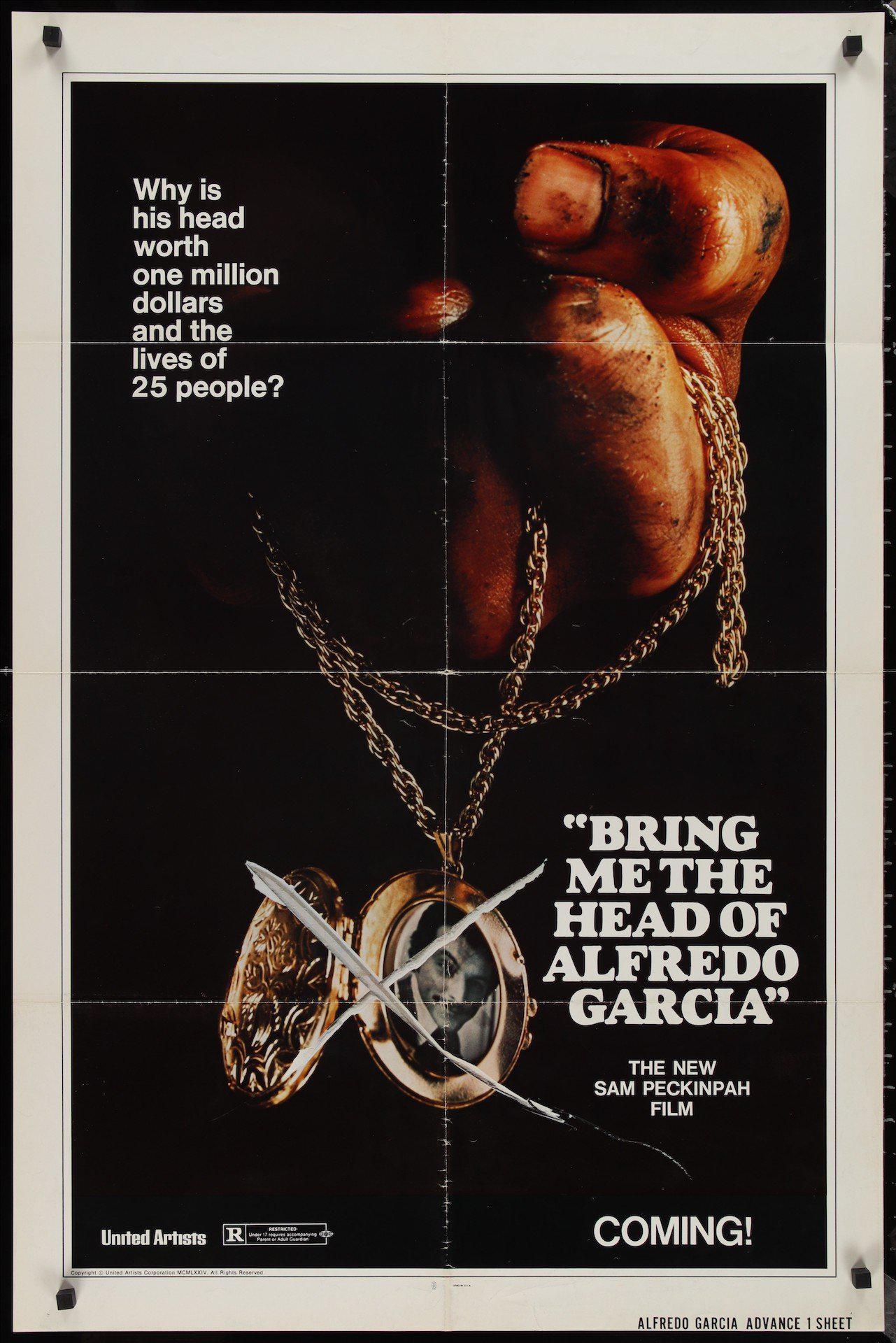
 When it came to finding the intersections between intelligence and mindless action, Sam Peckinpah was one of the best to ever live. A director whose career consisted of some of the most brutal but fascinating portrayals of violence ever produced, his status as one of the most controversial filmmakers of his generation is not ill-earned. One of his most iconic films is Bring Me the Head of Alfredo Garcia, a neo-western taking place in and around rural Mexico, as we follow a captivating story of revenge and redemption, all through the unequivocally twisted visionary eye of Peckinpah, who spins a dark, subversive yarn that sees us venturing into the other side of humanity, where the audience intermingles with gangsters, hitmen and vindictive relatives, all of which are vying for dominance and superiority over the others. A complex but well-executed film that is equal parts a thrilling action piece, a darkly comical satire and a modern western, Bring Me the Head of Alfredo Garcia is a relentlessly charming and often enthralling example of effective genre filmmaking, and proof that action films, in spite of the attention to the more bombastic elements of the filmmaking process, are still able to be intelligent and multilayered works of art.
Despite being the titular character, Alfredo Garcia does not make an appearance in the film – or at least, not all of him. At the outset, we are introduced to a malicious crime lord, whose daughter has been impregnated – and when she is forced to reveal who the father of her unborn child is, Alfredo Garcia is the unlucky recipient of an order for his death. The job of retrieving his head and returning it to El Jefe is put upon Bennie (Warren Oates), a down-on-his-luck American ex-soldier living his banal life as the manager of a small Mexican tavern. It turns out that Alfredo Garcia has died in a mysterious car accident, and when it turns out that all Bennie has to do is dig up his corpse and bring the head to those who requested his assistance, he jumps on the opportunity, especially because of the enormous sum of money he would receive in return. However, he does not account for the fact that several people are involved in this manhunt, and even when searching for someone who has died, there are enormous complications, with our anti-hero finding dozens of people standing in his way, many of which are more than willing to dispose of the raggedy American with the same ease as they would anyone else. Yet, Bennie possesses a conviction stronger than most, and will go to any lengths to get the job done, even if that means losing everything he holds dear and true.
Warren Oates had a fascinating career – whether it be playing a dashing hero or a malicious villain, he was always exceptional, and it made him a performer caught between being a leading man and a dedicated character actor. His work with Peckinpah was perhaps his best, and Bring Me the Head of Alfredo Garcia is the film that may define Oates’ illustrious career. Taking on the role of Bennie, Oates is given quite a difficult task – he is to portray a character who is not particularly likeable and make him a compelling hero, someone who the audience feels no qualms in rooting for, and who does awful things, but still never loses our trust and admiration. Oates and Peckinpah, working together in their collaboration, do well in preventing Bennie from being a character with some form of redemption that erases his past misdeeds – from the very first moment, we are reluctant to trust Bennie all that much. Always scruffy and almost exclusively wearing his thick black sunglasses, he’s not a character that lingers as the epitome of traditional leading characters – and just consider how this role could have so easily been given to a more traditional leading man, who would undoubtedly mute his more deplorable qualities, the fact that Oates found the common humanity in a character who is not particularly deserving of it is a testament to his great talent. It’s a brilliant performance from an actor who downplayed the heroism and accented the desperation that pulsates throughout the character in a way that makes him such a carefully-curated portrayal of the working-class distress.
Bennie is an extremely unconventional character – although, to be fair, Bring Me the Head of Alfredo Garcia is far from a conventional film. Of all of his qualities as a filmmaker, one of the most interesting is that Peckinpah was able to construct complex characters that often blurred the boundaries between heroes and villains, and Bennie is the very epitome of this style, whereby there is nothing about him to suggest that he is anything close to admirable – he is not heroic, and often demonstrates a general sleaziness often found in villains. In fact, the fact that he was the main character in this film is unique in itself – normally this archetype is one reserved for secondary hoodlums or heavies to the main villain, not the protagonist of this sprawling neo-western. Peckinpah is very liberal with how he builds the character, imbuing him with a certain complexity, yet never explaining his origins very clearly. Throughout Bring Me the Head of Alfredo Garcia, we learn minor facts about Bennie’s life, but not enough to justify the audience forming any meaningful relationship with him. In fact, keeping his past a mystery only adds to the enigmatic nature of the character – his origins are ambigious, and his future (if he even has one, as the final shot of this film leaves it open for interpretation) is vague. Yet, we can’t resist rooting for the character – he is deplorable but not unlikable, unsentimental but also not without his own merits. It is in this ambiguity of his characters, whereby their morals and intentions are murky, that Peckinpah forged a path for himself as one of the most iconoclastic filmmakers of his generation, with his consistent use of anti-heroes in the central roles making for unconventional but engrossing cinema.
On the subject of riveting but unconventional cinema, its not only in the characterization of the central figure in the film that makes Bring Me the Head of Alfredo Garcia so unique – Peckinpah utilizes his unique approach to storytelling to deliver a western with a distinctively acidic flair. Making use of all the elements of a traditional western – the reluctant protagonist being sent to track down someone else, and coming across a variety of colorful characters, some of which aid him and others try and eliminate him – infused with contemporary crime film trademarks, such as excessive violence, gang warfare and the underlying idea of the drug trade, executed with almost businesslike precision. This approach is extremely unique (although it has come very popular in contemporary film and television, where innumerable modern works make use of the same elements to construct their own versions of western narratives). Where Bring Me the Head of Alfredo Garcia succeeds is not only does it cleverly make use of these tropes, but it does so with such elegance and precision, which allows it to always appear not only as being stylish and entertaining but also thoroughly authentic. There is not a single false note to be found anywhere in this film, but there are no shortage of surreal moments, such as the tendency for the main character to converse with the disembodied head of the titular outlaw, or the gunfights that serve as the coda for the film, executed with such brutal beauty. Yet, absolutely nothing in Bring Me the Head of Alfredo Garcia is played for laughs, with the absurdity that can be found scattered throughout only serving to portray the bleak nature of gang warfare, and how even the smallest of actions can result in trouble if it is perceived to strip someone of their dignity. Pride and power are the two most lethal combinations, as evident by the overarching narrative of this film.
Sam Peckinpah was a genius, and while his career may have been defined mainly by his astonishing revenge western, The Wild Bunch, he did absolutely incredibly with Bring Me the Head of Alfredo Garcia, which is no less impressive, and just as masterful. It is an intricately-designed thriller, one that makes great use of its setting, and finds the balance between intimate character development and exuberant, excessive violence, with the action in this film being extremely effective, and never too gory, even if it is occasionally quite intimidating. Featuring a career-best performance from Warren Oates, whose work here as the sleazy and mysterious Bennie is something to behold, and a cast of smaller performances who may not make an enormous impact but still do contribute to the film as a whole (has Kris Kristofferson ever been so terrifying?). Peckinpah may be too easily written off as someone whose work is categorized as being too excessive with its portrayal of violence, but as Bring Me the Head of Alfredo Garcia demonstrates, nothing could be further from the truth. Stylish, surreal and captivating from the sinister introduction to the thrilling ending, it is a remarkable achievement and a film that has a great deal of underlying commentary which only further facilitates its unhinged brilliance.
 The Postmodern Pelican