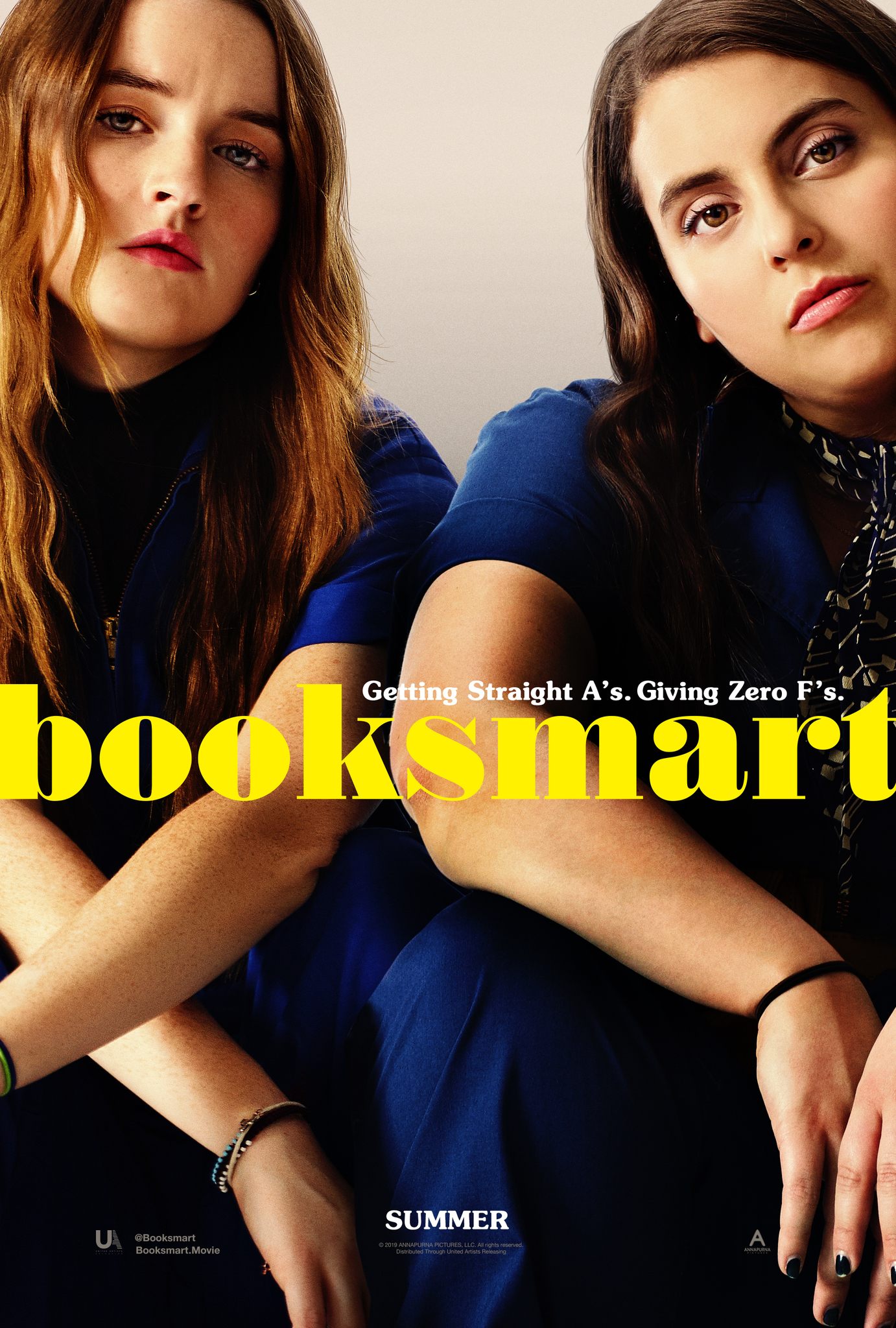
 Molly (Beanie Feldstein) and Amy (Kaitlyn Dever) are on the eve of their high school graduation. The previous four years have been challenging for the two friends, who have prioritized their grades in order to ensure that they get into good colleges, which does work, with the duo being well on their way to starting their careers by earning well-deserved spots at Ivy League colleges. The problem is, so are a large portion of their classmates, who spent the previous few years having fun, but somehow still managing to get into the same prestigious institutions as Molly and Amy, who sacrificed the real high school experience for the sake of their schoolwork, which resulted in them being pretty much in the same position as their classmates, just without the joy that came from having a good time along the way. With only one night standing between them and their final moments of high school, the two best friends have no choice but to distill four years of reckless, youthful fun into a few hours to make sure that they don’t graduate high school without having experienced the more chaotic side of the teenaged years, the apparently legendary parties that they had deftly avoided, with their peers viewing them as pariahs of fun, who were more interested in going to the library than going to house parties. This begins a winding series of unfortunate events for the duo, who soon discover it takes a lot of effort to have a little bit of fun, but they’ll go to any lengths to ensure that they graduate having had fun, even if only for a single drug-fueled evening, and they set off on a hilarious misadventure that sees them coming into contact with some interesting characters along their way to pre-graduation infamy.
Each generation has a film that defines its youth. The 1980s generation had The Breakfast Club, the 1990s had Clueless and the 2000s had Mean Girls. These are terrific films that show particular versions of the high school experience from the perspective of that specific generation, and they’ve all risen to the level of almost folkloric works of pop culture history. Booksmart doesn’t only thrive as a great tribute to these iconic films – it stands as being just as good as them, flourishing into a film that will undoubtedly go on to become a classic of the genre. Olivia Wilde, in her impressive directorial debut, has made a film that is far from the disposable, predictable film about teenage rebellion, but a hilarious, irreverent comedy about youth that will have audiences feeling nostalgic (even if they’re still in high school themselves – in which case, they shouldn’t really be watching this film, but its just good enough to warrant as wide a viewership as it can get). A film about so many themes above that of high school – its a touching film about holding onto our high school years, which may be challenging and test our mettle as individuals, but ultimately turn into the proverbial “good old days”, upon which we look fondly and remember those formative moments and how they moulded us into the individuals we are today. Wilde has not just made merely another great teen film – she has made one of the most extraordinary odes to high school and all of its insurmountable challenges, and through a blend of broad, outrageous comedy, a well-written script and an elegant dosage of warm, endearing nostalgia, she delivers one of the year’s very best films, and a comedy destined to become a true classic.
First and foremost, we need to mention Beanie Feldstein and Kaitlyn Dever, without whom Booksmart would just not be anywhere close to being as exceptional as it was, this film thriving entirely on their performances and their chemistry with each other. Two actresses who are not necessarily newcomers, but have hardly been given the showcase this film provides. Taking on the two leading roles, both had the unenviable challenge of carrying this film and playing two characters who are supposed to not only be endearing in a relatable way but also entirely convincing as well. Both rise to the challenge and deliver astounding performances, both individually and together, where their chemistry is so palpable, its jarring to realize that they’re playing characters rather than themselves. These are a pair of performances heavily informed by reality, as the gravitas both actresses bring to the film is astonishing and can only be the product of introspection and inspiration from experience. Feldstein brings a certain energetic quality to her performance, playing Molly as an assertive (but not unlikable) young woman who is seemingly self-assured and willing to do anything to prove herself as being just as valid as those who look down on her. Dever contrasts her with a more soft-spoken, but no less compelling, interpretation of a young woman growing into her sexuality, and becoming more confident in her skills as a person, not only being defined as a bookish nerd but as someone with a wider range of interests and abilities. Where this film deviates from other similar films is that while those normally focus on outsiders who are self-assured, this one is about individuals who know who they are, but struggle to adapt to this self-worth that they so desperately seek. Booksmart lacks the massive transformation normally seen in these kinds of films, whereby the previously frumpish, unconventionally likeable protagonists undergo a massive rejuvenation, both in terms of their looks and personality – the message of the film is that everyone, regardless of who you are, is valid, and nothing needs to change as long as remain true to yourself. This is one of the great modern female-led comedies of the past few years, with both actresses being utterly exceptional, and even when confronted with scene-stealing performances from the likes of Billie Lourd (utterly hilarious as the ubiquitous party girl who serves as the protagonists’ spiritual guide of sorts) and Skyler Gisondo as perhaps the most friendly character of the year, this film unequivocally belongs to Feldstein and Dever, who are beyond remarkable in this film, and turn in some of the year’s best performances.
Just looking at the core of Booksmart reveals how this is a familiar premise executed from a unique perspective. This is, by all accounts, a traditional coming-of-age comedy. It features a common plot structure and a lot of the themes we have grown accustomed to seeing over the years. In this regard, it isn’t necessarily innovative, and Wilde doesn’t do much in changing a successful formula. However, she succeeds in adapting the structure to a more modern set of themes, tinkering with the general concepts that we all know, and breathing new life into them. Ultimately, this film is nothing more than an outrageous ode to the best days of our lives, and perhaps the closest the millennial generation is going to get to their Dazed and Confused, previously one of the only truly brilliant comedic demonstration of teenage angst in the midst of the end of high school and the beginning of a new chapter, and one that carefully balances comedy and nostalgia. Amongst the many films Wilde has cited as being an influence on this one, Dazed and Confused stands as the one that is most resonant, not only in the structure (both films are set over the course of a single afternoon and night) but also in the concepts that are explored. The exuberant comedy of youthful recklessness intermingles with the more profound, moving and perhaps slightly terrifying notions of questioning the future and how we are going to move onto the next chapter, facing the intimidating dread of not knowing what’s to come, and still finding the joy. Booksmart is a film that operates on two levels – as a nostalgic reflection on the past, celebrating the fun that comes from the high school experience and relishing these formative moments in our lives, as well as a motivating statement on not holding onto the past, and knowing while these experiences may shape us, they don’t necessarily define us, and high school, like anything, is just another part of life – and whatever we learn in that time will be pivotal for how we approach whatever challenges and experiences that we are set to face. Wilde does all of this without neglecting the comedy, which often deeply enriches the more pensive, wistful subject matter.
With Booksmart, Wilde seems to have, whether intentionally or otherwise, reinvented the modern teen comedy. She does this through an impressive use of immense heart, endless pathos and a certain rare compassion often missing from more contemporary interpretations of these kinds of stories. She makes a very warm film that has a heart far bigger than what we’d normally see, all the while never losing sight of the comedy at the core of such a story. Booksmart is a riotously funny film about some very large, intimidating issues. Amongst those explored throughout the film are sexuality (both in terms of sexual orientation and carnal desire, which are themes so conveniently glossed over in most of these films, normally being ignored or used as the fuel for gross-out comedy, rather than being moments of profound, meaningful commentary), womanhood, friendship and the fearful nature of the future, and how each one of us, regardless of what clique we fall into, are on our own individual journey towards figuring out who we are, and what our path should be. Despite the underlying message, Booksmart is a really funny film – there are moments of such genuinely profound humour that comes from how the filmmakers not only understood the way modern teenagers act, but could also represent it in such a way that wasn’t stereotypical or cliched, and feels entirely genuine from beginning to end. Everyone in this film, even the most outrageous of characters representing familiar archetypes, appear to be authentic, and that’s both a product of the committed performances and the empathetic, honest construction of these characters to not only be fun but also very truthful. There are many laughs to be had in Booksmart, and the fact that they co-occur alongside moments of genuine heartfelt compassion just bolsters this film even more and cements it as a true classic for generations to come.
What Wilde, along with screenwriters Emily Halpern, Sarah Haskins, Susanna Fogel and Katie Silberman, did here is construct a smart and insightful film that is as heartfelt as it is bitingly satirical – it accomplishes the rare feat of both subverting and paying tribute to the subject matter at its core, and with its heartfelt execution, Booksmart becomes a towering teenage odyssey of self-discovery that mesmerizes audiences with its bold but undeniably warm approach to relaying the relatable pitfalls of the teenage years, especially from the perspective of those who are seen as outcasts because of their non-conformity to the status quo. I’ve always been interested in the fact that the majority of these kinds of films are made from the perspective of the self-proclaimed misfits, the proverbial “square pegs in round holes”, who couldn’t fit in, no matter how hard they tried. There’s a certain relatable quality that comes from telling a story with an ordinary teenager that makes for such a compelling narrative. Not everyone can attest to being as popular the prom queen or the most admired sportsman, but most of us can relate to feelings of insecurity, inadequacy and judgment from our peers, especially in these early years. It’s hardly a coincidence that when it comes to these kinds of films, it’s the outsiders who stand as the champions when representing youth because ultimately, there’s an element to their plight that all of us can recognize in some way. Whether this film serves as a potent reminder of how even the most difficult of challenges can be overcome, or as a motivational message to those who don’t fit in to help them move forward and persist on being themselves, Booksmart makes a real impact. There’s very little doubt, if any, that this is one of the year’s best films, and something that will only grow in acclaim and adoration as time goes on, and audiences are introduced to Olivia Wilde’s funny, heartwarming and brilliant teen comedy that never falters from being an authentic, honest depiction of youth and its various triumphs and challenges, flourishing into a bold, resonant anthem on the follies of youth and the joy that comes from realizing that celebrating who we are is far better than trying to be someone we’re not. This is just a really terrific film, and something that clearly comes from the heart, which is a special quality not many films can attest to having. For this reason alone, Booksmart is a triumph of a film.
 The Postmodern Pelican