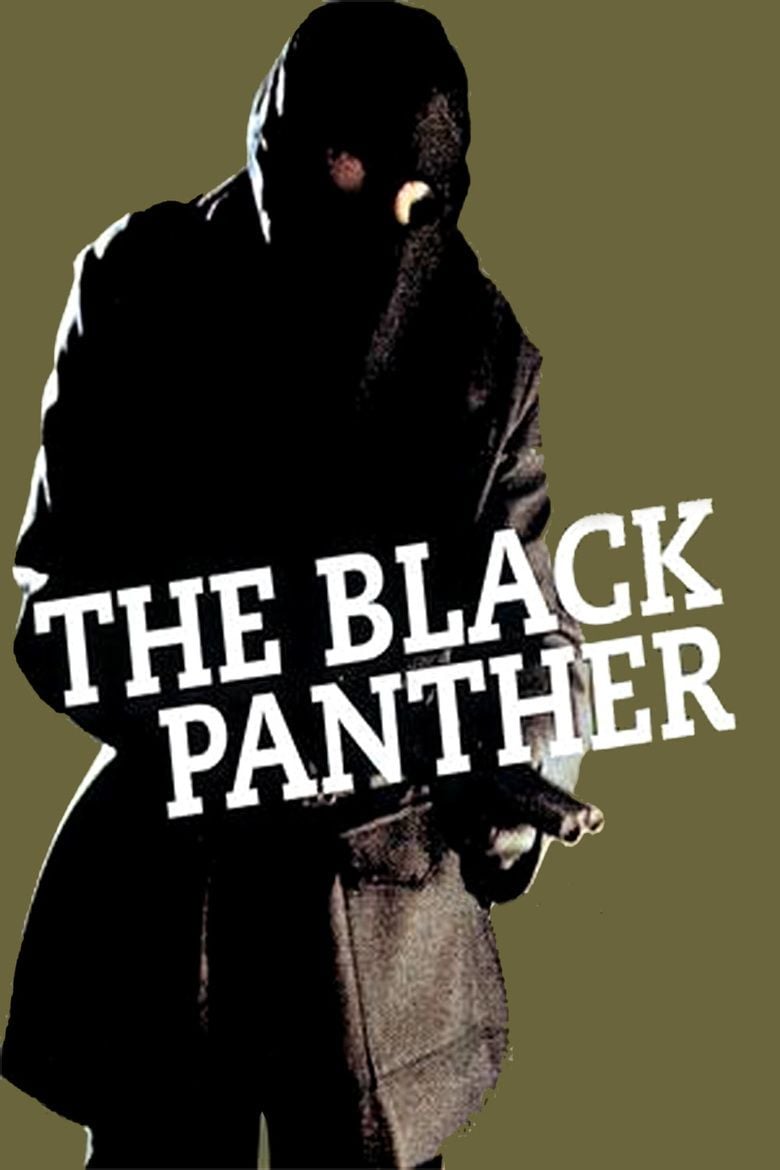
 A sub-genre that I have been recently exploring is that of the British true-crime thriller. These are differentiated from fictional works insofar as being equally as gritty (perhaps even more so), they tend to be a lot bleaker and arid than their most enthralling speculative counterparts. One of the most controversial of all of these was The Black Panther, a dark crime thriller that recounts the true story of Donald Neilson, an ordinary man who tried to make a living through crime. To be entirely honest, The Black Panther is not necessarily a bad film (and its controversial reputation is hardly unearned), but it is also not a film that achieves much other than being a gritty crime thriller. It is oftentimes quite dull and is not nearly as compelling as it should have been. Whatever Ian Merrick was trying to say with this film was achieved with far more finesse and equal notoriety in films such as Sunday Bloody Sunday and 10 Rillington Place. Still, there are certainly some merits to this film that warrant watching – just be warned, if there is a more miserable, disconcerting and unpleasant cinematic experience, I have yet to find it.
Donald Neilson (Donald Sumpter) is an ordinary man living in working-class England. He is not the most sociable fellow and is notoriously misanthropic, as well as being quite abusive to his wife and daughter, who do their best to soothe the jittery nerves of the volatile man that controls every aspect of their lives. By night, Neilson has tried to make a career by robbing post offices, gaining notoriety for his choice of a black balaclava, with the media dubbing him “The Black Panther”. His efforts are in vain, as he is severely underqualified for a life of robbery – so to remedy the situation, he decides to take extreme measures and kidnap a young woman who is the heiress to a massive fortune, holding her captive and hoping that her family will care enough to may the hefty payment to ensure her safety. Throughout the film, we follow Neilson has he goes from an incompetent petty thief to a full-blown malicious criminal, whose volatile nature and quick reactions make him an impulsive but effective killer, leaving a trail of destruction in his wake – but for how much longer can he get away with it?
It would be wrong to pretend that I enjoyed this film, but in spite of how dreadfully unpleasant it is, I can readily admit that The Black Panther is an effective film. Donald Neilson was a controversial figure, and his crime spree around Britain in the 1970s is almost folkloric in how notorious it is. To be fair, there wasn’t much of a chance anyone could make an entertaining film from this material – Neilson didn’t have the idiosyncrasies of Reg Christie (10 Rillington Place), nor the irreverent humour of Charles Bronson (Bronson). He was a quiet, sinister man without an ounce of charisma or tact, who performed terrible acts for the sake of financial aid. There is no reason to ever actually compare criminals, especially those on the same level of cruelty as Neilson, but considering some of the contemporary films made about these kinds of subjects, The Black Panther quite simply cannot compare, as there is an almost total lack of any particular merit. Ultimately, it is not a bad film, but one that is only barely passable.
The main character is played by Donald Sumpter, a reliable character actor who never ascended to the heights of some of his peers. After seeing The Black Panther, its clear why he didn’t. This isn’t to say he is bad at all (he does the best with the material he’s been given), but rather that there is absolutely nothing to his performance here. I can’t recall the last time I saw a character so blatantly unlikable and without any merit in a film, and it made this film even more challenging. This isn’t to suggest an individual like this should be made likeable, nor should the audience be compelled to feel any empathy or sympathy to the person. It isn’t the job of the filmmaker to turn a real-life villain into someone endearing. But it is their responsibility to make the character at least interesting because, without any development, he just remains a vapid and dull interpretation of a man who was far more complex than the one-dimensional character we are presented with her. Sumpter certainly does try – but he can only do so much with a character who the filmmakers didn’t think through. It is tough for an actor to be given a role where there are only a handful of lines (half of them not spoken so much as incoherently yelled in some barbaric accent, with all sense of grammar and structure disappearing entirely), and made to evoke the idea that this was a real person. We are thrown in media res to his activities, without any semblance of background to who he is, and why he is acting in this way. The purpose of a true-crime film is not necessarily to portray the events (as I mentioned, if we wanted an objective retelling of this story, there are numerous written resources that chronicle it), but to get into the psychology of the perpetrator and explore the motivations behind their characters. Without this quality, a film like this is nothing short of a misguided bore.
The biggest problem with The Black Panther, to put it frankly, is that it is dreadfully boring. This is a film based on true events, and we have to give credit to Merrick for sticking very closely to the actual happenings. Yet, he doesn’t do much else – and the film moves at a pace almost entirely unbearable, and very little is done to draw the audience in and have us feel anything other than repulsion to Neilson’s actions. There is no need for us to feel empathy towards the leading character, but he could’ve at least been developed more effectively. Merrick could’ve very easily infused The Black Panther with some form of artistic flow, rather than being a visual representation of little more than a newspaper article. It has the cold and sterile atmosphere of a low-grade crime documentary reconstruction but it lacks the captivating nature that makes those kinds of things perhaps not necessarily entertaining, but at least somewhat gripping. It isn’t enough for a film like this to be realistic, it also needs to have some semblance of artistic merit, or else we’d just be better off reading the countless tabloid accounts of this very story. It is an odd criticism to comment on a crime film for not being interesting enough, but when it comes to The Black Panther, the execution just felt extraordinarily dull.
This film isn’t completely without merits, and it is possible to find some aspects of it that are worth watching (even if they are few and far between). First and foremost, this is a very well-made film. It is shot beautifully, and the three post office heists are certainly very tense, with Merrick capturing the sheer terror of such events with precision and allowing them to veer off into the realm of horror. The Black Panther is certainly a nasty little film, and it remains steadfast in its commitment to be entirely serious and undeniably sinister, which was a choice that gives the film a truly disconcerting atmosphere – it doesn’t make for pleasant viewing, but it certainly makes us feel something, even if it is sheer dread at what is being represented on the screen. Yet some of the creative choices did work out – there is a notable lack of music throughout most of the film, which lends it a sense of hostility, and creates the idea of urgency that the main character is feeling. Moreover, its meticulous pace and general foreboding sense of danger also work towards telling this story effectively, and more than anything else, confirms what we suspected all along: there is a much better film lurking beneath The Black Panther.
I desperately do want to say that The Black Panther is not a bad film – and it really isn’t. Rather, it is a disjointed, misguided jumble of ideas, assembled by someone more interested in objectively presenting the stories as opposed to exploring the elements that have made these kinds of films so popular. Ultimately, the result is a film I am perhaps mostly ambivalent towards. Whoever the culprit is that turned this film into a meandering, convoluted bore really failed to see the potential within this story, which deserved more captivating filmmaking. The Black Panther had so much that could’ve been done with it – for instance, the title reflects the nickname given to Neilson during his reign of terror, and there are some allusions made to the animalistic nature of Neilson, stalking his prey like a vicious predator – yet they are quickly forgotten in favour of a rushed third act that attempted to portray Neilson’s most heinous act in a far shorter time than it deserved. Or the failure to explore the bilateral life of Neilson as anything other than a mere footnote to the taut ramblings of an overblown attempt at melding kitchen sink realism and crime drama, which just didn’t work. This is a film that should’ve been much better – who would’ve thought a film about a vicious, murderous criminal could be so utterly unlikable?
 The Postmodern Pelican