2018 was an exceptional year for cinema – I feel like I say this about every year, but I genuinely believe the standard of cinema is only increasing year after year, with more respect being given to independent filmmaking, a seismic shift towards inclusivity and a broader appeal being found in intelligent, well-made cinema, which is steadily overtaking the more populist fare, with even the biggest blockbusters being of considerable merit in many ways, challenging audiences just as much as they engage with them, proving that going to the movies is not only about being entertained, but also mentally stimulated.
As per the annual tradition, with the Academy Awards set to be presented this evening, I’m listing the films I considered to be the defining masterpieces of the year. Two years ago, I made the conscious decision to extend my list from ten to fifteen in order to make space for some of the other films I feel deserved to be recognized. Constructing the list is a wonderful experience and a terrific way to reflect on the previous twelve months and muse on all the cinematic experiences I encountered, from the bold to the weak, from the magnificent to the disappointing, from the audacious to the predictable. 2018 was the first year where I genuinely could not find space on my list to fit every film I wanted to mention, not even in the Honourable Mentions. Extending my list only further was out of the question because it only allows for more leniency to be given. The total was kept to a solid fifteen in the main list, eight in the honourable mentions, which proved to be a true challenge. However, these films represent some of the year’s most extraordinary, unique and powerful artistic moments, and define exactly why the past year was a tremendous one for cinema. It does mean some had to be left out, such as A Star Is Born, Black Panther and First Man, which are certainly wonderful, but they just narrowly missed the top spot. Even any of the films listed in Honourable Mentions could have topped the list in any other year, which is only a testament to the strength of this year’s artistic output.
I also want to use this space before commencing the list to remark on two of the year’s greatest achievements from outside the world of film. The first is the HBO television show Barry, which went from a zany dark comedy to one of the most beautiful explorations of the human spirit, a psychological study into the mindset of a conflicted anti-hero and his philosophical quandaries, with Bill Hader proving himself to be not only a talented comedian but also a gifted writer, director and actor capable of handling even the most dramatic of material. Secondly is the music video to Childish Gambino’s “This Is America”, an extraordinary short film that captivated the world and struck many of us in an unexpected way. It was so potent and powerful, it even persuaded me to break with tradition and write a review for it, which you can find here.
Therefore, without any further ado, I present to you the best films of 2018:
Honourable Mentions
Roma
Suspiria
Hearts Beat Loud
First Reformed
Cold War
The Old Man and the Gun
Private Life
Thunder Road
The Best Films of 2018
#15 – The Death of Stalin
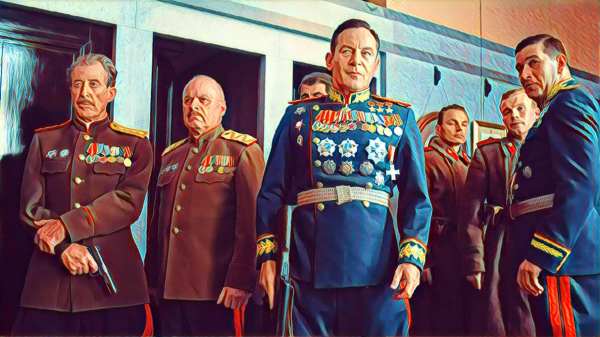
The years between 1917 and 1991 were a tumultuous time in Eastern Europe, and the Soviet Union was responsible for a lot of hardship for millions of people who died or were tortured under the vicious Communist regime that governed the region. It was certainly a tragic period – so how is it possible that The Death of Stalin is one of the year’s funniest films? Armando Iannucci is a gifted comedic mind, and perhaps the greatest living satirist, and he assembles a stellar cast that works alongside him to create one of the year’s most memorable films, a work that is hilarious and harrowing in equal parts. I laughed more in The Death of Stalin than nearly any film this year, and the brilliance in the film lies in the fact that it finds humour in some very bleak, horrifying spaces, and exploits the absurdity of politics, history and humanity in a way that is intelligent but brutally funny as well.
#14 – Madeline’s Madeline

Josephine Decker is one of the most exciting voices in contemporary independent filmmaking, and her work is experimental and audacious, and wholly brilliant. Madeline’s Madeline is an unsettling psychological drama about performance, featuring an astonishing turn from Helena Howard who gives the breakthrough performance of the year in this searing, powerful and unsettling character study that takes its characters to some very dark places without them ever leaving the confines of their Upper East Side lives, with the playground of this bleak drama being the minds of its unlikable but endearing protagonist. It may not make much sense, with Decker taking a more subtle approach to looking at themes rather than a coherent story, but it becomes a powerful melodrama heavily influenced by the European arthouse, blending fantasy and reality in a chaotic but beautiful metaphysical exploration.
#13 – Searching
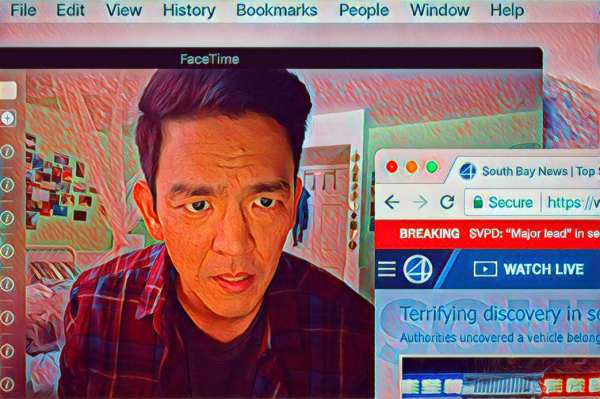
Too many films rely on a gimmick, and it often leads to something entertaining, but otherwise nothing more than a novelty, to be consumed but not remembered or revisited. This is not the case of Searching, a film that embraces its premise and utilizes it to its full potential, creating one of the most entertaining thrillers of recent years, a complex and fascinating approach to looking at technology and our relationship with it. Told entirely through computer screens, it certainly is not the first film to use this structure, but it is undoubtedly the best so far, because not only is it well-written and exceptionally-performed, it believes in its own brilliance just enough to actually achieve it, fully committing itself to its premise. A film I initially watched simply to pass some time, Searching still lingers as an extraordinary achievement, and a singularly unforgettable piece of audacious filmmaking.
#12 – Spider-Man: Into the Spider-Verse
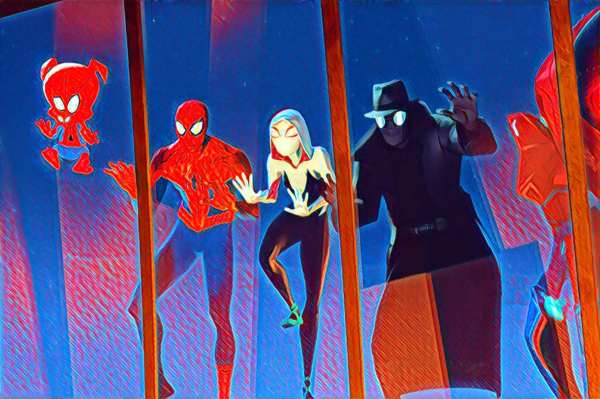
I like the Marvel Cinematic Universe far more than a lot of critics, but even I have my limit, and considering their films are bold and demand attention, they eventually fade – not even Black Panther, which was a strong contender for even the top spot of this list when I initially watched it a year ago, failed to materialize eventually as it just became overblown, and its exposure started to work against it, the ultimate tragedy of a popular film. One superhero film that refused to be taken down is Spider-Man: Into the Spider-Verse, which proved to not only inject a new youthfulness into a genre that is struggling to remain interesting, it is one of the year’s most original achievements, and the closest we’ve gotten to an actual comic book being reflected on screen. Beautifully-made, narratively profound and extremely moving, with a plethora of remarkable performances from its voice cast, this is a film that won’t only stand as one of the best in the superhero genre, it will define it.
#11 – Blindspotting

Comedy and tragedy are interwoven so brilliantly in Blindspotting, a darkly satirical look at race relations in contemporary America, written by the incredible Daveed Diggs and Rafael Casal, who also serve as the leads of this terrific but shocking film. Much like “This Is America” that I mentioned in the introduction, Blindspotting takes an unconventional approach to looking at very serious issues such as police brutality and racial inequality, daring us to laugh at something extremely disturbing, and forcing us to question our own passive response to the clear problems plaguing our world, and questioning the ways in which we can help perpetuate particular metanarratives that are often not even intentional. It creates a sense of despair in the viewer – how can we change the way society functions if these problems are ingrained not within the individual, but within the institution as a whole? The main message of Blindspotting is that in a world torn apart, there aren’t any winners, and we need a bit more than tolerance and understanding if we want to change anything.
#10 – Shirkers

Very rarely does a film affect me quite as much as Shirkers did. I adore documentaries, and they are usually moving depending on the subject matter, usually managing to be fascinating, compelling and often profoundly heartwarming. Shirkers is far from conventional, and something entirely different than what we’d expect, especially because director Sandi Tan crosses the boundaries of filmmaking in crafting a deeply personal film that both serves to be an intimate reflection on her coming-of-age as a young female filmmaker in a nation that does not appreciate the arts as much as other places, as well as a deeply powerful statement on the nature of narrative fiction and the filmmaking process. A perfect companion to Orson Welles’ F for Fake insofar as Shirkers begins to question reality and the nature of truth, as well as blurring the lines between fact and fiction in an audacious, incredibly-complex and utterly riveting viewing experience that never relents from stirring the audience into a dizzying frenzy and proving that some of the finest stories come from the artist’s own experiences.
#9 – Burning

An existential masterpiece if there ever was one – three individuals encounter each other by chance in contemporary South Korea. A young working-class man, a woman with huge aspirations and just enough gall to actually pursue them, and a rich and mysterious stranger who changes the course of everyone he encounters’ lives. Throughout the nearly three hours that Burning runs, we are subjected to a plethora of philosophical ramblings, especially on behalf of our main character, who begins to question humanity, as well as his own perspective on the world as he begins to see that there is something far more sinister lurking beneath the placid nature of society. Featuring dynamic performances from its three leads, especially Steven Yeun who is rapidly establishing himself as one of arthouse cinema’s most extraordinary new muses, Burning is a considerable achievement for everyone involved – the cast, director Lee Chang-dong and Haruki Murakami, who wrote the novella upon which this film was made. Slow but never boring, and entirely captivating on every level.
#8 – Sorry to Bother You

Satire has always been the backbone of our culture, and some of the most poignant social or political statements came in the form of subversive comedy. Boots Riley makes one of the year’s most incredible directorial debuts with the stunning Sorry to Bother You, a film that wears its intention on its sleeve and proves that in order to make something effective, you can’t be afraid of the repercussions, as long as the core of your work is not to offend, but to stir discussion. Hilarious and absurd, but also profoundly beautiful and exceptionally bleak in some places, this is what George Orwell’s Nineteen Eighty-Four would look like had it been infused with healthy doses of stark race relation commentary, and a devil-may-care approach to its subject matter, with Riley using his background in hip-hop to make this an abstract and very trendy look at contemporary society. In terms of originality, no film this year comes close to being as unique as Sorry to Bother You, and it is destined to become a cult classic, and perhaps can incite a few discussions along the way.
#7 – We the Animals

Jeremiah Zagar did something miraculous with We the Animals – he made a film that took an extraordinary but almost inaccessible novel, a semi-autobiographical bildungsroman, and crafts one of the most powerful coming-of-age stories ever put on film – from the wide-eyed brilliance of Evan Rosado’s performance that suggests at a stark maturity coming in the form of a very young protagonist, to the surreal and dream-like filmmaking, to the powerful themes of being different in a hostile world, We the Animals is one of the year’s most extraordinary achievements, a subtle but unforgettable drama that will make your heart soar and your spirit sing in sheer melancholy. Very few films manage to be as remarkable in looking at the relationship between the self and the world around us as this, and Zagar focuses on the theme of identity, looking at one young individual making his way through a world that may not be as accepting of how different he actually is. It is a film that will speak to any viewer, who will undoubtedly see their own childhood reflected back at them in this unflinchingly beautiful testament to life and all of its challenges.
#6 – At Eternity’s Gate
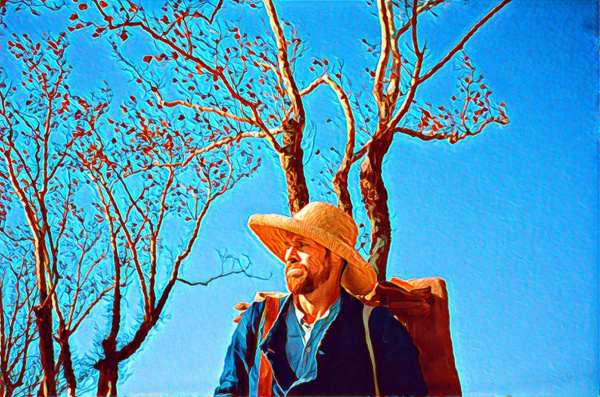
Vincent van Gogh is one of the most influential artists to ever live, and who better to venture into the mind of this iconoclast than a director who is a painter himself? Julian Schabel’s directorial career has had its highs and lows, but it reaches an apex of brilliance with At Eternity’s Gate, an unconventional but magnificent biographical film that finds Willem Dafoe giving the best performance of his career as the world’s most famous painter, but instead of being a straightforward account of his life, it is a film built around a variety of episodic moments that serve to be profound meditations on existence, and our relationship with the world, those within in and ultimately the most difficult relationship any of us have to face – ourselves. It is an ode to a great and misunderstood artist, a love letter to the art life, and a powerful account of the nature of existence and how each of us is confronted with our relationship to eternity.
#5 – The House That Jack Built

The biggest surprise of the past year was not only did I find Lars Von Trier’s The House That Jack Built to be far from the nauseating experience many felt it to be during its initial release at Cannes, but that it became one of the best films of the year, and a highlight in Von Trier’s otherwise troubling filmography. Brutal, shocking and often extremely hilarious (anyone who looks at this film as anything other than a pitch black comedy is watching it wrong). This film has the best work Matt Dillon has done since Rumble Fish, and it finds its provocative director venturing into the darkest recesses of the human spirit, uncovering psychological issues that are rarely presented with such stark honesty and overt brilliance. A film intended to be divisive, with the consensus remaining that whether the viewer adores it or abhors it, this is an achievement from the maestro of provocation, and while I am normally his most vitriolic detractor, The House That Jack Built is just terrific, and while it may not work for some, this is one instance when Von Trier’s experiments with decency actually result in something effective – visceral, dark and brutal, there aren’t many films as scarring as this, and for that reason alone, its a masterpiece.
#4 – If Beale Street Could Talk

Barry Jenkins’ Moonlight was hailed as one of the finest breakthrough achievements for a young director – and he proved himself to be someone profoundly audacious, so much that his next project was to be the first narrative adaptation of a James Baldwin novel, an author many of us admire, through his extraordinary works written in a time when people like Baldwin were shunned as second-class citizens. It takes a remarkable filmmaker to transfer the words of an author as indomitable as Baldwin to the screen, but Jenkins flawlessly allows us temporary access into the rich, evocative and beautiful world of Baldwin’s New York in the 1970s, where we are witness to the tense race relations in a country where the colour of one’s skin seems to supercede the quality of their soul, and where very little needs to be done to perpetuate various stereotypes. Whether it be the powerful social message, the astonishing cinematography on behalf of James Laxton, the extraordinary score by Nicholas Britell, or the delicate performances from its talented cast, If Beale Street Could Talk operates as a beautiful ode to Baldwin’s work, a striking portrayal of race relations, and a wholly unforgettable work that will unquestionably come to be seen as one of the most gorgeous films ever produced, both visually and narratively.
#3 – The Favourite
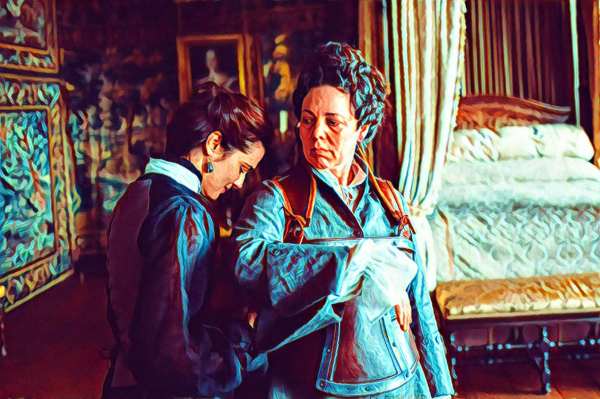
Yorgos Lanthimos is one of the most exciting and iconoclastic auteurs working in contemporary arthouse cinema, and ever since his breakthrough with Dogtooth a decade ago, he has steadily been working to craft some of the most extraordinarily odd works ever committed to film. He has a steadfast conviction to remain as absurd as he has been throughout his entire career. Personally, his finest moment (to date at least) has come in the form of The Favourite – a dark, hilarious and twisted dark comedy that blends heartful humour with deceptive drama, subverting expectations of the costume drama genre. It is a female-led film that allows its three core performers – Olivia Colman, Emma Stone and Rachel Weisz – to play complex, unique and fascinating characters driven by their own desires, rather than being simple plot devices. It is a film that is both gorgeous and hideous, hilarious and terrifying, triumphant and tragic, and more than anything else, unabashedly unique. Lanthimos has finally crossed over into the realm of the relative mainstream, and while he doesn’t show any signs of changing his strange outlook, we can only expect more brilliance from him in the years to come.
#2 – Can You Ever Forgive Me?
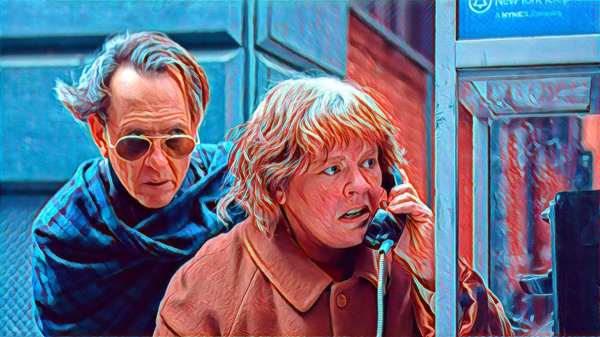
A misanthropic writer and a homeless cocaine dealer team up to forge their way across the New York literary world, becoming rich in the process – this premise seems as absurd as it is enticing, and in Marielle Heller’s terrific Can You Ever Forgive Me?, we are given access to the life and times of Lee Israel who was very much real, unlike her modus operandi for making a living. A film that is far more than just a comedy – it is an ode to a bygone era, a film about friendship, a romantic drama and a love letter to the literary world. Melissa McCarthy gives her finest performance to date, and Richard E. Grant is just as wonderful as always, giving a spirited performance that finally has allowed him the recognition that has been due to him for over three decades. It is an anomaly of a film – a story of two miserable people who somehow find happiness in one another, and an aromantic love for each other as they stumble their way through life, surviving on a diet of alcohol, bitterness and deception – and if this isn’t one of the most compelling films of the year, then absolutely nothing else is. It came extremely close to taking the top spot in this list, but one film overtook it quite literally at the last minute.
#1 – BlacKkKlansman

When it came down to choosing the film that would occupy the top spot on this list, I went for the film that I feel best encapsulated everything I adored about cinema, from a director who has also proven himself as being one of the most unique and provocative voices in contemporary cinema. Spike Lee is a director who I have admired for years, and while his prolific career has had its fair share of low points, BlacKkKlansman is a film that stands as some of his finest work, a film that is both a scathing social satire and a bleak statement on the state of society. In most of his finest films – Jungle Fever, Do the Right Thing, Crooklyn and Chi-Raq to name just a few, he blends comedy and drama in a way where they are symbiotic – we are dared to laugh in the face of fear, and the moments of despair are counterbalanced by a unique form of levity that is entertaining without being inappropriate. Lee is a director not afraid to provoke audiences, as seen by the ending sequence of this film, that will move any audience member to the point of an existential crisis. It incites discussions without giving resolution, provides questions without any answers. BlacKkKlansman is just an extraordinary work, and its ability to take a true story that is already fascinating and turn it into one of the year’s most insightful, powerful and brilliant films is testament to the talent and dedication of everyone involved. When it comes down to it, no film this year moved me quite as much as BlacKkKlansman – it is far more than just an entertaining biographical story that veers into the territory of the absurd – it is a poignant and potent work that will undoubtedly be discussed for decades to come, and leave an indelible imprint on the mind of every viewer.
So that concludes our retrospective of the 2018 cinematic year. It was an exceptional year for movies, and while there were several mediocre films along the way, we are witnessing a change in cinema that is destined to bring legitimate recognition to under-appreciated genres and shed light on new and exciting voices. 2019 has much to live up to, but if it is anything like this past year, I have a feeling we’ll have even more difficulty in narrowing down the best films of the year next year. Next year will also bring us to a retrospective of the past decade, so here’s hoping 2019 can help contribute to what is undoubtedly one of the strongest decades for artistic expression.
 The Postmodern Pelican