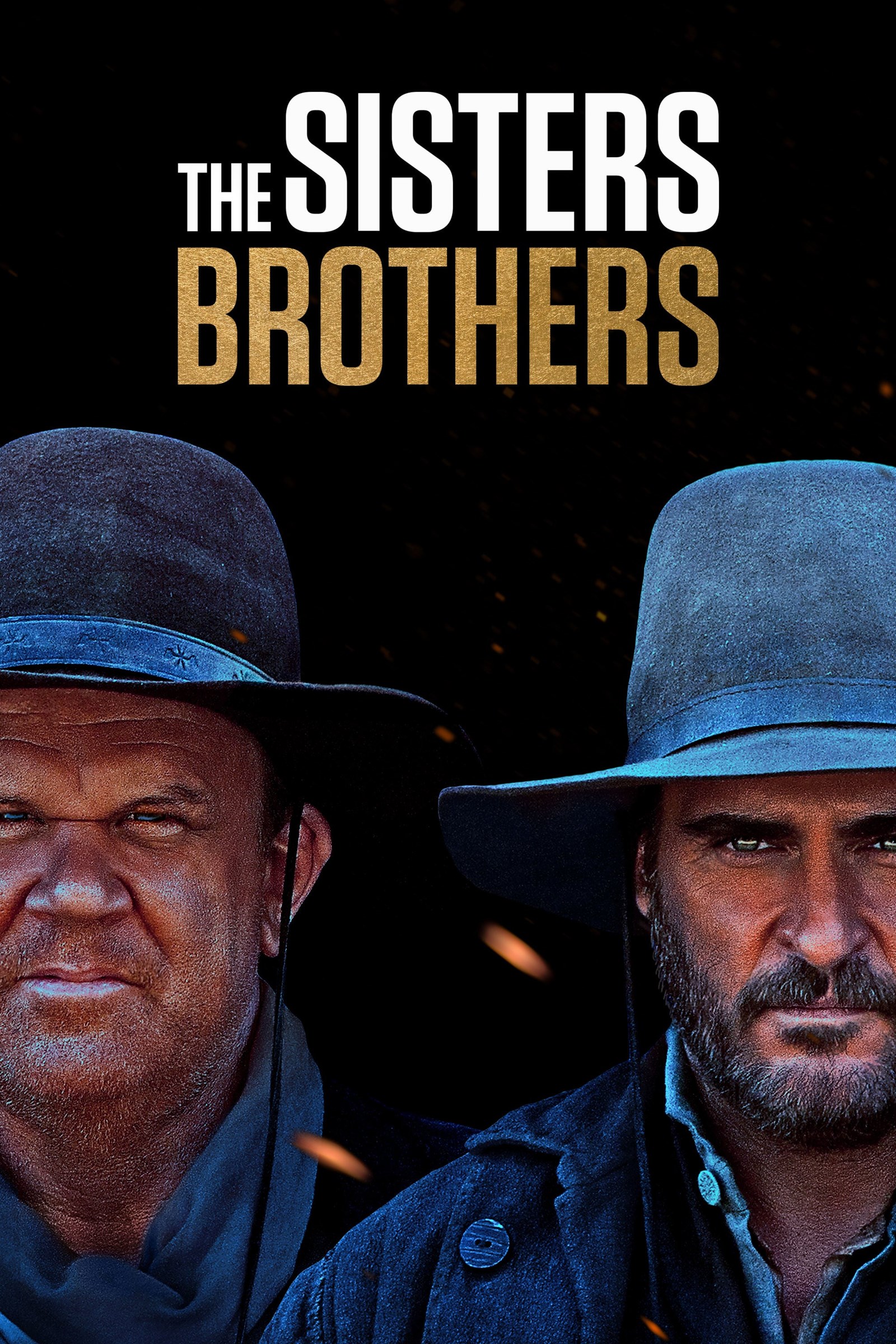
 Eli Sisters (John C. Reilly) and his brother, Charlie (Joaquin Phoenix) are a pair of hitmen in the Gold Rush era. They are in the service of a mysterious but wealthy man known only as The Commodore (Rutger Hauer), who sends them on a quest for Hermann Kermit Warm (Riz Ahmed), a chemist who has discovered a formula that can help with finding gold and can revolutionize the gold industry. Their contact is a private investigator, John Morris (Jake Gyllenhaal), who soon accidentally befriends Warm, and discovers that he more than just a debt-skipping scoundrel, but a renaissance man of sorts, someone with a particular view of the world that wins over the cynical Morris. Very soon, the two duos are to meet, and whether or not the Sisters Brothers are to complete their task, or to be won over by the utopian vision by Warm remains to be seen.
The western is perhaps the only genre that has been officially redundant for decades, but still perpetually appears in a series of self-referential, revisionist works that stake their claim as unique and subversive takes on the genre. The Sisters Brothers is one of the more fascinating recent westerns, and with French auteur Jacques Audiard making his English-language debut, and a cast led by a quartet of their generation’s most extraordinary performers, as well as some tremendous cinematography (by Benoit Debie, the deranged genius beyond the unconventionally gorgeous Enter the Void and Spring Breakers) and production design, The Sisters Brothers is one of the year’s most fascinating achievements, a hilarious but riveting modern approach to archaic themes, a western that doesn’t necessarily break the boundaries set by its predecessors, but rather take the best qualities of the westerns that formed the basis of the genre, and provokes them to the point where this stands in their ranks as an exciting, exhilarating and undeniably entertaining experience.
The Sisters Brothers is composed of a quartet of performers who one wouldn’t necessarily think would interact, especially not in a film quite like this, and they are divided into two pairs that eventually come together in the third act. The first duo is the titular characters, Charlie and Eli Sisters, the infamous Sisters Brothers, played wonderfully by Joaquin Phoenix and John C. Reilly. Their work in this film was quite unexpected for both of them for a number of reasons. Firstly, one wouldn’t expect either of them to appear in a western, especially not a darkly comical acid western like The Sisters Brothers. Moreover, their individual characters go against what we’ve normally seen from either actor – Reilly, the perpetual reliable supporting comedic presence, takes on the most significant role as Eli Sisters, and he is oddly composed, without the endearing goofiness that has defined most of his roles, whereas Phoenix, someone often known for his extreme seriousness in approaching roles, is the comic relief, with him being at his most relaxed and upbeat here, possessing a certain reckless quirkiness that we don’t often see from him in his more dour works – he is certainly amongst the best actors working today, and the fact that he managed to play a role like Charlie Sisters, who is neither heroic and intelligent, or sinister and brooding (both the qualities we normally find in Phoenix’s performances), but rather just a drunken, eccentric oddity, is a testament to his great versatility as an actor. It goes without saying that Phoenix would be great, but I was most impressed with Reilly, whose performance in The Sisters Brothers shows a remarkable sincerity and a certain maturity to his acting style, and hints at a deeper level of introspective talent in the actor. The Sisters Brothers is a comedic film, but not one that relies on necessarily comedic performances from its cast, especially not its leads, who play their roles with great enjoyment, but serious dedication as well.
Surprisingly, it wasn’t the pairing of Phoenix and Reilly that kept this film fascinating, but rather the two major supporting performances that proved to be the most astounding performances in the film – Jake Gyllenhaal and Riz Ahmed, who previously worked together on the tragically underrated Nightcrawler in 2014, reunite as the unlikely pair of the milquetoast investigator and the rogue chemist who go from strangers to adversaries to friends. The Sisters Brothers is most compelling when tracing these two characters and their growing friendship, and if the film had been focused solely on them, The Sisters Brothers would have been just as brilliant. Ahmed, as the solemn but intelligent Warm, the central catalyst for the events of the film, shows a wonderful nuance to his performance, a subtle brilliance that we haven’t seen from him yet, or at least not in such a character. He is a complex antagonist, someone not necessarily malicious or even likely to be fully classified as a villain, but still suitably sinister. It is always an indication of great character development when the audience starts to feel empathy for the villain, without the character becoming likeable or redeeming himself. Ahmed certainly establishing himself as a consistently excellent actor, and The Sisters Brothers is just another tremendous addition to his eclectic career. Jake Gyllenhaal is a great actor who isn’t always given the roles he deserves, but in recent years, he has started to abandon the more heroic protagonist roles, and take on roles usually suited to character actors – one just needs to look at his polarizing performance in Okja to understand that Gyllenhaal’s growth as an actor is unexpected but thoroughly wonderful in every way. In The Sisters Brothers, Gyllenhaal is given a character that is, unfortunately, the most vaguely-composed of the four central characters, being more of a reactionary than a fully-formed character, but he nonetheless finds the humanity in an ambigious character, and he gives perhaps the most complex performance of the cast, a truthful and human performance. The cast of The Sisters Brothers is really good, and much smaller performances by the likes of Rebecca Root and Carol Kane may be brief, but still leave an impact on an already memorable film.
The structure of The Sisters Brothers is not particularly innovative, but it is still unique. This is a film composed not of one story, but rather two, occurring concurrently, defined by two pairs that are working towards the same common goal, and are aware of the other, but only meet towards the end of the film. The third act is when we see the two stories intersect, and by this point, we have already been witness to a unique view of the Gold Rush, a very different perspective of the western era that doesn’t challenge what we already know but rather shows it a different side of it. This is a traditional western story in every way – a pair of good-hearted rogues are sent on a cross-country journey to confront a particular adversary, and coming across a variety of unexpected obstacles along the way. Where The Sisters Brothers differs is in its execution – this is a film seemingly without a clear structure of “heroes and villains” – no one in this film is particularly heroic, not wholly evil, but rather quite simply realistic individuals, in search of their own successes and hopes to achieve their own individual ambitions. There is a certain sweeping view of the Gold Rush that we hardly see, and the motivations of these characters are far less binary than we’d expect, with the real challenges to these characters not coming by the individual adversaries, but by the general problems with society. The Sisters Brothers makes some subtle but fascinating statements on early-era capitalism, as well as social order in an era defined by the quest for wealth – this was a time when the American Dream was at its most potent, where anyone with a pan and a shovel could become rich with the right effort and a precise amount of ingenuity – whereas others have to make a living killing people – either those are firmly-ingrained within the capitalist project (albeit on the wrong side), or those that dare defy it. There is a lot to be unpacked within The Sisters Brothers, a complex film that looks at some broad themes without becoming dour, always having a wonderful sense of humour and a biting satirical edge that makes it a compelling film in every way.
The Sisters Brothers is a great film – it is a polished and effortlessly confident western film that never feels compelled to put in too much effort by being heavy-handed in its themes, opting much rather to let the story speak for itself. Patrick DeWitt (on whose novel this film was based) has always been a writer who has allowed his prose to create an atmospheric complexity, crafting stories that make profound statements without focusing on inconsequential detail. Audiard, in adapting the novel, did well in capturing the spirit of what DeWitt intended – riveting but darkly comical, serious but with a satirical edge, The Sisters Brothers is a masterful achievement. It has some moments of unparalleled visual beauty, especially in the cross-country scenes where we see our characters traversing different landscapes and climates, as well as some really great performances from a talented cast. Ultimately, this is a film that came and went without much fanfare, but it does have a lot of heart and compensates for being underseen with its genuine brilliance and dedication to the story, and for that reason alone, The Sisters Brothers deserves one’s time. It is a terrific western, a hilarious dark comedy and a meaningful meditation on some very broad themes – and what else does one look for in a film like this?
 The Postmodern Pelican